
Posts by Angela Hill
Treaty 6, Metis Homeland flag raised over Lakeland College campuses
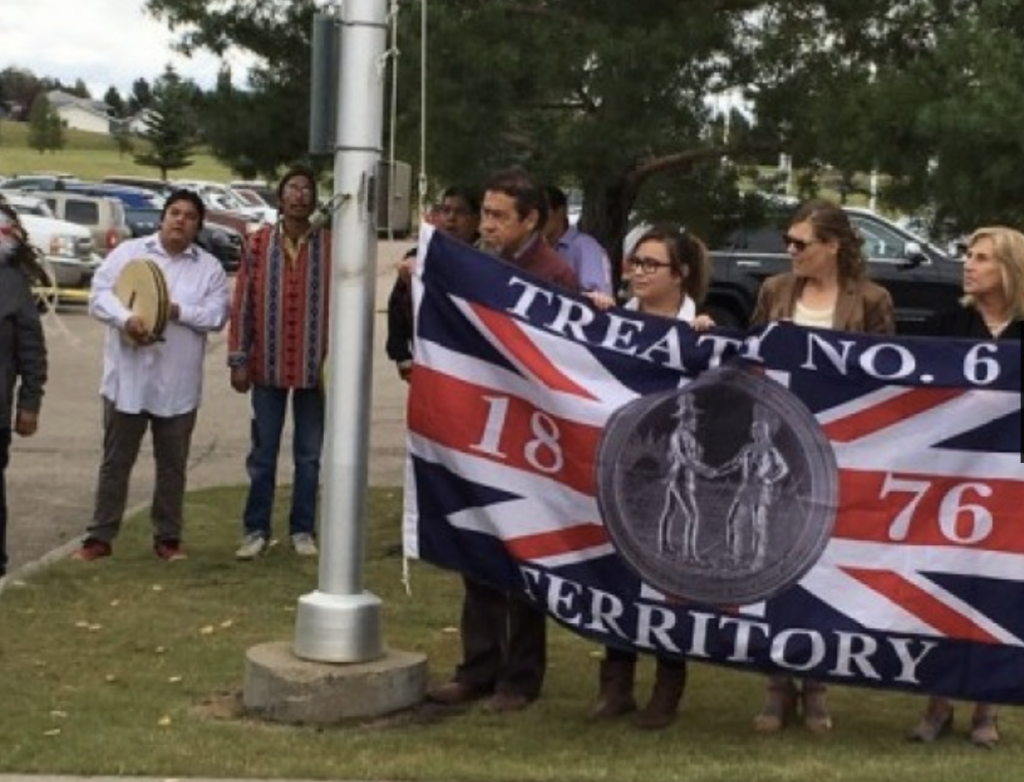
 Today two new flags flew over the Lakeland College campuses in Vermillion and Lloydminster – Treaty 6 and Metis Homeland.
“The flags are a symbol of shared history and shared future,” said Lloydminster MLA Colleen Young during the event.
This is just an outward sign of the steps Lakeland College is making towards Reconciliation. According to president, Alice Wainwright-Stewart, the college is working to make their campuses a welcoming educational environment including a speaker series, creation of an Aboriginal students’ lounge, awareness courses and more.
“The flags show commitment to relationships based on rights, respect and cooperation,” she said.
Office of the Treaty Commissioner executive director Harry Lafond spoke about the importance of knowing our histories.
“We can’t go forward in a good way without knowing from where we’ve come. That is our identity,” he said.
“Stay curious about the stories that are not told in written form. First Nations, Metis and settlers. All stories. These are our stories.”
Onion Lake Chief Wallace Fox agrees with the message of unity.
“To live and cohabit on this land we need to work together in equal partnership.”
OTC executive director recognized as a U of S Canada 150 Citizen
The OTC executive director, Harry Lafond, is being recognized for his work towards Reconciliation.
As part of the U of S Canada 150 Project, the University of Saskatchewan is recognizing 10 remarkable members of the university community as U of S Canada 150 Citizens. These individuals have significantly contributed to Canada becoming a more diverse, inclusive and environmentally sustainable country.
The honourees were nominated by members of the public, and were selected for exemplifying the Canada 150 themes of diversity and inclusion, reconciliation between Indigenous and non-Indigenous peoples, environment and youth.
Harry is an advocate for Indigenous Peoples and the Cree language. He has a range of experience in politics and academics, and not only is he currently the executive director of the Office of the Treaty Commissioner, he serves as chair of the Board of Trustees First Nations Trust.
Previously, he served his nation as chief, and worked as the Director of Education and as the principal of Kihiw Waciston School.
A member of the U of S Senate from 1995-2002, Harry is also a university lecturer who guides his students in developing visions for reconciliation in their own lives, and inspires participation beyond the classroom.
Treaty Catalyst Teacher Workshops
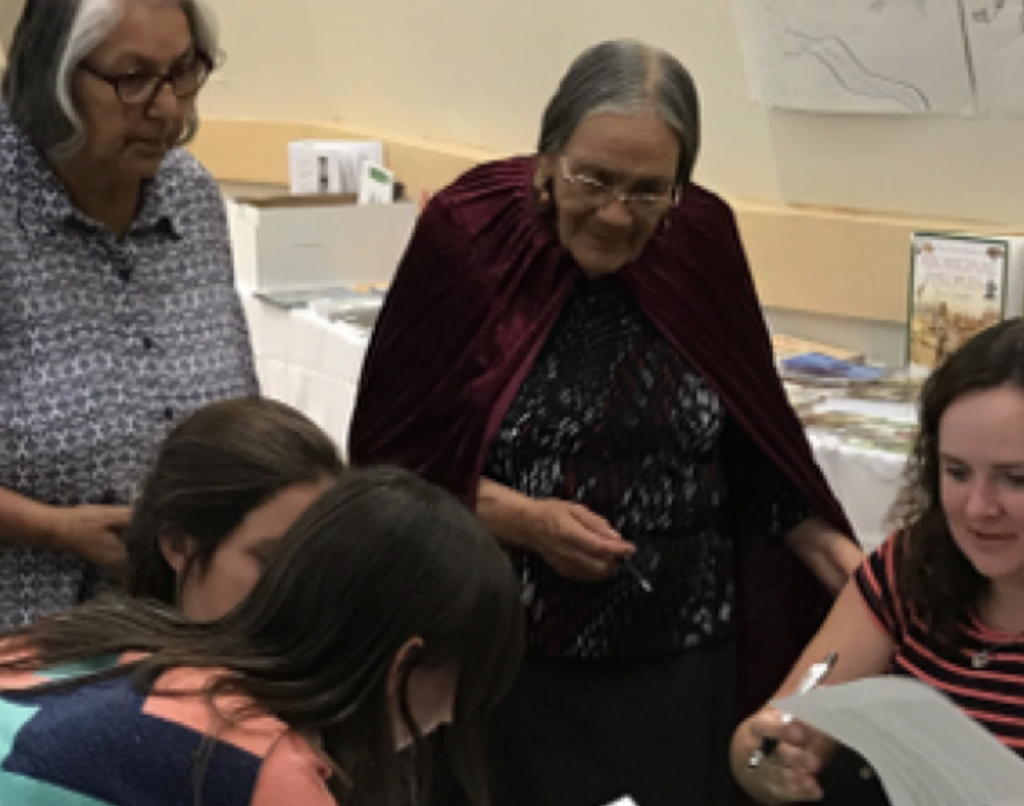
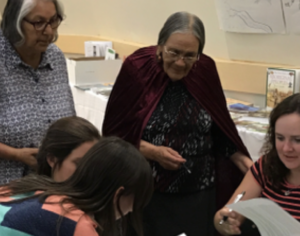 The Office of the Treaty Commissioner’s Treaty Catalyst Teacher Workshop held in Saskatoon saw 19 teachers participate.
The History of Treaty Making – Day One
The first day of the workshop is designed to increase knowledge, enhance individual self-awareness and strengthen skills for teachers. Elder Gladys Wapass-Greyeyes and Chief Sylvia Weenie of Stoney Knoll Cree Nation talked about their life experiences under the Indian Act, cultural teachings, Residential Schools and contemporary issues.
Teaching Treaties in the Classroom – Day Two
The objective of day two of the workshop is to become familiar with the resources and materials used to teach Treaties. The Elders shared their traditional teachings and cultural worldview. The group were introduced to the OTC Treaty resource materials in the K – Grade 12 Treaty Resource Kit and followed with an activity on the Treaty Essential Learnings. The teachers each developed lesson plan for immediate use in their respective classrooms.
Treaty Catalyst Teacher – Days Three and Four
The objective of these workshops is to give the teachers more exposure to First Nation Elders and their specific traditional teachings according to the signatories of Treaty. The teachers work in small and large groups to review and share treaty resources with each other. Topics of discussion include tips on facilitation and Q and A on specific contemporary issues and concerns.
Thanks to the Workshop Facilitator, Cort Dogniez, there are now nineteen more teachers who are certified to deliver the Day 1 and Day 2 workshops within their schools, Tribal Councils and school divisions.
— Brenda Ahenakew
Ayisinowak: A Communications Guide launched
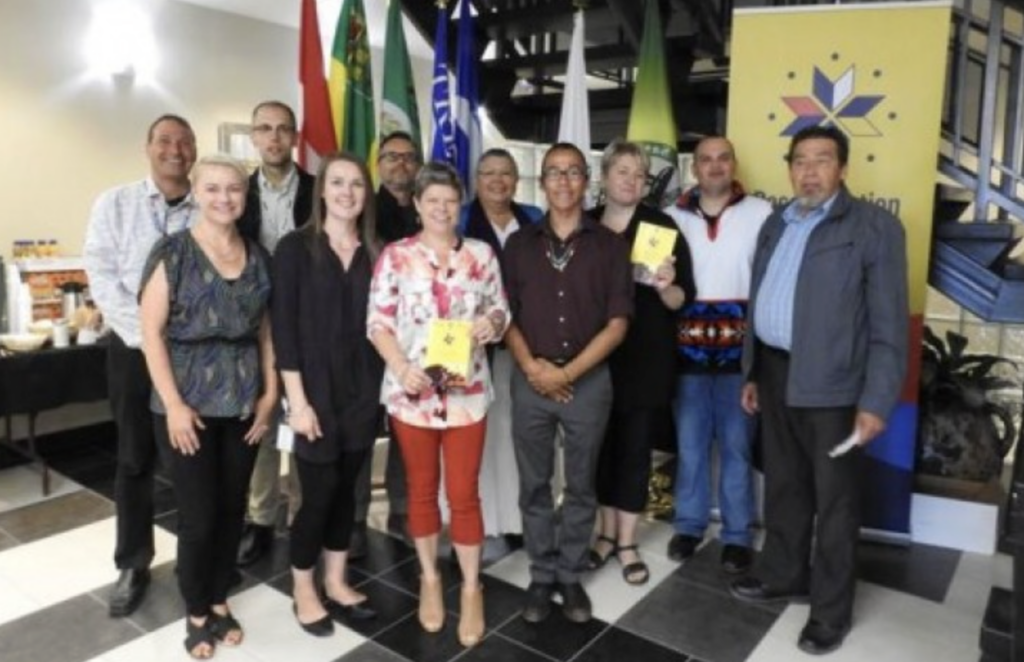
The Guide is intended to provide individuals with a basic outline of Aboriginal protocol and governance systems in order to facilitate improved relationship building either as co-workers, through business opportunities or through inclusion in specific projects.
The framework for the Guide was made possible, in part, through a summer employment partnership opportunity with the Saskatoon Tribal Council, and was developed through an internal collaboration between the Regional Planning, Aboriginal Relations and Communications Divisions. The team then partnered with the Saskatchewan Indigenous Cultural Centre (SICC) and the Office of the Treaty Commissioner (OTC) who provided valuable information on First Nation meeting etiquette, protocols and ceremonial traditions. The content is presented as an adaptive and living document that will continue to develop as our relationships and understanding grows.
— Gilles Dorval, City of Saskatoon
David Arnot receives citizen of the year award
At the end of March, David Arnot received his CTV Saskatoon Citizen of the Year award at a reception attended by the community.
The Office of the Treaty Commissioner representatives were there to celebrate the man who was the second Treaty Commissioner in Saskatoon from January 1997 to 2007.
During Arnot’s time as Treaty Commissioner he coined the phrase “We are all Treaty people” to capture the nature of the Treaty relationship in Canada. He was also a driver in the creation of the “Teaching Treaties in the Classroom Project” ensuring Treaty education was permanently a part of the Saskatchewan curriculum.
Arnot went on to become the chief commissioner of the Saskatchewan Human Rights Commission and is in his second five-year term
In one the letters of support to CTV, for Arnot’s nomination, “FSIN Chief Bobby Cameron said: ‘With an unwavering vision for what is possible, he has brought together educators, legal and political leaders and the public to see the importance of harmony for our society.’”
Arnot was named the 2016 citizen of the year on Dec. 31, 2016.
Second annual Rock Your Roots, Walk for Reconciliation
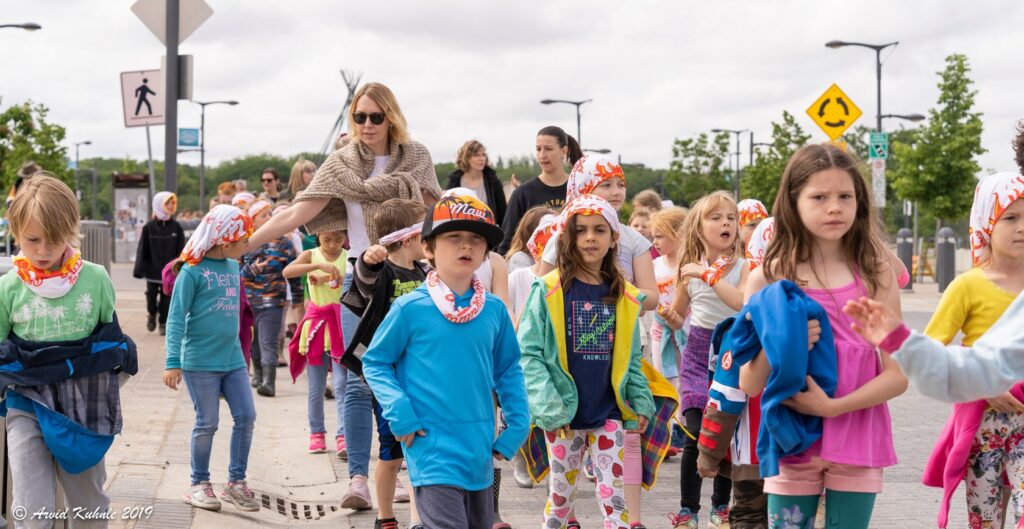
This year marked the second for the Rock Your Roots, Walk for Reconciliation and the momentum continues to grow.
At about 9:30 a.m., June 21, National Aboriginal Day, Saskatoon’s Victoria Park began filling with people, and the excitement grew as more and more people joined in.
“To see so many diverse people come out to celebrate Indigenous Peoples Day was very encouraging,” said Rhett Sangster, Director Reconciliation, Community Partnerships for the Office of the Treaty Commissioner.
“I think it demonstrates that we’re moving in the right direction.”
At the War of 1812 monument, there were traditional dancers and drummers giving a feeling of the community the day honours.
Teedly Linklater was drumming and singing as she led the walk. She spoke with CBC Saskatoon during the event
“All my ancestors, my grandparents I wish they were here to see, to be a part of this truth and reconciliation,” she said to them.
Thousands of people walked together for Reconciliation and they were supported by groups providing music and dancing.
“It was a wonderful celebration. A celebration honouring survivors, a celebration honouring Indigenous cultures and a celebration of all of our ancestors and our shared future together,” Sangster said.
“It was a chance for people in Saskatoon who don’t necessarily know each other very well to interact and learn and start to build relationships.”
When the walk was over, people spilled onto the grass at Victoria Park surrounded by tipis and activities, said Reconciliation Saskatoon’s Carrie Catherine.
“A favourite moment came when CUMFI President Shirley Isbister and Mayor Charlie Clark talked about the possibility of renaming that park of Victoria Park Reconciliation Circle,” she said.
“We were reminded that beyond the moment of just walking together, there is real action being taken by members of our community and leaders working towards reconciliation. “
Wear red in honour of MMIW
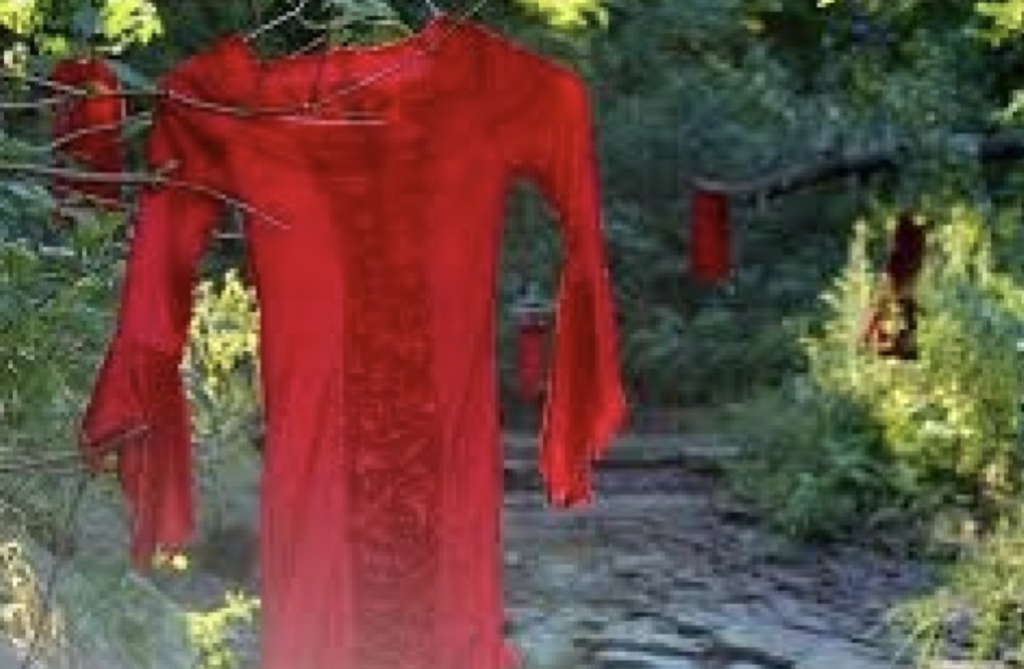
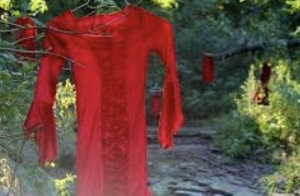 To raise awareness of Missing and Murdered Indigenous Women, people are asked to wear red or to hang a red dress in a public place on May 5.
“The red dress has become a symbol for the thousands of Indigenous women who have gone missing or been murdered in Canada over the years. Often the suspicious circumstances of their disappearance or death remains uninvestigated by police,” said a release from the Federation of Sovereign Indigenous Nations.
By wearing red, it acknowledges that those who have gone missing or have suffered a violent death are still in the hearts of people who knew them, said FSIN chief Bobby Cameron.
Read more about the beginning of Red Dress Day: Red Dresses Draw Attention To Canada’s Missing And Murdered Indigenous Women
The Red Dress Project is online here and on Facebook.
OTC at the 2017 National Congress on Rural Education
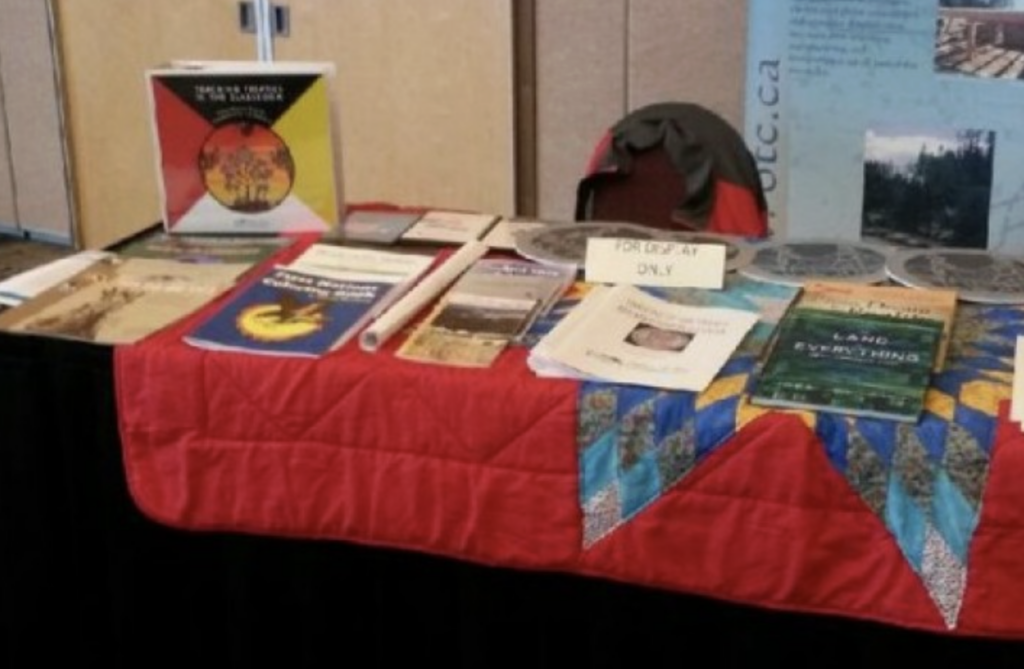
The Office of the Treaty Commissioner was happy to be at the 2017 National Congress on Rural Education in Canada.
The conversation about reconciliation was central to the conference held in Saskatoon and included members of our speaker’s bureau throughout the March 26 to 28 event.
Annie Battiste spoke at the breakout session on “what is reconciliation and why is it important.” Lyndon Linklater spoke about treaties and the treaty relationship.
During the workshop on Responding to the Truth and Reconciliation Commission’s Calls to Action, the OTC executive director Harry Lafond, was joined by director, reconciliation and community partnerships Rhett Sangster and former treaty commissioner David Arnot. They spoke about reconciliation and how to move forward to live together.
On the final day, Sangster was part of the telling of the story of Reconciliation Saskatoon along with Neal Kewistep from the Saskatoon Health Region, Carol Cooley from Saskatoon Public Library and Dave Moors from the United Church. It was about challenging and inspiring people to start their own reconciliation work in their own communities.
Orange Shirt Day events in Regina schools
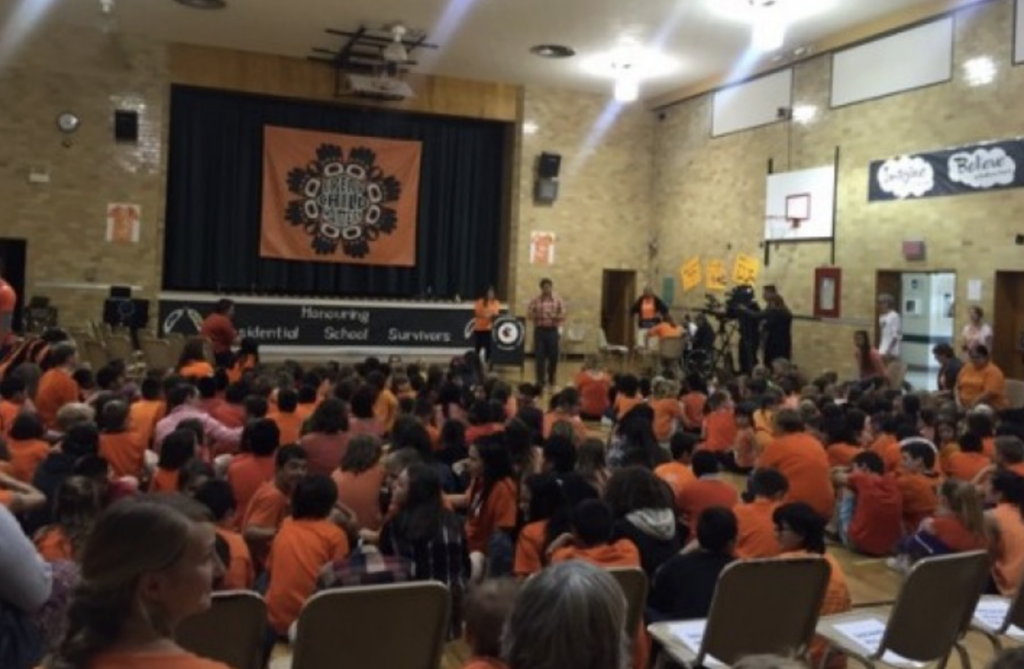
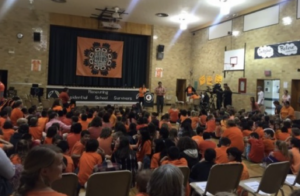 For the Regina Public School Division, this year’s Orange Shirt Day is a culmination of a year of activities aimed at filling knowledge gaps.
This is the third year the division has held Orange Shirt Day, and this year nearly every school is involved, said Sarah Longman, supervisor of aboriginal education for Regina Public Schools.
In previous years, Longman said she found many people weren’t aware of Orange Shirt Day and its significance as far as reconciliation and remembering and honouring those who went to residential schools. After hearing Senator Murray Sinclair talk about filling knowledge gaps, Longman said it started them moving towards providing learning opportunities.
Over the past year educators have been reading and Tweeting the Truth and Reconciliation Commission report, Longman said. They also started using blanket exercises, where participants take on the roles of Indigenous peoples in Canada. It started with a group of volunteers on one weekend and through the following months everyone in the division office has taken it, as well as school administrators, resources officers and social workers, Longman said.
Starting in October, high school students will learn the blanket exercise and move to sharing it with their feeder elementary schools.
This work has made a good space for Orange Shirt Day, Sept. 30. During the day, kids are wearing orange, decorating orange shirts and some of the classrooms have residential school survivors speaking.
“It’s going to be a day of tears and it’s going to be a day of healing,” Longman said.
She shared a story from last year’s event.
“We had a residential school survivor go in and speak to a predominantly non-Indigenous group of Kindergarten students. She was sharing the stories of when she was a little girl around the same age as them,” Longman said.
The survivor said that she didn’t have anybody who was “’there to tuck her in at night, she didn’t have anyone on her birthday bringing cake to her or any presents, she didn’t have anyone cuddle her or comfort her when she felt scared and she certainly didn’t have anyone tell her she was beautiful,’” said Longman.
“Of course our kindergarten students all understood this … and one of our little girls with great big, blue eyes and blonde hair walked up the survivor … and gently, very gently tucked her hands on her face and looked the survivor in the eye and said, ‘I think you are beautiful.’”
International business forum talks Reconciliation
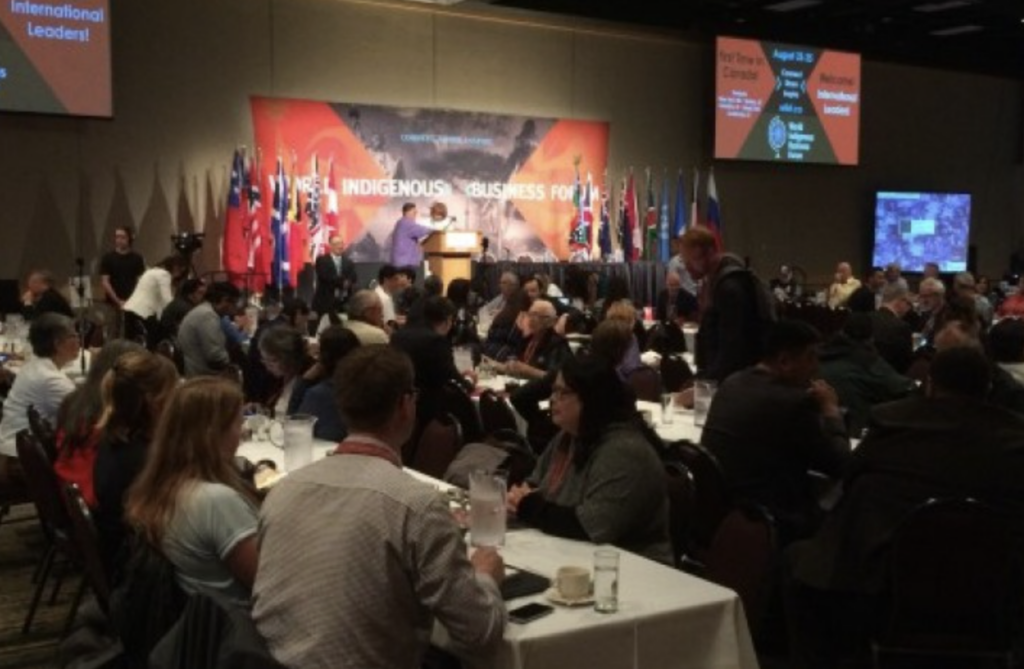
 Reconciliation in business was a big part of the conversation at the 2016 World Indigenous Business Forum that took place in Saskatoon this week.
“Strong, shared-value relationships drive reconciliation,” said Sean Willy, vice president of Des Nedhe Development and relationship coach with Creative Fire.
He spoke about the importance of taking the time to make relationships, to the audience of approximately 900 delegates from around the world.
Willy said, if you put your own objectives and values on the table, “more often than not, you will find common ground.”
When he talks about shared value, he means that in the end everyone is looking for some way to benefit in a business deal. He gives the example of a community wanting employment, a company wanting a good story and the government wanting to increase their tax base, so everyone benefits.
“The best way to eliminate poverty is investing in Aboriginal business,” Willy said.
Monica James with the Business Development Bank of Canada, took a moment to remind everyone of the Truth and Reconciliation Commission’s call to the business community by reading out Call to Action 92.
“We call upon the corporate sector in Canada to adopt the United Nations Declaration on the Rights of Indigenous Peoples as a reconciliation framework and to apply its principles, norms, and standards to corporate policy and core operational activities involving Indigenous peoples and their lands and resources.“ (Read the complete calls to action here)
The Call to Action 92 was the centre of a presentation by vice president Stephen Lindley of SNC Lavalin, an engineering and construction group. The natural resources sector, generally, has been doing a good job of Aboriginal inclusion, he said but that the Canadian economy is more than resources.
“We’ve got a long way to go if we want to meet the challenge that’s been set out for us by the TRC,” he said.
“If we’re going to better, we’re going to have to diversify our inclusion efforts.”
Off-reserve, urban communities are growing at rate five times the rate of on-reserve communities, Lindley said, so there has to be improvement of inclusions of Aboriginal people in manufacturing, service and other sectors. He said to do that these sectors will need to continue to rely on the resource industry to lead the way.
“It’s an imperative that corporate Canada step up and take Justice Sinclair’s challenge in recommendation 92,” he said.
He makes some suggestions of what business can do:
- Reduce reliance on the temporary foreign workers program
- Get the conversation started, because it hasn’t started yet
- Encourage best practices, make it good business to have an Aboriginal employment strategy
- Reach out to young, urban populations and get to know them
“We have to work harder, smarter and faster because we have to meet this challenge sooner rather than later,” Lindley said.