
Business
Des Nedhe Development
Indigenous economic independence and business partnerships need to be part of Reconciliation in Canada. The Office of the Treaty Commissioner is featuring First Nations’ Economic Development businesses and projects.
Des Nedhe Development is the Economic Development company of English River First Nation. They are 100 per cent owned by English River First Nation a Denesuline community. Des Nedhe means The Great River and is referencing the Churchill River, where the people of English River traditionally lived on the south banks during the winter.
 The Office of the Treaty Commissioner sat with Des Nedhe President
and CEO, Sean Willy, to learn more about their work.
How did Des Nedhe Development get started 30 years ago?
When the uranium industry began in Saskatchewan, the community’s leaders and elders said our first responsibility is to the environment, including pre-mining activities, ongoing monitoring of environmental impacts, and being present during reclamation and decommissioning. When all that was achieved and they understood where the uranium is going, they wanted to create their own business to create own-source revenue.
What are the businesses owned by Des Nedhe Development?
The first big pillar was an industrial side. The community bought Tri-Con North, which became Tron Construction and Mining, the heartbeat of Des Nedhe. They are a 100 per cent First Nation owned mechical, piping, electrical, instrumentation, and structural steel contractor. There are not many, if any 100 per cent Indigenous owned construction companies of this size.
Des Nedhe has a joint venture with Thyssen Mining and other First Nations, Métis and municipalities from northern Saskatchewan in Mudjatik Thyssen Mining Ltd. Partnership, which does developmental mining for Cameco in the north.
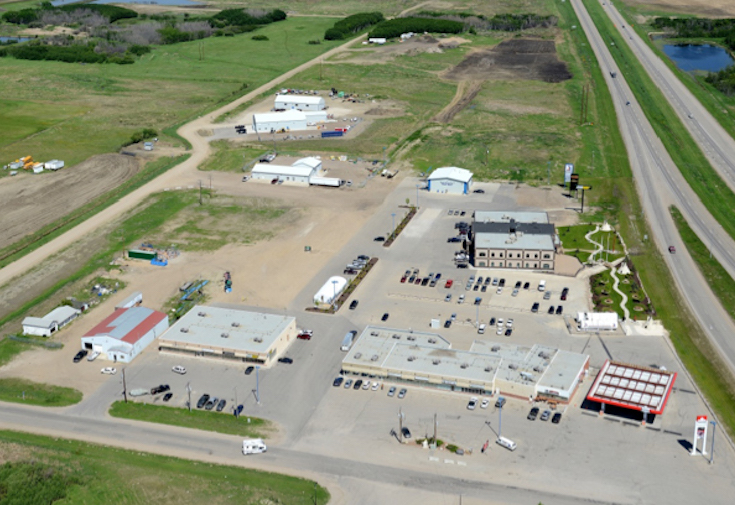
Des Nedhe has 140 acres of land just south of Saskatoon that was purchased as part of the Treaty Land Entitlement. With 15,000 cars passing by the reserve daily, we asked how do you show the rest of the province what a progressive economic development opportunity looks like. By being high tech, and using green energy. We are going to develop the rest of the acres and people can already see some work happening now the Grasswood Reserve.
In the retail division: we operate the PetroCanada on the Grasswood Reserve, one of the busiest in the province; a general store in Beauval; and the community gas bar in Patuanak. The retail is pretty integral to the group of companies.
We are also in the renewable power space. With a Peter Ballantyne Cree Nation partnership, we bid on a number of SaskPower opportunities, we’ve also put some bids into SaskPower to do some residential, roof-top solar panels in Beauval.
The last piece is investments. Part of the profit of Des Nedhe goes towards acquiring additional assets. Examples include JNE welding, a large steel fabrication company; Creative Fire, a communications and marketing company; Synergy 5, a group of four FN owning three cannabis retail stores; Athabasca Catering, which provides catering services to the uranium industry; and Northern Resource Trucking.
What is the mandate of Des Nedhe Development?
To generate own-source revenue for communities, to grow the business, and to employ Indigenous People wherever we operate.
How does that fit with Economic Reconciliation?
The English River story is from long before the term Economic Reconciliation was coined. It’s the understanding that you cannot move forward, and you cannot protect your culture on government funding alone. You can’t say you are self-determinate if you are getting cheques from Indigenous Services Canada or even philanthropic institutions. At some point Indigenous People have always used the resources of their traditional territories wisely.
I look at Economic Reconciliation as new opportunities with companies that historically weren’t involved in Indigenous economic development.
Resource companies initially were legally mandated to work with Indigenous communities, but it’s gone far above that in the past 25 years. The model of northern Saskatchewan is now copied around the country. Some regions might get more hype because of the dollars they spend on their projects, but it started in northern Saskatchewan. To have a strong diversity mandate provides you a value for your company.
Des Nedhe is 30 years old and other First Nations are just getting involved in the economic development space, we’re looking to provide support to those nations. They can partner with us and create a nation-to-nation relationships and using some of our experience about joint ventures, we’ll go out and try to sign progressive joint ventures. We’ll try to use our workforce to train up other First Nations. When they have the capacity, we’ll exit. I think many non-Indigenous businesses don’t create an exit strategy for the community to take on the projects themselves because the revenues are too good.
What does success look like?
When we are all working. With challenges in the last couple of years in the uranium market, we’ve had to pivot, we’ve had to adjust, and had to earn work in other places. When we’re working, people in the community are working, they are engaged, there is activity and when it’s busier, everyone is naturally happier.
I think for long-term success the community is on a path towards self-determination. If the community is making the big decisions they want to make and they have own-source revenue, I think that’s a win for us.
How does the profits get used?
The goal from the community is to try to make profit. Part of the profit goes back into the business and we share that profit to dividends to the community. That part of the profit goes, not to per capita payments, but to support services in the community like elders services, educational services, infrastructure in the community.
What are the big lessons learned along the way?
It is one step at a time. I think you have to be honest. Des Nedhe is not perfect, but you just have to learn from your mistakes, move forward and diversify. I think there are communities out there right now that are getting resource development opportunities and one of the things we say is, “start thinking about diversifying from day one. What are your plans if the market goes awry or that finite resource eventually runs out?”
Our community leaders always remind me that we’ve been at this for 30 years. They’ve been very humble and very quiet. I think of teaching from elders about patience and the journey, and that’s what business is.
We have an independent board of directors, which is unique, we’re not run directly by chief and council. It provides more transparency, you don’t have someone in my role that can just make decisions. We’re not dependent on elected council, so if elected council changes there is stability.
One piece of advice?
It’s a journey. Take it slow. You’re not going to please everybody right from the start. With the socioeconomic conditions of many of our communities, it takes a while to turn the tide. You’re not going to be able to help everyone as soon as you start up an economic development arm and get the first contract. With your first contract, you have to reinvest in yourself to get the second contract, and reinvest in yourself to get the third. There is always this pull between the business and the socioeconomic needs of our communities.
Good governance is another piece of advice. Be transparent, there’s a lot of misinformation out there, especially in our communities. Be consistent, how do you communicate with the community as a whole?
Once you start down the economic development road, it’s addictive because you have that own-source revenue, you have those jobs, and you want to keep moving forward.
Anything else?
What I see out there right now is more appetite for nation-to-nation business. I think 10 years ago there was jealously between communities. In the past you would have heard, “oh you are from a different province, go back to that province,” but they’d never say that to a non-Indigenous firm. It starting to change now, I’ve seen more willingness to work together. Let’s work with each other. Let’s keep Indigenous money in Indigenous pockets rather than let it drain out, let’s share with each other. It something I keep running into and to me a sign that things are changing, there are discussions happening. There is a unitedness that is very pleasant to see.
Misty Ventures
Indigenous economic independence and business partnerships need to be part of Reconciliation in Canada. The Office of the Treaty Commissioner is featuring First Nations’ Economic Development.
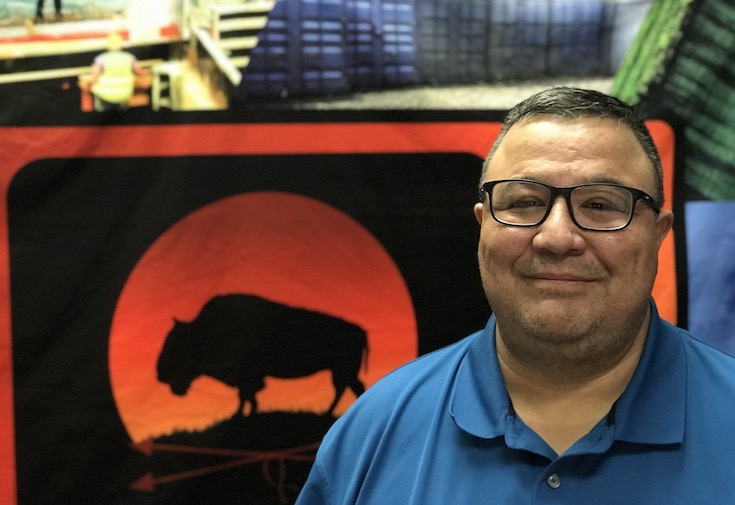
Misty Ventures is the Economic Development branch of Mistawasis Nêhiyawak First Nation. The Office of the Treaty Commissioner sat with Misty Ventures President and CEO Robert Daniels to learn more about their work.
What is the mandate of Misty Ventures?
The mandate is to create revenue in order for Misty Ventures to operate. The mandate is to create wealth and employment, training, opportunities, and partnerships. We couldn’t survive without our partners. We need revenue and how do you get revenue? You get work. And how do you get work? You work together.
What companies are Misty Ventures involved in?
HCC Group is a Saskatchewan-based corporation providing services in the Mining, Civil, and Mechanical Construction sectors
Misty Chemco is a multi-disciplinary industrial contractor providing construction and maintenance solutions across Southern Saskatchewan and Alberta.
Clifton Associates: an engineering, science, and technology company that provides technical solutions for problems involving soil, rock, water, and air.
Misty Burton Concrete is a company majority owned by Misty Ventures that handles all aspects of concrete work as well as a full range of gravel products. Other areas of expertise are fencing, excavating, site reclamation, environmental clean up, ICF construction and steel building supply and installation.
Misty Petroleum: a gas station and convenience store at Mistawasis Nêhiyawak First Nation
Misty Ventures Property Management: a company designed to manage commercial property being developed on reserve lands, with an expansion into snow removal, landscaping, and janitorial services.
Misty Ventures Storage and Containers: a company providing rentals and sales of portable storage bins.
What is the goal of the work?
The objective right now is looking at acquisitions of companies that are successful. Ideally, they would be built by a family, be that farms, be that businesses in the mining sector, were looking more at the supply chain side of construction, and not going in and starting from scratch, but taking that company to the next level.
When we talk about Reconciliation, we need to figure out how to work together. All of these partnerships and acquisitions we’ve made we don’t go in and clean house and start from scratch. We expect those people to come along with the company and stay within the organizations and assist us in the growth and training.
What does success look like for Misty Ventures?
We would like to be recognized in the next 20 years as just a company, so they no longer have to categorize us as an Aboriginal company, they just categorize us as successful. We don’t want to be awarded work simply because we are First Nations, we want to be awarded work because we are good at what we do. We want to get work based on our ethics, morals, values and quality.
As an Indigenous business are you seen differently in the business community?
I’ve had discussions with people that work in the mining industry and they say, ‘it’s frustrating that Aboriginal people get jobs just because they are Aboriginal. We as non-First Nations people worked very hard to get our foot in the door of the mining sector.’
We get labelled by people who are too aggressive, that use the political body to get work and that is not the message Misty Ventures is trying to send. We want to be awarded work because we have earned it, because we are qualified.
I find groups that are doing the work are afraid they are going to lose their contracts because they don’t have Indigenous engagement. If you have Indigenous procurement on your side you will be engaged and have an opportunity to bid. Those who refuse to have Aboriginal engagement feel strongly that they aren’t going to be able to have that opportunity.
There is a divide, I am not naive to it. But it is getting better. Companies are seeing that the more we get people to work, the more we work together, the stronger we will become because those people now have a sense a pride.
What are the lessons learned in the time of Misty Ventures?
What I’ve learned is to be patient. What I would tell other people getting into economic development is understand that a lot of people in our province just don’t know what it’s like to be First Nations. They don’t know what it’s like to live on a First Nations, to be unemployed, to have the social ills that we have in some of our communities, and the daily experiences.
A big lesson learned from my 94-year-old grandfather is you’ve got to get people to think outside the First Nation. You have to get along with everyone. There is going to be people that you will not like, there are going to be people that you absolutely love, there will be people you won’t trust. But the lesson to learn is not all people are bad, there is good people.
How much of what happens at Misty Ventures goes to support Mistawasis?
Within the first five years, there are going to be employment opportunities and there is going to be other opportunities that can offset some of the cost of own-source revenues in the community.
Once that own source revenue gets to a certain point, that’s when you give back to the nation in capital projects.
Any other advice?
I want to send a message to people to not give up. Ask questions, talk to people. We’ve got to work together to keep us stronger.
*Answers have been condensed and edited for clarity
Multimillion dollar Aboriginal-owned company creating sustainable wealth for its communities
Athabasca Basin Development, a company dedicated to building long-term wealth and investments for indigenous people in Northern Saskatchewan has based its profits solely on the strong partnerships they have developed within the Aboriginal/First Nations communities. The company believes that standing united as a region has been incredibly beneficial not just to the economic stability of their region but to the overall development of these communities and has put in place sustainable wealth for future generations.
Kristy Jackson, Director of Marketing and Communications at the company says the commitment by the owners, the seven communities that came together to build this company in 2002, has allowed the company to earn some $127 million over the past 14 years, with over 1,000 people employed as a result of these partnerships and investments in the region.
Athabasca Basin hosts the world’s richest high-grade uranium deposits. The northern area covers almost a quarter of Saskatchewan and a small portion of Alberta, and currently supplies about 20 per cent of the world’s uranium. The region is also the home of seven, largely Dene First Nations, communities.
Kristy Jackson talked with the Office of the Treaty Commissioner about these partnerships that have tremendously benefited indigenous communities.
Q: How did Athabasca Basin Development come to be? What was the reason for pursuing this partnership between the different communities?
A: The company was formed back in 2002 with the sole purpose of creating wealth for the communities, employment, investments and subsequently make it sustainable for future generations.
Essentially, seven communities in the region came together to form this company after identifying opportunities and economic activities that could benefit the overall development of the region. This unity was key in our development and basically if it weren’t for the union, we wouldn’t be where we are today.
It originally started with a road maintenance contract with Sask. Highway and then it evolved because there were a lot of mining activities and new opportunities in the region. Leadership at the time wanted to maximize on the new opportunities to create a sustainable company for future generations because they knew they needed employment and wealth for the communities. They also knew they needed to prepare for when the mines were no longer available.
Q: Which communities are involved in the partnership?
A: The communities that came together to form this important partnership are: Hatchet Lake First Nation, Black Lake First Nation, Fond du Lac First Nation, Northern Hamlet of Stony Rapids, Northern Settlement of Wollaston Lake, Northern Settlement of Uranium City and Northern Settlement of Camsell Portage. We have ownership by three First Nations communities and four settlements. However, the population is primarily Aboriginal even though there are three First Nations communities that own the company.
Q: In what ways have the indigenous communities primarily benefitted from these partnerships?
A: Primarily, we are building long-term wealth through investments for the communities, particularly the First Nations communities. The communities benefit through financial donations and distributions of the shares while some of the benefits are intangible such as building a great reputation. The company’s value has grown tremendously over the years and we’ve been able to give thousands in donations that have improved some aspects of the communities. For example, in 2013, $249,000 was donated to the region to improve cellular service there. This brought $6 million worth of cell towers which were officially opened in December 2015.
The communities are also proud of a company that they built that has garnered a great reputation that helps with investment opportunities.
Additionally, the company is committed to hiring people from the Athabasca region and Aboriginal people as much as possible. Also, many of our investments go into training programs to help with transferable skills and to attain meaningful employment beyond our company. When people in the region are employed to external companies, we don’t see this as a loss but a gain because of the training they’ve acquired. We also just work with local subcontractors and that also help provide more economic activities in the communities. We also ensure we lend our executive experiences to the communities involved.
Q: How has the partnerships affected reconciliation between those communities?
A: Our shareholders are united to start with. Seven communities got together and decided that together we are stronger. The communities have remained united for the past 14 years and this level of discipline is very impressive.
Q: What has the response/feedback been like from the First Nation/Aboriginal communities?
A: It’s been very positive. Some communities may often ask questions on things they may not be clear on like their dividends and when we meet and explain things to them, the end result has always been positive. We’ve invited other groups for potential investments and this benefits the entire community. They appreciate the knowledge that is shared among the communities and we don’t have competition with other First Nations groups, instead we aim to partner with them for more economic activities to create more wealth for the region. All and all, it’s been very positive.
Q: What advice would you give to other corporate enterprises looking to involve more Aboriginal/ First Nations/Metis in their operations?
A: Partnerships are important. For us, we’ve learnt that many are stronger than one. Partnerships, unity and commitment to creating wealth for the communities are important. If they’re looking to create immense wealth and overall sustainable economic development for Indigenous/Aboriginal communities, then the right partnerships are essential. Additionally, reinvestments and remaining focus are integral.
Written by Sasha-Gay Lobban
Finding synergy: New partnership brings Saskatchewan First Nations and business together
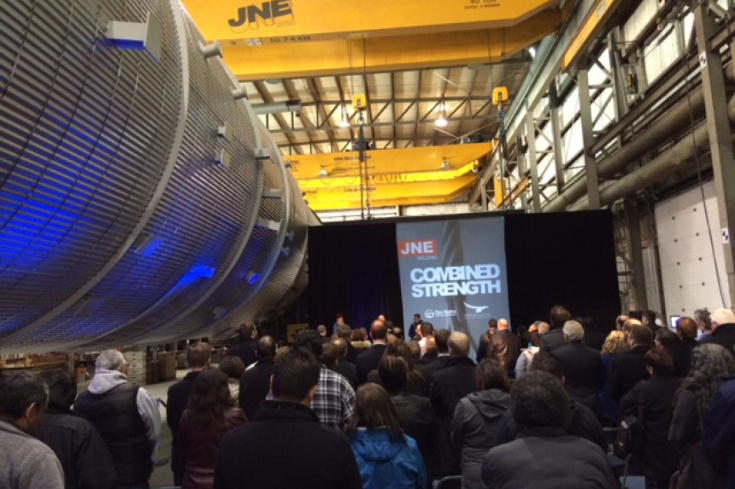
With the province’s largest full-service fabricator entering into a partnership with two Saskatchewan First Nations – the OTC wanted to get a better sense of why and talk about how this fits with economic reconciliation.
The economic development corporations of English River First Nation and Peter Ballantyne Cree Nation have each acquired 30 per cent ownership interest with JNE Welding, a fabricating company which began in 1980 and works with mining, construction, petrochemical, and power-generation companies across North America.
“It made sense to me on several different levels,” JNE Welding president and CEO Jim Nowakowski said.
The partnership with the First Nation communities puts JNE at a competitive advantage while competing in a global market, Nowakowski said.
Across the country, there is an increasing mandate for industry to work with Aboriginal-owned companies. Nowakowski added that both First Nations also bring in well-established industry connections and projects running a mine supply company, industrial production company, and a communications company.
“All of those are synergetic with our company,” he said.
For English River and Peter Ballantyne, the partnership will diversify their holdings, bring earnings into the communities, and create jobs. Nowakowski said as the partnership was being built, it was important to find ways of helping the communities, specifically the youth, to become more successful.
“I’m pretty happy to be able to play some part, some small part, in that role of helping these leaders in those communities be more successful through what I’ve been building over the last 35 years, which now I hope to be able to share,” he said.
The combined top-line revenue of the three companies is $296 million and together they account for over 1,000 jobs.
The First Nations and non-First Nations partnership is essential to the success of business and the province, Nowakowski said. By coming together, all of the parties are able to benefit.
“The model I built will not survive the next 35 years unless we are very strategic about what we do and how we do it, and be very aware of the changes around us. We are not the lowest cost producer, nor do we strive to be the lowest cost producer, we strive to be certainly the best steel fabricator that we can be,” Nowakowski said.
“We strive to be not only a good vendor but a good employer and a good customer as well; in order to be able to do that, we have to look at what our competitive advantages are.”
Written by Geraldine Malone