
News
The Lost Reserve
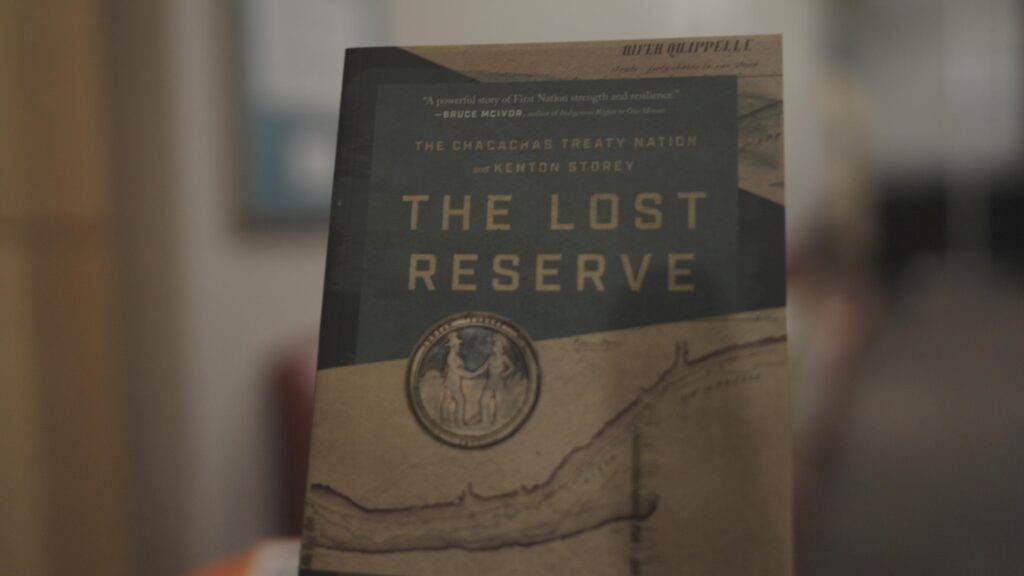
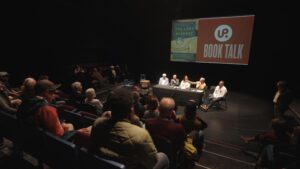 A new book sharing the history of the Chacachas Treaty Nation was launched this month. It’s filled with inspiring stories of their Elders, leaders and citizens who have persevered for generations despite the many obstacles put in place by colonial practices and processes.
Our kēhtē-ayak remind us that Treaty is written in our lands, in our shared histories, languages, songs, ceremonies, traditions and laws and so our Treaty histories remain strong and alive.
By bridging the oral and the written, we confront the silencing and erasure of Treaty histories from mainstream education systems and help create a common understanding of Treaty grounded in truth.
The Lost Reserve: The Taking and Remaking of the Chacachas Treaty Nation, co-authored by historian Dr. Kenton Storey and the Chacachas Treaty Nation (with a foreword by Chief Charlie Bear) draws on extensive 150-year oral history and archival documents to provide readers with the truth of its Treaty history.
This history is a testament to the âhkamêyimow or the strong spirit and will of the Chacachas Treaty Nation to persevere for more than seven generations. Their struggle for justice is ongoing.
The book launch opened with a prayer by the oldest kēhtē-aya of the Chacachas Treaty Nation and an in-depth dialogue moderated by Kathy Walker, Treaty Commissioner, with Chief Charlie Bear, Tom Waller, Dr. Kenton Storey and Peter Watson, with additional commentary provided by long-time grassroots leader, Heather Bear.
To order a copy of the book, published by University of Regina Press, please go to this link: The Lost Reserve: The Taking and Remaking of the Chacachas Treaty Nation.
Photos provided by Jimi Leigh Kinistino, WÂHKÔHTOWIN MEDIA.
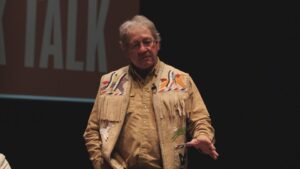
Remembering Morley Maier
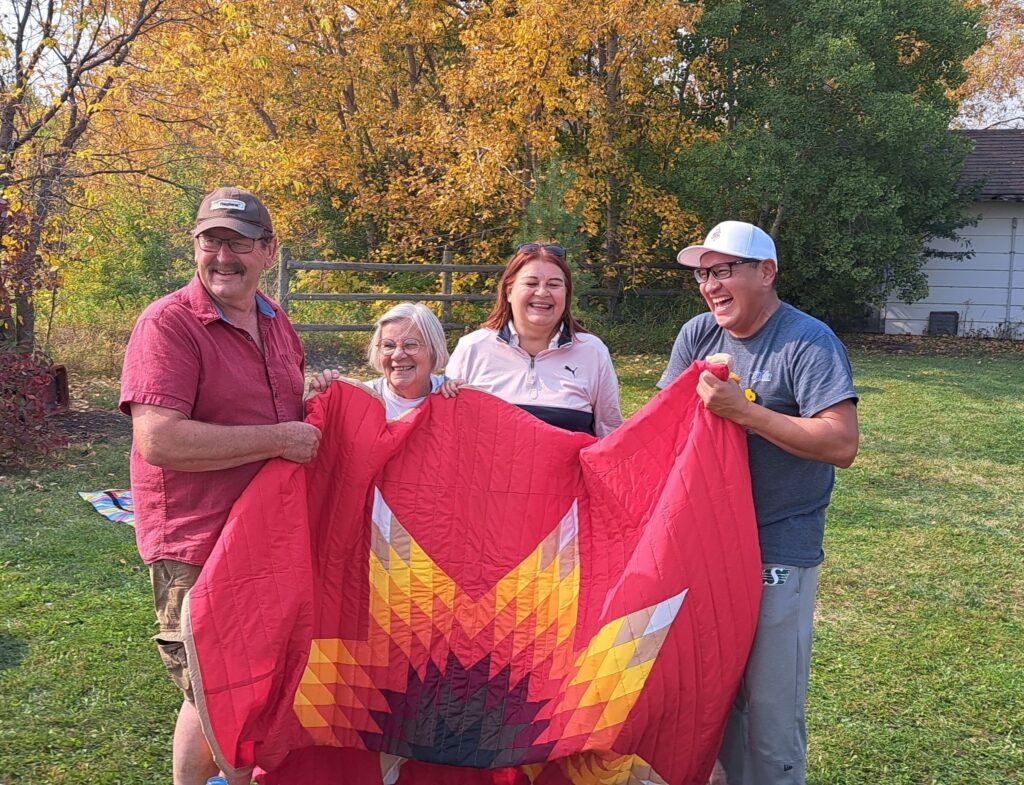
 The Office of the Treaty Commissioner was saddened to hear of the death of Morley Maier.
National Day for Truth and Reconciliation 2026
 The National Day for Truth and Reconciliation, also known as Orange Shirt Day happens Sept. 30. This day has become an opportunity to recognize and commemorate the history and ongoing impact of residential schools, while honouring the survivors, their families, and communities.
Spirit and Intent
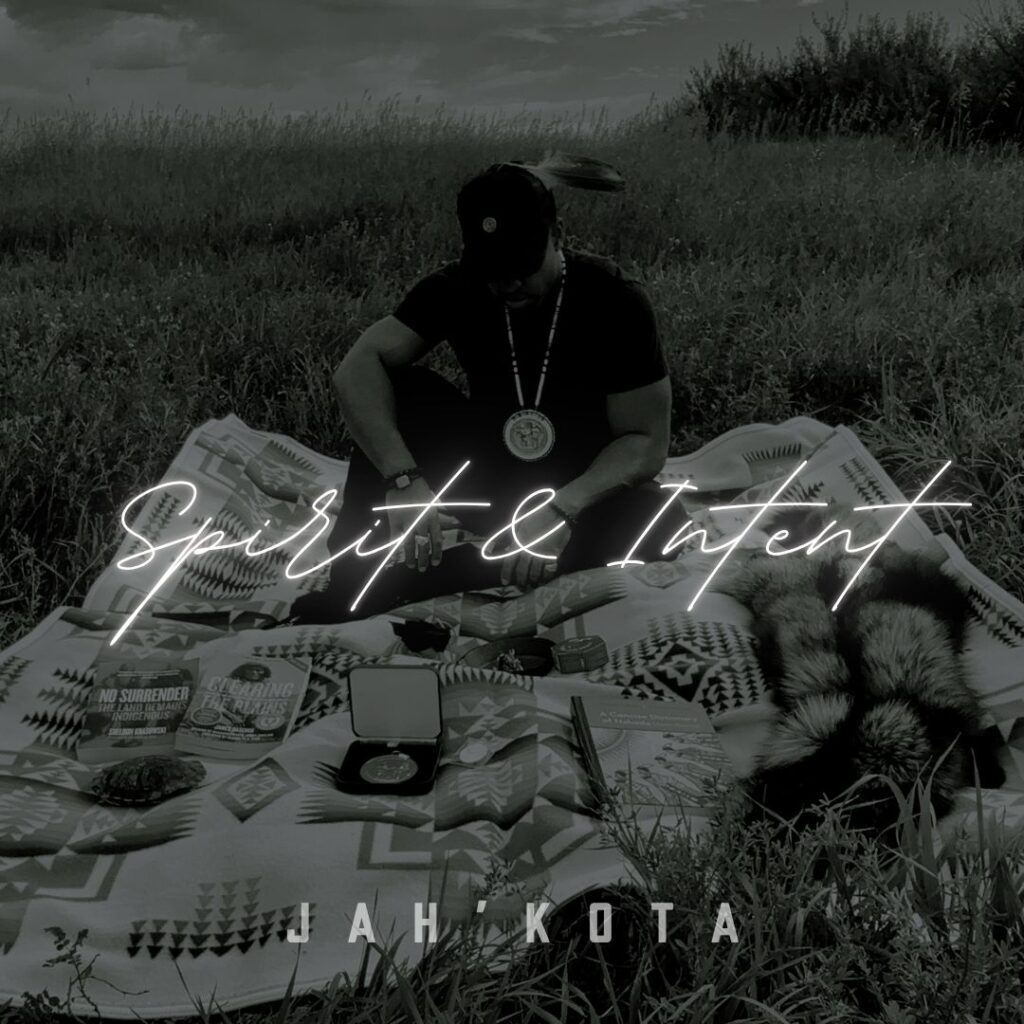
 Spirit and Intent is a new song by Joh’kota released Sept. 15 that captures the significance of 150 years of Treaty.
Jah’kota, also known as Justin Holness, is a head person from Ocean Man First Nation.
As a Treaty leader and musician, his music-making also carries a message about treaty-making.
“Many of my songs I use as time capsules as an opportunity to share our story as First Nations people, but also as a productive educational resource for the broader community to know the true spirit of intent, and that we are all treaty people,” he said.
“It was important for me to make this song as a way to incorporate our truth, both the hardships, but also our resilience because as we continue to coexist within treaty territory.”
He wanted to be part of a broader education for Canadians because that is the foundation for living together and prospering with the true spirit and intent of treaty.
“I hope it encourages those who might be learning about it for the first time or hearing some of the truth I shared for the first time and they take it upon themselves to research and learn more about our treaty relationship,” he said.
Spirit and Intent is available on all streaming platforms or find @jahkotamusic on social.
Treaty 6 150 Commemoration at Fort Pitt
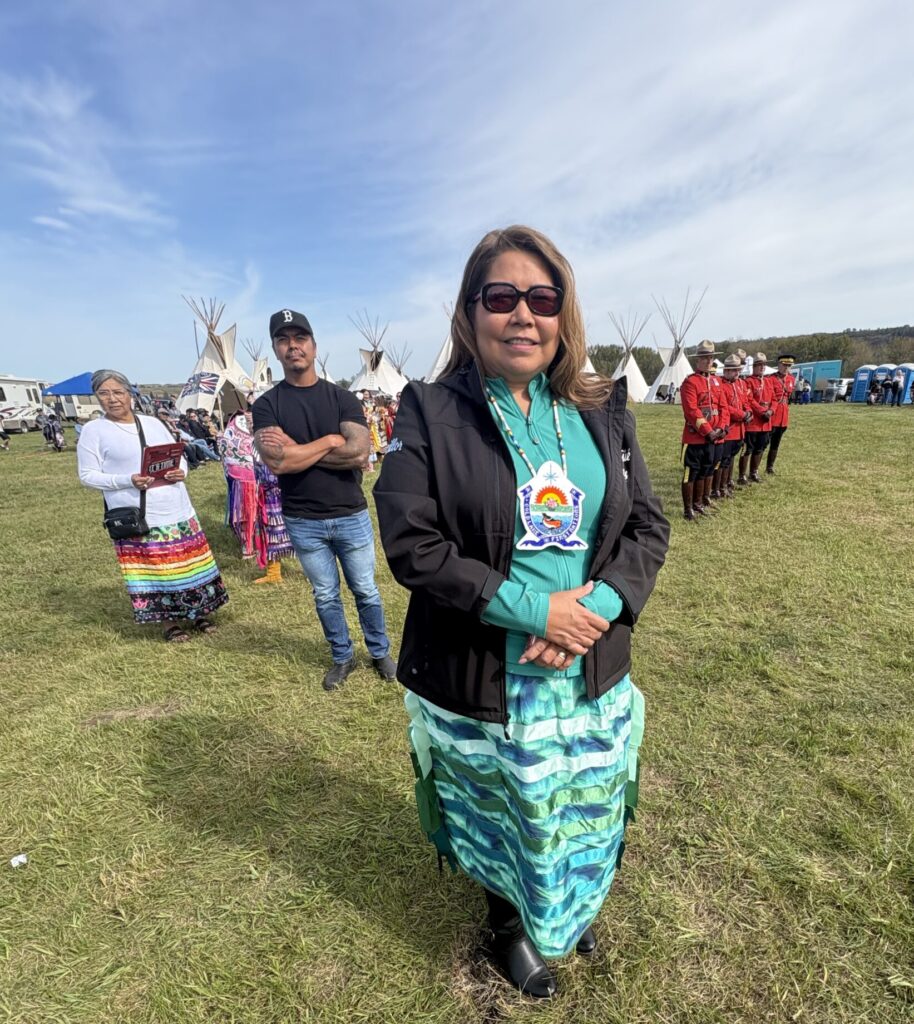
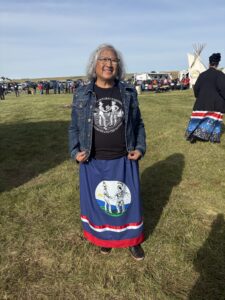
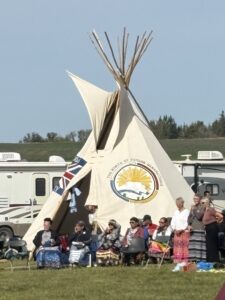
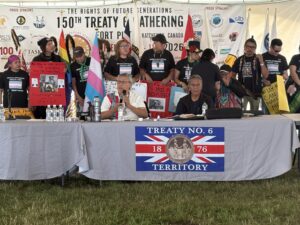
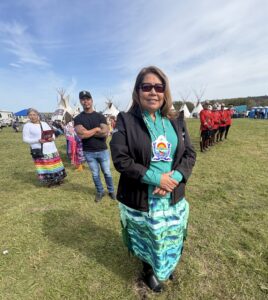 Hosted by the Onion Lake Cree Nation, the Treaty 6 150th commemoration at Fort Pitt last week featured Elders, Knowledge Keepers, leaders, and teachings on Treaty histories, culture, health, current issues, and the responsibilities of Treaty people.
The OTC wants to highlight the role of women and Two Spirit people as leaders and knowledge keepers that was clearly supported at the event. A media event held Sept. 9, announced that Saddle Lake Cree Nation was standing up to establish a safe haven for gender-affirming medical care.
“We remind you of your duty to protect all people and not perpetuate colonial violence,” said Saddle Lake Chief Dale Steinhauer. “No longer will our children and families have their rights taken away.”
The Fort Pitt commemoration and others are an opportunity not only to remember the past, but to strengthen relationships in the present and encourage all Treaty people to understand their role in carrying the Treaty relationship forward.
The original Treaty 6 manuscript also was on site at Onion Lake, the first time the document had been at this location in 150 years.
Honouring strength and resilience
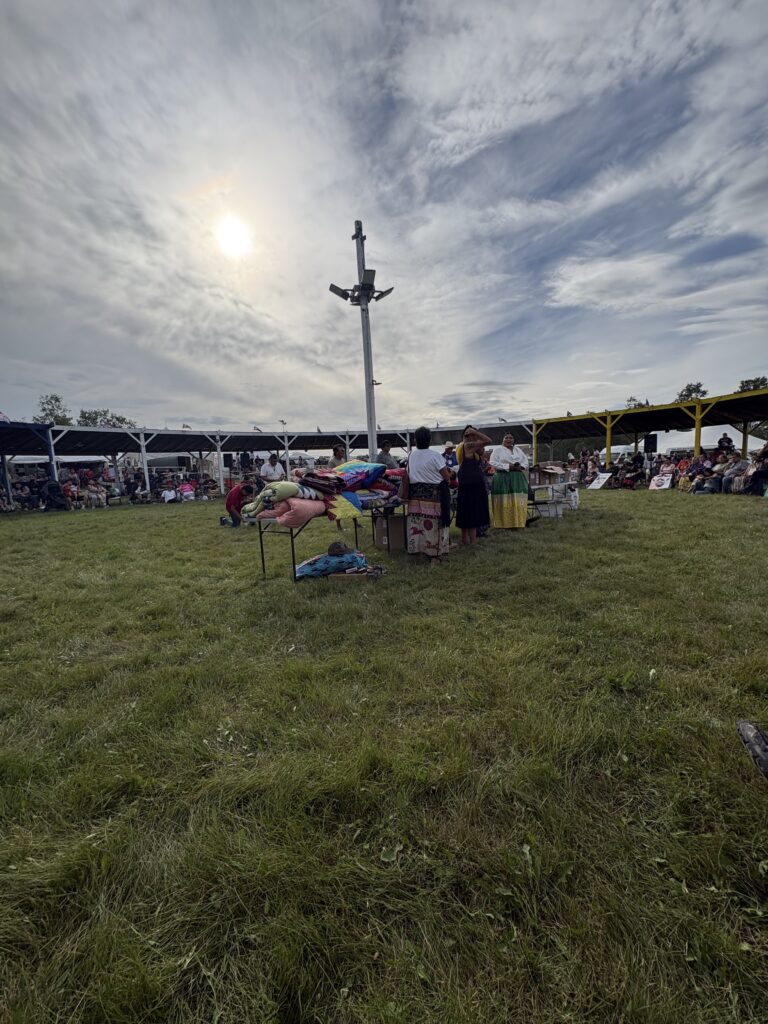
On Sept. 4, James Smith Cree Nation, Chakastaypasin Band of the Cree Nation and the Peter Chapman Band honoured and remembered the loved ones who were lost, the survivors, and their families on the 4th year anniversary of a tragic act of violence that claimed 11 lives and injured 17 others.
The ceremony recognized the strength and resilience of the nations and their citizens with families being wrapped in star blankets to surround and protect them with the strength and presence of their nations and ancestors. The family of the victim from Weldon was also honoured.
The Office of the Treaty Commissioner honours the strength and resilience of the nations and their work towards healing and prevention.
At the traditional memorial pow wow, Fawn Wood sang the song ‘Remember Me’ in touching tribute. Here are some of the words from her song:
Remember me (remember me)
When the sun comes up in the morning sky
There I will be (there I will be)
Soaring with the eagle so high
Feelin’ free
Remember me
Down the road
Hand in hand
You and me
Advancing Global Sustainable Futures
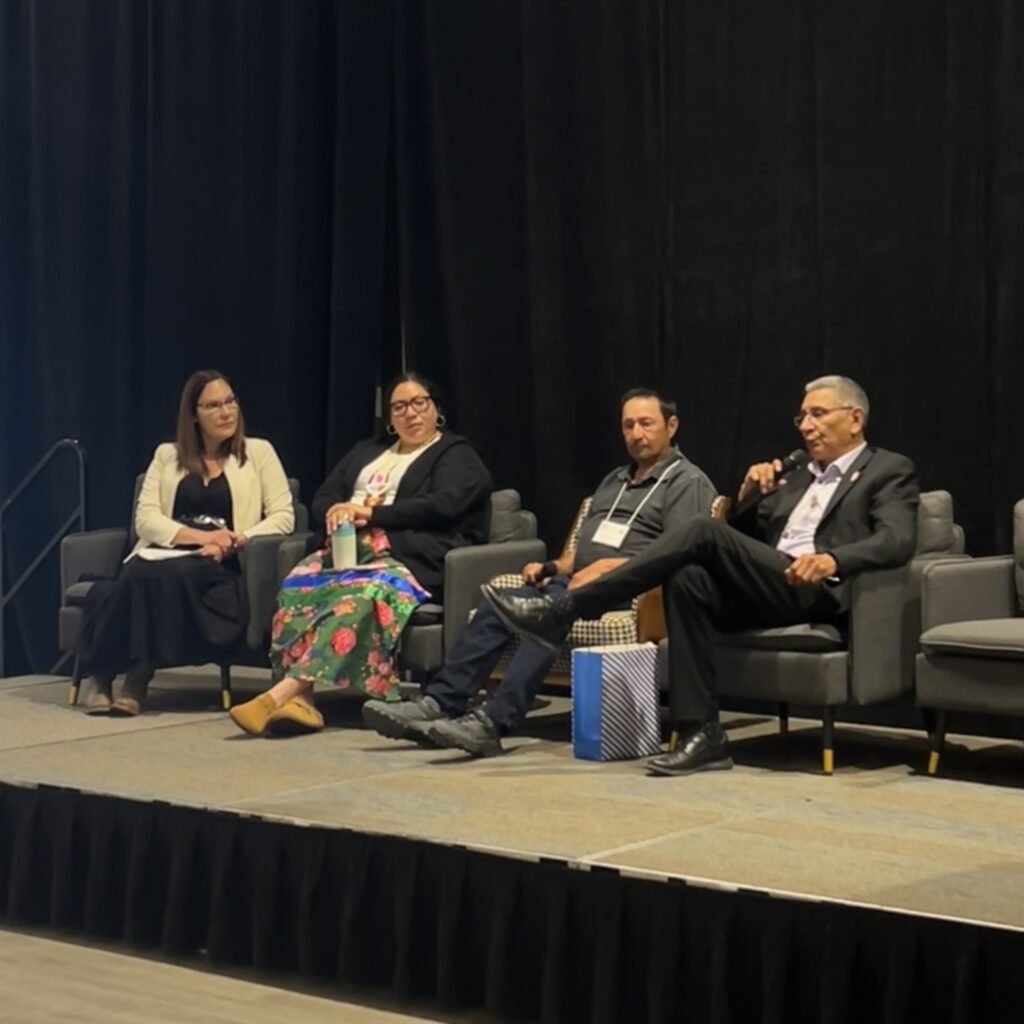
 This week the Federation of Sovereign Nations’ (FSIN) Lands and Resources Secretariat hosted a two-day First Nations Summit for Advancing Global Sustainable Futures in Saskatoon to focus on what sustainable water governance looks like from First Nations perspectives.
This second annual gathering on building sustainable futures brought together First Nations leadership, Elders, Knowledge Keepers, youth, practitioners, educators, and partners from government, industry, academia, philanthropy, and the non-profit sector to strengthen relationships, and explore practical pathways towards more resilient futures.
Treaty Commissioner Dr. Kathy Walker moderated the session on First Nations Water Governance and Legal Personhood Pathways with panelists, Shanice Mollen-Picard, Muteshekau-shipu Alliance; Chief Matthew ‘Todd’ Peigan, former Chief of Pasqua First Nation and a leader in water governance; and Barry Carriere, of Cumberland House Cree Nation.
Water governance from First Nations perspectives is key to exercising inherent jurisdiction, livelihoods and a way of life grounded in the health and well-being of our water bodies.
Other discussions included First Nations water, land, habitat, and resource stewardship; food sovereignty, agriculture, soil health, and climate resilience; major projects in clean energy and emerging technologies; Inherent and Treaty rights, legal personhood, and rights-based approaches to sustainability.
Treaty 6 manuscript returns to traditional territory
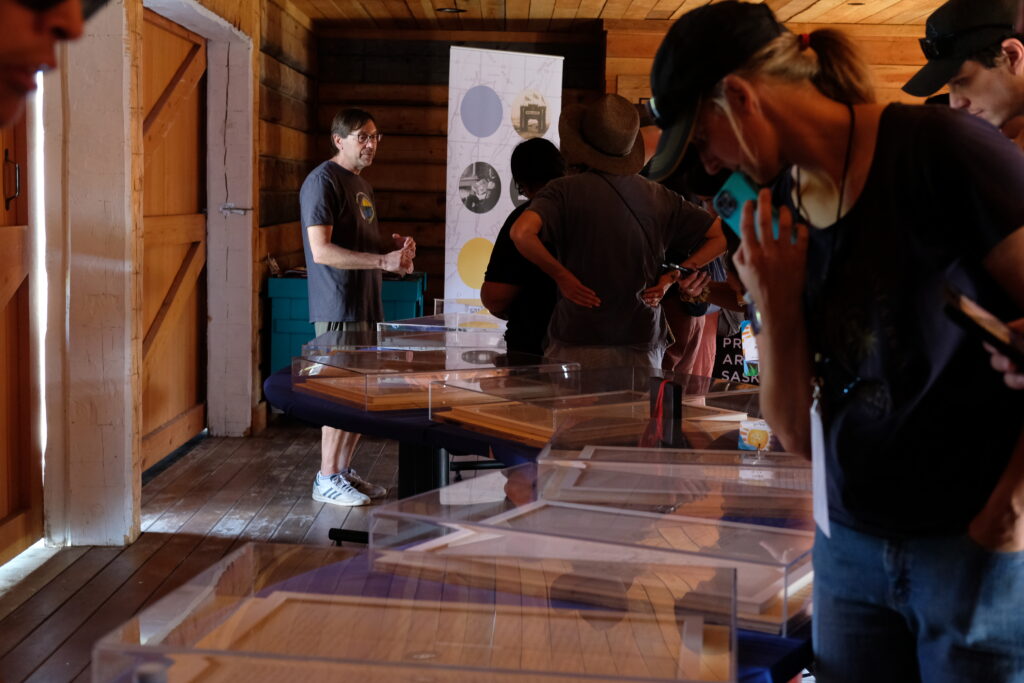
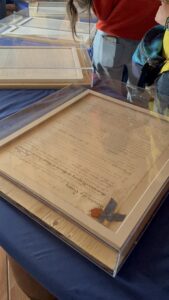 The Office of the Treaty Commissioner worked alongside Beardy’s & Okemasis Cree Nation to bring the original Treaty 6 manuscript back to its traditional territory for the 150- year commemoration.
“This is the first time in 150 years that Treaty 6 is back in Treaty 6 territory. The original text,” said Eli Worme, a summer student in the Research and Archives department at the Office of the Treaty Commissioner.
“For the last 150 years, it’s been stored at the preservation society though Library and Archives Canada in Gatineau, Quebec right across the river from Ottawa.”
About 18 months ago Chief Edwin Ananas started the process, and with the support of OTC the manuscripts will b brought to four Treaty sites this summer/fall – Fort Carlton, Beardy’s Campsite, Fort Pitt / Onion Lake and Enoch Cree Nation.
There had to be arrangements for insurance, specialty shipping, and keeping the manuscript out of direct light, said Research and Archives director Sheldon Krasowski.
“In fact, this document has never been on display to the public until now.”
Krasowski said there has been a range of emotions for people who see the 10 pages of documents. This is particularly true for “descendants who see the chiefs who they have ancestral ties to, when they see their name on the Treaty, they are very emotional.”
It has also been a good learning experience for non-First Nations on the Spirit and Intent of Treaty, he said.
“The first thing that happened at Treaty 6 was a Pipe Ceremony. That’s the most important part. The connection to the Creator, then we talk about the Spirit and Intent, wahkôhtowin, the brother-to-brother relationship between First Nations and newcomers,” Krasowski said.
“We also talk about the negotiations themselves, the chief’s speeches, what was actually agreed too. Then finally we have the Treaty text, it’s the least important part of Treaty but it does shed light on the negotiations here at Fort Carlton.”
The Treaty will travel to Beardy’s for Aug. 28, then on to Fort Pitt / Onion Lake in early September.
OTC at Treaty 6 150 Commemoration
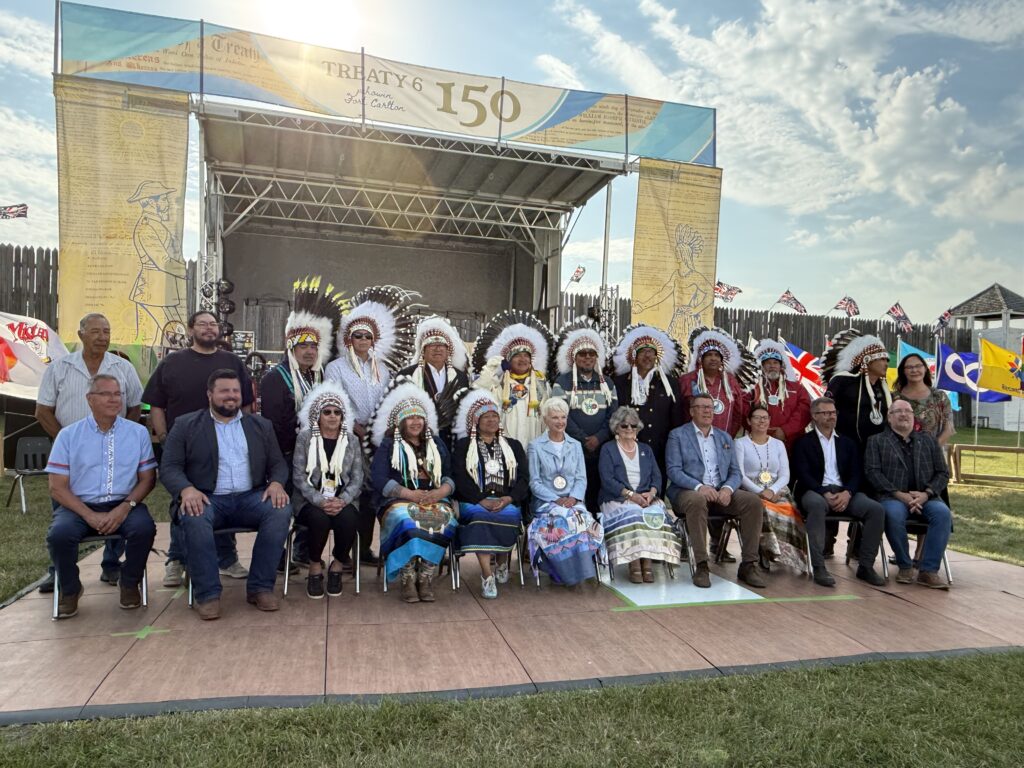
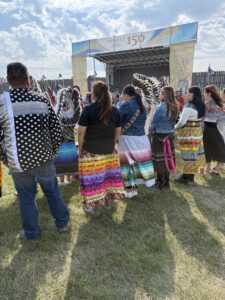
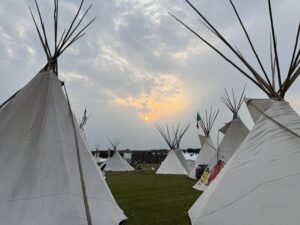
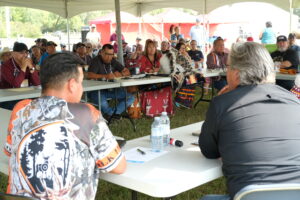
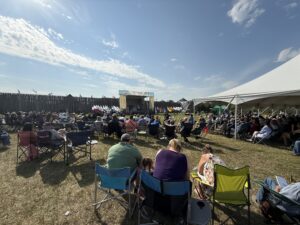 The Treaty 6 150 Commemoration was four days of connecting with the land, one another and the spirit and intent of Treaty 6 at pēhowin / the waiting place.
“It’s just been such an incredible four days and I’m just so grateful to have been able to experience it and be a part of it,” said Treaty Commissioner of Saskatchewan, Dr. Kathy Walker.
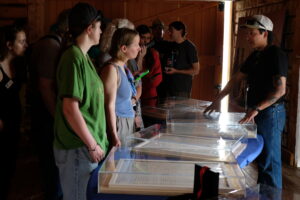
The Office of the Treaty Commissioner team worked alongside Pêmiska Tourism and Beardy’s & Okemasis Cree Nation to organize the events. On Aug. 20, the riders from the Unity Ride were some of the first Treaty 6 leaders and citizens to arrive at the gathering. There was a beautiful village of nations, tents for Elders and Youth, and the opportunity to view the original Treaty 6 manuscript and Treaty bundle over the weekend.
“I think my favourite part of this couple day commemoration event was being able to see the Treaty 6 manuscript for the first time laid out in the Treaty house that was very special,” said Eli Worme, who works with the OTC. He stood for hours every day talking with people to answer questions and help people understand the significance of the historic documents.
The ceremony of the Treaty bundle was pivotal. The Governor General of Canada, Louise Arbour, was there to take part as the representative of the Crown.
“My highlight of this whole commemoration was to be a part of the actual Treaty bundle and having to hold it, pray over it, and share it with the Governor General… I will never forget being a part of that history and seeing history inside that treaty bundle,” said Beardy’s and Okemasis Chief Edwin Ananas.
“It was just such a moving, powerful experience and something I will never forget,” said Commissioner Walker.
Benji Noon is a filmmaker who works with the OTC’s digital archives.
“My biggest highlight was being able to take time and reflect on this momentous occasion. It’s a time to look back. It’s a time to see where we are, and it makes me hopeful for the future,” he said.
Remembering Colten Boushie
Today marks 10 years since Colten Boushie was fatally shot on Aug. 9, 2016.
His death drew attention from across Canada and sparked a conversation about racism and discrimination in Saskatchewan.
Colten was a son, brother, and friend, whose young life was cut short. His story remains a call to action for justice and change. We take time to remember today because we want a better future.
Ten years later there is still the need to battle racism, to learn more about Indigenous culture and worldview, and to bring justice for missing and murdered Indigenous Peoples.
To honour Colten’s memory, we stand in solidarity with his friends and loved ones and with all people facing racism or hate in Saskatchewan and we work towards a future where all people can live in safety.
Watch nîpawistamâsowin: We Will Stand Up to learn more about Colten’s story.