
Posts by Angela Hill
OTC at the National Gathering on Unmarked Burials
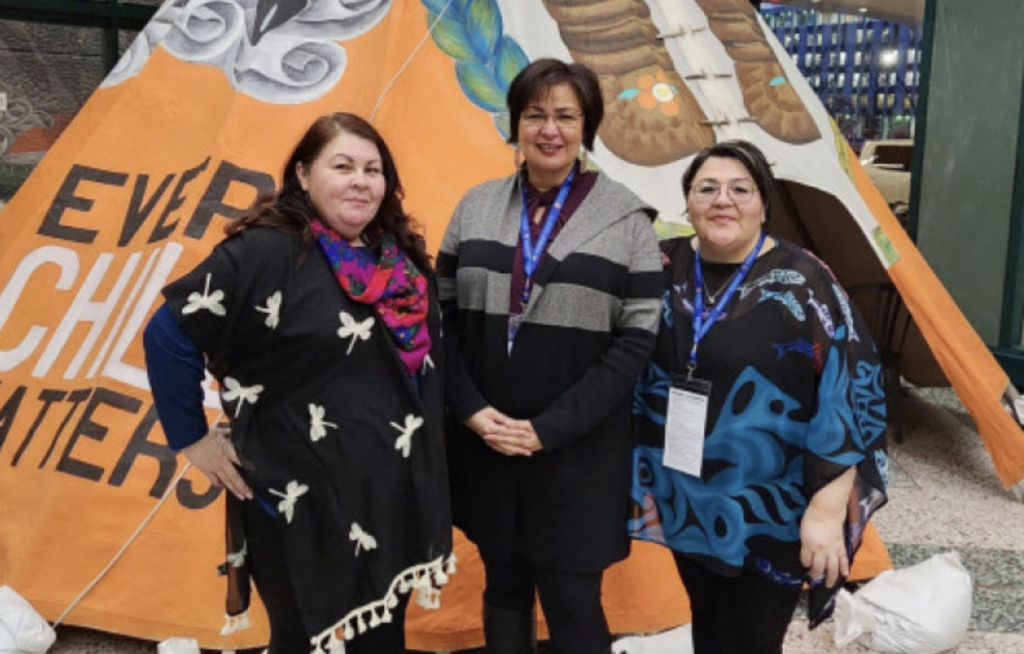
 Treaty Commissioner of Saskatchewan Mary Culbertson, and members of the Office of the Treaty Commissioner team were honoured to attend the second “National Gathering on Unmarked Burials: Addressing Trauma in the Search and Recovery of Missing Children” in Winnipeg this week.
The event, which finished Nov. 30, was hosted by the Independent Special Interlocutor, in partnership with the National Centre for Truth and Reconciliation.
It was about addressing trauma and healing during the search and recovery of missing residential school children.
“Coming together to heal and having support and resources to do this is such an important part of this process,” said Commissioner Culbertson.
“The residential school system is about the failed Treaty promise of education; we need solidarity to heal, especially during recovery work.”
Senator Murray Sinclair, chair of the Truth and Reconciliation Commission, spoke as the key note on Monday about unresolved grief, community trauma, and the power of people helping one another to heal.
If you are a Survivor and need emotional support, a national crisis line is available 24 hours a day, seven days a week: 1-866-925-4419. Emotional, cultural and professional support services are also available to Survivors and their families through the Indian Residential Schools Resolution Health Support Program. Services can be accessed on an individual, family or group basis.
Healing Together Through Kindness Conference
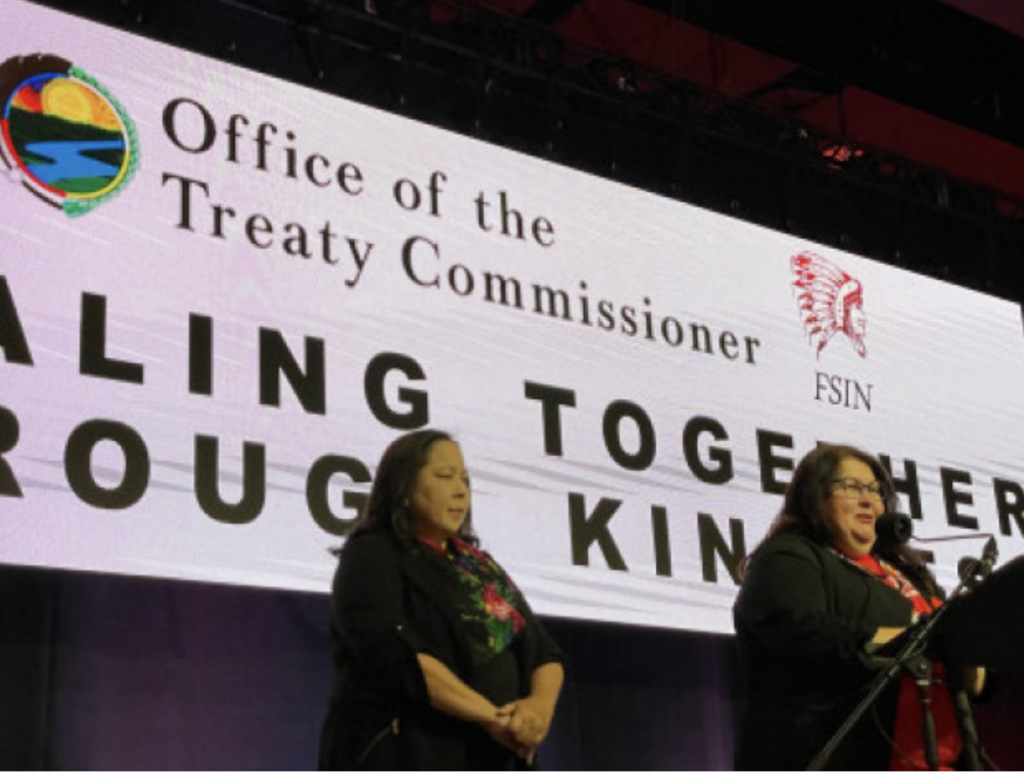
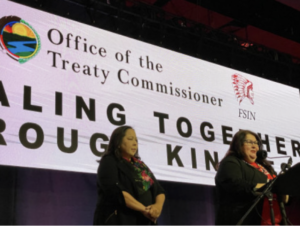
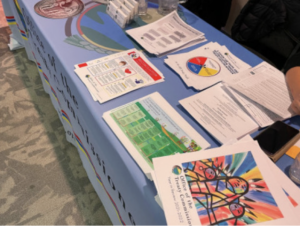
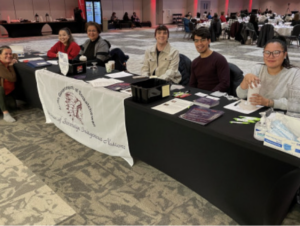
 A conference hosted by the Office of the Treaty Commissioner of Saskatchewan and Federation of Sovereign Indigenous Nations, Healing Together Through Kindness, talks about rights and healing.
Nov. 9 focuses on Lateral Violence/Lateral Kindness and Nov. 10 on the United Nations Declaration on Right of Indigenous Peoples.
“Before we talk about the rights agenda we need to talk about healing,” said Treaty Commissioner Mary Culbertson.
“We need to talk about healing within ourselves or within our nations and that starts with kindness.”
By being kind to one another, we can tackle the legacy of residential school, the broken Treaty promises, and change the systems that weren’t built for everyone, she said. Reminding people that how we treat each other is what youth see.
The conference gives attendees from across Saskatchewan the opportunity to share their stories, as well as educate and support one another.
“We heal people by the way we treat people,” said FSIN Chief Bobby Cameron during the opening session.
“Those acts of kindness go a long way, not only for ourselves, but for those who are healing.”
OTC attends October Treaty Medal ceremonies
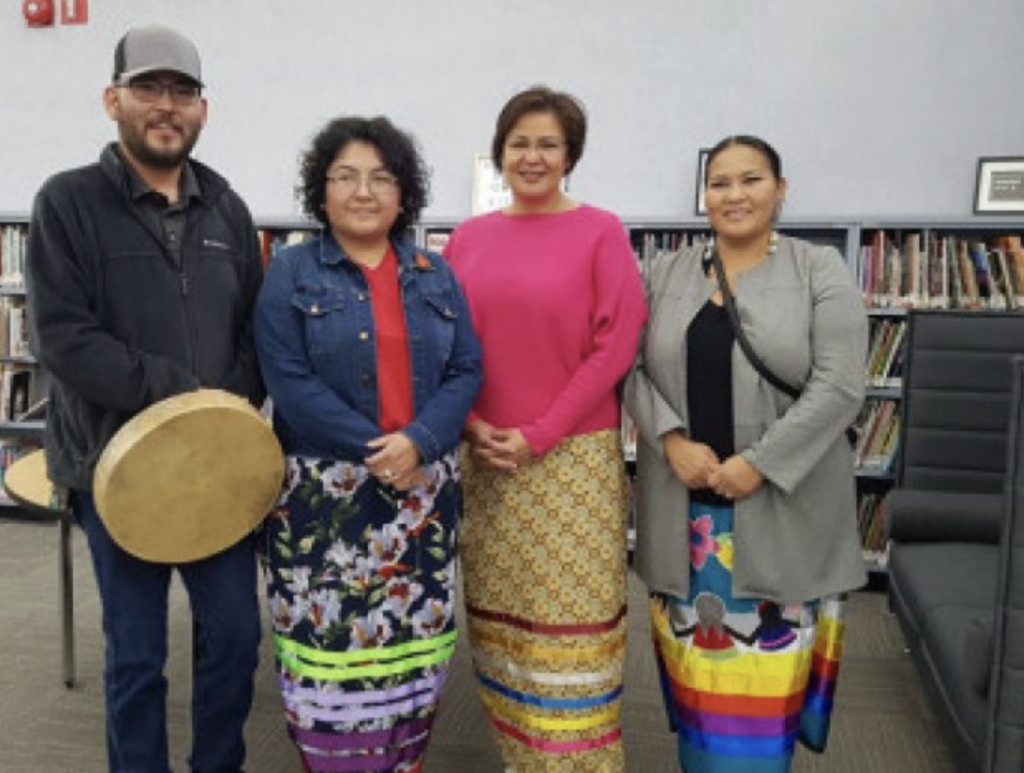
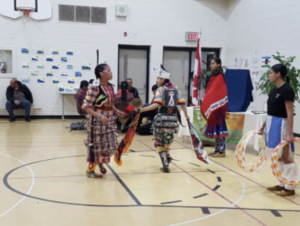
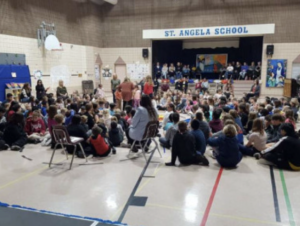 The Office of the Treaty Commissioner was pleased to attend two events in October honouring flags and Treaty medals.
On Oct. 20, Bishop Pocock School had an event featuring students in school performances, dancers, and speakers from across the community, including OTC Director of Treaty Education Elaine Sutherland. It was a Treaty 6 Medal ceremony and Treaty 6 Flag blessing.
The next day at St. Angela School, the Director of Treaty Education spoke at an event honouring the Treaty 6 Medal and the Métis Flag with performances and information sharing.
The OTC is happy to be able to attend these important events that show the emphasis being placed on Treaty in the classroom. We see this as an important step in reconciliation.
OTC hosts Reconciliation gathering
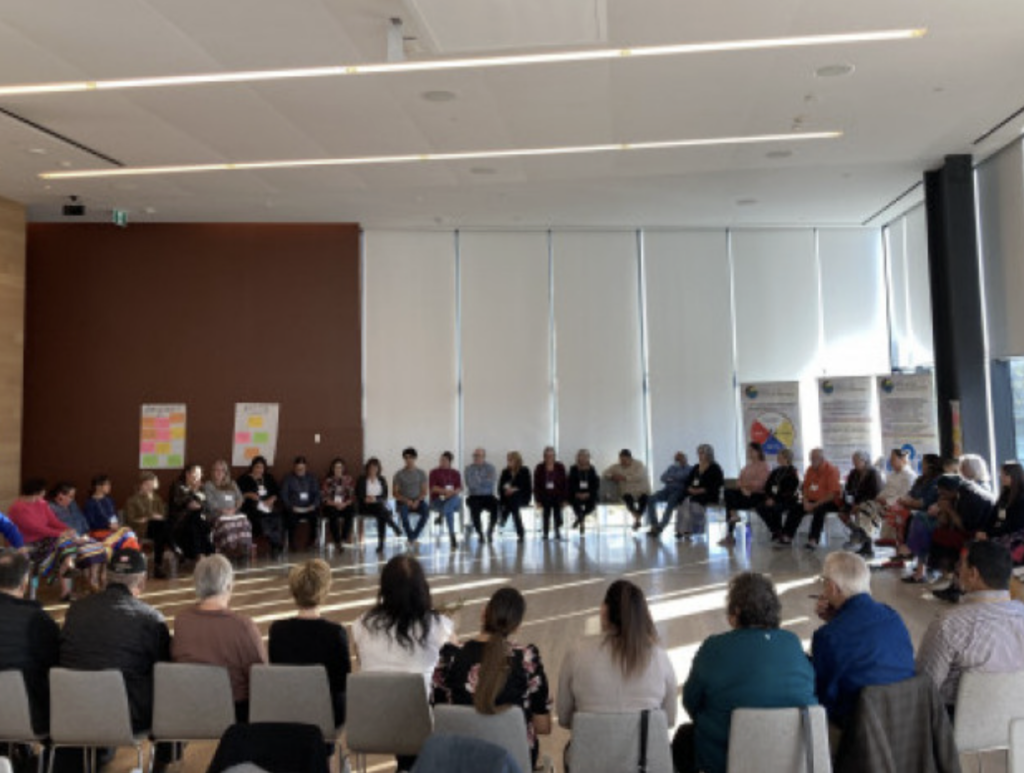
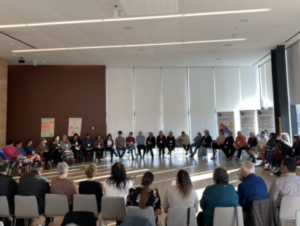 On October 17 and 18, about 70 people from across Saskatchewan gathered at the Remai Modern in Saskatoon to talk about moving reconciliation forward.
Hosted by the Office of the Treaty Commissioner, the group of Elders, donors, and members of 10 Reconciliation Circles across Saskatchewan came to share stories and discuss what impact they wanted to have in the coming months and years.
“The goal as we are coming out of COVID was to re-energize, build and strengthen relationships, and think about where we are, where we want to go and how we’re going to get there,” said Rhett Sangster, Director, Reconciliation and Community Partnership at the OTC.
“We pulled together 70 people and we created a ‘we’ in two days. There was a lot of positive energy, a lot of smiles, and a real sense of hope among this very diverse group of people.”
There was ceremony, inclusion of Indigenous language, and support from Elders throughout the retreat.
In terms of challenges to advancing reconciliation work, the groups and individuals discussed resourcing, how to communicate the work, how to organize, and how to overcome resistance to the reconciliation movement.
They weren’t looking to find answers and solutions in only two days, but rather to figure out ways to work together and create an agenda to move forward.
“We talked about Indigenous and non-Indigenous ways of being together, a new way of doing things that seeks wisdom from all sources,” Sangster said.
“It was awesome, it was a really good gathering.”
OTC forms Elders Council for policy and protection of Treaty Oral Histories

Using funds from the Council on Library and Information Resources (CLIR) the Office of the Treaty Commissioner created an Elders Council to promote and protect Treaty oral histories. The OTC has a large collection of recorded Treaty oral histories currently undergoing a process of digitization to ensure their preservation. Once digitized, the Elders Council will review which oral histories can be shared with a larger audience.
Most of the Treaty oral histories in our collection were recorded to be shared, but some contain information on ceremonies or family histories. Many of these will have restrictions on viewing, but the restrictions will be defined by the Elders Council. The Elders Council (in collaboration with the Treaty Commissioner) will also define their role with the OTC toward implementing the spirit and intent of Treaties Four, Five, Six, Eight and Ten.
The OTC Elders council was selected by Treaty Commissioner Mary Culbertson and includes 14 Elders and two youth members from all five Treaty Areas in Saskatchewan. The Elders Council meets 4 times a year with the first meeting held at Wanuskewin Heritage Park on Sept. 29.
Although newly added to the Council, many these Elders have long standing relationships with the Office of the Treaty Commissioner.
Elder Jacob Bill advised the Treaty Table in the 1990s and 2000s and contributed to the Treaty Elders of Saskatchewan book: Our Dream That We May One Day Be Clearly Recognized as Nations.
“I am happy to share my teachings, but I am also happy to take the teachings from these Elders back to my home community*” he said, emphasizing that by coming together, Elders also return to their home Indigenous Nations to share knowledge and teachings.
“When you take a single blade of sweetgrass and pull from each end, it breaks. But if you braid sweetgrass it cannot be broken.” Elder Wapass Greyeyes said at the end of the first meeting. She said she was happy that Elders from all the Treaty areas are coming together to make Treaties stronger.
*Elder Jacob Bill’s statement was translated from Cree by Elder A. J. Felix, for which the Office of the Treaty Commissioner is grateful.
OTC celebrates first ever Treaty boundary sign installed on Saskatchewan highway
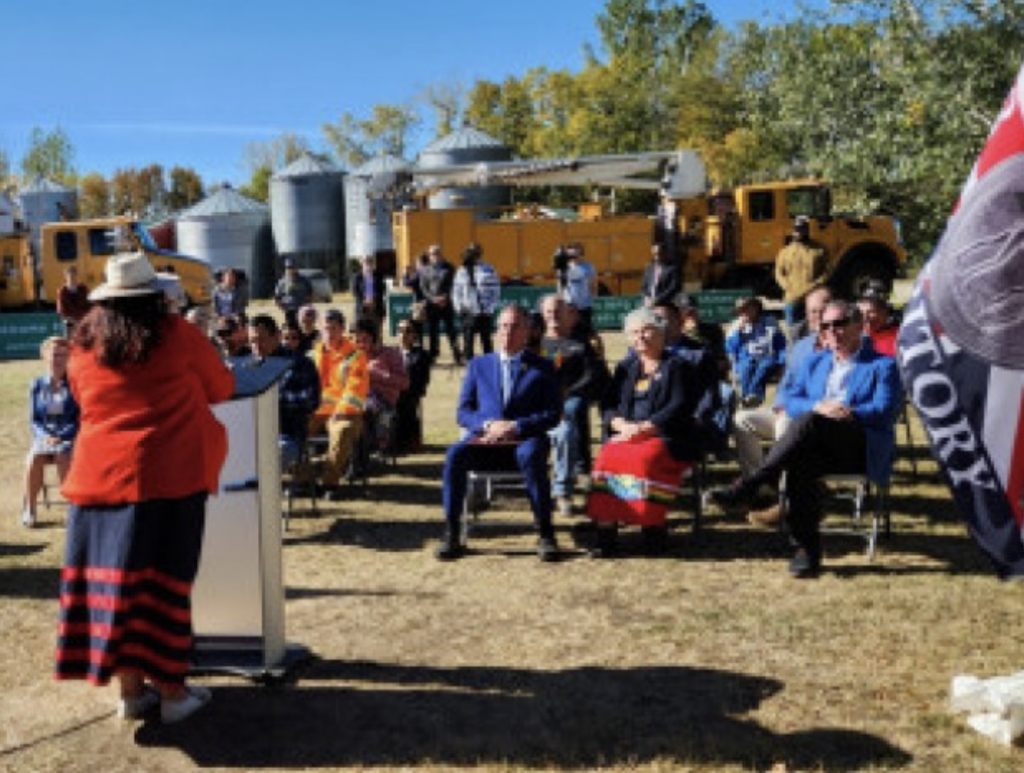
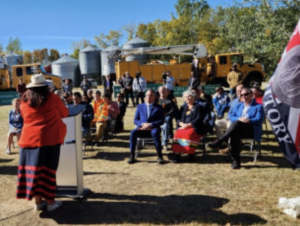 The Treaty Commissioner of Saskatchewan attended the installation of the new boundary signs marking Treaty 4 and Treaty 6 along Highway 11. These signs are part of the ongoing work by Office of the Treaty Commissioner to increase awareness and knowledge of Treaties and the Treaty relationship in Saskatchewan.
“A sign seems like a small action, but it represents something significant. It is common sense to acknowledge the Treaty boundaries, these Treaties were here before the province was created and before roads were here,” said Treaty Commissioner Mary Culbertson.
The location of the signs, near Bladworth, was selected by Culbertson based on oral history descriptions contained within the OTC archives, Treaty text, local practicalities, information from ISC Canada and Saskatchewan Registry, and Geographic Information System for Treaty areas of Canada.
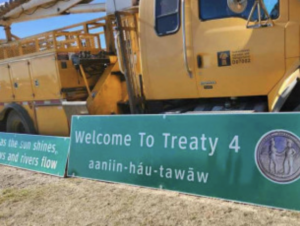
People travelling the highway towards Saskatoon will see the Treaty 6 sign, and those driving towards Regina will see the Treaty 4 sign. Each sign has an image of the Treaty medal, wording from the Treaties, and a welcome in the Indigenous languages of the respective Treaty areas. Ensuring the inclusion of Indigenous language was an important part of the sign, as Indigenous languages were here long before the two official languages of Canada.
The Government of Saskatchewan funded these signs as well as coordinated their production and installation.
“It is so important to see this project underway, we are starting with one sign, but hope to see this for all our Treaty boundaries,” Culbertson said. “There are Treaties 2, 4, 5, 6, 8, and 10. We will work with our knowledge keepers and the Elders Advisory Council to ensure that other Treaty boundaries that cross provincial highways will be marked with signs in the coming years.”
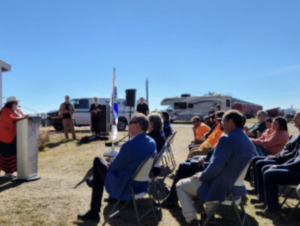
OTC at Treaty 4 Gathering
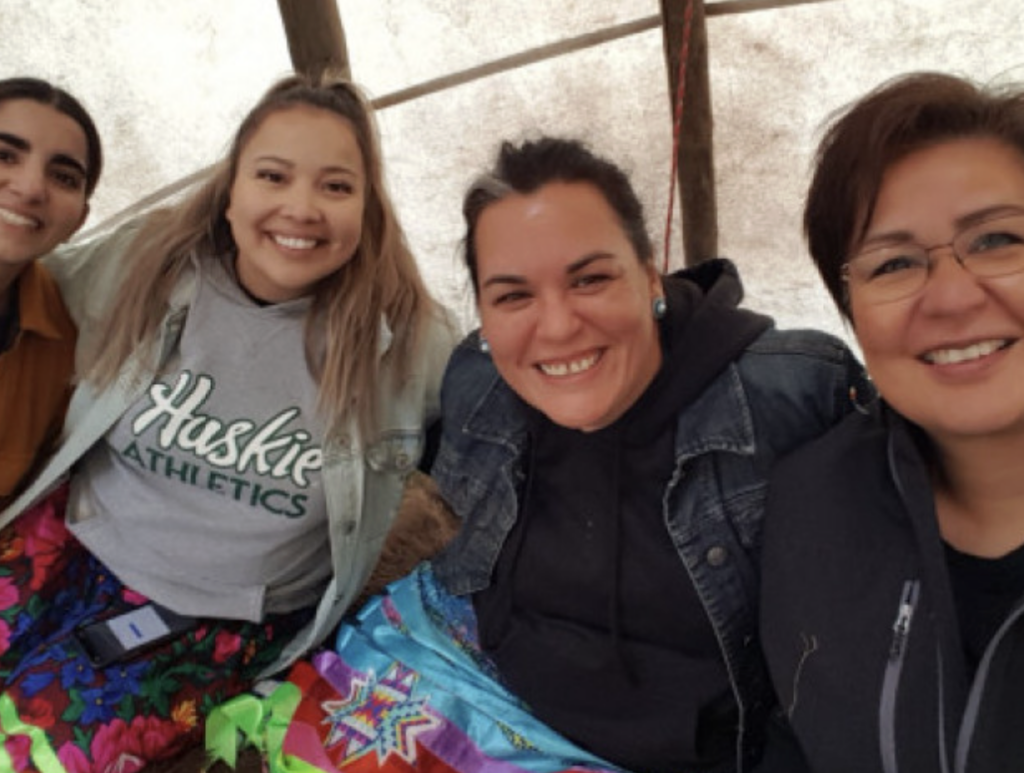
 Sept. 15, 1974 marked the anniversary of the signing Treaty 4 and the Treaty 4 Gathering celebrates that annually ever since. Many children, students, teachers, parents and grandparents take part in the daily activities and events organized by Treaty 4, including the Office of the Treaty Commissioner team.
Events have been running all week and included a Dry Dance, Elder’s Forum, Powwow, Parade, and so much more.
The OTC is there with our booth, sharing information, and happily taking part in all of the activities.
Statement from Treaty Commissioner of Saskatchewan Mary Culbertson on the passing of Her Majesty Queen Elizabeth II
The Office of the Treaty Commissioner recognizes the passing of Queen Elizabeth II today. We offer condolences to the Royal family and those around the world who held the Queen close.
As the head of the Crown, Queen Elizabeth II represented the Treaty relationship her grandmother Queen Victoria directed her officers to create. This was to be a direct relationship between First Nations and the Crown through Treaty.
Indigenous peoples have long had a complex relationship with the Crown. It was the monarchy that colonized what is now known as Canada, but it was also the crown that negotiated Treaties with Indigenous Nations. Those Treaties promised that the Crown would honour Treaty rights and Indigenous ways of life would be protected. We know this did not happen.
Queen Elizabeth II commemorated Treaties 6 and 7 on their centenaries by holding a reception at Buckingham Palace.
In 1987 I met the Queen during a cross-country Royal Visit when she, with Prince Philip, made a stop in Veregin, Saskatchewan. I was struck by her strength and dignity.
For the first annual National Day for Truth and Reconciliation in Canada in 2021, the Queen sent a statement saying she joined with Canadians “to reflect on the painful history that Indigenous peoples endured in residential schools in Canada, and on the work that remains to heal and to continue to build an inclusive society.”
In March this year, Queen Elizabeth met with the first Indigenous Governor General of Canada, Mary Simon, hosting her for tea at Windsor Castle.
Queen Elizabeth II listened during visits to Canada about Treaties not being honoured, and recognized the destructive role colonization played in Canada. Today on the passing of the longest reigning monarch as she reached the Platinum Jubilee year we honour the Crowns role in the Treaty relationship, and look to the next monarch, King Charles to do the work towards Treaty understanding and implementation, reconciliation of the genocide that colonization created and nation-to-nation relations.
Yours in service,
Treaty Commissioner Mary Culbertson
Office of the Treaty Commissioner calls for deeper engagement on First Nation and Métis Consultation Policy Framework
The Treaty Commissioner of Saskatchewan is calling on the Government of Saskatchewan to ensure there is meaningful participation in their First Nation and Métis Consultation Policy Framework (CPF), especially as it relates to Treaty and Aboriginal Rights, and Traditional uses of Land and Resources.
• Treaty and Aboriginal rights, such as the right to hunt, fish and trap for food on unoccupied Crown lands and other lands to which First Nations and Métis have a right of access for these purposes; and
• Traditional uses of land and resources, such as the gathering of plants for food and medicinal purposes and the carrying out of ceremonial and spiritual observances and practices on unoccupied Crown lands and other lands to which First Nations and Métis have a right of access for these purposes.
On Sept. 1, the Government of Saskatchewan announced they were looking for feedback on future revisions and not current policy, which negatively impacts the ability of First Nation and Métis communities to participate in Saskatchewan’s economy and contribute to the GDP.
“The Office of the Treaty Commissioner’s mandate is to educate and inform all people of the issues and matters that impact, in particular, the Treaty rights of First Nations Treaty people,” said Treaty Commissioner Mary Culbertson.
“It is up to the OTC to speak out on this critical matter and we are requesting a formal discussion with the First Nations, Métis and Northern Affairs Ministry. We want to see full engagement as laid out in the numbered Treaties, the UNDRIP Articles, and the TRC Calls to Action.”
The day the request for feedback was made, the OTC team was meeting with Standing Buffalo Dakota Nation on the very issue of consultation as failed Duty to Consult policies along with industry and proponent actions have been continuously affecting their stewardship and participation in the economy.
The Government of Saskatchewan needs to be setting the bar for consultation by having true and meaningful engagement with First Nation and Métis communities, and holding others as accountable.
Statement from the Office of the Treaty Commissioner on the James Smith Cree Nation tragedy
Our team at the Office of the Treaty Commissioner, like everyone in this province, is shocked and devastated by the tragedy that is unfolding in Saskatchewan. We are thinking of those families and communities who have lost loved ones and of those who were injured in these horrific acts of violence.
We offer our condolences to the people and loved ones of James Smith Cree Nation, Chakastaypasin and Peter Chapman Cree Nation and the town of Weldon.
We call on governments and people across the province to work together to ensure that the people of James Smith Cree Nation – James Smith Cree Nation, Chakastaypasin Band, and Peter Chapman Band – are supported and their resilience strengthened during this tragedy.
We ask that the state of emergency is respected as the community responds to his critical incident.
Our hearts break with those who are affected and we will support all those affected in any way we can.