
Posts by Angela Hill
Statement from the Office of the Treaty Commissioner on the appointment of Judge David Arnot to the Canadian Senate
The Office of the Treaty Commissioner is pleased to congratulate former Treaty Commissioner of Saskatchewan Judge David Arnot for his well-deserved appointment to the Senate of Canada.
Arnot was the second Treaty Commissioner of Saskatchewan, from 1997 to 2007, and during his time in the role he coined the term “We are all Treaty people” to capture the nature of the Treaty relationship in Canada. He was also a driver in the creation of the “Teaching Treaties in the Classroom Project” ensuring Treaty education was permanently a part of the Saskatchewan curriculum.
“Judge Arnot has a deep understanding of the pillars of treaty implementation and reconciliation and undertook this work long before it was popular. The Senate will be complimented by the knowledge that he has painstakingly and patiently acquired. He will be a voice of reason and compassion,” said Mary Culbertson, Treaty Commissioner of Saskatchewan.
Arnot remains a valued mentor to the Office of the Treaty Commission and speakers bureau member.
A Statement from the Treaty Commissioner of Saskatchewan
It has been an amazing week for women.
Kahsennenhawe Sky-Deer was elected the Grand Chief of the Mohawk Council of Kahnawake. She is the first LGBTQ2S+ and woman to hold the title in what’s been called a historic moment.
Mary Simon was selected as Canada’s first Indigenous Governor General. Simon is an Officer of the Order of Canada, and advocate for Inuit rights and culture in Canada. She rightly said, her appointment was historic and an important step forward in the long journey towards reconciliation.
Then we saw RoseAnne Archibald elected as the first woman national Chief of the Assembly of First Nations. Archibald has a long history of firsts including the female deputy grand chief Nishnawbe Aski Nation (NAN), for Mushkegowuk Council, and as Ontario regional chief.
We continue to see institutions embracing the role of women as leaders and we continue to break through the glass ceiling. Each woman who sits in a leadership role shows the next generation what is possible.
Congratulations to these new leaders.
Statement from the Office of the Treaty Commissioner
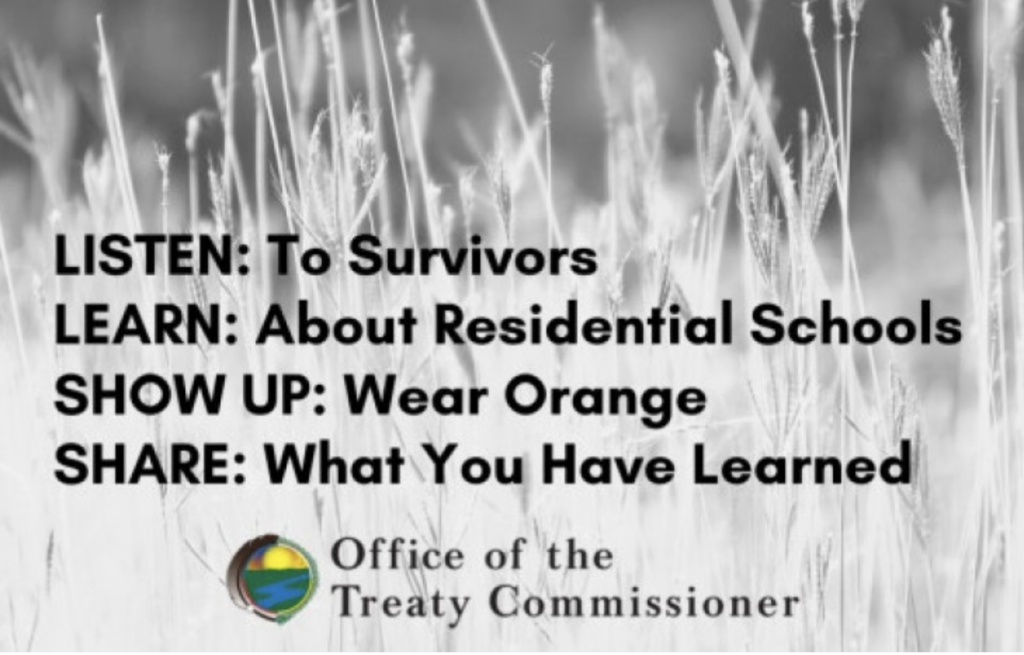
 It has been a difficult few months, finding the remains of children at two residential schools and knowing that the more we look the more will be found. For years Indigenous communities talked about the children who never returned home. This is bringing to light what they already knew and what can’t be denied now.
For others, the past month is shedding a new light of truth on the history of Canada.
This Canada Day consider wearing orange instead of red and white as some people do, we can do this to honour the truths we have to continue to understand. It’s also in honour of Indigenous Peoples and the Treaty relationships that are the base of Canada’s foundation.
Take time on July 1 to acknowledge what Indigenous Peoples endured in residential schools, during 60s scoop, and with the pass system. Take time to learn about residential schools, there is so much material available. Listen to the experiences of survivors, read the reports from Canada’s Truth and Reconciliation Commission.
As we work towards reconciliation, we can never forget that the truth of the history must come first. This Canada Day the OTC asks that people celebrate their resiliency, that all Canadians learn and educate themselves to understand why so many people are grieving all over again, are hurting so profoundly and work to repair the Treaty relationship. No other generation can endure what the others before us have, and experience what we are going through now. This is all based in racism, discrimination and assimilation. As horrific as the truth is Canada needs to face it. #HonourTheTruth #HonourTheTreaties
A national Indian Residential School Crisis Line has also been set up to provide support for former students and those affected. People can access emotional and crisis referral services by calling the 24-hour national crisis line: 1-866-925-4419.
OTC celebrates the graduates of 2021

 Graduation is a significant milestone in a person’s life. It is an accomplishment that deserves recognition especially for those students graduating after the unprecedented years we’ve had due to COVID-19.
With this in mind, the Office of the Treaty Commissioner is so pleased to congratulate all the graduates of 2021!
In this year’s graduating class are two of the OTC Youth in Service. These are students who completed their studies in class, but also took the time to be part of the work of reconciliation in Saskatchewan. Abby Blomquist and Hailey Rose, thank you for your participation, congratulations on your achievement, and best wishes as you take your next steps.
Always remember there is no limit to what you can do, believe in yourself, and show us all what you can accomplish. Take pride in how far you have come, we are looking forward to seeing how far you can go.
A Statement from the Office of the Treaty Commissioner
The Office of the Treaty Commissioner celebrates the passing of Bill C-5 by the senate. The bill will allow for the creation of a statutory holiday to commemorate the terrible legacy of residential schools in Canada.
This work that lead to this bill began in 2017, when former MP Georgina Jolibois, from La Loche and the Clearwater River Dene Nation, introduced a private member’s bill. She sought to establish a day for “reflection and celebration of Indigenous history and contributions to our collective society.”
It did not pass at the time, but current Canadian Heritage Minister Steven Guilbeault introduced Bill C-5 in committee in 2020. During the senate readings last week, Guilbeault said the objective of the day is to create a chance for Canadians to learn about and reflect the dark chapter Cana’s history and to commemorate the survivors, families and communities.
The OTC knows that truth must come if we are ever to have reconciliation, and while it can be painful, it is important that we have the opportunity to understand these truths and our history.
We thank Georgina Jolibois for taking from the Truth and Reconciliation Commission’s recommendations and starting the work towards creating a National Day for Truth and Reconciliation.
This is another small step in a long journey to see reconciliation in Canada.
OTC encourages learning more about residential schools
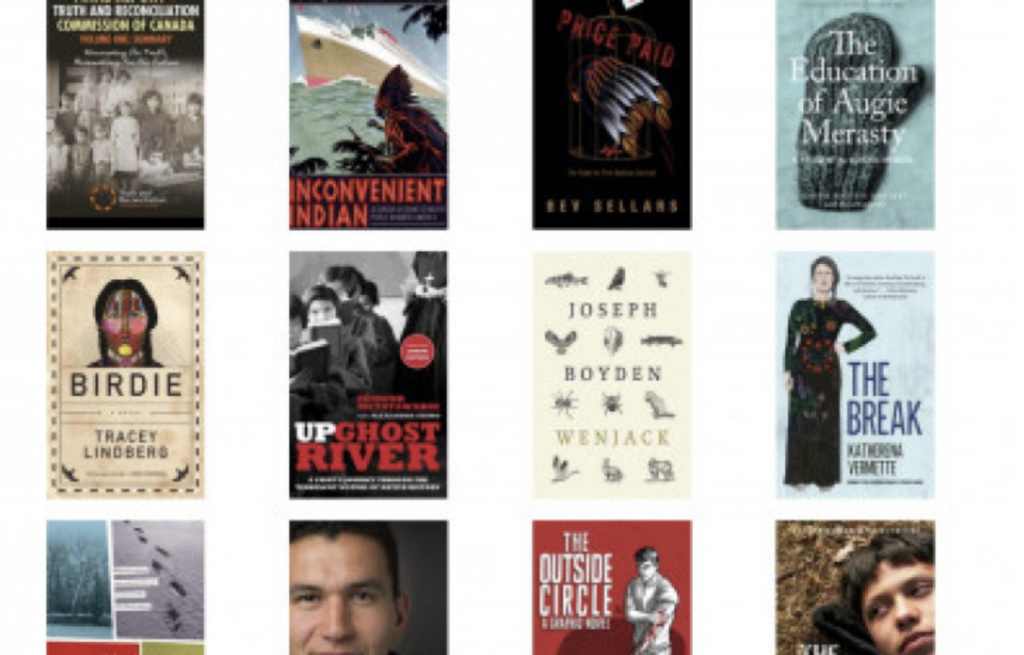
 It continues to be of incredible importance to learn about residential schools and the lasting impact they have had on the lives of so many families.
The Office of the Treaty Commissioner understands that more and more people are interested in being part of reconciliation. That journey needs to be grounded in truth and a shared understanding of our history. Reading about residential schools through the eyes of those who attended them is a good way to start.
The OTC created a list of suggested readings to help further understanding of the residential school experience and its legacy.
You can also read about some of the experiences being shared in light of the remains of 215 children found buried outside the former residential school in Kamloops.
Statement on the discovery of remains at a residential school
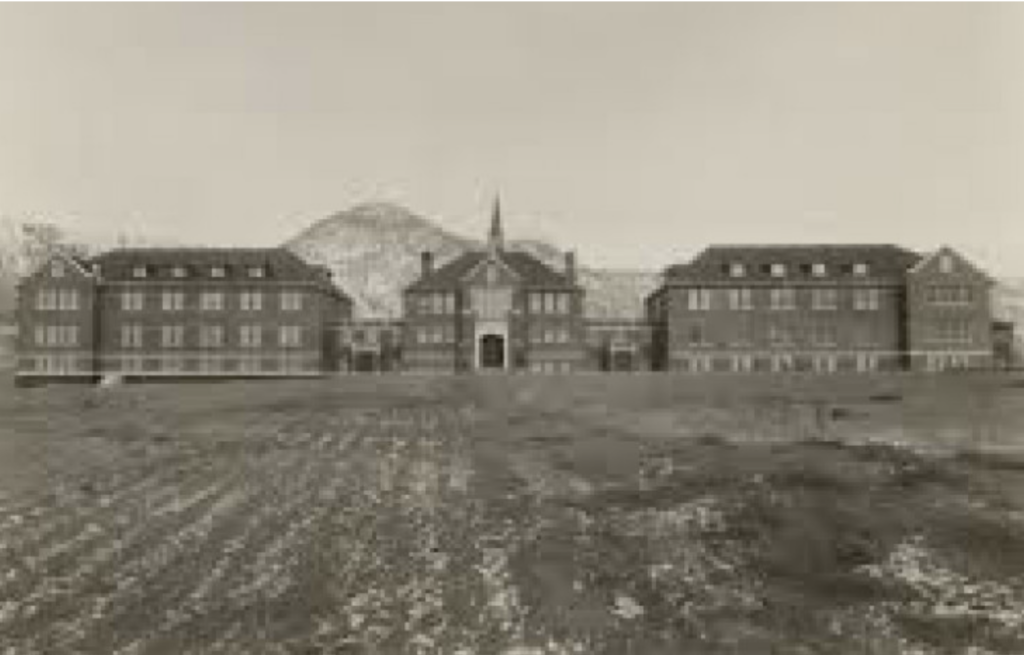
 The recent discovery of 215 children found buried near residential school in B.C. moved the Treaty Commissioner of Saskatchewan to write a column for the Toronto Star. (Trigger warning: this piece may be distressing for some. The National Indian Residential School Crisis Line is 1-866 925-4419)
We’re sharing excerpts from the article here.
“I came from Keeseekoose had the shadow of Fort Pelly, or St. Philips Residential School, then day school casting an awful legacy on our nation.
I grew up hearing the stories, and there was never a single good one.
We would play scary games and listen for things that went bump in the night. We felt that place was creepy, that spirits lived there and that bad things happened there. It was just something you always knew. The fear was instilled in us: You don’t go there.
A lawyer friend in Toronto sent me a link Thursday night to an article about Kamloops residential school and the bodies that had been found there.
Reading the article this week was horrifying, heartbreaking and triggering. I was shocked at its existence, in some ways, because now it’s all real – right in front of Canada. The graves have been found.
It is something we as Indigenous people know: that children died, that children were killed, that there were graves, that children were never seen again. Oral history and loud secrets in communities are common; there are things you don’t talk about.
The true nature of the schools, their purpose and their legacy was revealed to the world through the Truth and Reconciliation Commission that was struck from the Indian Residential School Agreement implemented in 2007.
The TRC reported that approximately 3,200 children died in the residential schools and the National Centre for Truth and Reconciliation, based in Winnipeg, has created a registry of children who died in the schools. We know as Indigenous people this was not all. Now the rest of the world knows too; it is the truth.
I am the first lawyer from my nation, I am the first woman Treaty Commissioner of Saskatchewan, I am the daughter and granddaughter of residential school survivors and the ex-wife of a survivor.
I had the honor of serving survivors as a lawyer for a First Nations law firm, Sunchild Law, in the Independent Assessment Process, the compensation part of the residential school settlement agreement.
It tore me apart, it built me back up and I am able to face this work with the resiliency that my ancestors have instilled in me. We can never stop speaking and exposing the truth of these horrifying facts, of the genocide. For the children who never came home, for our children yet to come that this may never happen again and that we never forget the truth comes before reconciliation.”
Statement from the OTC on Red Dress Day
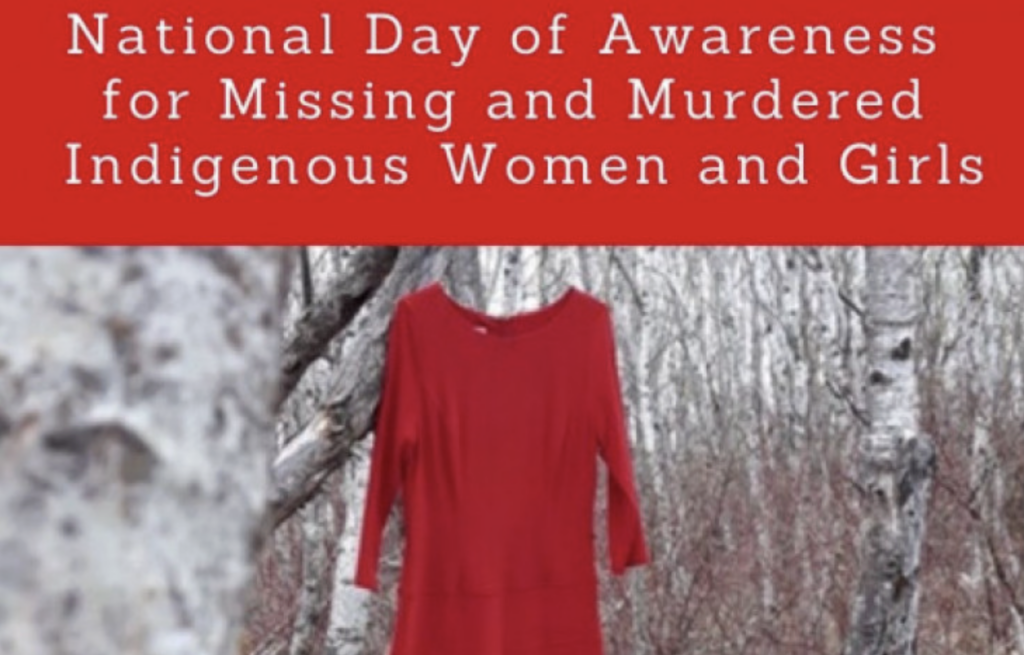
 In Canada, May 5th is a national day to raise awareness of Missing and Murdered Indigenous Women and Girls.
The Office of the Treaty Commissioner encourages people to take the to learn about the thousands of Indigenous women who have gone missing or been murdered in Canada over the years. Many times, their disappearance and death is under suspicious circumstances.
A good resource for this is reading Reclaiming Power and Place: The Final Report of the National Inquiry into Missing and Murdered Indigenous Women and Girls. Every week since December, the OTC has been sharing some of the recommendations from the report on Facebook. We appreciate how many of you have been sharing those messages and looking at how to make changes in your lives and industry. This is a step in repairing the damage and working towards making the world a safer place for Indigenous Women and Girls.
We also ask that on May 5, you wear Red. By wearing red, you acknowledge that those who have gone missing or have suffered a violent death are still in the hearts of people who knew them and you stand in solidarity with those who have lost loved ones.
The REDress Project is an installation art project based on the response on the issue of Missing and Murdered Indigenous Women and girls in Canada, serving as a visual reminder of the women who are no longer with us. Learn more the Red Dress Projects
Another good resource is the Window Art to honour MMIWG. Created by students at Yorkton Regional High School in partnership with Yorkton Tribal Council and Big Brothers Big Sisters, it shares the steps of how to create the art and additional resources for learning.
OTC visit to Canoe Lake Cree Nation
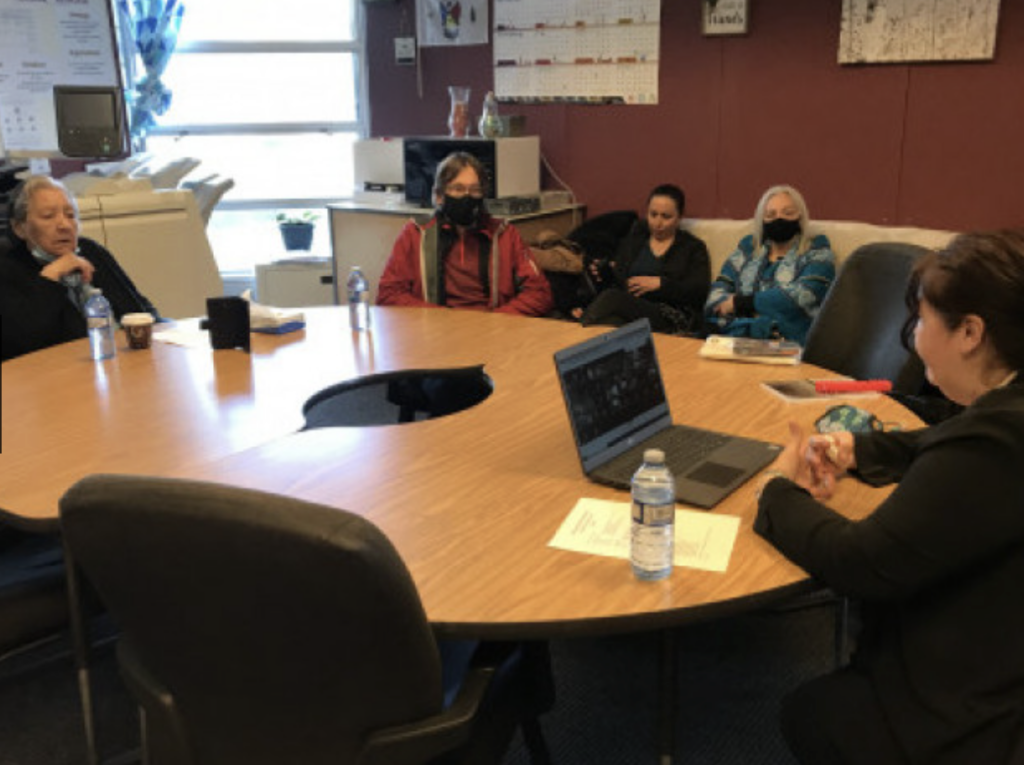
 On Earth Day, the Treaty Commissioner of Saskatchewan, Mary Culbertson, and some of the OTC team visited Canoe Lake Cree Nation.
We met with the Canoe Lake Cree Nation Band Council, and the trip provided the opportunity to connect with some of the Treaty 10 Gathering Team about the event tentatively planned for August this year.
After a welcome from the teachers and students of Canoe Lake Miksiw School, including a drum group and honour song, the Treaty Commissioner spoke on the importance of Treaty education, as well as the history and the work of the OTC.
The OTC team was grateful to be part of a traditional dinner at lunch with the band council.
The Treaty Commissioner is pleased to be able to visit communities and have discussions about full Treaty implementation and the Treaty relationships.
“I absolutely loved the greeting and honour song. It feels so wonderful to be in the communities again in this time of COVID. Whenever we can all be safe I am looking forward to taking the opportunity to be in our communities.”
This Apr. 22 visit followed all COVID-19 protocols including full mask wearing, and a stop at the security checkpoint at the community entrance for contact tracing.
Statement from the OTC
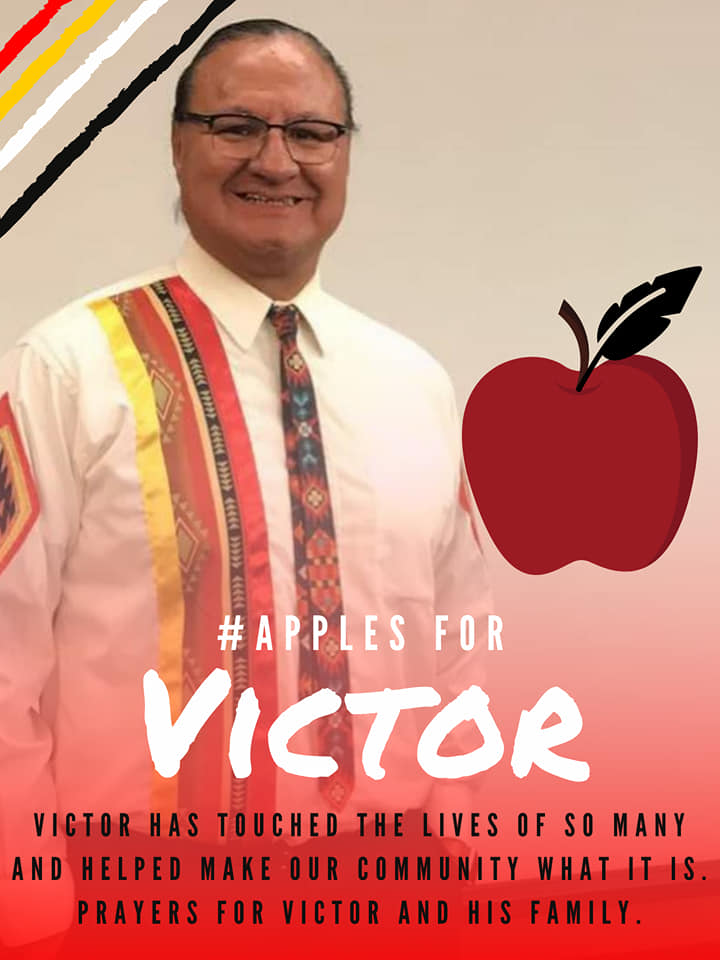
The Office of the Treaty Commissioner joins many in remembering Victor John Jr. Thunderchild, who we lost early April 17. The OTC team sends their condolences to his family, friends, community and all the students and lives he touched through his leadership.
Thunderchild was known not only for his work as a teacher at Carlton Comprehensive High School in Prince Albert, but his work promoting Indigenous culture, worldview, and teachings. His life was rooted in tradition, and he encouraged Indigenous youth to have pride in their culture, language, and heritage.
The OTC was fortunate to work with Thunderchild on a youth project, where he facilitated many sessions at Prince Albert meetings. We remember his pride showing us the good work they were doing at Carleton; it was obvious he cared deeply about his students.
He made a tremendous impact on us all.
As COVID-19 prevents us from gathering together to celebrate Thunderchild, we join others in showing our support with #ApplesForVictor and we know his memory will live on through the teachings he shared.