Posts by Angela Hill
Treaty Commissioner at meeting with Governor General
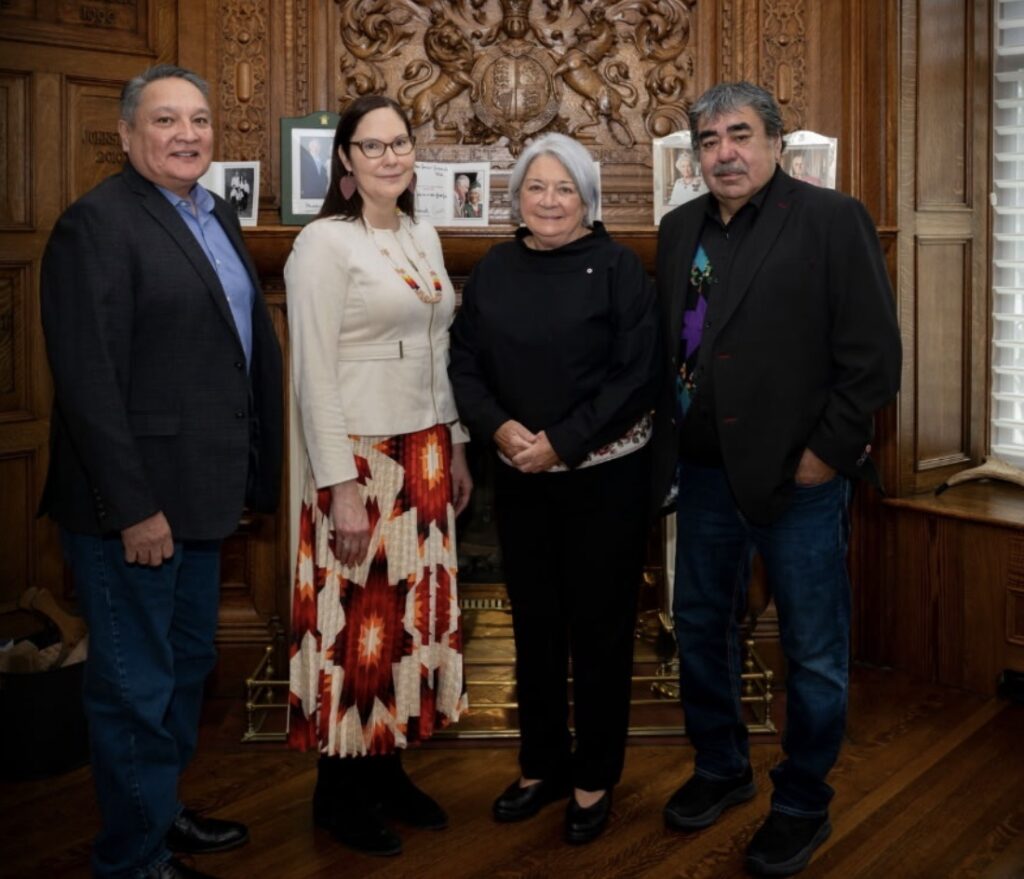
Treaty Commissioner of Saskatchewan Kathy Walker, Ahtahkakoop Cree Nation Chief Larry Ahenakew, and Mistawasis Nêhiyawak First Nation Chief Daryl Watson met with the 30th Governor General of Canada, Mary Simon.
At the meeting on May 8, these leaders thanked Simon for her years of service as the first Indigenous person to hold the Governor General role.
“As a proud Inuk she has demonstrated a commitment to strengthening the Crown’s foundational relationship with Indigenous peoples through reconciliatory action, and not mere words,” said Walker.
Simon promoted the truth about the shared history of our land in that it stretches across millennia throughout iyiniwi-ministik (North America). Foremost among this shared history is the Treaty relationship between First Nations and the Crown and the sacred bundle of roles, responsibilities and rights constituted by Treaties 1 to 11.
Grounded in the history of these lands, Treaties have long set out a powerful roadmap for reconciliation. As noted by the Truth and Reconciliation Commission of Canada (2015), all Canadians, particularly governments, policymakers and public servants, have a duty to learn, educate and understand our Treaty history because ‘History plays an important role in reconciliation; to build for the future, Canadians must look to, and learn from, the past.’
As representatives of two of the original Treaty nations to negotiate Treaty 6 with the British Crown and its Dominion of Canada, Chief Ahenakew and Chief Watson hand delivered an invitation to the Governor General and her successor, the Governor General Designate, Louise Arbour, to attend the commemoration of 150 years of Treaty 6 on August 23, 2026 at Fort Carlton, Saskatchewan, Treaty 6 territory.
As a former Supreme Court Justice and United Nations Human Rights Commissioner, the new Governor General, Louise Arbour, brings a life-time of commitment to upholding constitutional rights and human rights, and in light of her deep understanding of justice, we trust that she will recognize and affirm the inherent, constitutional, human and Treaty rights of First Nations in her new role.
May 5 is Red Dress Day
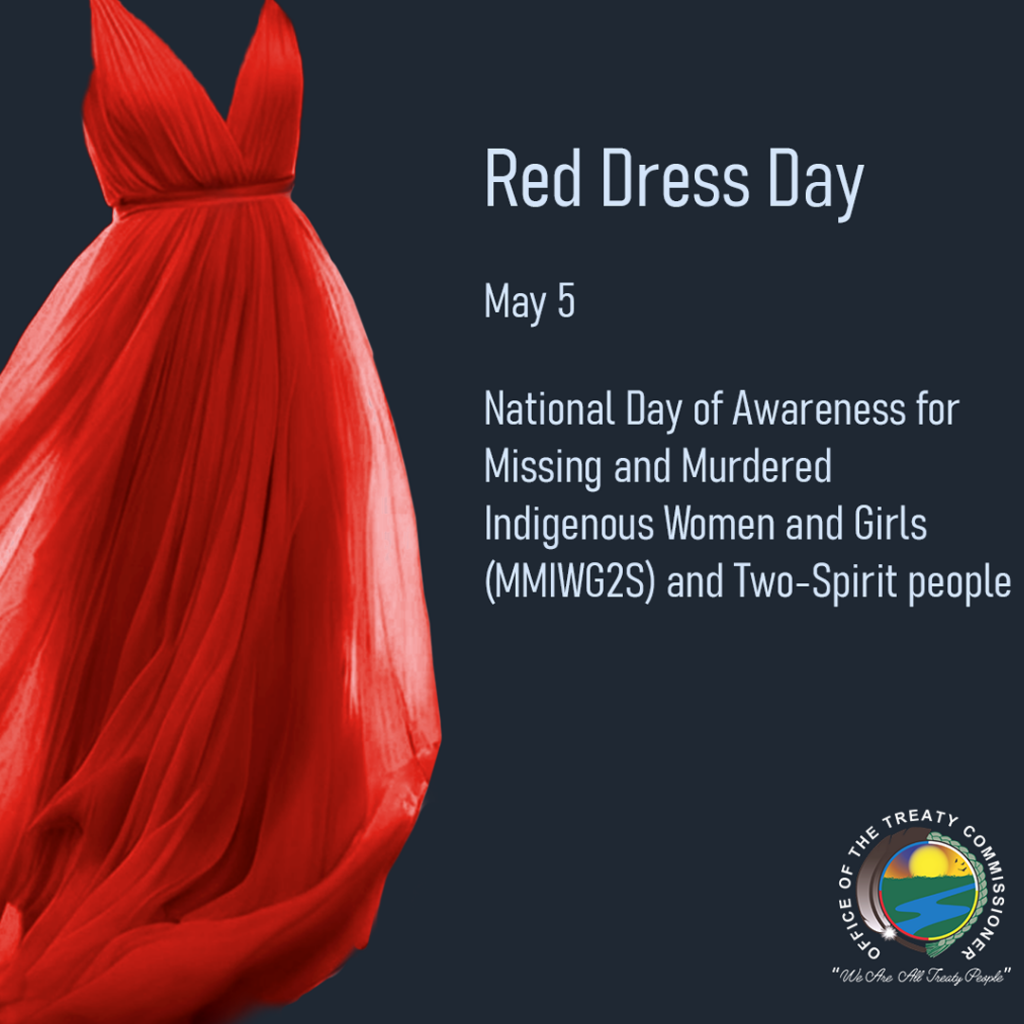
 May 5 is Red Dress Day, the National Day of Awareness for Missing and Murdered Indigenous Women, Girls, and Two-Spirit People.
It’s a day to honour the lives of Indigenous women, girls, and two-spirit people who have been lost to violence, and to stand with the families and communities who are left carrying grief.
Red Dress Day has its roots in the REDress Project, created by Métis artist Jaime Black. The image of the red dress has become a powerful symbol and calls attention to the ongoing crisis of violence against Indigenous women, girls, and two-spirit people across Canada.
The Office of the Treaty Commissioner encourages all people to wear red on May 5 as a visible act of remembrance and solidarity. Wearing red is one way to show that those who are missing are not forgotten.
This day is also a call to action. The violence faced by Indigenous women, girls, and two-spirit people is rooted in ongoing impacts of colonialism, systemic racism, and inequities. Meaningful change requires continued learning, reflection, and action.
The OTC encourages people to engage with the Calls to Justice from the National Inquiry into Missing and Murdered Indigenous Women and Girls, to support Indigenous-led initiatives, and to work toward safer, more equitable spaces for Indigenous Peoples.
Red Dress Day is not only about awareness—it is about responsibility. Together, we must continue the work of truth, justice, and reconciliation.
Coalition calls for Canada to end mass incarceration of Indigenous Peoples
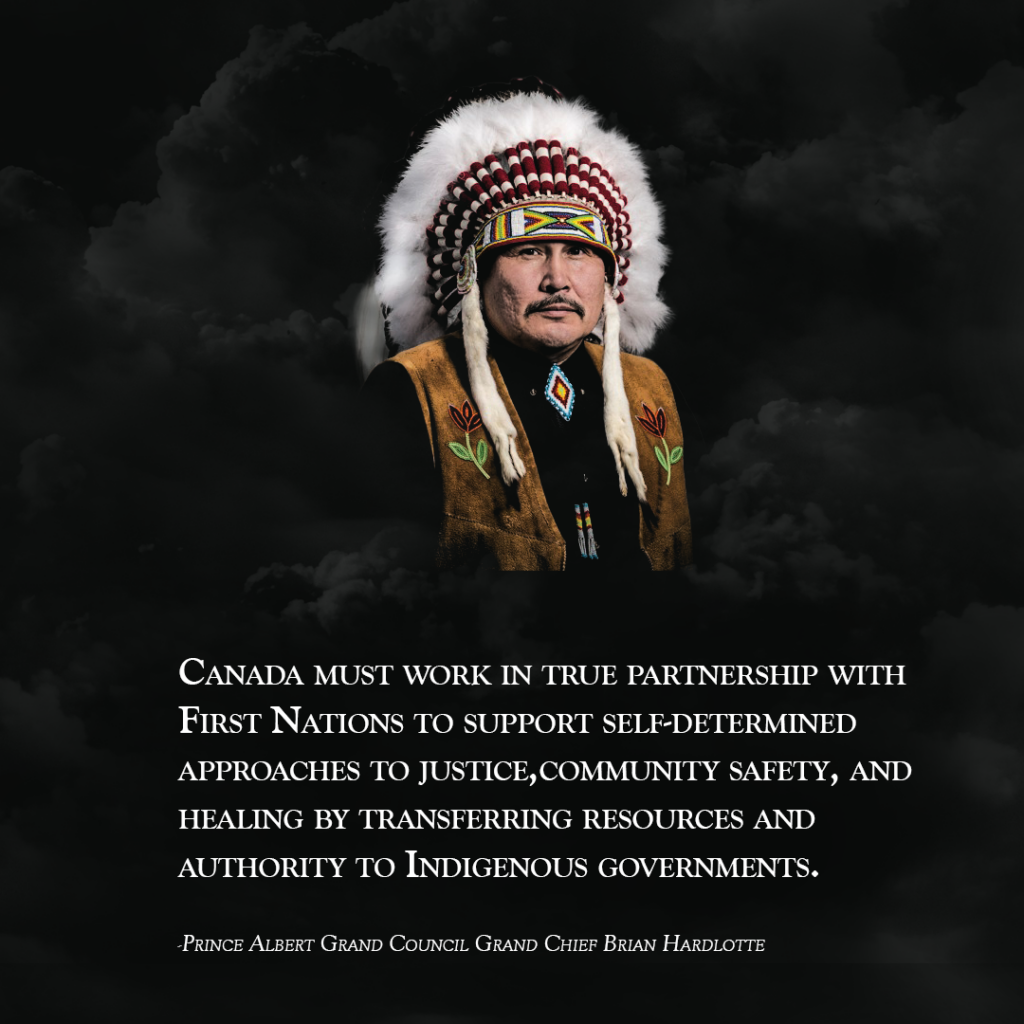
A coalition of Indigenous governments, organizations, and allies are in New York at the 25th Session of the United Nations Permanent Forum on Indigenous Issues to draw international attention to Canada’s increasing mass incarceration of Indigenous Peoples.
The Assembly of First Nations, BC First Nations Justice Council, Black Lake Denesuline First Nation, Prince Albert Grand Council, Union of BC Indian Chiefs and Prisoners’ Legal Services are urging Canada to end to the mass incarceration of Indigenous Peoples.
“For decades, Canada has promised to reduce the overrepresentation of Indigenous Peoples in prison, yet today we make up just five per cent of the population and one-third of those in federal custody, and half of incarcerated women. This is systemic racism rooted in colonialism, not individual failure,” said Prince Albert Grand Council Grand Chief Brian Hardlotte.
“The case of Joey Toutsaint, a member of Black Lake Denesuline First Nation, held for over 3,000 days in intermittent solitary confinement in violation of the UN Nelson Mandela Rules, shows the profound harm this system continues to inflict on Indigenous Peoples. These conditions are driving disproportionate rates of self-harm and suicide and constitute a serious threat to the health and wellbeing of Indigenous Peoples.”
“Canada must work in true partnership with First Nations to support self-determined approaches to justice, community safety, and healing by transferring resources and authority to Indigenous governments. The solution is clear, respect our right to self-determination and end the mass incarceration of Indigenous Peoples.”
Indigenous people also spend more of their sentences in custody and are disproportionately exposed to the most punishing and damaging aspects of prison, including solitary confinement, and are over-represented in self-harm injuries and deaths by suicide in prison. Legal provisions that would allow Indigenous people to serve their sentences in Indigenous communities are under-funded and rarely used.
Canada is called on to redirect one third of Correctional Service Canada’s approximately $3 billion annual budget – or $1 billion annually – to Indigenous governments and organizations to de-incarcerate Indigenous Peoples in a manner consistent with the United Nations Declaration on the Rights of Indigenous Peoples.
“First Nations continue to condemn this systemic discrimination, and insist on effective corrective action. Likewise, the massive apprehension of First Nations children under provincial and territorial child welfare laws is a part of this systemic discrimination as Chief Willie Littlechild has said many times. The so-called child welfare system is a pipeline that funnels our children into conflict with the law and often places their welfare at risk. Governments at all levels in Canada must follow the lead of First Nations to restore our ways of justice, healing, and reconciliation,” said Assembly of First Nations National Chief Cindy Woodhouse-Nepinak.
See the Coalition’s full news release here: United Nations Permanent Forum on Indigenous Issues – Indigenous governments, organizations and legal aid clinic rebuke Canada for mass incarceration of Indigenous Peoples – call for funding and authority to Indigenous governments and organizations
OTC and SUMA Promote Understanding of Treaties
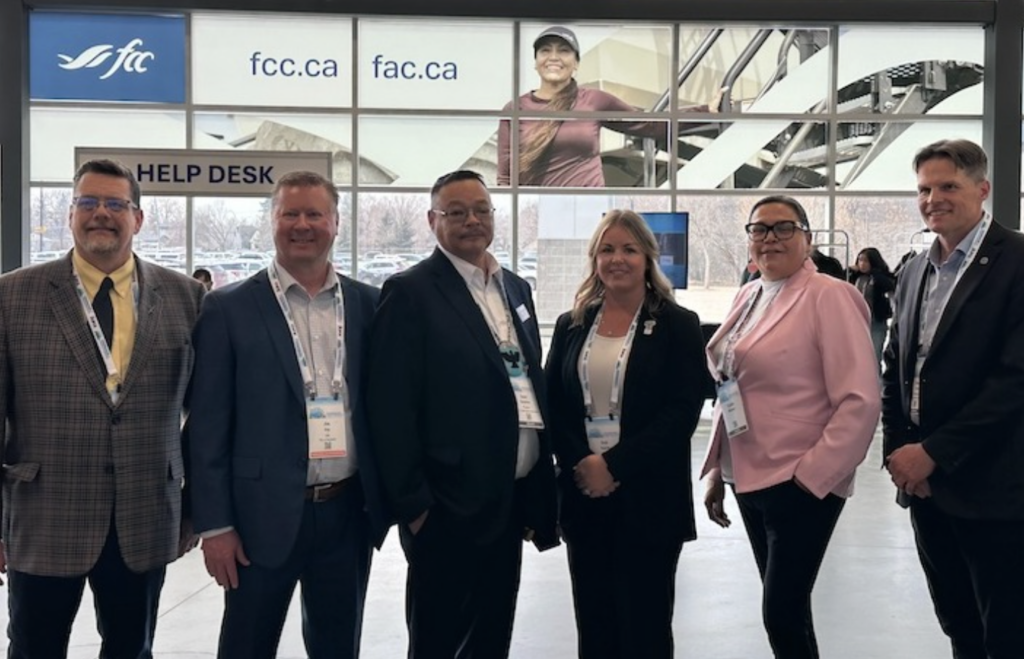
On Apr. 13, the Office of the Treaty Commissioner worked with SUMA to co-present a main stage panel at the SUMA convention.
This panel was organized in keeping with their shared commitment to promote respect and understanding of Treaties and to facilitate strong relationships amongst all Treaty people in Saskatchewan.
“All urban municipalities in Saskatchewan are located within Treaty territories and so all urban municipalities and their residents are Treaty people,” reads the OTC-SUMA memorandum of understanding.
To this end the panel brought together stories of partnerships grounded in the principles of Truth and Reconciliation and how municipalities have a role to play in Treaty implementation.
Along with Charlie Clark, the OTC Treaty Relations Lead, panelist included Lucky Man Cree Nation Chief Crystal Okemow, North Battleford Mayor Kelli Hawtin, Fishing Lake First Nation Community Navigator Brent Sunshine, and Humboldt City Manager Joe Day.
More than 1,000 representatives from Saskatchewan’s cities, towns, villages, resort villages, and northern municipalities attend the annual convention.
Treaty No. 6 Leaders met with His Majesty, King Charles III during historic private audience
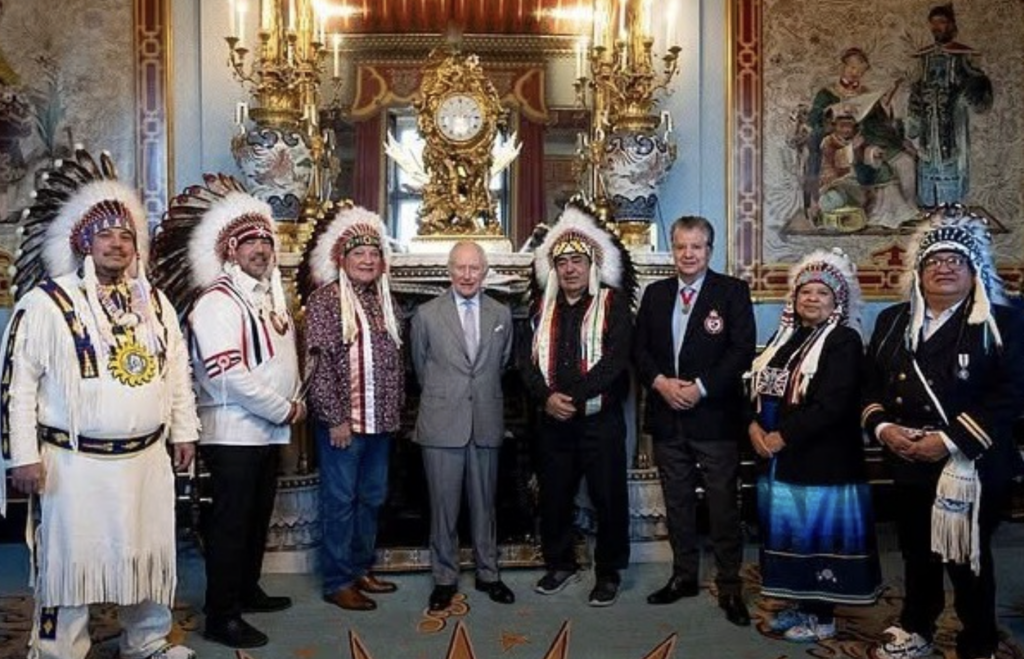
Leaders from Treaty 6 First Nations met this week with His Majesty, King Charles III during a historic private audience at Buckingham Palace, marking a significant moment in the ongoing Treaty relationship between Treaty 6 First Nations and the Crown.
The meeting was brief, but meaningful, particularly given the historic significance of the Crown meeting with First Nations of Treaty 6 the year of the 150th anniversary of the signing of that Treaty.
“It was an honour to be the first invited into the room to lead the delegation into the audience. It’s gratifying to know that the first invitation we sent from Ahtahkakoop Cree Nation led to the moment where we could have an audience means something,” said Chief Larry Ahenakew.
The delegation of seven Treaty 6 leaders travelled to London to personally deliver a formal invitation to His Majesty to attend the 150th Commemoration of Treaty 6 at Fort Carlton from August 20 to 23, 2026.
“The visit was quite positive. The King was welcoming and was engaged, asking questions about what is happening on First Nations and how Treaties are being implemented and honoured,” said Mistawasis Nêhiyawak Chief, Daryl Watson. “He is committed to upholding the honour of the Crown under Treaty.”
It was also an opportunity for Treaty 6 leadership to discuss important Treaty matters directly with the Crown, including hunting and fishing rights and the right to health care under the Treaty 6 Medicine Chest Clause.“When Treaties were signed, they were intended to be renewed annually, reflecting the ongoing relationship between First Nations and the Crown. This meeting was an opportunity to reaffirm the sacred and irrevocable relationship between Treaty 6 First Nations and the Crown as one based on peace, friendship, and respect. Under Treaty, dialogue should continually happen with respect to ensuring mutual benefits,” said Beardy’s & Okemasis Cree Nation Chief, Edwin Ananas.
“Each of us carried the message from our people — that Treaty will last as long as the sun shines, the grass grows, and the river flows. What we do today must honour our children and the generations yet to come,” said Sturgeon Lake First Nation Chief, Christine Longjohn.
The visit included time at Canada House, where the leaders met with Canadian Deputy High Commissioner Robert Fry. The High Commission of Canada team was very supportive of the audience with the King and did everything in their ability to make sure the visit went smoothly.
The 51 First Nations signatories to Treaty 6 across Saskatchewan and Alberta have been invited to the 150th Commemoration. Invitations have also been extended to Prime Minister Mark Carney, Governor General Mary Simon, and other federal and provincial dignitaries.
“The sacred pipe was lifted to signify the sacred Treaties, our Treaties are international law, our Treaties protect our way of life on the land as long as the sun shines, grass grows, and rivers flow. We will continue to advocate for King Charles to attend 150th treaty 6 gathering at the fort Carlton location,” said said FSIN Chief Bobby Cameron.
Further details regarding the Treaty 6 150th Commemoration will be shared in the coming months.
Kehte-ayak and Youth Treaty gatherings
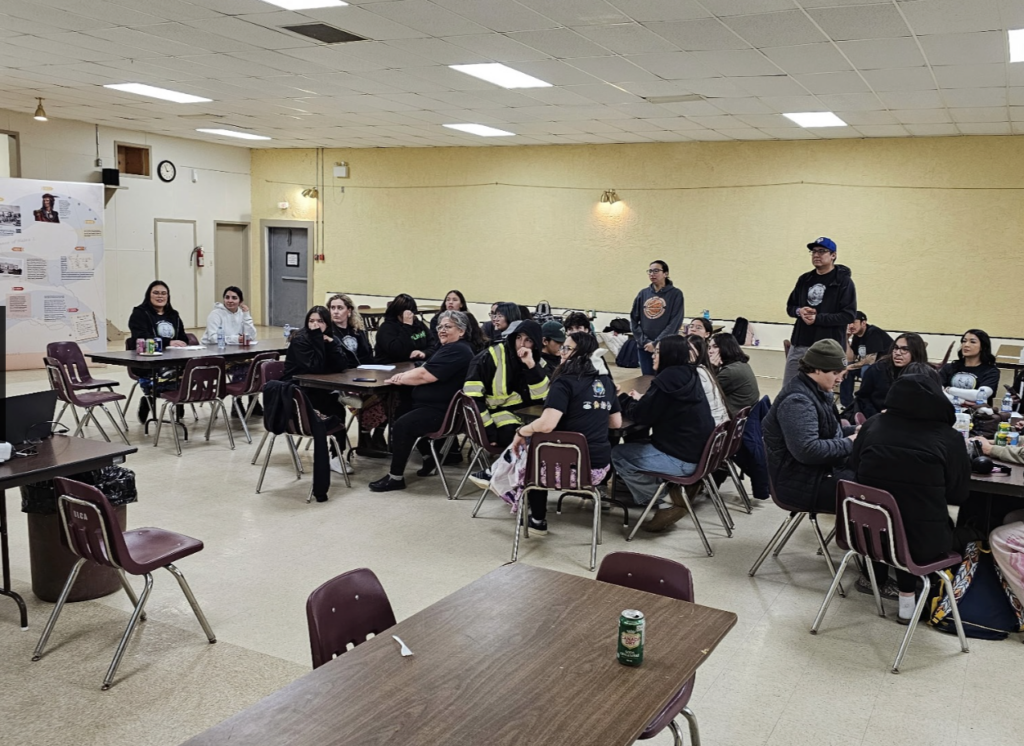
The Office of the Treaty Commissioner, in collaboration with Mistawasis Nehiyawak, Beardy’s & Okemasis Cree Nation, One Arrow First Nation and Muskoday First Nation, held Treaty gatherings on Monday and Tuesday of this week. Both events were hosted by Beardy’s & Okemasis Cree Nation.
A kehte-ayak gathering took place on Monday and then Tuesday brought together youth from the participating nations to talk and learn about Treaty. The focus for both days was on Creation stories and one of the core Treaty doctrines: wahkohotowin.
“We are here on our second youth Treaty gathering, where we are meeting with the youth on providing Teaching Treaties to our youth from One Arrow, Muskoday, Beardy’s, and Mistawasis as our new Treaty gathering group,” said One Arrow First Nation Chief Janine Baldhead.
“I would definitely encourage everyone to start talking with Elders in your community or if you are in an urban area, reach out to the tribal councils, to the Treaty Commissioner’s office, to your leadership, on the Elders that are in your areas, to start learning your inherent rights [and] to truly understand how our Treaty rights came to be.”
The four participating nations plan to host a total of four gatherings within the year, with Mistawasis Nehiyawak and Muskoday First Nation planning to each host the next gatherings. The gatherings came about after youth at the first youth-focused event in November 2025 asked to come together more often to learn about Treaty. Elders at this event also requested their own Treaty gathering to share knowledge and renew their understanding.
“We heard from the Elders and youth that they really appreciated having this opportunity to learn as we never learned our history in schools, coming from our side and not the colonial version,” said OTC Director of Education, Elaine Sutherland. “This is truly inspirational, and lights the fire to keep going, to keep making a difference.”
Treaty Commissioner Dr. Kathy Walker said all other Treaty nations are invited to collaborate with the OTC on similar gatherings in their regions.
Celebrating International Women’s Day
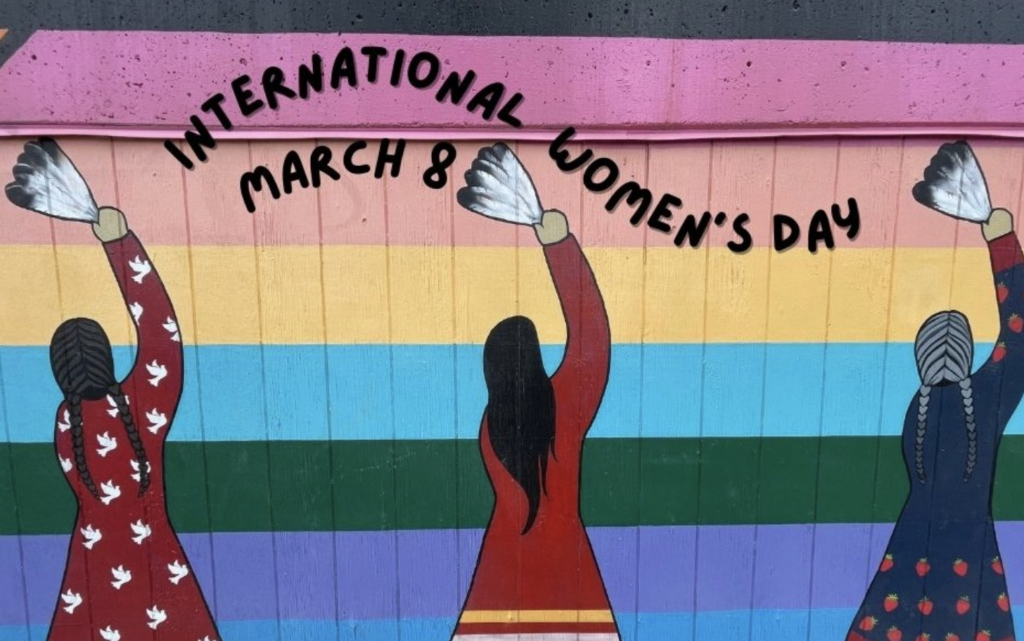
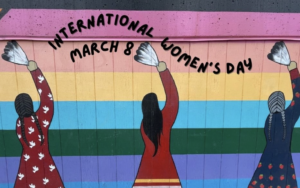 Each year on International Women’s Day, we celebrate the leadership, knowledge, and contributions of women in our communities. Indigenous women have always played important roles in governance and the Treaty relationship.
Before the signing of the numbered Treaties across the Prairies, Indigenous nations practiced governance systems grounded in relationships and collective responsibility. Governance was understood as a shared responsibility. Women were advisors, knowledge holders, and decision-makers within their communities. Their perspectives ensured that decisions reflected the needs of families, future generations, and the land.
Women participated in discussions leading up to Treaty negotiations and their leadership helped ensure that the meaning of Treaty grounded in respect, reciprocity, and shared responsibility, continued to be passed down through generations.
Despite disruptions to these systems during colonization, Indigenous women have continued to carry leadership roles in communities.
“First Nations systems of governance recognize the central role of women in guiding our communities and our relationships,” says Dr. Kathy Walker, Treaty Commissioner of Saskatchewan. “Teachings by our matriarchs show us that leadership begins with listening to our Elders and working to uphold the spirit and intent of Treaty.”
On this International Women’s Day, the Office of the Treaty Commissioner honours women, and especially those who serve in governance and leadership roles in their communities.
Treaty 6 leaders invited to Buckingham Place ahead of Treaty 6 150 commemoration events
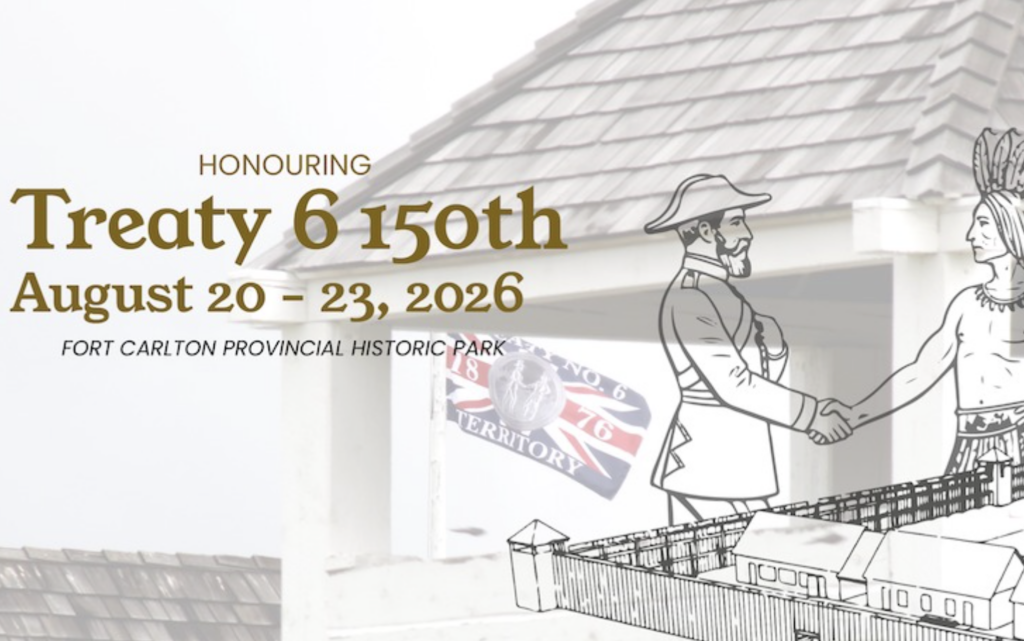
Treaty 6 territory – Treaty 6 leaders will travel to London for a private audience with His Majesty, King Charles III on March 11th, 2026 at Buckingham Palace.
The invitation to the seven-member delegation comes as a response to invitations from Treaty 6 leaders for His Majesty, King Charles III to attend the 150th Commemoration of Treaty 6 at Fort Carlton, August 20–23, 2026.
“Ahtahkakoop took the lead on inviting the head of the British Crown to reaffirm the continued relationship between Treaty 6 First Nations and the Crown for as long as the sun shines, the grass grows, and the rivers flow,” said Ahtahkakoop Cree Nation Chief Larry Ahenakew, who is part of the Treaty 6 delegation.
The Treaty 6 delegation have followed up with subsequent invitations and advocacy for a royal visit to Fort Carlton this year with support from the Federation of Sovereign Indigenous Nations and the Office of the Treaty Commissioner.
“The aim of the delegation is to contribute to honouring Treaty 6 and the Treaties 1-11 bundle,” said Chief Daryl Watson of Mistawasis N?hiyawak.
“As a delegation, we do not seek to speak for all of Treaty 6, because each nation exercises its own sovereign, self-determining authority and voice.”
During the audience, delegates said they will extend an in-person invitation for His Majesty to attendthe Sesquicentennial of the signing of Treaty No. 6 at Fort Carlton.
Delegate Chief Edwin Ananas of Beardy’s & Okemasis Cree Nation has taken the lead on bringing the original Treaty 6 parchment back home to Treaty 6 territory for the first time in 150 years, including helping to coordinate visits of the Treaty 6 document to other signing sites, including Beardy’s Camp, Fort Pitt and Enoch Cree Nation in Alberta.
“While the Treaty texts do not tell the complete story of what was agreed to under Treaty 6, they are a key part of our history and my hope is that the visiting Treaty 6 exhibits will provide much needed Treaty education and awareness that will provide a strong foundation for realizing Treaty over the next 150 years,” said Chief Ananas.The focus for Treaty 6 delegate Chief Christine Longjohn of Sturgeon Lake First Nation is on reaffirming that Treaties are for our children and children’s children.
“I plan on gifting His Majesty with baby moccasins to represent that care for our children and future generations must be at the centre of our governance and decision-making,” said Chief Longjohn.
A royal visit to commemorate 150 years of Treaty 6 at Fort Carlton on August 23rd has been supported by resolutions of the Chiefs-in-Assembly at both FSIN and Assembly of First Nations legislative assemblies.
“These resolutions reaffirm the significance of Treaty and the need for Treaty partners, leadership and citizens, with guidance from our kêhtê-ayak or Elders, to come together collectively to reflect, renew and uphold Treaty,” said FSIN Chief Bobby Cameron.
In keeping with the interprovincial, nation-to-nation Treaty relationship, delegates from Treaty 6 territory come from throughout Treaty 6 territory.
The Delegation of Treaty 6 Leadership will consist of:
• Chief Larry Ahenakew – Ahtahkakoop Cree Nation
• Chief Darryl Watson – Mistawasis Nêhiyawak
• Chief Edwin Ananas – Beardy’s & Okemasis Cree Nation
• Chief Christine Longjohn – Sturgeon Lake First Nation
• Councillor Gary LaPlante – Stoney Knoll First Nation
• Grand Council Chief Joey Pete – Confederacy of Treaty 6 First Nations
• Chief Desmond Bull – Louis Bull Tribe
The Treaty No. 6 Chiefs’ Delegation will depart on March 9, 2026 from Saskatoon International Airport.
Treaty 6 Commemoration
As Treaty 6 approaches its 150th anniversary, the Office of the Treaty Commissioner is pleased to support the Treaty 6 First Nations with their commemoration events.
In 1876, First Nations and the Crown entered into Treaty 6 at Fort Carlton on August 23, at Chief Kamiscowesit’s (Beardy’s) campsite on August 28, and at Fort Pitt on September 9. The agreement, grounded in promises of mutual benefit and shared prosperity, endures as a covenant between peoples.
From August 20–23, 2026, commemorations will take place at Fort Carlton Provincial Historic Park, offering an opportunity to honour the Spirit and Intent of Treaty and reaffirm commitments for future generations.
The anniversary is about more than history, Treaty Commissioner of Saskatchewan, Dr. Kathy Walker said.
“The Treaties are not relics of the past. They are living agreements. Living the Treaties means understanding our shared responsibilities and working together in the spirit they were intended.”
The OTC is inviting communities to reflect on a living agreement that continues to shape relationships across the Prairies.
The words spoken at the negotiations still resonate today
“What we speak of and do now will last as long as the sun shines and the river runs, we are looking forward to our children’s children, for we are old and have but few days to live” said Chief Weekaskookwasayin in 1876.
As part of the commemoration, organizers have launched the Treaty 6 150 Logo Contest, calling on artists to design an emblem reflecting the Treaty’s history and living legacy. The selected logo will be featured across events and materials, marking this once-in-a-generation milestone.
Treaty 6A Adhesion Commemoration
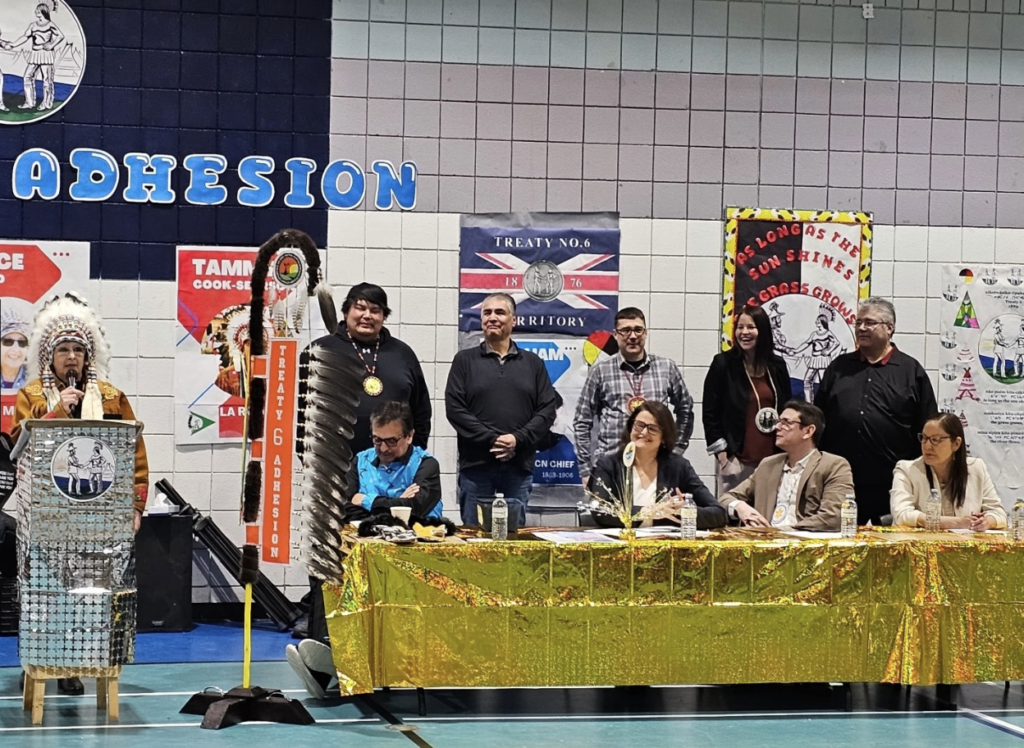
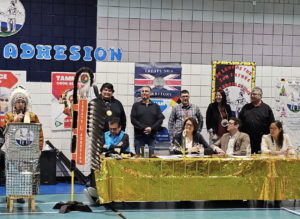
The Treaty Commissioner of Saskatchewan and Office of the Treaty Commissioner staff were pleased to be able to attend the 137th commemorative gathering of Treaty 6A in Montreal Lake Cree Nation this week
“Gatherings like this are so important to understanding treaty history especially of Treaty 6A and of those nations,” said Treaty Commissioner, Dr. Kathy Walker.
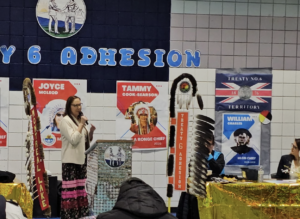
More than 100 people filled the Senator Allan Bird Memorial School gym. The event got underway with a grand entry led by flag carriers and two eagle staffs.
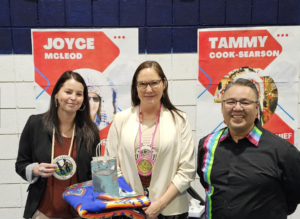
The Chiefs of the three signatory first nations spoke about upholding Treaty and Treaty Rights – Chief Peter A. Beatty of Peter Ballantyne Cree Nation, Chief Tammy Cook-Searson of Lac La Ronge Indian Band, and Chief Joyce Naytowhow McLeod of Montreal Lake Cree Nation.
Also in attendance was Premier Scott Moe, cabinet ministers, and members of the opposition.
These events are a way to educate youth and create space for knowledge keepers to share the oral histories, said Walker. The Office of the Treaty Commissioner’s Treaty Timeline was on display.
“It’s a way for people to talk about Treaty 6A, acknowledge the importance, and connect with one another.”
After the official close, everyone gathered for a feast of fish and moose meat, harvested by youth and Elders for the event.
The commemoration was held Feb. 10 because Feb.11, the Treaty signing day, was declared a public holiday on Montreal Lake Cree Nation.
There was a call to host the event on Feb. 11 next year at Molanosa, where Treaty 6A was signed.
“Because then it helps the history come alive even more. The exact place when the Treaty was signed and the exact time,” Walker said.