
Posts by Angela Hill
Treaty Agriculture Benefits Q&A
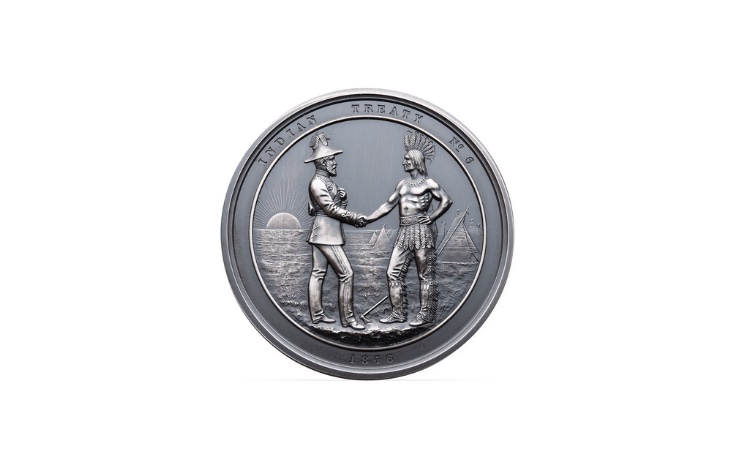
The Office of the Treaty Commissioner understands there is a lot of confusion and questions around the Treaty Agricultural benefits, so we put together this Q&A to help navigate it.
What are the Treaty Agricultural benefits?
The Treaty Agricultural benefits are benefits that were promised to First Nations peoples when Treaties were negotiated.
However, historical records and other available evidence suggest the Government of Canada rarely completely fulfilled its agricultural benefits obligations under Treaty. This significantly limited the ability of First Nations to grow and develop their economies.
The Treaty Agriculture Benefits specific claims being discussed now are about Canada finally honouring their legal obligations to First Nations and working collaboratively to renew relationships in order to address historical wrongs and try to advance reconciliation.
What is ‘Cows and Plows’?
Cows and Plows is a slang term people have used to refer to the Treaty Agricultural benefits. Former Treaty Commissioner of Saskatchewan Mary Musqua-Culbertson said the slang term should be avoided as it undermines the importance of upholding Treaty rights, because it was more than just a cow or a plow.
The Treaty Agriculture benefit was intended for people to be able to participate in the economy of the day, which was farming. It would allow for land to be allocated and the provision of what a farmer needs to farm including seeds and equpment.
What is the claim?
The Treaty Agricultural benefits are considered specific claims.
Specific claims deal with past wrongs against First Nations. These claims (made by First Nations against the Government of Canada) relate to the administration of land and other First Nation assets and to the fulfilment of historic Treaties and other agreements.
Specific claims are separate and distinct from comprehensive land claims or modern treaties.
More information on Specific Claims from Crown-Indigenous Relations and Northern Affairs Canada here
How can I apply for the Treaty Agricultural Benefit?
Only a First Nation, not an individual, can submit an agricultural benefits claim.
To find out if your First Nation has submitted a claim, you can use the Specific Claims Reporting Centre.
Once a claim is settled the First Nation receives the settlement funds.
What is the process?
A First Nation submits a Band Council Resolution asking to start a claim for Agricultural Benefits under the numbered Treaties to the Specific Claims Branch. The First Nation can choose to provide its own historical research or rely on the research CIRNAC is doing.
Following the initial receipt and review of the claim, a submission from the First Nation may be required. If the claim is accepted for negotiation, the First Nation will receive an offer to negotiate.
What is the role of chief and council?
The ultimate role for the First Nation is to ensure they are keeping their people informed on the process and ensure that people are getting the information they need to make their decisions.
If I vote for the Treaty Agricultural Benefits, does this mean I lose my Treaty rights?
No, you will not lose your Treaty rights. The Treaty Agricultural benefits process is about ensuring historical Treaty promises are fulfilled as part of the ongoing Treaty relationship.
2024 Treaties Recognition Week
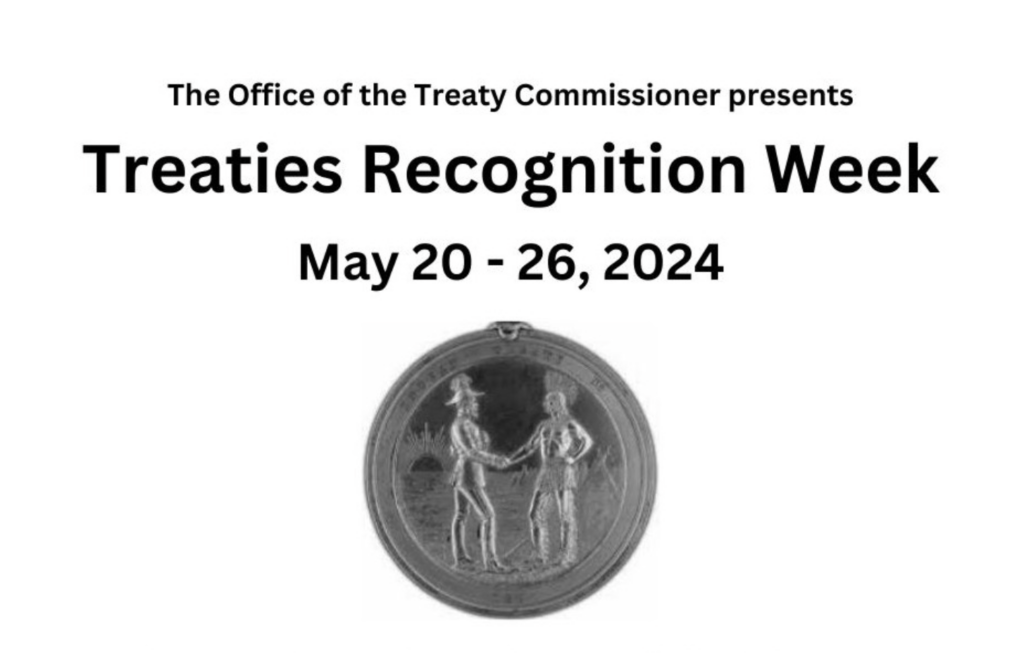
 The Office of the Treaty Commissioner is asking for individuals, organizations, schools, and communities to get involved with Treaty Recognition Week, running May 20-26. We encourage you to know more about the history of Treaties in Saskatchewan and Canada.
The first annual event was created last year as an important way to advance and celebrate the Treaty Relationship, a key component of reconciliation.
Treaties were created to ensure the peaceful relations and continued livelihood of both parties – the Indigenous people and non Indigenous people. Treaties are the foundational building blocks of Canada. Each nation had a responsibility to uphold the terms of Treaty. Upon agreement, the Indigenous Chiefs/Leaders assumed their way of life would be protected, but this all changed with the Government’s implementation of the Indian Act.
The Office of the Treaty Commissioner is asking for individuals, organizations, schools, and communities to get involved with Treaty Recognition Week.
We have resources to walk you through Treaty timeline: Before Treaty; At Treaty; After Treaty; and Today.
Before Treaty
We have resources for students in:
Primary Grades
Virtual Tipi building
The word Indigenous — explained l CBC Kids News grades k-4
Middle Grades
Grandfather Teachings – Video Series
Secondary Grades
7 Sacred Teaching; eagle feather & tobacco protocol
and the General Public
Indigenous Worldviews vs Western Worldviews
At Treaty
We have resources for students in:
Primary Grades
Alex Shares His Wampum Belt
We Are All Treaty People
Middle Grades
Treaty Relationships – A Reading
Secondary Grades
The OTC Treaty Video – A Solemn Undertaking
and the General Public
Treaties with Indigenous Peoples in Canada, Explained
After Treaty
We have resources for students in:
Primary Grades
Phyllis’s Orange Shirt
Middle Grades
My Suitcase by Nii Sookayasas
Stolen Words by Melanie Florence
Secondary Grades
Indian Act video
Phyllis Webstad – On Orange Shirt Day
and the General Public
Murray Sinclair’s response to “Why don’t people just get over it?”
And Today
We have resources for students in:
Primary Grades
The UNDRIP explained – Animated
Middle Grades
What is Reconciliation?
Secondary Grades
Our Rights: Indigenous Youth on the United Nations Declaration on the Rights of Indigenous Peoples
and the General Public
Truth and Reconciliation Commission’s calls to action, six years later
How UNDRIP Changes Canada’s Relationship with Indigenous Peoples
OTC Statement on Red Dress Day
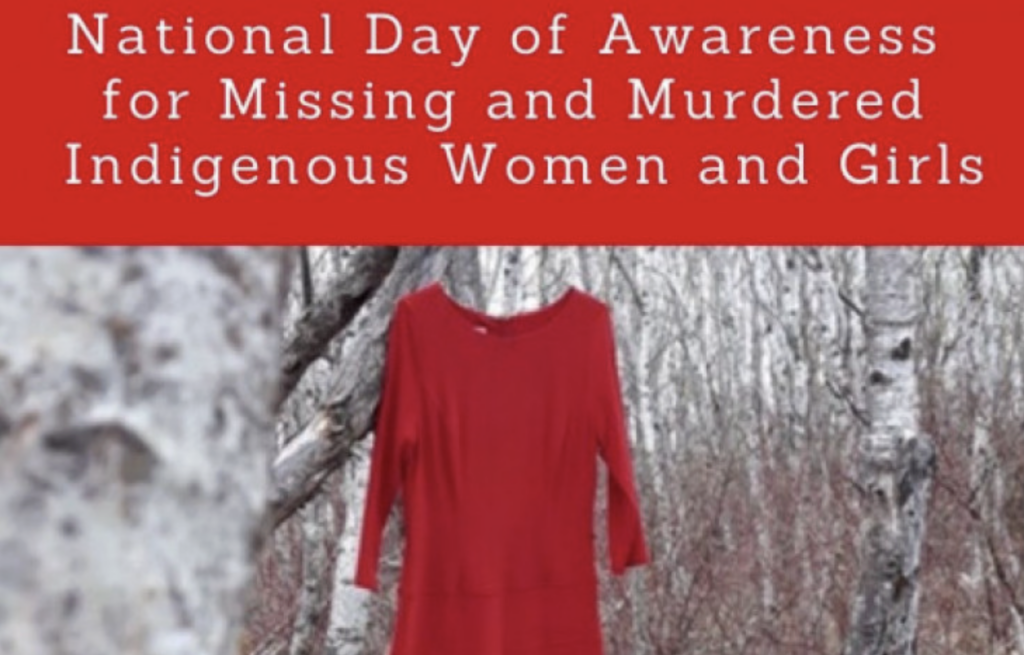
 May 5th isRed Dress Day, a day to remember and honour Missing and Murdered Indigenous Women, Girls, and Two-Spirit People.
In 2010, Métis artist Jaime Black created the REDress Project and this has become a movement with people across Canada using the Red Dress as a ways to bring awareness to the issue of Missing and Murdered Indigenous Women, Girls, and Two-Spirit People and be in solidarity with the loves ones left behind.
The Office of the Treaty Commissioner calls on people to join thousands of others across Canada in wearing red. Wearing red acknowledges those who have gone missing or have suffered a violent death are still in the hearts of people who knew them.
The OTC also asks that people use the day (and beyond) to further their learning. Read the National Inquiry into Missing and Murdered Indigenous Women and Girls’ final report, which showed that human and Indigenous rights abuses are the root causes behind Canada’s rate of violence against Indigenous women, girls and 2SLGBTQQIA people. Take time to become familiar with the Calls to Justice from the inquiry. Work to make workplaces, organizations, and lives, safer for all Indigenous Peoples.
Attending an event in honour of Red Dress Day can be a good place to start, the OTC is hosting a free online educational event on May 3.
Resources to support your learning
Reclaiming Power and Place: The Final Report of the National Inquiry into Missing and Murdered Indigenous Women and Girls
Their Voices Will Guide Us, an educational and outreach initiative of the National Inquiry
Amnesty International’s Activism Guide for Red Dress Day 2024: Take Action
The Highway is music video and song by N’we Jinan artists about the cases of missing and murdered Indigenous people along the highway of tears
Statement on the International Day for the Elimination of Racial Discrimination
March 21 is a day to recommit to making change and to working towards the elimination of all forms of racism. Marking the International Day for the Elimination of Racial Discrimination is a chance to look at the gaps in the implementation of a shared commitment to make the future better.
In Canada, like many places in the world, we see that racism, racial discrimination, xenophobia, and related intolerance continue to be a cause of conflict. There has been a rocky relationship between Indigenous and non-Indigenous people in Canada. Issues surrounding the failure of full Treaty implementation, limiting of land rights, socio-economic impacts, stereotyping, and mistrust have led to a place where we see messages of hate spread online, violence in front of us and to us, along with the existing, and systematic discrimination.
On the International Day for the Elimination of Racial Discrimination, the Office of the Treaty Commissioner invites individuals to join us by investing in true Reconciliation and relationship building, while having zero tolerance for any form of discrimination.
Education is a powerful tool in dismantling prejudice and fostering understanding. By equipping individuals with the knowledge of historical injustices and the spirit and intent of Treaty, we empower people to be a part of reconciliation.
So, learn more, book a speaker for your event, or attend an event hosted by others.
It is important for each of us to amplify marginalized voices, challenge discriminatory practices, and advocate for system changes. By standing in solidarity against racism, discrimination, and xenophobia, we uphold the rights of every individual and pave the way for a brighter, more inclusive future.
We believe that if we can come together on a common vision for success, that we can better work together, and create a better future for our children and grandchildren. One where everyone is equal and not judged on how they look, what their last name is, or where they are from.
International Women’s Day 2024
Today is an important occasion to honour and commemorate the remarkable social, economic, cultural, and political achievements of women. International Women’s Day not only serves as a time for celebration, but also as a call to action to advocate for the complete equality of women and gender balance.
The Office of the Treaty Commissioner encourages everyone to use the day to express gratitude to the women whose strength and resilience inspire them daily.
In Indigenous communities, women are revered as life-givers and caretakers of life, playing vital roles in their communities. Indigenous women are constantly working towards progress, often championing their causes without recognition or credit. Also, we are pleased to see the resurgence in the recognition of women’s leadership roles within First Nations and organizations.
That said, women still encounter barriers. There remains a considerable journey ahead to ensure the safety, health, and increased participation of Indigenous women in society.
At the OTC, we stand in solidarity against any form of discrimination against women. We strive to cultivate positive Treaty relationships founded on principles of mutual recognition, respect, and shared responsibility, while also encouraging women’s involvement in leadership and governance at all levels.
We need to work together to create a safer world for women and girls, particularly Indigenous women and girls. In our work we aim to amplify the MMIWG Calls to Justice and we appreciate those who join us in exploring avenues for meaningful change.
This International Women’s Day, take a moment to acknowledge the women in your lives—mothers, daughters, wives, aunties, friends, and colleagues—and commit to fostering an environment where they, and all women, can be safe, healthy, and free to pursue their dreams.
135th anniversary of Treaty 6A
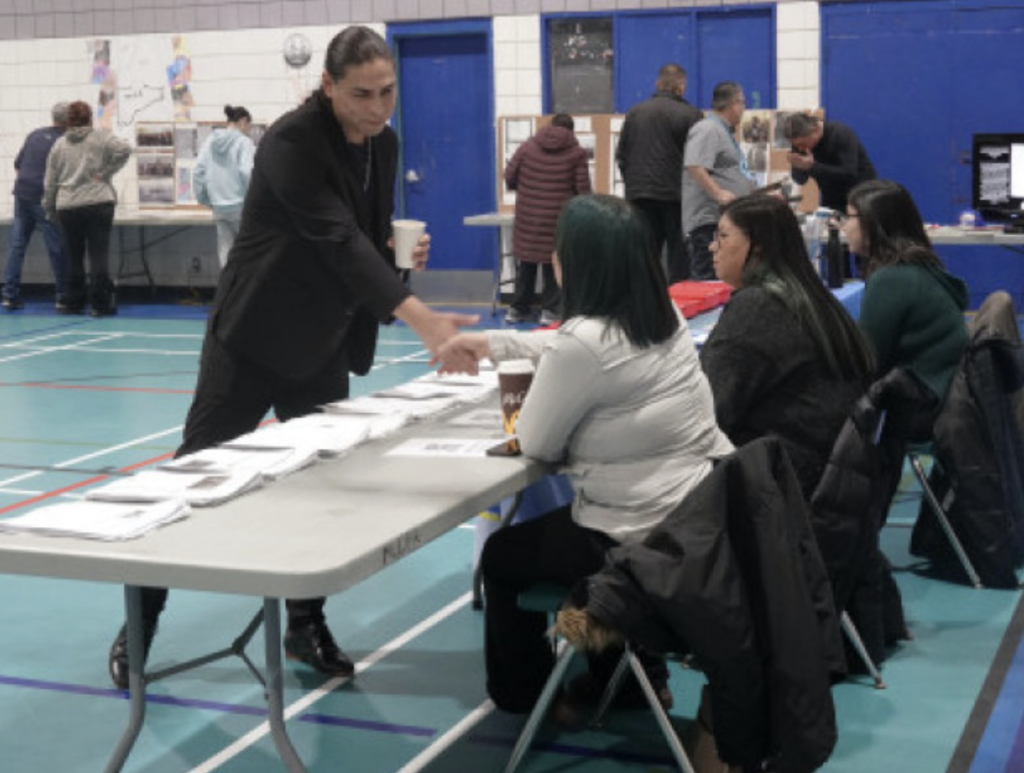
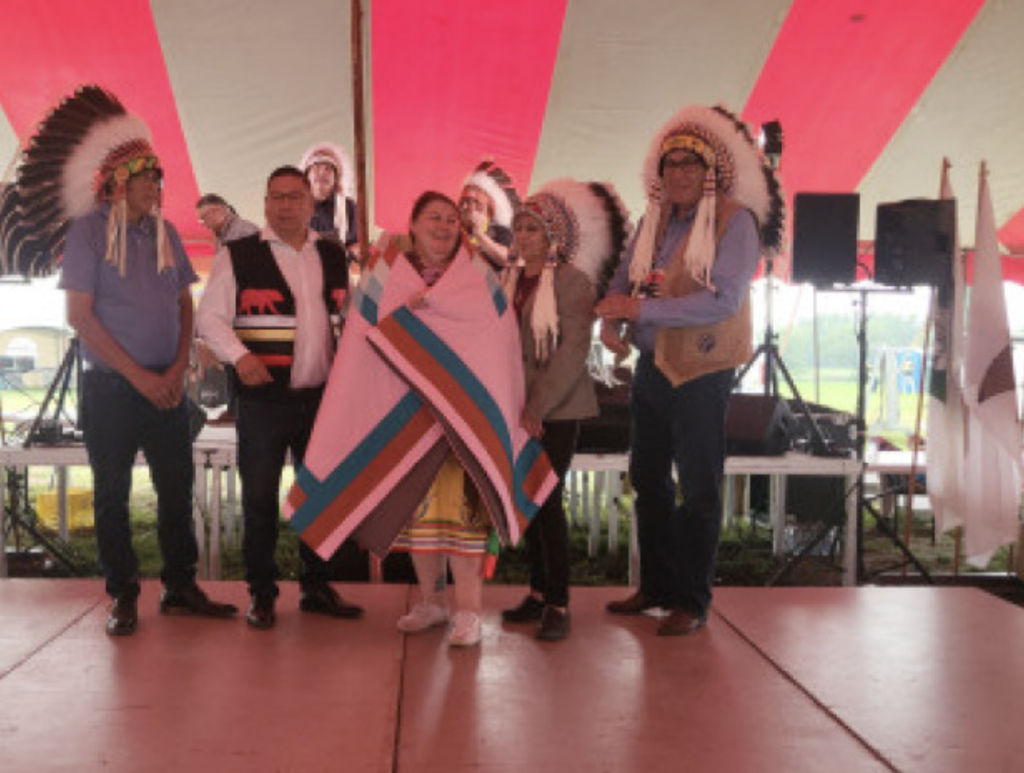
 The Office of the Treaty Commissioner was pleased to celebrate the 135th anniversary of Treaty 6A 1889 at Montreal Lake Cree Nation.
Celebrating the work of Commissioner Mary R. Musqua-Culbertson
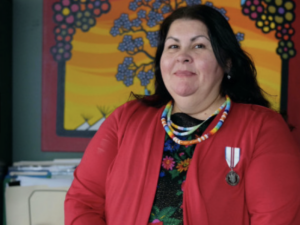 The Office of the Treaty Commissioner celebrates the work of Commissioner Mary R. Musqua-Culbertson as she completes her term as the first female Indigenous Treaty Commissioner of Saskatchewan.
Throughout her tenure, the Commissioner believed that the truth of Indigenous People in Canada must be honoured and cannot be ignored.
“We must understand the intergenerational impact and harms of residential schools and other breaches of Treaty. Our hearts must always be seeking compassionate understanding of what Indigenous people have had to and continue to endure,” Musqua-Culbertson said.
Her focus was on increasing the understanding of the Treaties, not just historically, but what it means today.
During her time in office, the Commissioner and OTC staff travelled to communities to meet with leaders, youth, and elders to shape the discussion on the spirit and intent of Treaty. We sat as part of Treaty and national gatherings, conferences, and ceremony.
The office celebrated the 30-year anniversary of OTC, with the unveiling of a new logo and a well-attended community round dance.
There were many new initiatives that were started over the past 5-year term, that were designed to further understanding on the Spirit and Intent of Treaty:
The Vision for Truth and Reconciliation through Treaty Implementation, shaped around four overlapping and continuous areas of work: a shared understanding of our history, vibrant cultures and worldviews, authentic relationships, and systems that benefit us all.
Office of the Treaty Commissioner Youth in Service project, which brought students from around the province together to learn from each other and work on reconciliation. This project included a cultural exchange trip to Fond-du-Lac.
Treaty Commissioner created the OTC Library & Archives to make sure the resources held by the office would be shared with the public. It has recently been renamed the Mary R. Musqua-Culbertson Library & Archives in her honour.
Treaty Learning Journey: Let’s Talk Truth, which took the popular Teaching Treaties in the Classroom and made it available to a wider audience beyond educators. This led to the creation of the first annual Treaty Learning Journey: Let’s Talk Truth Conference and to the first Treaties Recognition Week in Saskatchewan.
In partnership with the Province of Saskatchewan, the OTC started the process to mark Treaty boundaries. This includes signs in Indigenous languages erected on Highway 11 and 16 at the Treaty 4 and 6 boundary; Highway 39 at the Treaty 2 and 4 boundary and Highway 1 at the Treaty 2 and 4 boundary.
The development of a process to develop Reconciliation Action Plans, completing them for six organizations, including the Law Society of Saskatchewan and the Saskatoon Police Service.
The expansion of a network of Reconciliation Circles to 12 communities across the province – spaces where local Indigenous and non-Indigenous community leaders come together to learn, build relationships and act for truth, reconciliation and Treaty implementation.
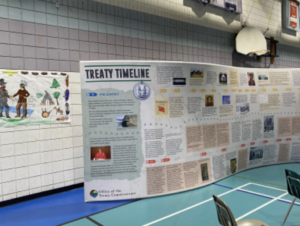
A 20-foot Treaty timeline displaying key milestones of Treaty in the Treaty Territories that make up Saskatchewan.
Treaty Elders Council, which includes 10 Elders from all five Treaty areas in the province and overseas the Library and Archives oral history collection, advises the OTC Treaty Table process, and helps to set policy for research.
With Commissioner Musqua-Culbertson, the OTC celebrated the successes of women leaders for their honours and appointments and called attention to the need to implement the recommendations of the Final report of the National Inquiry into Missing and Murdered Indigenous Women and Girls. She spoke at the House of Commons in the Standing Committee on Indigenous and Northern Affairs and was a constant advocate for the acceptance and implementation of UNDRIP. We saw the Beardy’s Treaty Medal repatriation and the exoneration of Chief Poundmaker.
During her time as commissioner, Musqua-Culbertson was awarded the Queen Elizabeth II Platinum Jubilee Medal for her service. She also ensured many other notable people were recognized for their work by nominating them for the award.
Even as she moves on to new opportunities, the OTC will continue to answer the Commissioners call that we all must support the work of Treaty education, Treaty rights, and Truth and Reconciliation through Treaty Implementation.
For all your work Commissioner, Migwec, Tiniki, Hiy Hiy.
National Ribbon Skirt Day
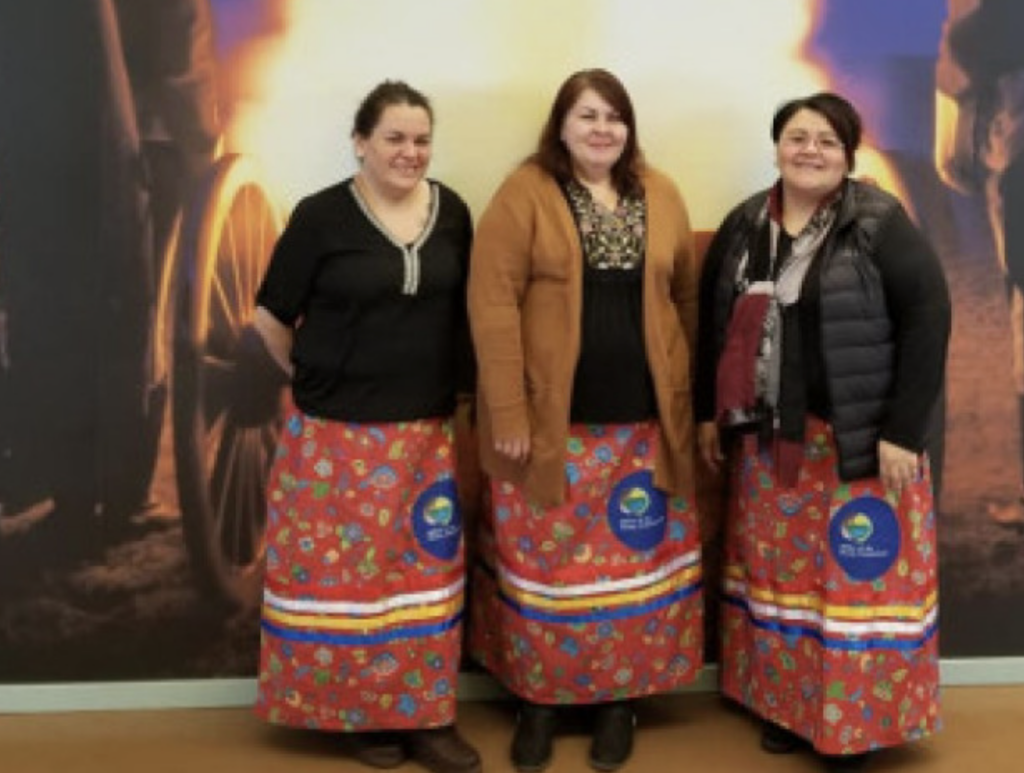
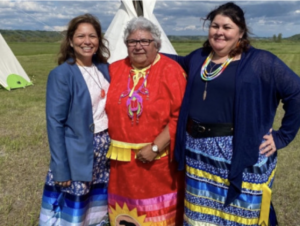
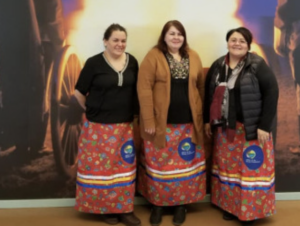
Today is National Ribbon Skirt Day, an opportunity to recognizes and honour the ribbon skirt as a symbol of Indigenous women, identity, ceremony, and tradition.
First observed last year, National Ribbon Skirt Day was created after 10-year-old Isabella Kulak, a member of Cote First Nation, shared her experience facing shame for wearing a handmade ribbon skirt to a formal day in 2020 at her elementary school.
Isabella’s story serves as a reminder that we still have to overcome racism and inequity for Indigenous People and it emphasizes our need to have a collective effort to be inclusive. National Ribbon Skirt Day is a step towards this.
Today, we witness women, girls, and gender-diverse people proudly wearing ribbon skirts to many different occasions.
In my capacity as Treaty Commissioner of Saskatchewan, I proudly wore a ribbon skirt to the swearing-in ceremony of our Lieutenant Governor and when meeting the Governor General. Our staff regularly wear ribbon skirts to important events, gatherings, ceremonies, and celebrations. For me, the ribbon skirt represents formal wear, a celebration of resilience, culture, and identity.
On this National Ribbon Skirt Day, take time to learn more about the ribbon skirt and about its connection to the earth and sacred medicines, and its role in ceremony.
I look forward to working together as a provincial community to reach a place where Indigenous people do not have to be afraid of discrimination and look forward to wearing clothing that celebrates resilience, culture, and identity.
Learn more National Ribbon Skirt Day Act
Celebrating multiculturalism in Saskatchewan
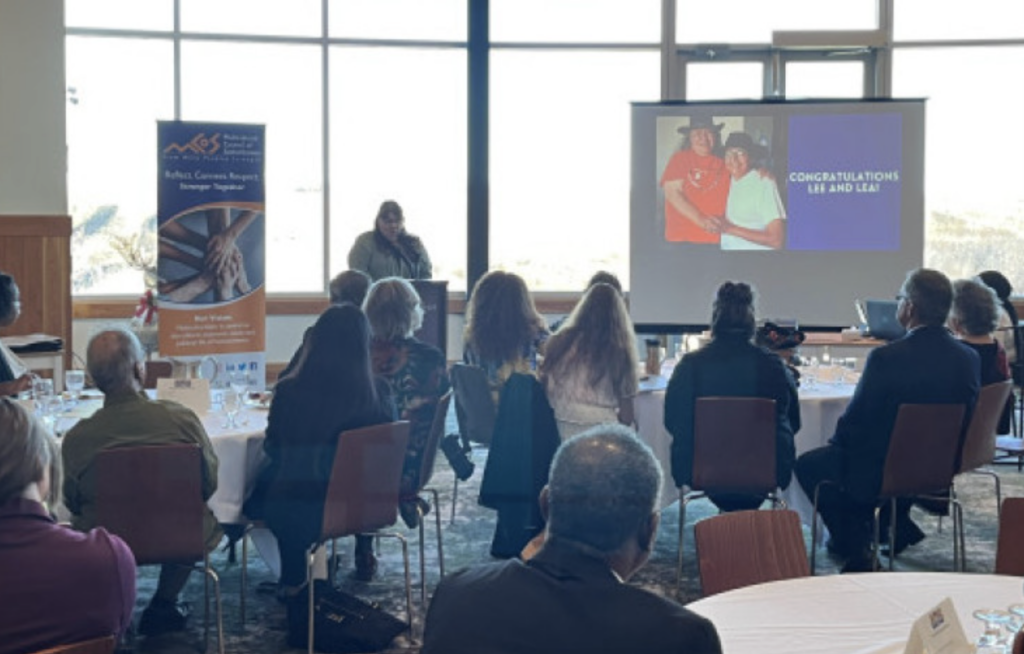
 The Treaty Commissioner of Saskatchewan, Mary Musqua-Culbertson, was pleased to attend the Multicultural Council of Saskatchewan’s kick off to Saskatchewan Multicultural week. The ceremony was created to recognize individuals who have made contributions to multiculturalism in Saskatchewan.
At the Office of the Treaty Commissioner of Saskatchewan, we like the Multicultural Council of Saskatchewan, work to ensure the preservation of identity, language, culture, and worldviews. We work towards reconciliation through education and understanding of a shared history. And we all want to see an end to racism and injustice.
Indigenous Peoples in Canada have survived failed attempts to remove these key components of culture, identity, and language, which is why it’s so important we work together to make Canada strong by preserving these.
Commissioner Musqua-Culbertson was pleased to be able to introduce Maureen Lea Keewatin Desjarlais and Angus Lee Desjarlais of Kawacatoose First Nation as the first recipients of the Leading Together Individual Award.
They created the All Nations Gathering Pow Wow as part of their ceremonial mourning journey for their daughter. They consistently show their immersion in nehiyaw traditions, meaningful relationships with Elders, and innovative ways to share culture with non-Indigenous people.
Recognized for the Leading Together Organizational Award was the Treaty Land Sharing Network in Treaty 4 Territory for their work in connecting farmers and Indigenous land users.
The Leading Together Award recognizes work with long-term impact towards reconciliation.
The Indigenous Veterans Initiative: Finding Unmarked Graves
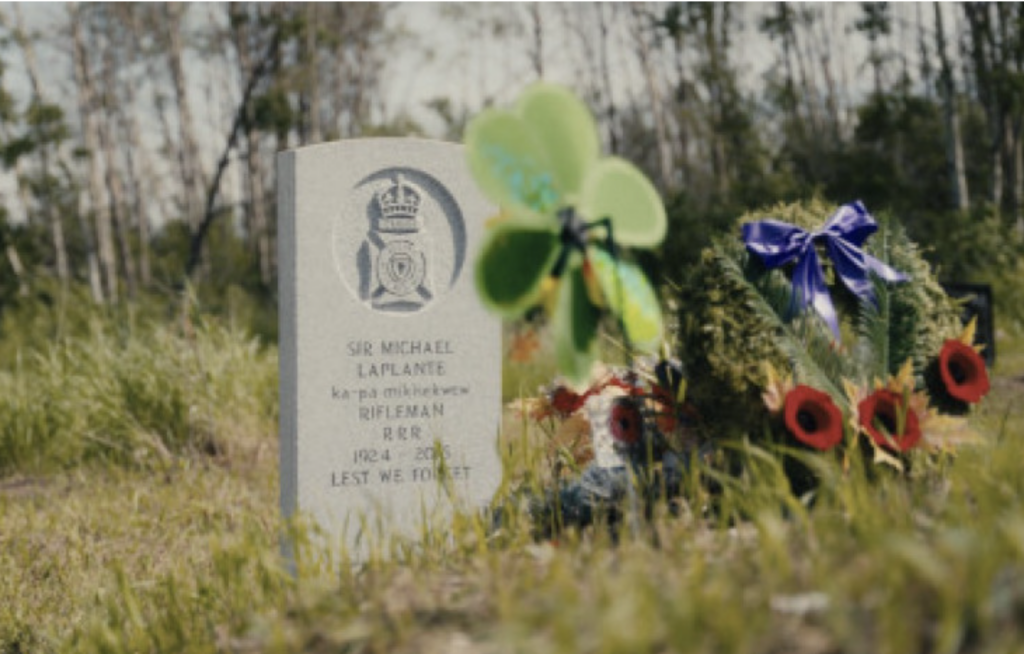
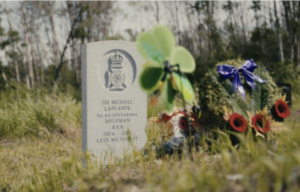 The Last Post Fund (LPF) is pleased to announce the launch of its short documentary film, The Indigenous Veterans Initiative: Finding Unmarked Graves.
The film showcases the work that the LPF’s Indigenous Veterans Initiative (IVI) has carried out in collaboration with Indigenous communities since its launch in 2019. It follows the journey of three Indigenous researchers based in different corners of Canada, as they share their process for finding the unmarked graves of Veterans in their community.
Specific to Saskatchewan, the film follows the work of Gloria LaPlante, a schoolteacher aid from Kawacatoose First Nation, who is committed to remembering the Veterans in her community.
Not only does LaPlante organize the community’s yearly Remembrance Day events, but she worked with the LPF to find the unmarked graves of more than ten Veterans. In the film we witness the installation of eight grave markers, with many families in attendance at the ceremony.
LaPlante was also particularly successful in helping find the traditional names of Indigenous Veterans in her community, allowing the LPF to add them to new and existing Veterans’ grave markers.