
Posts by support@ryadcorp.com
Lyndon J Linklater
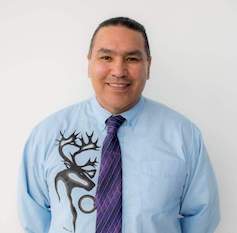
Lyndon J Linklater is a traditional knowledge keeper and storyteller. He has an educational background in Indian Social Work, Indian Studies and some law.
He is a citizen of the Thunderchild First Nation (Plains Cree) in Treaty 6 and has roots in Couchiching First Nation (Fort Francis, Ontario) in Treaty 3.
Presently, Lyndon shares work with the Remai Modern Art Museum in Saskatoon as their Indigenous Relations Advisor providing advice to their board and staff and delivering cultural programming.
He is the longest serving member of the Office of the Treaty Commissioner’s Speakers’ Bureau, since he was appointed in 2000. Over the years, he has spoken to tens of thousands of people, delivering awareness and enlightenment on Treaty and First Nation worldview.
He is a powerful story teller that utilizes First Nation teachings that involve knowledge of ceremonies and mixes humour to deliver a poignant message
Topics:
The Treaties: Treaty History, Treaty Relationship, Treaty Responsibilities, Spirit and Intent of Treaty
The Indian Act: History of the Indian Act, Negative Implications, Indian Residential Schools, Current Issues
Indigenous Culture: Worldview, Language Systems, Tribal/Nation Systems, Pre-Contact History, Colonial Decimation of Culture, Cultural Resilience
Positive Race Relations: Race Relations and Diversity, Multi-Cultural inclusivity
Treaty Implementation: United Nations Declaration on the Rights of Indigenous Peoples, Principles of Reconciliation, Truth and Reconciliation Commission’s Calls to Action, Resilience and Revitalization, Honoring Treaty Promises
*singer, drummer, storyteller, cultural resource
Kevin wâsakâyâsiw Lewis
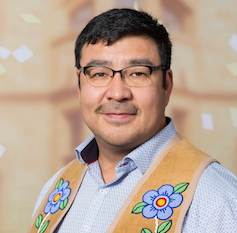
Dr. Kevin wâsakâyâsiw Lewis is a nêhiyaw (Plains Cree) instructor, researcher and writer.
Dr. Lewis has worked with higher learning institutions within the Prairie Provinces of Manitoba, Saskatchewan and Alberta in the areas of Cree Language Development and Instructional methodologies. His research interests include language and policy development, second language teaching methodologies, teacher education programming, and environmental education.
For the past 15 years, Dr. Lewis has been working with community schools in promoting land and language-based education and is founder of kâniyâsihk Culture Camps a non-profit organization focused on holistic community well-being and co-developer of Land-Based Cree Immersion School kâ-nêyâsihk mîkiwâhpa.
Dr. Lewis is from Ministikwan Lake Cree Nation in Treaty 6 Territory.
Topics:
The Treaties: Treaty History, Treaty Relationship, Treaty Responsibilities, Spirit and Intent of Treaty
The Indian Act: History of the Indian Act, Negative Implications, Indian Residential Schools, Current Issues
Indigenous Culture: Worldview, Language Systems, Tribal/Nation Systems, Pre-Contact History, Colonial Decimation of Culture, Cultural Resilience, Cree language instruction
Teaching Treaties in the Classroom facilitator :(primary, secondary, post-secondary), Treaty Kit facilitation (primary, secondary, post-secondary)
*storyteller, ecology and horticulture, traditional medicines, language revitalization
Judge David Arnot
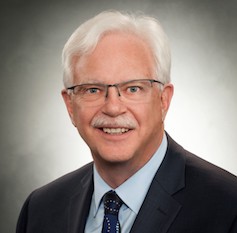
Judge David Arnot was seconded from the Provincial Court of Saskatchewan on January 15, 2009, and was appointed Chief Commissioner of the Saskatchewan Human Rights Commission for a five-year term. On January 15, 2014, Judge Arnot was reappointed as Chief Commissioner for an additional five-year term.
On January 1, 1997, he was seconded by the Federal Government to be the Treaty Commissioner for the Province of Saskatchewan for a 10 year period.
In 2002, as a voice for reconciliation and with the guidance of Elders, David introduced the phrase — “we are all treaty people” — a phrase that is in the discourse in Saskatchewan classrooms and is now part of the lexicon across Canada.
Judge Arnot’s work on the “Teaching Treaties in the Classroom Project” was specifically cited as a model for Canada by the United Nations Special Rapporteur on Racism in his report presented in March 2004. In October 2005, the Office of the Treaty Commission was selected by the Canadian Race Relations Foundation to receive its biennial Award of Excellence for education programs in the public and government sector.
Judge Arnot has produced and directed a number of video education projects. He has been involved in education for the Judiciary through the National Judicial Institute, the Western Judicial Education Centre, the Canadian Association of Provincial Court Judges, and the American Judges Association.
Judge Arnot has been honoured by numerous awards and recognition.
Topics:
The Treaties: Treaty History, Treaty Relationship, Treaty Responsibilities, Spirit and Intent of Treaty
The Indian Act: History of the Indian Act, Negative Implications, Indian Residential Schools, Current Issues
Positive Race Relations: Human Rights, Race Relations and Diversity, Cultural, Social and Economic Rights, Multi-Cultural inclusivity
Treaty Implementation: United Nations Declaration on the Rights of Indigenous Peoples, Principles of Reconciliation, Truth and Reconciliation Commission’s Calls to Action, Resilience and Revitalization, Honoring Treaty Promises
Georgina Musqua
Georgina Musqua has certificate of Human Justice from University of Regina. She took her practicum with Beardy/Okemasis First Nation with the Justice Community Program as Acting Community Justice Co-ordinator.
Georgina is a member of Keeseekoose First Nation, Treaty 4. She is a member of the Saulteaux tribe and speaks the language fluently. She is survivor of the St. Philip’s Residential School which was located on the Keeseekoose First Nation Reserve. She is the daughter of the late Roy Musqua and Nellie (nee: Brass) Musqua.
Georgina is mother of four daughters, the oldest daughter deceased in 1990. She took custody and raised her two young grandchildren, age 2 and 4. She is currently raising 5-year-old great grandson since infancy. She is a grandmother/ great grandmother of many. She loves spending time with her family and cooking for the special events throughout the year.
As a young mother with her deceased husband, took their daughters to the surrounding powwow, as well to the many ceremonies at Keeseekoose, Cote and Key First Nation. She is a proud, loving, gentle and kind Saulteaux woman who provides leadership and guidance for her children, grandchildren and other youth she works with. She practices her cultural in everyday life and strive to set an example for others. She looks for the good in all human beings no matter where they come from or who they are. She maintains a positive, respectful approach with her co-workers and with patience with those who are sometimes difficult to work with.
Topics:
The Treaties: Treaty History, Treaty Relationship, Treaty Responsibilities
The Indian Act: Indian Residential Schools
Indigenous Culture: Worldview
Positive Race Relations: Human Rights
*worked for the RCMP
Elizabeth Zdunich
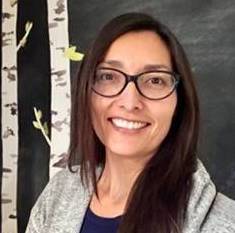 Elizabeth (Liz) Zdunich is a certified teacher who enjoys the adventure of learning and revitalizing Cree language and culture. She holds a Certificate in Indigenous Languages, a B.Ed, and a B.A.(Hons.) from the University of Saskatchewan.
Liz is a member of the Peter Ballantyne Cree Nation and is a descendant of Rock Cree and Scottish ancestry. A northerner at heart, Liz has called the prairie home for the past decade. She currently lives on a grain farm with her husband, three children and a herd of bison.
Inspired by the strong women in her family lineage Liz has continued to learn about traditional uses of medicinal plants, healthy relationships and to learn from the land. She shares rich cultural knowledge with students in a hands-on way as well as through story.
Guiding schools to as they collaboratively write land acknowledgements in a meaningful way is a positive part of her work. Liz specializes in Indigenous Perspectives and Treaty Education implementation in the classroom.
Topics:
The Treaties: Treaty History, Treaty Relationship, Treaty Responsibilities, Spirit and Intent of Treaty
The Indian Act: Negative Implications, Indian Residential Schools, Pass System
Indigenous Culture: Cultural Resilience, Strength of Women, Beginner Cree Language Instruction, Myths & Misconceptions
Treaty Implementation: Truth & Reconciliation Calls to Action, Resilience & Revitalization
Indigenous Language: Connecting to Language, Storytelling, Making Meaning Through Language Revitalization
Youth Advocacy & Leadership
Eleanore Sunchild
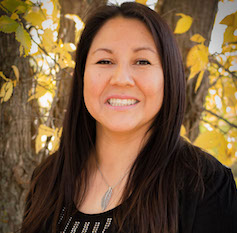
Eleanore Sunchild is a proud member of the Thunderchild First Nation.
She graduated from the University of Alberta, Faculty of Law in 1998 and has been a member of the Saskatchewan Bar since 1999. Eleanore has a BA in political science and completed her undergraduate degree in French immersion at Faculte St. Jean, University of Alberta. Eleanore is the sole owner of Sunchild Law, located on Poundmaker II, outside of Battleford. Sunchild Law specializes in Indigenous Law.
Ms. Sunchild has presented nationally and internationally on the legacy of the Indian Residential School system, and the impact of colonial policy in Canada, the history and importance of the Treaties and recently in April 2018, she presented at the United Nation Permanent Forum on Indigenous Issues on the systemic racism in the Canadian justice system. She is a current member of the Office of the Treaty Commissioner’s Speaker’s Bureau.
With her husband, Tony, they raise four children. She is dedicated to ensuring that her children also remain strongly connected to their culture and know the true history of this land.
Topics:
The Treaties: Treaty History, Treaty Relationship, Treaty Responsibilities, Spirit and Intent of Treaty
The Indian Act: History of the Indian Act, Negative Implications, Indian Residential Schools, Current Issues
Indigenous Culture: Worldview, Language Systems, Tribal/Nation Systems, Pre-Contact History, Colonial Decimation of Culture, Cultural Resilience
Positive Race Relations: Human Rights, Cultural, Social and Economic Rights, Anti-Racism training
Treaty Implementation: United Nations Declaration on the Rights of Indigenous Peoples
Delvin Kanêwiyakiho
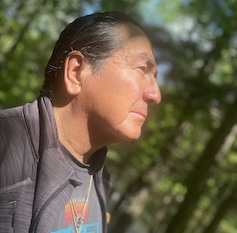
Delvin Kanêwiyakiho joins the Office of the Treaty Commissioners Speakers Bureau with 28 years experience as an educator with Greater Saskatoon Catholic Schools. A certified Treaty Catalyst teacher, he helps colleagues with their Treaty teaching using the Treaty curriculum and uses his own experiences to give students a good start in their journey.
In 2015 Kanêwiyakiho received Indspire’s 2015 Guiding the Journey: Indigenous Educator Award in the Language, Culture and Traditions category. He has cultural currency to speak about most things related to Treaty and nehiyaw settler relations in Canada.
Kanêwiyakiho is Plains Cree raised on Little Pine First Nation.
Topics:
The Treaties: Treaty History, Treaty Relationship, Treaty Responsibilities. Spirit & Intent of Treaties, Treaty Land Entitlement
The Indian Act: History of the Indian Act, Negative Implications, Indian Residential Schools, Pass System, Contemporary Realities, 60s scoop, Natural Resources Transfer Act
Indigenous Culture: Worldview, Language Systems, Tribal/Nation Systems, Pre-Contact History, Cultural Resilience, Strength of Women, Language & Ceremony, Cree Language Instruction, Myths and Misconceptions, Powwow
Missing and Murdered Indigenous Women and Girls
Treaty Implementation: United Nations Declaration on the Right of Indigenous Peoples, Truth & Reconciliation Commission’s Calls to Action, Resilience & Revitalization, Honouring Treaty Promises
Positive Race Relations: Multicultural Inclusivity, Human Rights, Race Relations and Diversity, Cultural, Social and Economic Rights
Indigenous Language: Connecting to Language, Language as Medicine, Storytelling, Making Meaning Through Language Revitalization, Language Curriculum Development
Youth Advocacy & Leadership
Anti-Racism Education: White Supremacy, Diversity and Inclusion as a Result of Equity, History and Contemporary Issues, Language and Research, Colonization, Allyship, How Inequity has been Normalized
Anti-Oppressive Education: Gender and Sexual Diversity, Two-Spirit Teachings, Workplace Discrepancies, Intercultural Communications, Social Location, Language & research, How Inequity Plays in the Workplace
Dale Worme
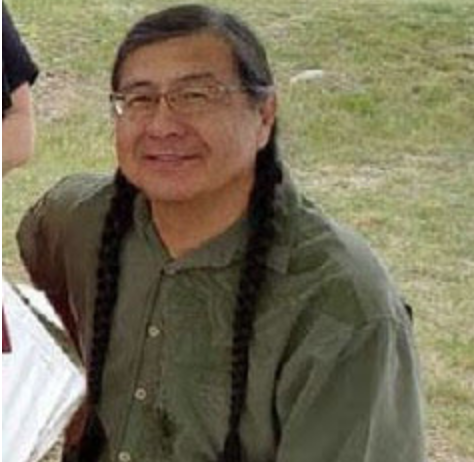
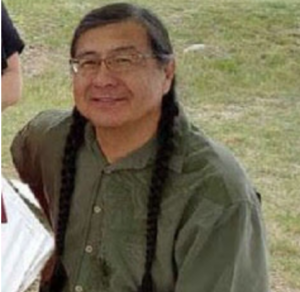 Dale Worme is from the Kawacatoose First Nation, #88, Touchwood Agency Tribal Council, Treaty 4.
Dale grew up with his grandfather on the Kawacatoose First Nation; his grandfather stressed the importance of education because what he considered his “lack of western education” and his ability to deal with the Indian Agent. Dale went on to receive his post-secondary education, a Bachelor of Science in Geology, at the University of Regina.
He has been employed by various natural resource companies and with Agriculture and Agri-Food Canada. During the last part of his career with Agriculture, Dale also farmed on the Kawacatoose First Nation.
Dale believes many First Nations still practice an education that is rooted in their local environment – the culture, the economy, music, and history of their communities. It is place-based; based on direct experience and reflection which increases knowledge, develops skills, clarifies values, and develops a person’s capacity to contribute to their communities.
Topics:
The Treaties: Treaty History, Treaty Relationship, Treaty Responsibilities
The Indian Act: History of the Indian Act, Negative Implications
Indigenous Culture: Worldview, Language Systems, Tribal/Nation Systems, Pre-Contact History, Colonial Decimation of Culture, Cultural Resilience
*geology, ecology, agriculture/horticulture
Charlie Clark
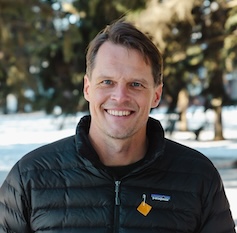
Charlie Clark’s ancestral roots are English, Irish, and German. He grew up mostly in British Columbia before moving to Saskatoon where he and his wife Sarah have been living since 2002, raising their three children and their dog Cocoa.
Charlie served as Mayor of Saskatoon from 2016-2024, and was a City Councillor for ten years before that. During that time Charlie worked with First Nation and Metis governments and organizations to strengthen relationships and build partnerships, working together with on a wide variety of initiatives.
During this time Charlie had the opportunity to sit with Indigenous Elders, Chiefs, Families, Youth, Staff members both in Saskatoon and neighbouring communities to learn about the truth about our history, First Nation Traditional worldviews and about how to build Miyo-Wahkotowin (good relationships).
Throughout this time, Charlie has also been part of local, provincial, and national conversations about how to return to the original spirit and intent of the Treaty Relationship – to work towards Wetaskiwin (living peacefully together on this land) through supporting each other to build Miyo-Pimatisiwin – good livelihoods. He is aware that he has only just begun to understand these core Treaty principles, but believes that these principles can be the basis for creating a better society and future for everyone.
Today Charlie is doing work with the Office of the Treaty Commissioner exploring how to strengthen relationships between First Nations and Municipal Partners across Saskatchewan. This has already been an inspiring experience meeting visionary and courageous people across the province forging paths of Reconciliation that he had no idea were underway.
As part of the Speaker’s Bureau Charlie can share his perspective of what he has learned as a non-Indigenous person and a Mayor working towards Truth and Reconciliation. He understands how the failure to live up to the Treaty Relationship has impacted our ability to build trust and how we can work as Treaty Partners to build the bridges needed to fulfill the Treaty Relationship as it is meant to be. Together, we can build better relations and a better future for all of our children and grandchildren
Topics:
A non-Indigenous journey of understanding the spirit and intent of Treaties; rebuilding Treaty relationships at the community level; and confronting the challenges and opportunities of rebuilding trust after generations of colonial-based relations.
Back
Cort Dogniez
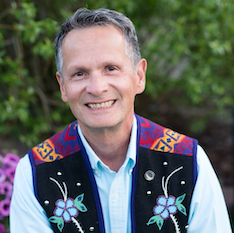
Cort Dogniez is a proud Métis man born and raised in Saskatoon. He is happily married to his wife Angela and proud of his daughter, Ashley and son, Christopher. He is a graduate of the Indian Teacher Education Program and possesses a Bachelor of Education and Post Graduate Diploma in Indigenous Studies. Cort worked in the education field for 41 years as a classroom teacher and administrator.
He is now happily retired and doing all the things he enjoys without any job hassles. He is an oral storyteller and enjoys sharing stories shared with him by his kohkom, Clara Delorme. He is also a published children’s author. His first book, Road to La Prairie Ronde was published by Gabriel Dumont Institute in 2020 and received two nominations from the Saskatchewan Book Awards.