
News
The Indigenous Veterans Initiative: Finding Unmarked Graves
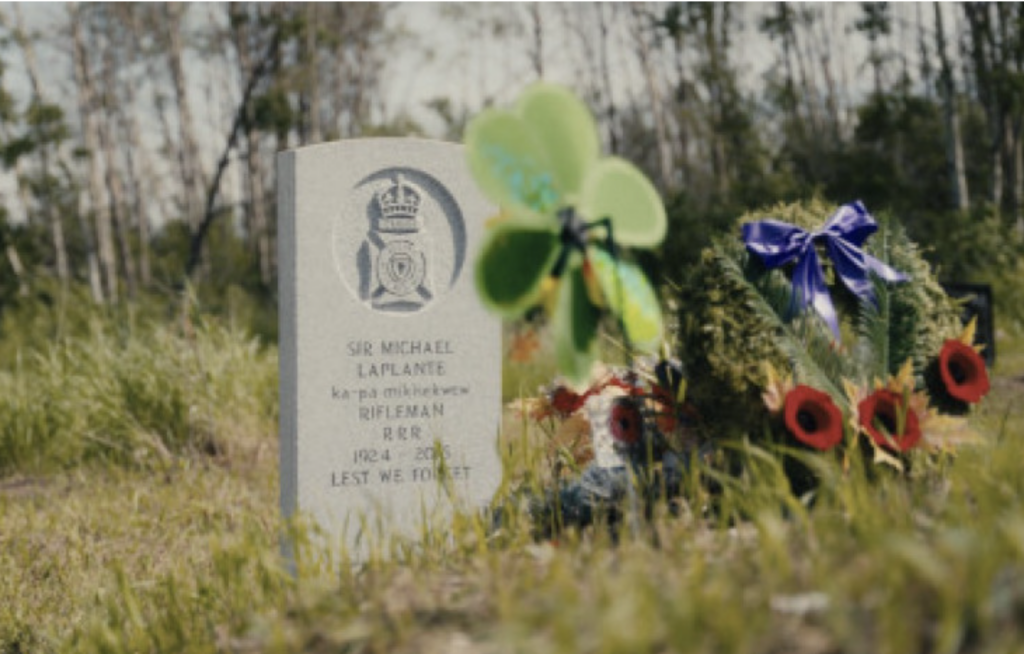
 The Last Post Fund (LPF) is pleased to announce the launch of its short documentary film, The Indigenous Veterans Initiative: Finding Unmarked Graves.
The film showcases the work that the LPF’s Indigenous Veterans Initiative (IVI) has carried out in collaboration with Indigenous communities since its launch in 2019. It follows the journey of three Indigenous researchers based in different corners of Canada, as they share their process for finding the unmarked graves of Veterans in their community.
Specific to Saskatchewan, the film follows the work of Gloria LaPlante, a schoolteacher aid from Kawacatoose First Nation, who is committed to remembering the Veterans in her community.
Not only does LaPlante organize the community’s yearly Remembrance Day events, but she worked with the LPF to find the unmarked graves of more than ten Veterans. In the film we witness the installation of eight grave markers, with many families in attendance at the ceremony.
LaPlante was also particularly successful in helping find the traditional names of Indigenous Veterans in her community, allowing the LPF to add them to new and existing Veterans’ grave markers.
National Indigenous Veterans Day
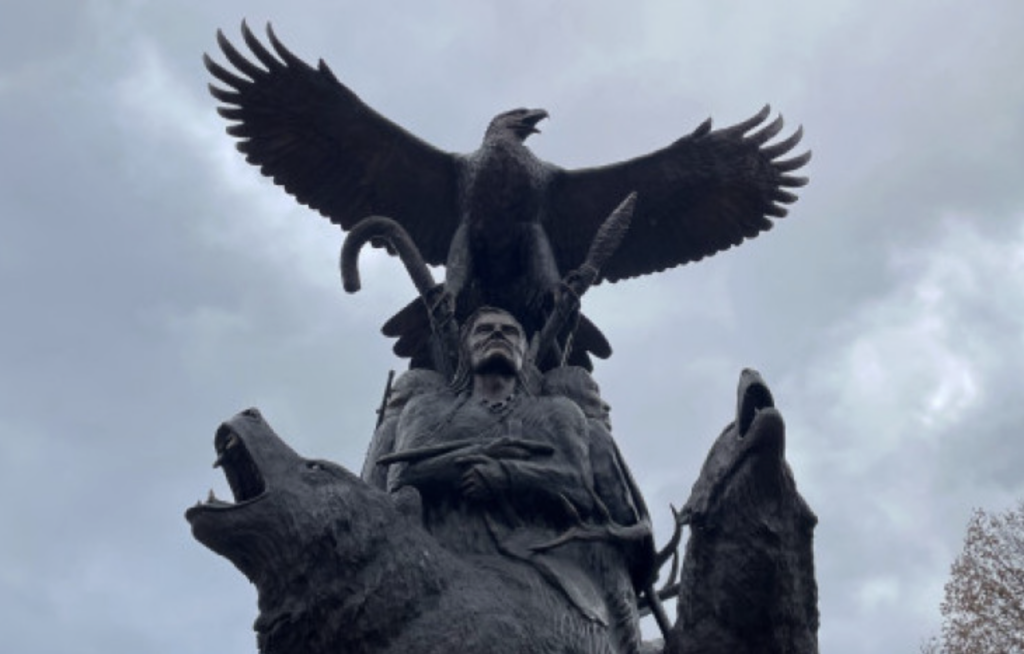
 Today we honour Indigenous veterans and pay tribute to their contributions in Canada’s military history.
Each Nov. 8, National Indigenous Veterans Day, is an opportunity to remember those who fought and died for a country that did not treat them equally or with respect. Many status Indian veterans returned from the Second World War found that while they may have fought for their country, they had lost their status in the process and had no home to return to.
Under Treaty, Indigenous People did not have to fight on behalf of the Queen or Canada. We saw this when Alexander Morris was with the Cree Nation during Treaty 6 negotiations at Fort Carleton in August 23, 1876.
“In case of war you ask not to be compelled to fight. I trust there will be no war, but if it should occur I think the Queen would leave you to yourselves. I’m sure she would not ask her Indian children to fight for her unless they wished, but if she did call for them and their wives and children were in danger they are not the men I think them to be, if they did not come forward to their protection.”
Then again during Treaty 6 negotiations at Fort Pitt on September 7, 1876.
“I know that you have been told that if war came you would be put in the front, this is not so. Your brothers at Carleton asked me that they might not be forced to fight, and I tell you, as I assured them, you will never be asked to fight against your will; and I trust that the time will never come of war between the Queen and the great country near us.”
As part of your reconciliation journey learn more about these veterans and take time to recognize them now. Here are some resources to get started
ithiniw-simâkanisihkânak / Indian Veterans
Salamô omasinahikîwin / Written by Solomon Ratt
Image: The National Aboriginal Veterans War Memorial in Ottawa
Additional New Treaty Boundary Highway Signs Unveiled
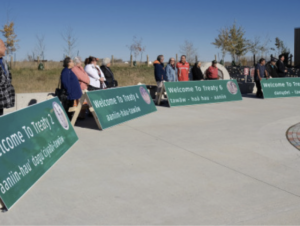
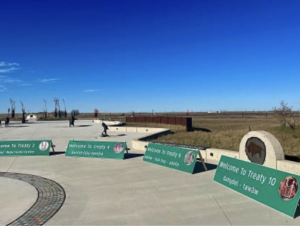 Today, the Government of Saskatchewan and the Office of the Treaty Commissioner unveiled a series of new highway signs to be placed in the Estevan, Moosomin, Lanigan and La Ronge areas to highlight more Treaty boundaries across the province – and will be seen by thousands of motorists daily.
“I appreciate the ongoing collaboration of the Office of the Treaty Commissioner and the Government of Saskatchewan in providing prominent highway signs that help bring attention to the importance of the Treaties,” Lieutenant Governor Russ Mirasty said.
“These provincial highway signs are symbols of our government’s continuing reconciliation journey and ongoing work to support Treaty education initiatives in Saskatchewan,” Minister Responsible for First Nations, Métis and Northern Affairs Don McMorris said. “We are proud to continue to work in partnership with the Office of the Treaty Commissioner on our ongoing path of reconciliation.”
“These signs allow people to recognize and understand the Treaty territories that were here long before the creation of the province,” Treaty Commissioner of Saskatchewan Mary Musqua-Culbertson said. “The highways cross these territories and it is important that it is acknowledged.”
Read the full release from the Government of Saskatchewan.
Additional coverage:
Sask. treaty commissioner, province unveil more treaty boundary highway signs (The Star Phoenix)
Four new treaty boundary signs to be put along Saskatchewan highways (Global News)
Sask. Government and treaty commissioner unveil new treaty signs (MBC Radio News)
OTC at the Heart of Treaty 6 Reconciliation Gala
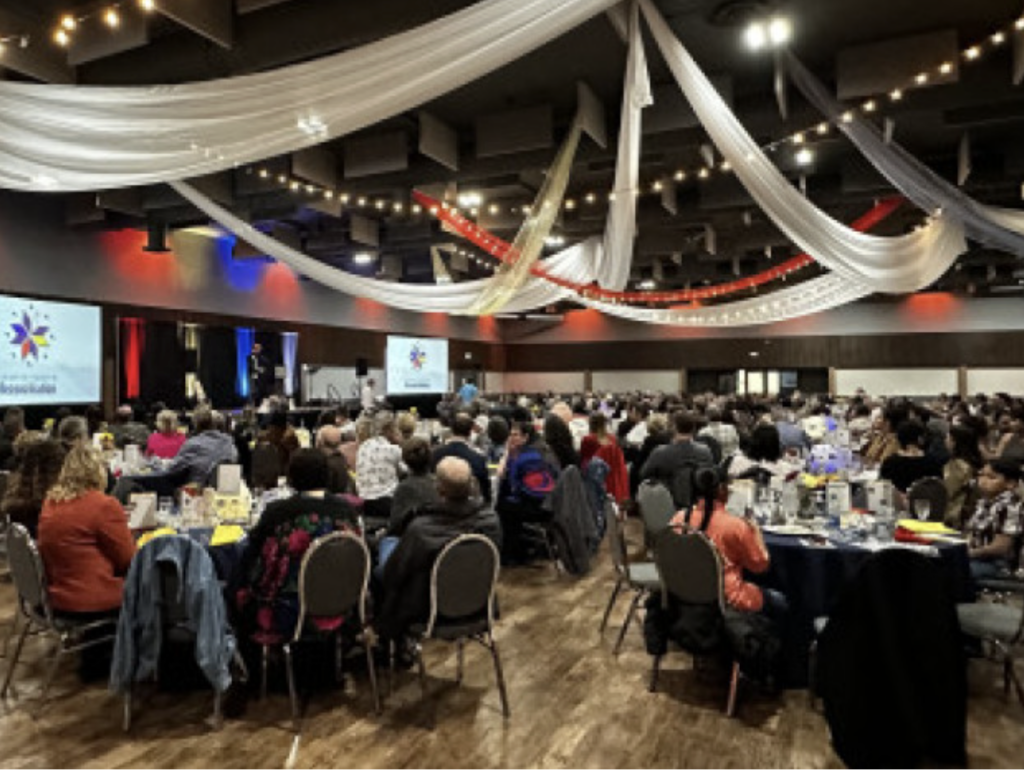
 On Oct. 12, team members from the Office of the Treaty Commissioner were pleased to join about 250 people at the Heart of Treaty 6 Reconciliation Gala.
“From the traditional ceremonies that took place throughout the evening, to the speakers that shared their stories, everyone was engaged. I think this event is beneficial as it brings like-minded people with culturally different backgrounds together for an evening, helping with truth and reconciliation,” said OTC student mentor Tori MacDonald.
Rhett Sangster, OTC director, reconciliation and community partnerships spoke during the event, telling the story of how the Heart of Treaty 6 Reconciliation group was first created. Organizations from Lloydminster, Onion Lake First Nation, Poundmaker First Nation, St. Walburg, and Turtleford signed a “Commitment to Relationships and Trust,” and committed to working together through participation in a tobacco ceremony.
The keynote speaker for the event was the Lieutenant Governor of Saskatchewan Russ Mirasty, who spoke about his experience as an Indigenous person attempting to enter the RCMP. He stressed the importance of relationships in advancing truth and reconciliation.
Howie Miller’s comedy performance ended the evening with laughs.
The OTC Honours Survivors on the National Day for Truth and Reconciliation
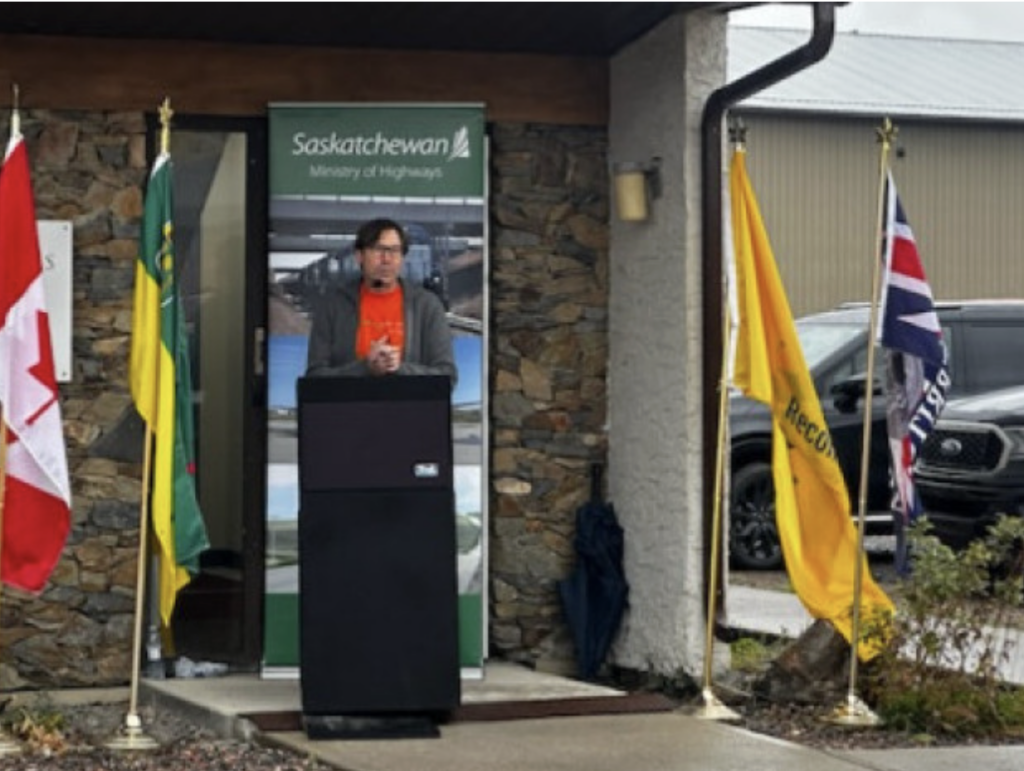
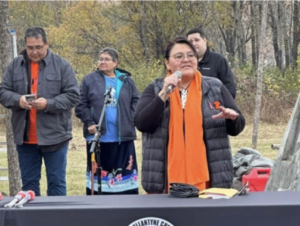
The Treaty Commissioner of Saskatchewan, Mary Musqua-Culbertson, travelled and visited through Treaty 4 territory and participated in a Walk for the National Day of Truth and Reconciliation.
At the Peter Ballantyne Cree Nation Truth and Reconciliation Sturgeon Landing Gathering, OTC executive director Angie Merasty spoke about hearing from survivors and honouring their stories, she thanked them all for their sacrifice because many would not be here today if not for them. She spoke about her late father who was part of the Indian Hospitals and contracted TB at a young age. She also spoke about the good work OTC does in educating about truth and reconciliation, research and archives, treaty education, etc. After Angie finished she was able to give to Survivors birthday cards from children at Vanscoy School. These students learned that children in residential school were unable to celebrate their birthdays and wanted to send greetings to do a small part to write those wrongs.
Our director of education, Elaine Sutherland spoke about Indigeneity; Treaties; the Indian Act; Residential School and Intergenerational trauma, at an event with Saskatchewan Polytechnic called Embracing the Circle: Strengthening Indigenous-Newcomer Relations. There was lots of good conversation and questions.
In La Ronge, director of research and archives Sheldon Krasowski spoke at the naming of the main bridge, now called the Reconciliation Bridge. By giving it the name Reconciliation Bridge, it will help bring the tri-communities of La Ronge, Air Ronge, and the Lac La Ronge Indian band together. More than 7,000 vehicles cross the bridge every day, not only local traffic but tourists, workers for the northern mine sites, and trucking companies cross it.
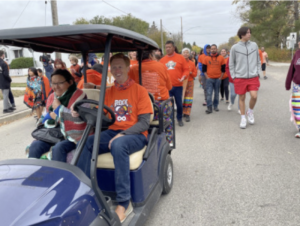
Rhett Sangster, the OTC director of reconciliation and community partnerships, volunteered at the Walk for Reconciliation in Saskatoon by supporting Elders and Survivors. Many others from our office also went out in the cold to join this walk.
Members of the OTC team also were at the Saskatoon Tribal Council powwow, some went to the events at Wanuskewin Heritage Park, and others made the day about consuming information about residential schools and their impacts, including attending 94 Calls to Action: A Round-Table Talk about Truth and Reconciliation in Canada hosted by the Saskatchewan Intercultural Agency.
This day is important to the OTC team, and everyone was so pleased to be part of it, in one way or another. We know that through kindness, patience, and understanding, we can do better, and we have to do better.
It is together that we become stronger and make our Treaty territories a safe and healthy place for all of us. It is about walking together on a journey to create a new, shared future for our children, grandchildren and generations to come.
Statement from the OTC for the National Day for Truth and Reconciliation
 On Sept. 30, 2023, we commemorate the National Day for Truth and Reconciliation also known as Orange Shirt Day. This year, don’t just take a day off work. Take time to learn more about reconciliation – read about residential schools and their impacts, learn about intergenerational trauma, watch a mini-documentary or listen to a podcast about the ongoing search for children who never returned home. Stop for a minute and think about what that means and the impacts they still have.
The new school year just started, children go to school in the morning and return in the afternoon. The Office of the Treaty Commissioner is asking that you imagine how it would feel to be forced to send a child to a boarding school and not see them until June, or never have them come home: the gravity of a situation you have no control over and can’t stop. How would you feel if you never saw your child again? Or know what happened to them? Feel angry about a system that was run by the government and churches – places that are supposed to be safe and protect people that were instead administering the residential school system and could not be turned to for help. Feel devastated at the idea that decades later some parents and families still do not know what happened to the children that left to school.
But don’t stop with these feelings. The OTC is asking you to channel those emotions and be motivated to take action: donate to organizations that support survivors and their families; advocate for churches and others to release records to family members; stand in solidarity with families.
The journey of reconciliation is not about checking things off a list. It’s not about ensuring you have said the right thing. It is a growth process, it is about being open minded and willing to learn, it usually involves a range of emotions and uncomfortable conversations with yourself and the people around you.
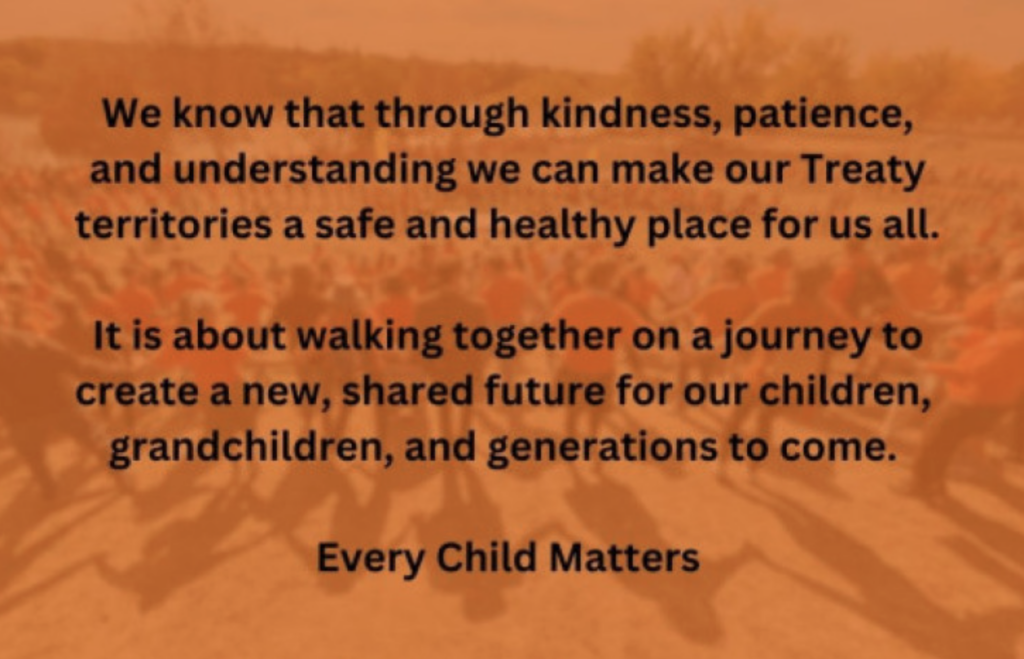
We know that through kindness, patience, and understanding we can do better, and we have to do better. It is together that we become stronger and make our Treaty territories a safe and healthy place for all of us. It is about walking together on a journey to create a new, shared future for our children and grandchildren. Every Child Matters.
OTC at Montreal National Gathering on Unmarked Burials
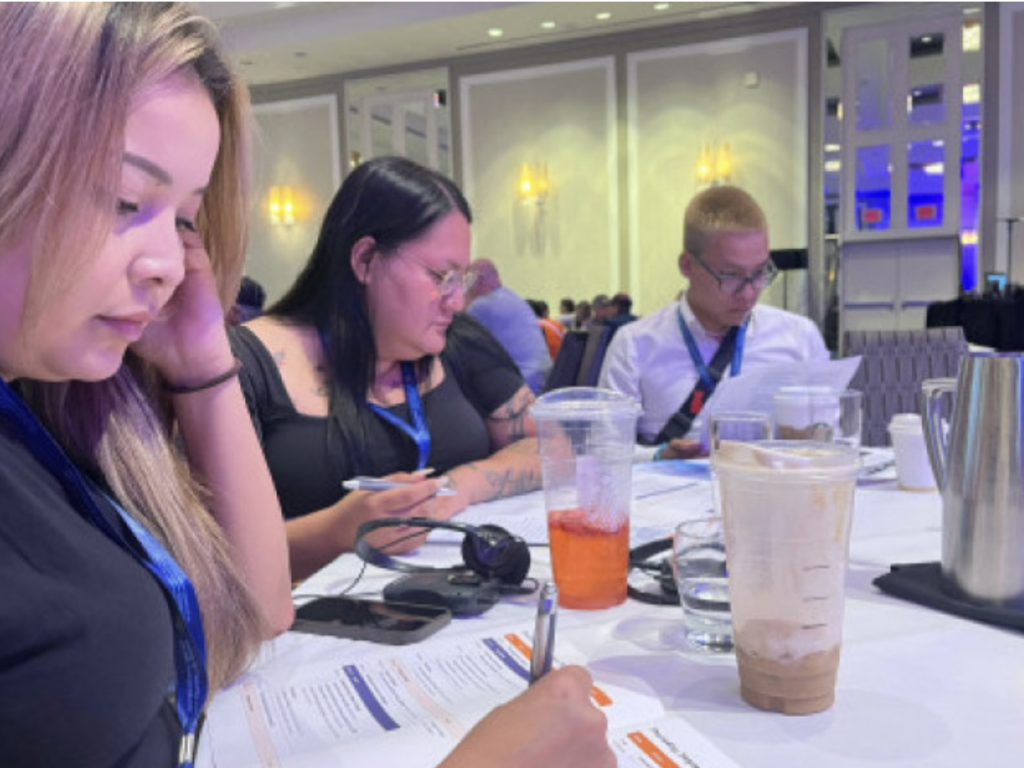
 A team of student mentors and the Office of the Treaty Commissioner director of Research and Archives traveled to Montreal to attend the National Gathering on Unmarked Burials.
“These conferences are never easy, but it has to be done and the education and conversations that come from it are why we do it,” said Morgan Esperance, a member of the research and archives team.
The conference featured survivors sharing their truths, leaders speaking on processes, researchers about the work of accessing residential school records, and the Special Interlocuter for Missing Children and Unmarked Graves and Burial Sites, Kimberly Murray.
Community leaders talked about what steps they took and what their process looked like when searching and dealing with unmarked graves. Journalist Tanya Talaga spoke of her experience searching for her great, great grandmother, including inconsistent information, name misspelling in documents, and barriers with access to information and privacy laws.
Survivors told personal stories, including their experiences searching for missing siblings who never returned from residential school. In some cases, people have found missing loved ones, and they were able to put in a gravestone and have closure, for many others the search continues.
“One man shared his story for the first time ever it was amazing. His partner stood behind him the whole time and he fell into her arms when he finished. It was powerful and beautiful to watch him let that go,” Esperance said.
OTC team members overcame emotion to ask questions and learn as much as possible about Unmarked Burials, the research being done, and the kind of support needed.
Following the event, the team debriefed with one another.
“We all talked together about how we were feeling and laid some tobacco down and said a prayer, so we could move forward in a good and healthy way after the emotional two days,” said Eli Worme, a student who works with the research and archives team.
Healing is a continuing journey for residential school survivors and the for those that are faced with the painful legacy. The OTC thanks survivors that have the courage to share their story and stands in solidarity with all survivors and their families.
If you are a Survivor and need emotional support, a national crisis line is available 24 hours a day, seven days a week. Residential School Survivor Support Line: 1-866-925-4419
OTC statement on changes to land claim settlements
According to current Crown-Indigenous Relations and Northern Affairs Canada policy, those currently entering Modern Treaties are being asked to surrender their lands, giving up current or future claim on their historic lands. As the spirit and intent of Treaty negotiations is defined by an equal partnership to share the lands and resources with newcomers, many are nations are rightly not interested in losing all connections to their land, or legally giving up their right or claim to it. This is stalling Modern Treaty processes.
In documents accessed by media outlets, the Government of Canada has been discussing possible changes to this land claim process that removes the need for communities to surrender land. In place of a surrender, the government is suggesting that as part of Modern Treaty negotiations communities could retain a connection to the land while agreeing not to sue for damages or return of the land.
The Treaty Commissioner of Saskatchewan is among the voices calling for increased funding for specific claims and a desire for an independent process to handle these claims
The use of these new measures is a move away from the relic of colonial laws, and marks another small step towards reconciliation. However, true reconciliation can only be achieved though full Treaty implementation, including, including Treaties 1-11 which allowed newcomers to settle in what was later called Saskatchewan.
The change to using promissory estoppel in specific claims settlements does not impact the historical treaties as the numbered Treaties in Saskatchewan never involved a land surrender. Oral histories and the Crown’s archival records tell us those Treaties were negotiated to be able to share the lands and resources. Treaty wasn’t about surrendering anything. Treaty was to share the land to the depth of a plough, enough for the new settlers to plant their seeds.
The numbered Treaties needs to be honoured in full Spirit and Intent and governments need to work harder to implement these.
The Treaty Commissioner of Saskatchewan calls on the Government of Canada to right past wrongs and the misadministration of land and resources for Indigenous Peoples.
English River First Nation releases results of ground-penetrating radar
Treaty Commissioner of Saskatchewan Mary Musqua-Culbertson spoke at the event. She asked parents to imagine what it would be like to send your four-year-old off to Kindergarten next week and not see them again until June. And then in June waiting to see your child, who never came home.
“[Parents now] get to hold their children at night, they get to kiss them, they get to hug them. Many of our people did not have that opportunity, nor did our parents feel that love,” she said.
Residential schools are the broken Treaty promise of education. First Nations families wanted children to be educated, to be prepared for the future, but also be able to keep their culture, and language. That is not what they got.
“These are ugly truths that we have to come to grips with in this country. Whether we like it or not this is happening, these truths are being unveiled.
“Nobody believed our survivors, nobody believed our oral history. Now they do.”
Musqua-Culberston said, learning the true history of Canada is the most important.
“I cannot say this enough, but It is all our responsibility, as people who live in this country to educate ourselves, take advantage of the resources, they are everywhere now.”
Read more about the event:
‘Not the final numbers’: 93 possible unmarked graves discovered at former Beauval residential school
Sask. First Nation says it’s found 93 potential unmarked child, infant graves
English River First Nation releases results of ground-penetrating radar
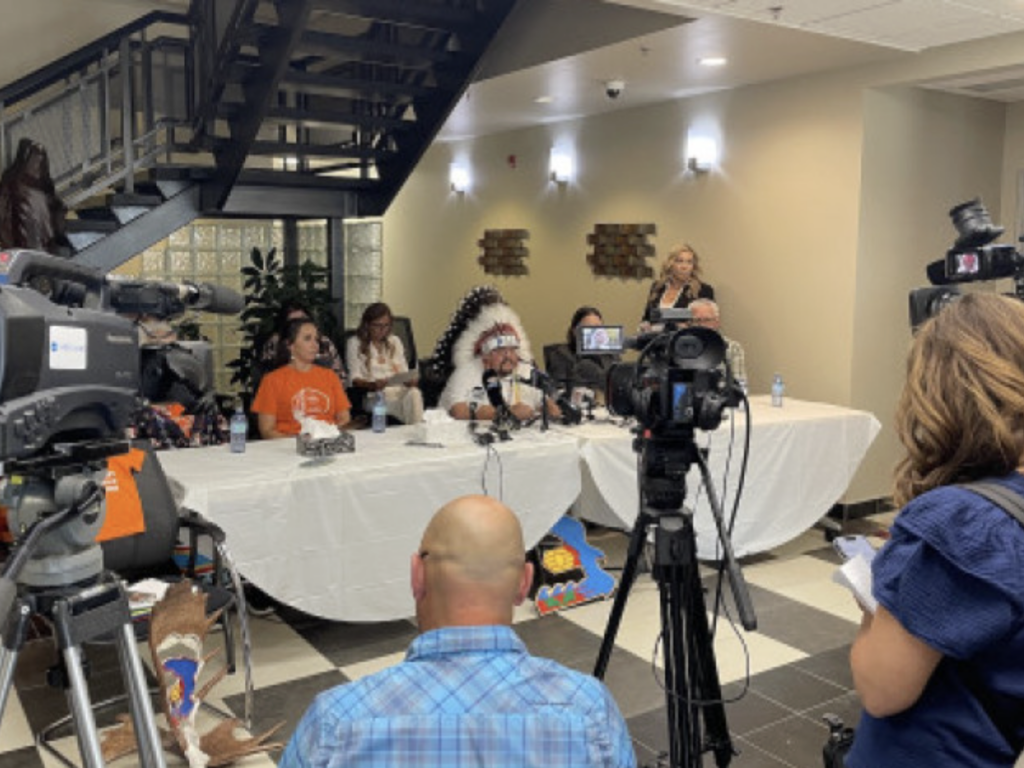
 At a media event today, the English River First Nation announced the results of a two-year search using ground-penetrating radar near the former Beauval Indian Residential School site. Remains of 93 people have been identified, with 79 believed to be children and 14 to be infants.
Treaty Commissioner of Saskatchewan Mary Musqua-Culbertson spoke at the event. She asked parents to imagine what it would be like to send your four-year-old off to Kindergarten next week and not see them again until June. And then in June waiting to see your child, who never came home.
“[Parents now] get to hold their children at night, they get to kiss them, they get to hug them. Many of our people did not have that opportunity, nor did our parents feel that love,” she said.
Residential schools are the broken Treaty promise of education. First Nations families wanted children to be educated, to be prepared for the future, but also be able to keep their culture, and language. That is not what they got.
“These are ugly truths that we have to come to grips with in this country. Whether we like it or not this is happening, these truths are being unveiled.
“Nobody believed our survivors, nobody believed our oral history. Now they do.”
Musqua-Culberston said, learning the true history of Canada is the most important.
“I cannot say this enough, but It is all our responsibility, as people who live in this country to educate ourselves, take advantage of the resources, they are everywhere now.”
Read more about the event:
‘Not the final numbers’: 93 possible unmarked graves discovered at former Beauval residential school
Sask. First Nation says it’s found 93 potential unmarked child, infant graves