
News
Saskatoon Open Door Society’s Treaty Learning Journey
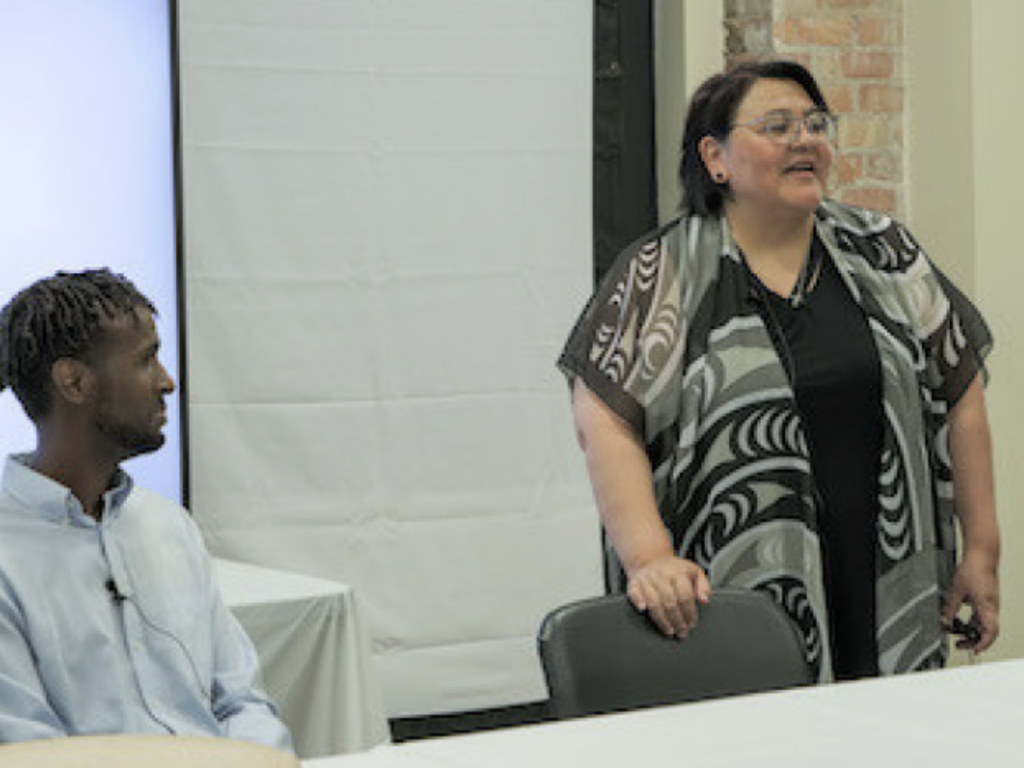
 The Office of the Treaty Commissioner was thrilled to work with the Saskatoon Open Door Society (SODS) to support intercultural learnings and information about Treaty with the Treaty Learning Journey: Let’s Talk Truth.
Over seven, 90-minute sessions, SODS staff and alumni from the Leadership and Community Engagement (LACE) program walked through the true history of Canada, from Before Treaty, then what happened At Treaty, After Treaty, and Today.
We were pleased to hear their feedback on the topics, including Indigenous worldview and indigeneity, numbered Treaties, breaches of Treaty, and contemporary Treaty issues.
Participants shared that they learned more about Indigenous communities, and the training dispelled myths they had been taught.
“The course helped me to understand the historical background of the issues Indigenous communities have been going through. I now realize how much problems we have inherited from the history and we have the obligation to make things correct,” said one participant on their feedback form.
“I have learned more about Canada’s history with Indigenous people and how it affects our country now. I think I’ve gained a greater understanding of the issues facing our Indigenous brothers and sisters,” another said about the training.
We were so happy to present certificates to 40 participants at a small graduation ceremony in June attended by OTC executive director, Angie Merasty, as well as the OTC programs team, speakers bureau member and trainer Delvin Kanêwiyakiho, and the CEO of SODS, Ali Abukar.
As we complete these trainings we are thrilled to see the engagement of participants who want to make positive changes in their communities. This is reconciliation in action.
In the words of one participant, “I think this [training] needs to become mandatory for all of our employees.”
OTC at the 2023 Woodland Cree Gathering
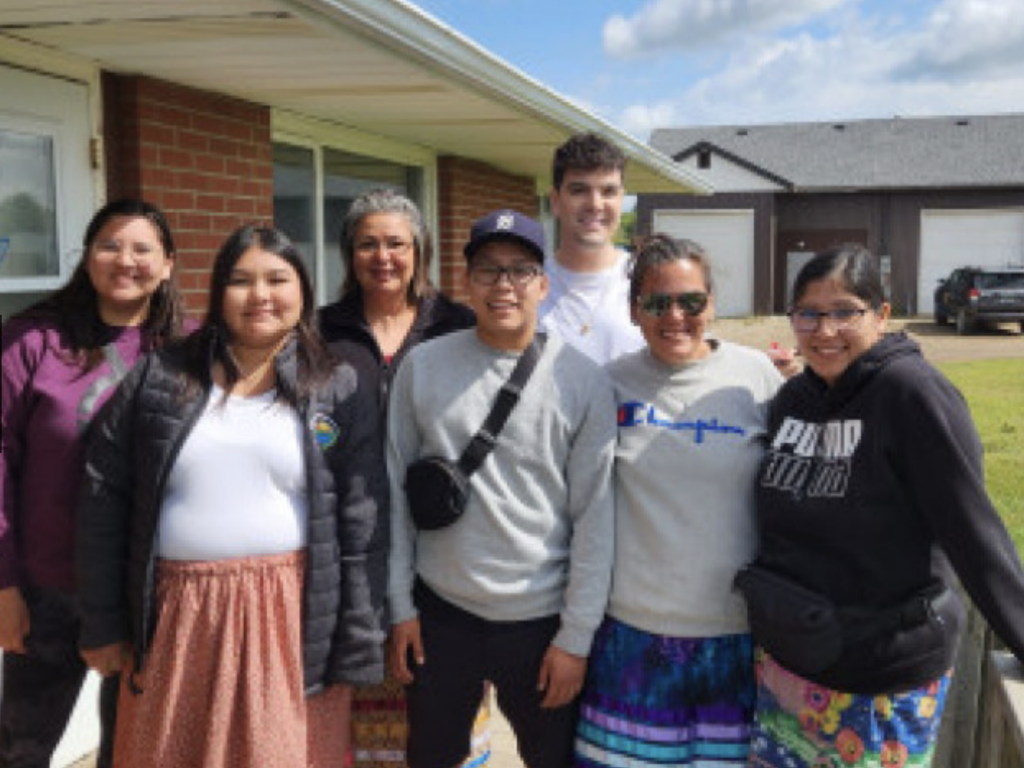
 The Woodland Cree Gathering is an annual event hosted in rotation between the Peter Ballantyne Cree Nation, Lac La Ronge Indian Band and Montreal Lake Cree Nation. It’s happening this week on the Chief Joseph Custer urban reserve in Prince Albert.
The Office of the Treaty Commissioner team was pleased to be able to attend events starting on Tuesday, the day for honouring Indian Residential School Survivors.
Our team was there to share information about the work of the OTC, the services of the speakers bureau and library and archives team, and opportunities to learn through our Treaty education department. We handed out information and answered questions.
We also got to see and participate in actives like hide scraping, smoothing meat and fish, preparing traditional meals like moose meat and stews.
“My favourite part was hearing elders speak during our interviews, but also hearing the speakers Tuesday who honoured NAIG athletes, as well as Chief Tammy Cook Searson’s speech about honouring the residential school survivors and the effects of the Indian residential school system,” said Eli Worme, a member of the OTC team at the event.
This gathering provided the opportunity for our researches to conduct interviews with Elders. They share stories that we are able to add to our archives as part of the oral histories of the Treaty territories.
Hear more through local media coverage:
Prince Albert Daily Herald: Woodland Cree gathering allows residential school survivors to foster healing by sharing stories
MBC Radio News: LLRIB Tammy Cook-Searson at the Woodland Cree Gathering in conversation with Jude Ratt, host of Achimowin
OTC at St. Michael’s Indian Residential School Gathering
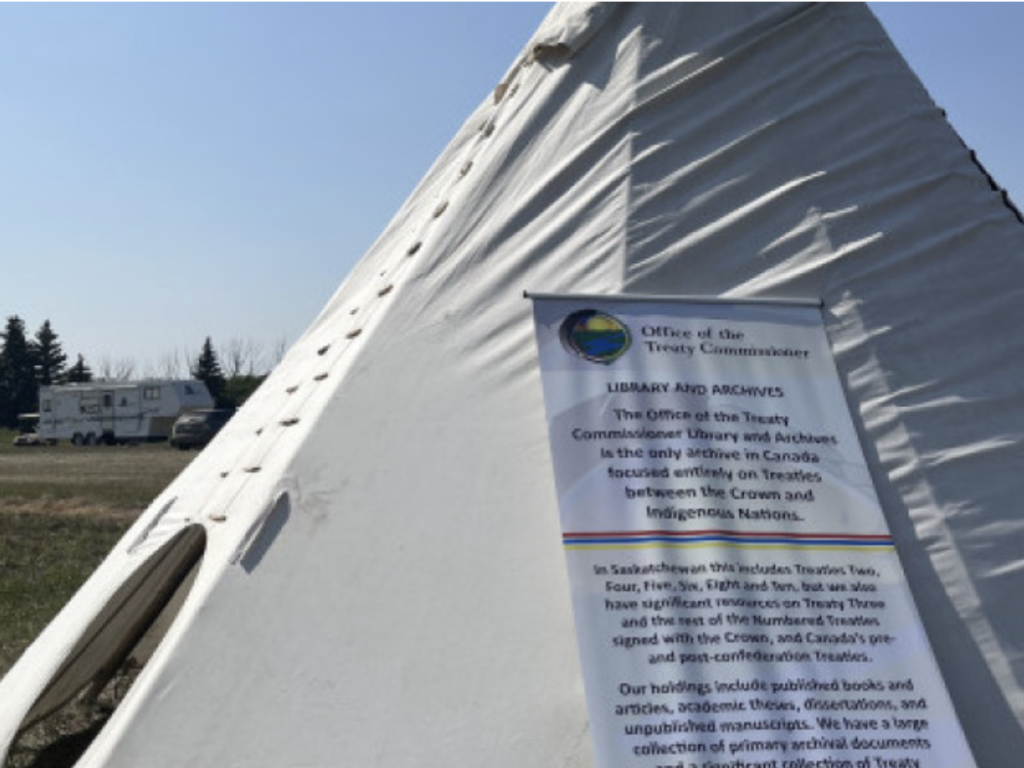
 Members of the Office of the Treaty Commissioner team travelled to Duck Lake, Saskatchewan to attend the third St. Michael’s Indian Residential School Gathering in early August.
We were there to share information about the work of the office, including information available in our archives, some of our work pertaining to Indian Residential School research, and how individuals can contact us for information to support their research.
There were about 100 people at the event including Elders and residential school Survivors, who attended to hear speakers focused on trauma, healing, and recovery.
“It was important and necessary. Speeches were made about addiction, love from our parents who attended residential school and intergenerational trauma,” said Morgan Esperance, a member of the OTC team.
There were also musical performers who provided entertainment during the breaks.
“The event it had a more serious tone the day [we] were there,” said Eli Worme, another team member.
“I am glad I was able to attend the event and hear the speakers I think it’s important and I believe other events like this should take place.”
OTC shares Treaty timeline through Government House
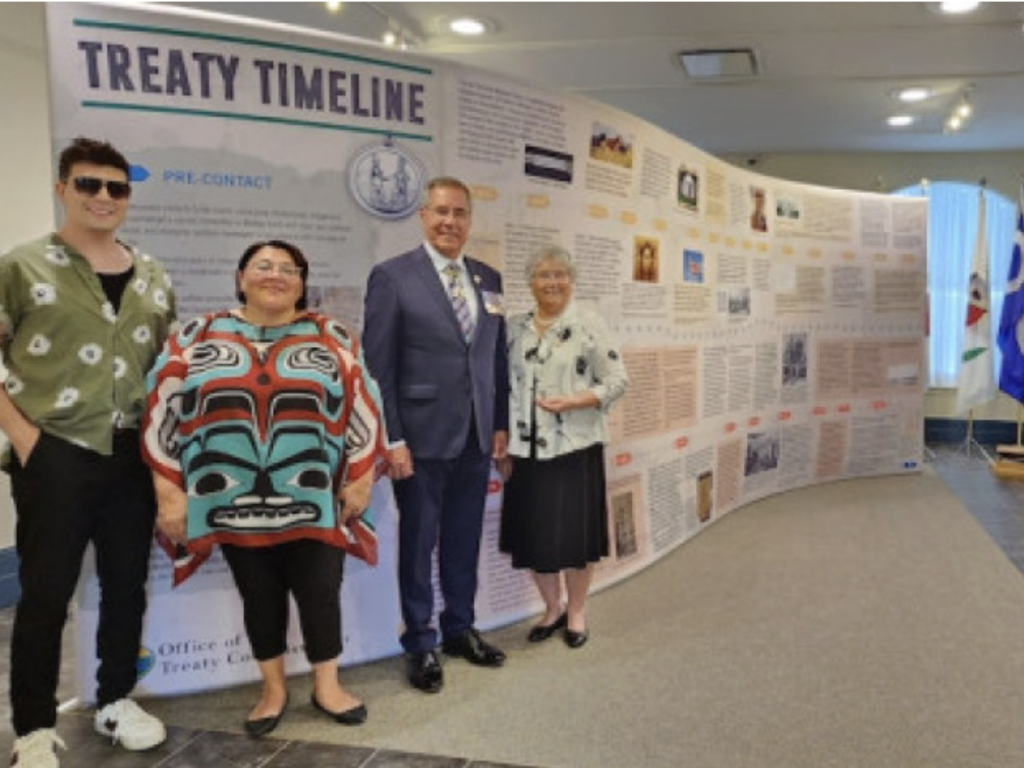
 The Office of the Treaty Commissioner is thrilled to be sharing the Treaty Timeline in partnership with the Lieutenant Governor of Saskatchewan, Russell Mirasty, at Government House in Regina this summer.
“As we continue to work to share information with the public having this Treaty Timeline is an excellent tool to help further the understanding of Canada’s true history. Working with the Lieutenant Governor and his team, we are able to reach even more people,” said Treaty Commissioner, Mary Musqua-Culbertson.
Research started in 2018 for the Treaty Timeline, which was created to share the history of the territories from 1643 to 2022. The goal was to represent a chronological timeline through 711 entries focusing on Treaty events, including entries on the history of settlement in Saskatchewan.
The display is printed on cloth and stretches serpentine through a room at Government House.
“I am grateful to the Office of the Treaty Commissioner for sharing this educational Treaty timeline with Government House,” said Lieutenant Governor Mirasty.
“The timeline is part of an exhibit that includes an original Treaty 6 Adhesion document, loaned to us by the Montreal Lake First Nation. The Adhesion artifact, along with the fascinating timeline display, help to make Treaty history come alive. I’ve been pleased to share the exhibit with classrooms visiting Government House in June, and on July 1, thousands of people viewed the exhibit. Many more will have an opportunity to learn about our Treaty history throughout the summer.”
Visitors will be able to learn starting with Pre-Contact, when since time immemorial, Indigenous peoples maintained a sacred connection to Mother Earth with their own political, legal, social, and economic systems develop in accordance with the laws of the Creator. The learnings wrap up in 2022 after the appointments of Mirasty as Lieutenant-Governor in 2019, and Kimberly Murray as the Independent Special Interlocutor for Missing Children and Unmarked Graves and Burial Sites.
OTC on report Sacred Responsibility: Searching for the Missing Children and Unmarked Burials
Every parent has a right to know what happened to children that were taken to residential school. Every family has a right to be united with remains of the children who were buried. This should not be taking decades. It has taken decades for survivors’ stories to be believed, despite Canada, the church, and other organizations responsible for these schools knowing the truth.
It is already long past time to truly honour the Treaty right to education. The right to have a school house on every reserve and a teacher for that school was twisted into residential schools that tried to see Indigenous culture, language, traditional knowledge, and history destroyed.
This interim report calls for the work that started with the Truth and Reconciliation Commission to be continued. To see all the missing children in unmarked burials returned home. The interim report also calls for Indian Residential School denialism to be considered a hate crime. It is atrocious to see articles written and posts made denying the existence of missing children, unmarked graves, and deaths of children.
The OTC stands in solidary with Special Interlocutor Kimberly Murray, who bears an immense responsibility on this journey. As she said, “upholding human rights principles does not require me to be morally indifferent to the fate of children who are victims of genocide, mass human rights violations, and injustice. Rather, I have an ethical duty to insist that there be accountability and justice for the missing children, Survivors, Indigenous families, and communities.”
“[It is] my responsibility is to speak up on behalf of those missing children in unmarked burials. I want to emphasize this point: my role is to give voice to the children. It is not to be neutral or objective – it is to be a fierce and fearless advocate to ensure that the bodies and Spirits of the missing children are treated with the care, respect, and dignity that they deserve,” Murray says in the report.
We are long past the time that all Canadians should understand the gravity and impact that willful ignorance, racism, and the colonization goals of Canada and the Crowns has on Indigenous People — of the genocide that was being committed. But, we must get there because without this knowledge and understanding, without empathy, there can be no healing and there can be no reconciliation.
The OTC continues to offer our resources and support to the nations, communities, and survivors in their search projects to find unmarked burials and try to bring their family member home. The research by OTC cited in the interim report, a year of working to get access to documents, shows our ongoing commitment to have government, churches, and other institutions, release their records.
We echo the Special Interlocutor’s call to not be a bystander. “Each of us must stand up and speak out. We must insist that these missing children, who were abused and neglected during their lives, now be treated with the respect and human dignity they deserve.”
Read the report. Meet the real people behind this work, like the parents of Marieyvonne Alaka Ukaliannuk, who said goodbye to their four-year-old daughter expecting to see her the next summer, and only learning where her remains were 50 year later. Or the family of Charlie Hunter, who struggled for 37 years to have the remains of their 13-year-old son returned to their community of Weenusk First Nation. It took until 2011 and the support of readers of the Toronto Star to make this a reality.
We can only complete this work together. By challenging those in power to do better. By having open access to residential school records for families and communities. By asking the difficult questions like: what if this were my child? Or why would “schools” have cemeteries. By stopping violent denialism.
We need to hear these hard truths and help families and communities heal and find justice.
OTC celebrates National Indigenous Peoples Day
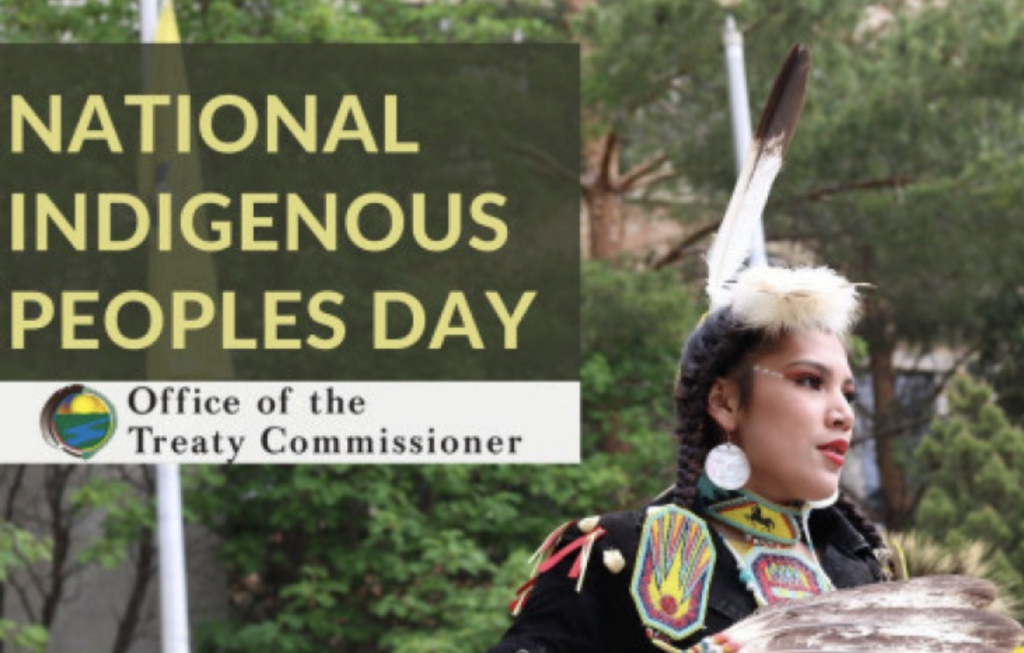
 The Office of the Treaty Commissioner is pleased to join those across the country in celebrating National Indigenous Peoples Day.
It’s a day not only to celebrate the vibrant culture and contributions of Indigenous Peoples in Canada, but also a reminder of the importance of honouring Treaties and working towards full Treaty implementation.
On June 21, it is important to reflect on the history of our country, but also recognize that Indigenous cultures continue to flourish and these need to be celebrated. It’s also important to learn about the differences in beautiful languages, worldviews, and beliefs.
Across the Treaty territories there are events happening to mark the summer solstice and celebrate being Indigenous.
For so many years the celebrations of Indigenous Peoples were not allowed, languages were not able to be spoken, powwows and dances banned, and histories were not shared. Having a day like Indigenous Peoples Day starts to undo this harm, but protection for Indigenous languages, cultures, and communities needs to continue year-round.
Here are some films to get you started. (Trigger warning: these videos may be distressing for some. Support is available for anyone affected by residential schools’ intergenerational trauma through The National Indian Residential School Crisis Line at 1-866 925-4419)
nîpawistamâsowin: We Will Stand Up
Elementary School films available in one playlist from the National Film Board
Maq and the Spirit of the Woods (Eight minutes): This animated short tells the story of Maq, a Mi’kmaq boy who realizes his potential with the help of inconspicuous mentors. This video includes an education and study guide.
Vistas: Dancers of the Grass (Two minutes): This short film presents a stunning display of a stop-motion animation as it vividly depicts the majesty of the hoop dance, a tradition symbolizing the unity of all nations. This video includes an education and study guide.
Evan’s Drum (14 minutes): An adventurous young boy and his determined mother share a passion for Inuit drum dancing in Happy Valley-Goose Bay.
High School Titles in another playlist
Now Is the Time (16 minutes): When internationally renowned Haida carver Robert Davidson was only 22 years old, he carved the first new totem pole on British Columbia’s Haida Gwaii in almost a century. On the 50th anniversary of the pole’s raising, Haida filmmaker Christopher Auchter steps easily through history to revisit that day in August 1969, when the entire village of Old Massett gathered to celebrate the event that would signal the rebirth of the Haida spirit.
Mary Two-Axe Earley: I Am Indian Again (34 minutes): Mary Two-Axe Earley fought for more than two decades to challenge sex discrimination against First Nations women embedded in Canada’s Indian Act and became a key figure in Canada’s women’s rights movement. This video includes an education and study guide.
Red Path (15 minutes): This short documentary tells the story of Tony Chachai, a young Indigenous man in search of his identity. On the verge of becoming a father himself, he becomes increasingly aware of the richness of his heritage and celebrates it by dancing in a powwow. This video includes an education and study guide.
Stories Are in Our Bones (11 minutes): In this layered short film, filmmaker Janine Windolph takes her young sons fishing (in La Ronge) with their kokum, a residential school survivor who retains a deep knowledge and memory of the land. The act of reconnecting with their homeland is a cultural and familial healing journey for the boys, who are growing up in the city.
To Wake Up the Nakota Language (Six minutes): “When you don’t know your language or your culture, you don’t know who you are,” says 69-year-old Armand McArthur, one of the last fluent Nakota speakers in Pheasant Rump First Nation, Treaty 4 territory, in southern Saskatchewan. Through the wisdom of his words, Armand is committed to revitalizing his language and culture for his community and future generations. This video includes an education & study guide. You can also watch this video in Nakota rather than English.
Find something, learn, and celebrate today and all year long.
OTC Celebrates the Grads of 2023
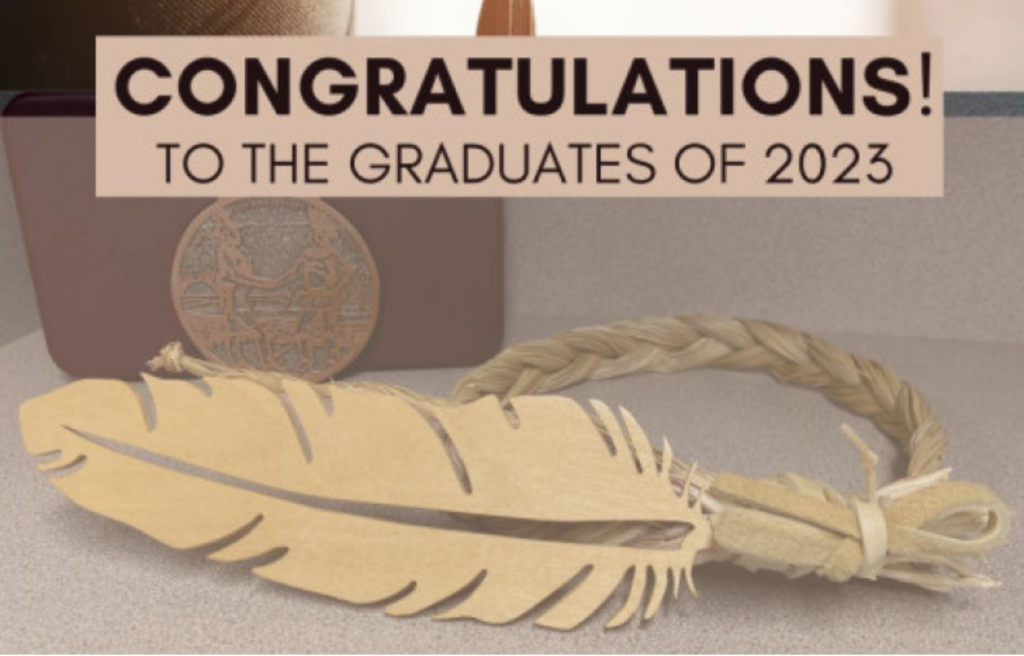
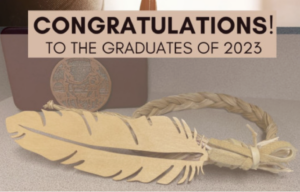 The Office of the Treaty Commissioner congratulates the graduates of 2023.
Graduation is a significant milestone in a person’s life. It marks the beginning of change, saying goodbye to the patterns, classrooms and friends of the past few years and getting ready to embrace what life brings to you next.
Your perseverance to fulfill the Treaty Right to education the way our ancestors intended when they negotiated the Treaties is inspirational.
People will tell you it can’t be done until you do it. Then they might tell you it was luck. But, keep succeeding over and over again. Show them your spirit is strong. Show them what you can do.
We are proud of you, your impact, and we are excited to see what you do next.
OTC Celebrates Pride Month
 As we celebrate Indigenous History Month alongside Pride Month, the Office of the Treaty Commissioner honours the diversity within our communities.
Pride allows us to hold up the courage and achievements of LGBTQ2S+ individuals and lift up their voices, experiences, and stories, fostering an environment of love, respect, and inclusivity.
The presence and contributions of Two-Spirit people are important to note during this month. The OTC encourages people to learn more about Two-Spirit identities. Out Saskatoon defines Two-Spirit as a “term that exists as an English placeholder as Indigenous communities uncover and reclaim the terms for gender and sexual diversity within their Indigenous languages. The term can be used by Indigenous people who are gender and/or sexually diverse.” (Read more here)
By learning more about Two-Spirit identities, we increase our understanding of gender diversity and challenge societal norms. We need to come together as a community Indigenous and non-Indigenous to create spaces where everyone feels seen, heard, and valued.
By celebrating both Indigenous History Month and Pride means we together stand against hatred, challenge discrimination, and stop prejudice and intolerance.
In the spirit of Truth and Reconciliation through Treaty Implementation, take time to learn about Two-Spirit individuals and how to be an ally
Read:
The history of two spirit folks
Two-Spirit activists, community leaders and content creators
A Place in the circle: Understanding and Support Two-Spirit People
Out Saskatoon’s Allies and Solidarity
Watch:
What does Two Spirit mean?
Trans And Native: Meet The Indigenous Doctor Giving Them Hope
Office of the Treaty Commissioner recognizes the anniversary of the Cypress Hills Massacre
On June 1, 1873 accusations of thievery lead to the massacre of Assiniboine (Nakoda) Elders, warriors, women, and children staying in camps near two trading posts in the Cypress Hills. Only one of the wolfers was killed in the melee, a French-Canadian man.
The massacre of the Nakoda people at Cypress Hills was the reason why the North West Mounted Police marched from Winnipeg that year to try to bring order to what was seen as the lawless west. Nakoda men, women and children were massacred by American wolf hunters and whiskey traders. The hunters and traders surrounded the camp and used rifles to shoot the people there. The exact number of people killed that night has been lost to time. Some historians peg it around 20 people killed, or slightly more, where survivors of the massacre said it’s closer to 300.
There was no burial for the Nakoda people, their bones lay on the ground for years. The survivors, however, reached safety with some Métis a few kilometers away. The Montana traders packed their belongings and returned south, escorted by the wolfers. News of the massacre spread slowly. Abel Farwell, who ran a training post, reported it to the authorities in Montana, who relayed it to Washington. Meantime, Métis brought the same news to Winnipeg. Both reports reached Ottawa by the end of August 1873.
For three years the federal government tried to bring the murderers to justice. In July 1875, officers of the new North West Mounted Police (NWMP) traveled to Montana, but failed to extradite seven men. Another three, captured in Canada, were tried and acquitted in Winnipeg in June 1876. No witness under oath would incriminate the accused. All charges were dropped in 1882. While the US government cooperated, public opinion in Montana favoured the accused; in Winnipeg it was divided.
Parliament passed the needed legislation even before the massacre. Cabinet discussed the whisky trade early in August and on the 28th the Ottawa Citizen announced that the NWMP would be organized immediately. The next day saw the first published report in eastern Canada about the Cypress Hills Massacre while the first 150 members of the NWMP were already training in Manitoba.
Government thought the ensuing pursuit would strengthen Canadian authority by showing to First Nations that the justice system was impartial and as part of their Treaty, provide them a life free of interference from settlers and whiskey traders. We see today that this is not the case and the NWMP and subsequently the RCMP have been part of the genocidal practices used to build Canada.
Although the Cypress Hills Massacre has faded from many modern memories, it is still remembered every spring with commemoration through the descendants of Ceg-A-Kin, the ancestors of the modern “Carry the Kettle” First Nations. They signed adhesion to Treaty 4 at Fort Walsh on September 25, 1877. The three Assiniboine Chiefs who signed the Treaty 4 adhesion were Man Who Takes The Coat (Cuwiknaga Je Eyaku, in the Assiniboine/Nakoda language), Long Lodge (Teepee Hoksa), and Lean Man (Wica Hostaka). Ochankugehe (Dan Kennedy) published a moving account by an Assiniboine survivor in 1972. The incident remains important to Nakoda in the area, where some are working to obtain protection for the site of the 1873 camp.
The Cypress Hills massacre shows the racism and oppression faced by Indigenous people, and in so many ways we see how this has continued today. The Office of the Treaty Commissioner urges people to learn the true history of this land as they begin their reconciliation journey, because without Truth there is no reconciliation.
First Treaties Recognition Week
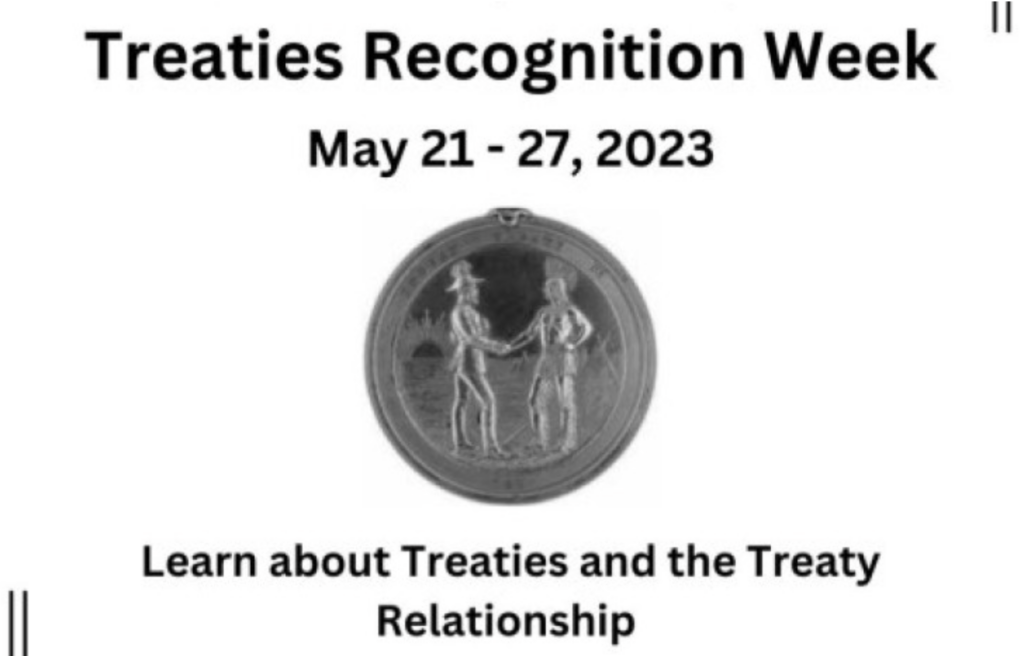
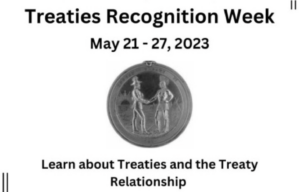 The Office of the Treaty Commissioner is excited to celebrate the first Treaties Recognition Week in Saskatchewan, running May 21-27 to commemorate the Treaties and the Treaty Relationship.
The initiative is an important way to advance and celebrate the Treaty Relationship, a key component of reconciliation. Having the provincially recognized week ensures the teachings of Treaty are given recognition and continue in the curriculum of our schools,” said Mary Musqua-Culbertson, Treaty Commissioner of Saskatchewan.
The initiative was introduced by students in the Grade 5 Class at École Lumsden Elementary and their teacher Justin Freitag as part of their diligent work on reconciliation and their drive to commemorate the Treaties and the Treaty Relationship.
“These students are the voices of the future of this province and their push for a Treaty Recognition Week is a commendable example of reconciliation. The OTC is also pleased to have the support of First Nation Communities from across the province support the initiative including from LLRIB Chief Tammy Cook-Searson, Sweetgrass Chief Lori Whitecalf and her Council by way of BCR, and Ocean Man Chief Connie Big Eagle.”
School divisions Horizon School Division and Prairie Valley School Division have also come forward to support the initiative.
The Office of the Treaty Commissioner is asking for individuals, organizations, schools, and communities to get involved with Treaty Recognition Week by watching videos and using resources to support learning about the Treaty Relationship. Links to resources will be shared on otc.ca daily from May 23-26.
Day 1: Before Treaty
Day 2: At Treaty
Day 3: After Treaty
Day 4: Today