News
OTC celebrates Indigenous Pulitzer – Peabody win

 The Office of the Treaty Commissioner congratulates journalist Connie Walker for her 2023 Pulitzer Prize and Peabody Award wins this week.
Her podcast Stolen: Surviving St. Michael’s, with the team at Spotify’s Gimlet Media, won the Pulitzer on Monday for best audio journalism. Then on Tuesday it won the Peabody Award for its “commitment to recognizing the full history of the Indigenous community.”
Walker is a member of Saskatchewan’s Okanese First Nation.
“It is incredible to see an Indigenous journalist be recognized for the hard work she is doing sharing Indigenous stories. These stories she shares matters, and her stories of residential school survivors are so important,” said Treaty Commissioner Mary Culbertson.
“We hope that this win means even more people will learn about, and understand, the true history of residential schools in Canada.”
Listen to Stolen: Surviving St. Michael’s here https://gimletmedia.com/shows/stolen
Warning: This podcast could contain material that could be triggering for some listeners. For those who need support as a result of the residential school experience, there is the 24-hour, toll-free and confidential National Indian Residential School Crisis Line at 1-866-925-4419.
Honouring MMIWG2S on Red Dress Day
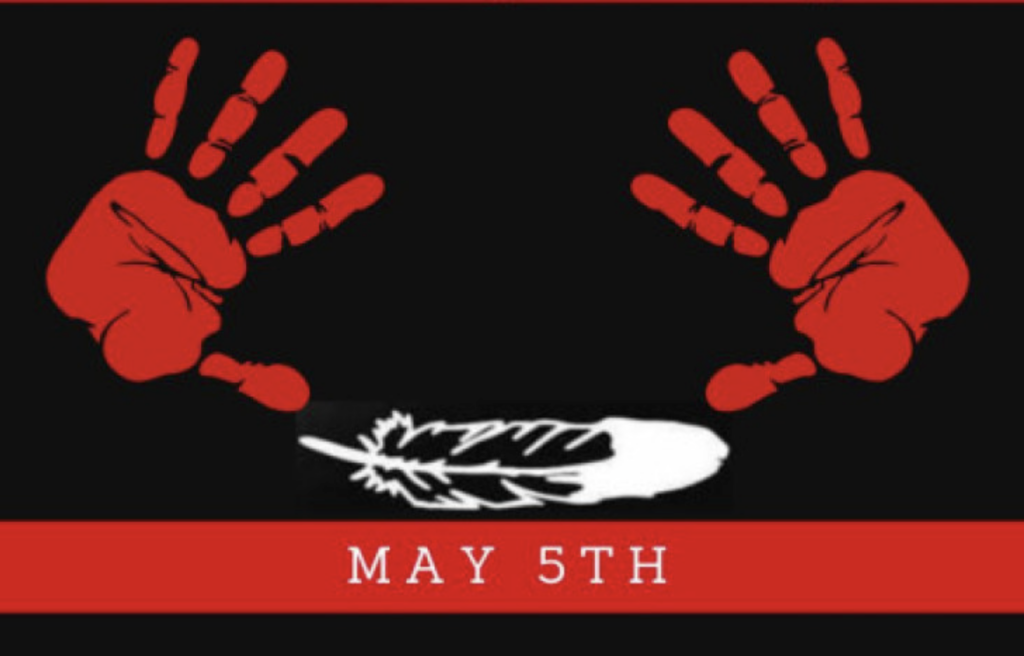
 May 5th is Red Dress Day in Canada, also known in as the National Day of Awareness for Missing and Murdered Indigenous Women, Girls, and Two-Spirit People.
The day honours and brings awareness to Indigenous women, girls, and two-spirit people who have been disproportionately impacted by violence.
The Office of the Treaty Commissioner calls on people to join thousands of others across Canada in wearing red.
The red dress has become a symbol for the thousands of Indigenous women who have gone missing or been murdered in Canada over the years. We know that often these deaths and disappearances are not investigated.
Red Dress Day started as part of the REDress project created by Indigenous artist Jamie Black who used red dresses to bring focus on the issue – wearing red and hanging a red dress became a way show solidarity with the families and loved ones left behind.
Take steps to raise awareness, not just on the National Day of Awareness for Missing and Murdered Indigenous Women, Girls, and Two-Spirit People, but throughout the year.\
Attend an event:
Check the OTC events calendar for one in your area
Keetsahnak: Our Missing and Murdered Indigenous Sisters
Watch:
Finding Dawn: a compelling documentary that puts a human face on a national tragedy – the epidemic of missing or murdered Indigenous women in Canada
Protect our Future Daughters: a short docu-drama that educates about the Missing and Murdered Indigenous Woman movement and Red Dress Project
The Highway: a music video and song by N’we Jinan artists about the cases of missing and murdered Indigenous people along the highway of tears.
Red Dress: A song and music video with Amanda Rheaume feat. Chantal Kreviasuk about the impact of missing and murdered Indigenous women, girls and two-spirit people.
OTC pleased to be part of the Heritage Festival of Saskatoon
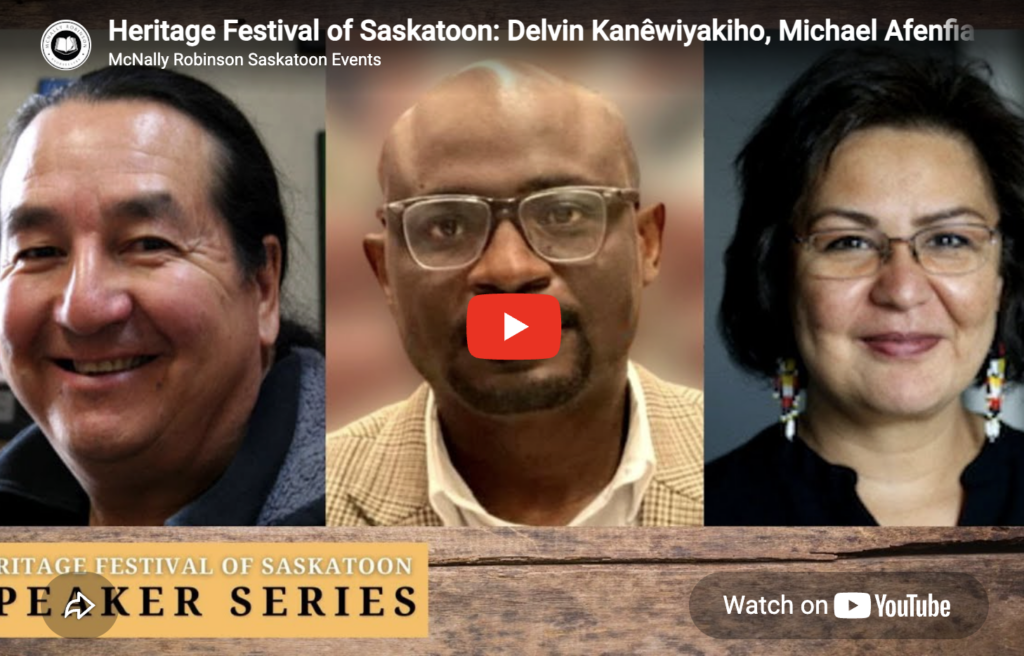
The Office of the Treaty Commissioner Director of Education, Elaine Sutherland facilitated a conversation as part of the Heritage Festival of Saskatoon this winter. The video is now available online.
The Speaker Series featured Delvin Kanêwiyakiho, a Knowledge Keeper from Little Pine First Nation, and is with the Office of the Treaty Commissioners Speakers Bureau, and Michael Afenfia, diversity, settlement and inclusion practitioner.
Founded in 1987, the Heritage Festival of Saskatoon is a destination for connecting to our past, our present, and our collective identity.
Statement from the Office of the Treaty Commissioner on the formal repudiation of the “doctrine of discovery”
The Office of the Treaty Commissioner welcomes today’s formal repudiation from the Vatican of the “doctrine of discovery,” theories backed by 15th-century “papal bulls” that legitimized the colonial-era seizure of Indigenous lands and form the basis of some property laws today.
The statement from the Vatican says the “doctrine of discovery” is not part of the teaching of the Catholic Church.
The church “acknowledges that these papal bulls did not adequately reflect the equal dignity and rights of indigenous peoples.”
The statement also says the Vatican is aware that these documents “were manipulated for political purposes” and used “to justify immoral acts against Indigenous peoples that were carried out, at times, without opposition from ecclesial authorities.”
This statement comes about nine months after a visit by Pope Francis to Canada in 2022 to apologize and meet with Indigenous People.
This is another step in working towards reconciliation between Indigenous and non-Indigenous peoples in Canada.
The statement from the Vatican also says there is “strong support for the principles contained in the United Nations Declaration on the Rights of Indigenous Peoples. The implementation of those principles would improve the living conditions and help protect the rights of indigenous peoples as well as facilitate their development in a way that respects their identity, language and culture.”
We encourage this support to continue and look to see the full implementation of inherent Treaty rights, UNDRIP, and the Calls to Action in Canada.
Read the Statement from the Vatican
Full news story: Responding to Indigenous, Vatican rejects Discovery Doctrine
Statement from the Office of the Treaty Commissioner
The Office of the Treaty Commissioner attended Federal Court of Appeal hearing on Mar. 29 in Saskatoon’s Kings Bench.
Jessie Waldron, a day-school survivor, is arguing for her right to receive compensation for the most severe level of abuse she suffered. The Federation of Sovereign Indigenous Nations was an intervenor in this appeal.
During implementation of the Day School Settlement Agreement, the claims administrator said survivors could not change their level of reported abuse or could not add additional information of more serious abuse.
“The ability of survivors to come forward in designated time frame in a prescribed framework such as the settlement processes that exist is traumatic,” said Treaty Commissioner Mary Culbertson.
“Many are not able to start the painful process of disclosing abuses they may have never spoke of previously. There should be no barriers due to administrative processes and interpretation by one party or another to limit compensation or the acknowledgement of survivors experiences.”
Claim levels range from Level 1: Verbal/Physical Abuse (where claims are worth $10,000) to Level 5: Sexual/Physical Abuse (where claims are worth up to $200,000) depending on what happened to the claimant while they were a student at day school.
Claims at higher levels required supporting documentation. And claimants were encouraged to put forward their full story in order to receive the highest compensation they could receive. Ms. Waldron initially filed a at Level 1, but refiled with the help of a lawyer outlining abuses that entitled her to a higher level of compensation. These additions were not accepted.
For the first five months of the claims process, until June 2020, the Claims Administrator allowed for progressive disclosure. The policy was then changed with two weeks’ notice. Ms. Waldron filed the updated claims after this date, but before their initially claims were adjudicated or payment received.
Ms. Waldron is looking to receive compensation that matches her experience, which she reported, but says the information provided was ignored by the Claims Administrator
The OTC will continue to watch this case and hopes for fair and just outcomes for all claimants.
Read more about the situation and prior court cases here
Efficiency Over Fairness: Interpreting the Day School Settlement
OTC’s Treaty Learning Journey
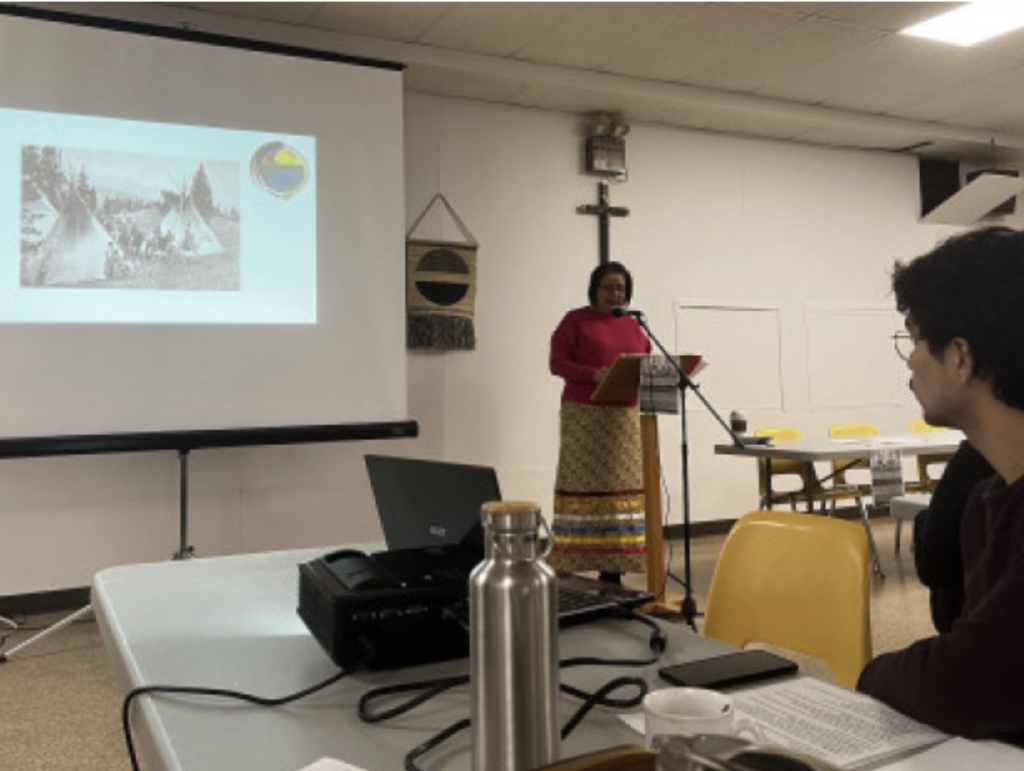
 In an effort to build on the popular Teaching Treaties in the Classroom training and reach people beyond educators, the Office of the Treaty Commissioner has designed and started the Treaty Learning Journey.
Designed to walk people through history, the journey starts with Before Treaty, then what happened At Treaty, After Treaty, and Today. Topics include Indigenous worldview and indigeneity, numbered Treaties, breaches of Treaty, and contemporary Treaty issues.
The trainings also include practice strategies that educators can use to teach others.
The Treaty Learning Journey (Phases 1 and 2) began with a few targeted trainings last fall, but has quickly grown in popularity and demand. The OTC has more than 25 trainings booked into the spring.
“I highly recommend this Treaty Timeline Journey to schools, churches, parishes. To wherever people gather,” said Bonnie Roberts, after she completed the training this winter.
“Participants were frequently reminded as we learned more historical facts that there was no ‘shame or blame’ on us.”
She described the training as “a clear, interactive and systematic Treaty timeline leaves this participant with a fundamental rewiring and understanding of the relationship between First Nations people and the British and Canadian governments.”
Treaty Commissioner honoured by FSIN
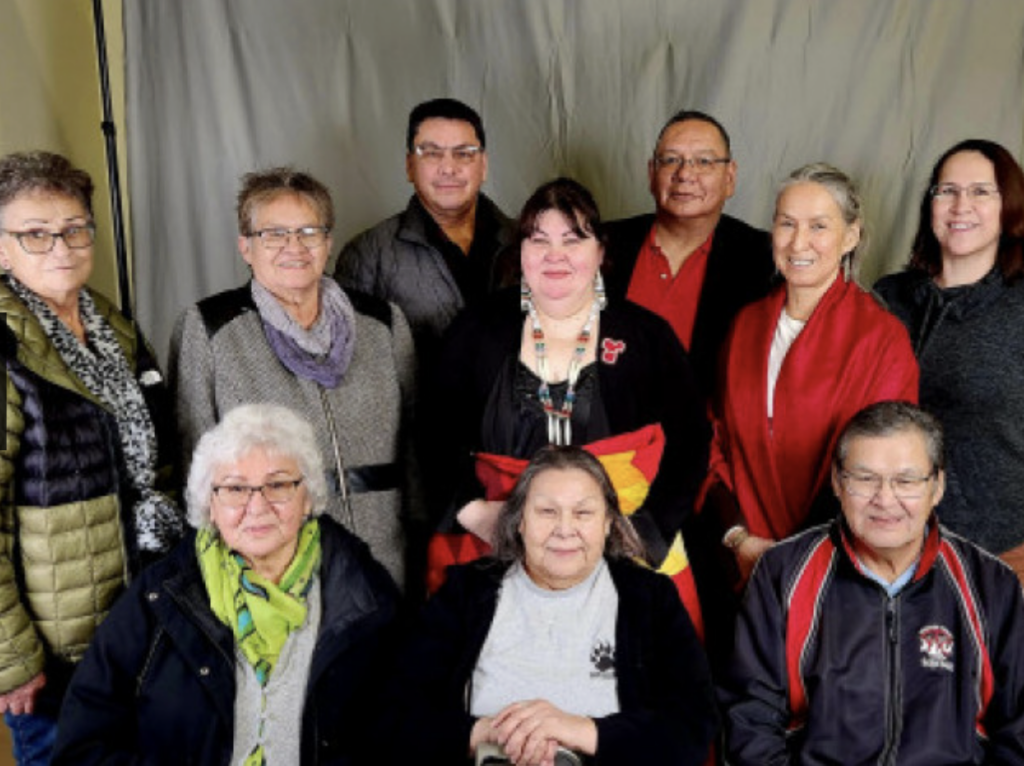
During the Federation of Sovereign Indigenous Nations Assembly this past week, Treaty Commissioner of Saskatchewan, Mary Culbertson, presented for the last time in her home territory of Treaty 4.
It was an emotional event, as the Treaty Commissioner was honoured for all her hard work over the past five years. She was in her home tribal council area, surrounded by many relatives, friends, and neighbours as she was honoured with a star blanket.
During the Treaty Commissioner’s final report she spoke about the mandate of the office, what has been completed, and what is still ahead.
“It has been an honour to serve,” she said.
National Gathering on Unmarked Burials
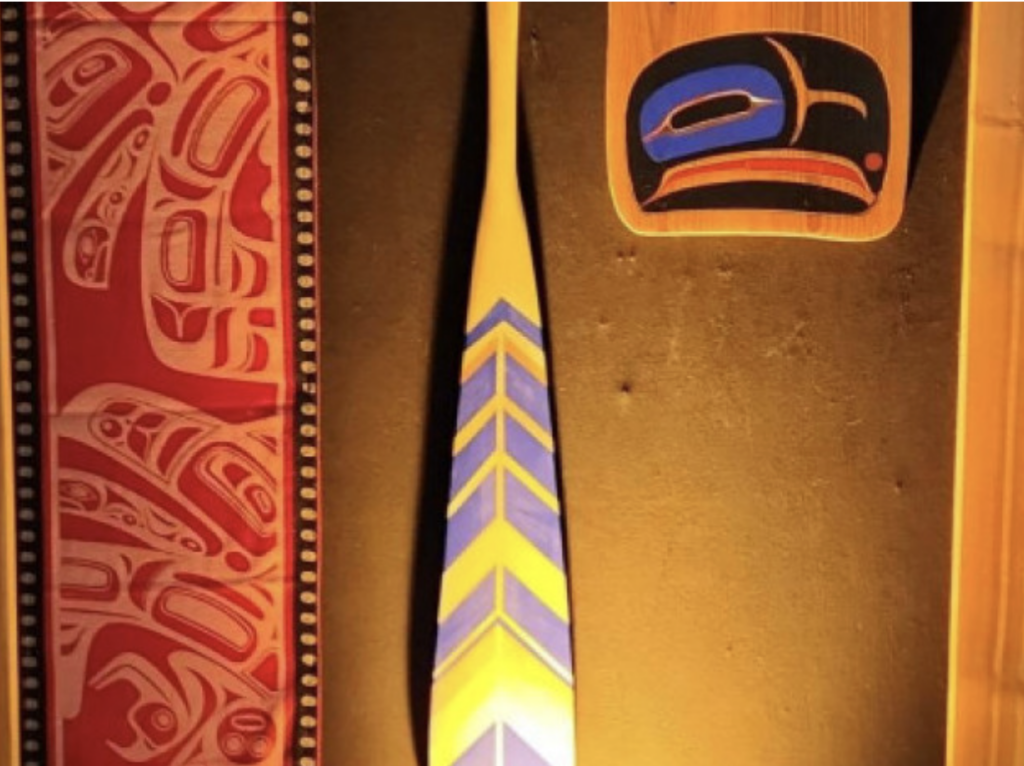
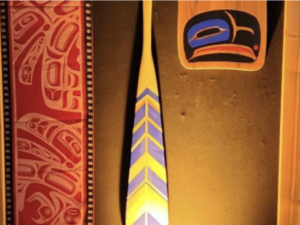 The Office of the Treaty Commissioner was pleased to be able to attend the National Gathering on Unmarked Burials: Affirming Indigenous Data Sovereignty and Community Control over Knowledge and Information in Vancouver last week.
There were several people representing Saskatchewan in attendance. The OTC team was pleased to meet Phyllis Webstad, the founder of Orange Shirt Day.
Keynote addresses included “Honouring Children Found in Unmarked Graves: Those That did not Survive Indian Residential Schools” and “Truth and Reconciliation Commission of Canada’s Vision in the Creation of the National Centre for Truth and Reconciliation.”
Much of the information being shared was on the importance of data sovereignty and access to record, including practical information about what records are available and how they can be accessed; as well as information about specific research and archives projects. Other breakout sessions included Indigenous Law Relating in Information and Knowledge, Indigenous community Perspective: The Power of Data; and the Transfer and Condition of Records: Language and Translation.
Trauma-informed and culturally appropriate health and wellness supports were available and there were others taking statements from survivors if they wanted share. Smudging was available throughout the event.
The next National Gathering is in Toronto, March 27-29, 2023.
OTC celebrates those named to the order of Canada
Psychologist Gordon Asmundson is known for his research into anxiety around COVID-19 and post-traumatic stress disorder. Dr. Ivar Mendez is a neurosurgeon, who is innovate in Canada and around the world. Don Kossick is a social justice and human rights advocate, focused on empowering communities. Rod McKendrick is with the Victims Services team where he is an interpersonal violence specialist.
The Honourable Judge Gerald Morin, from Ballantyne Cree Nation, is the first Cree-speaking judge in Saskatchewan and he created the Cree Court Circuit. This and his ongoing mentorship of young lawyers and judges had him named a Member of the Order of Canada.
Every time an Indigenous person takes a position of leadership or is recognized for their role in making their community, territory, or country a better place, it shows others what is possible.
We congratulate Judge Morin on his accomplishment and thank him for being a role model and trailblazer.
All of these five honourees have enriched the lives of others and made a difference to their country. They show us the way forward and we are inspired by their service, innovation, and compassion.
Treaty Commissioner receives Jubilee medal
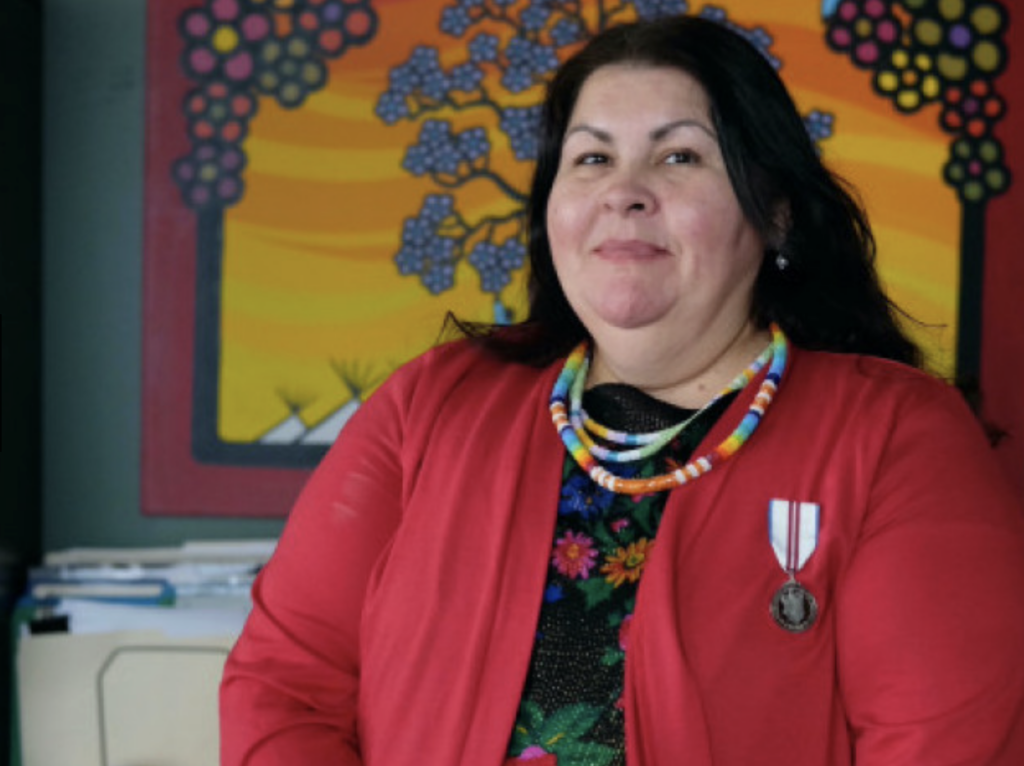
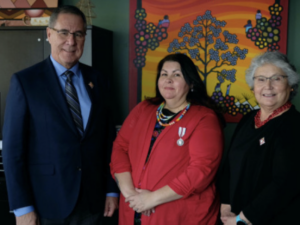
 The Treaty Commissioner of Saskatchewan, Mary Culbertson, received the Queen Elizabeth II Platinum Jubilee Medal in a small ceremony at the Office of the Treaty Commissioner on Dec. 7, 2022.
“It is very special for me to be able to do this today,” said Lieutenant Governor of Saskatchewan, Russell Mirasty during the medal presentation.
“Thank you for so much for what you have done, what you continue to do, and what you have committed to doing in the future.”
Mirasty spoke about the importance of Indigenous people stepping into public spaces to “claim our right to be there and be able to express ourselves, our world view and really educate people about who we are, why we are here and ultimately we belong.”
“Work like what you have done enforces that and will continue to into the future.”
Friends and family in attendance, as well as OTC staff, spoke about the impact the Commissioner has had in their lives and on their work.
The Queen Elizabeth II Platinum Jubilee Medal (QPJM) recognizes outstanding Saskatchewanians of all ages and from all walks of life, who have built and continue to build a strong, vibrant society and province through their service, contributions, and achievements.