
News
Reconciliation Regina goes public with Invitation to Participate
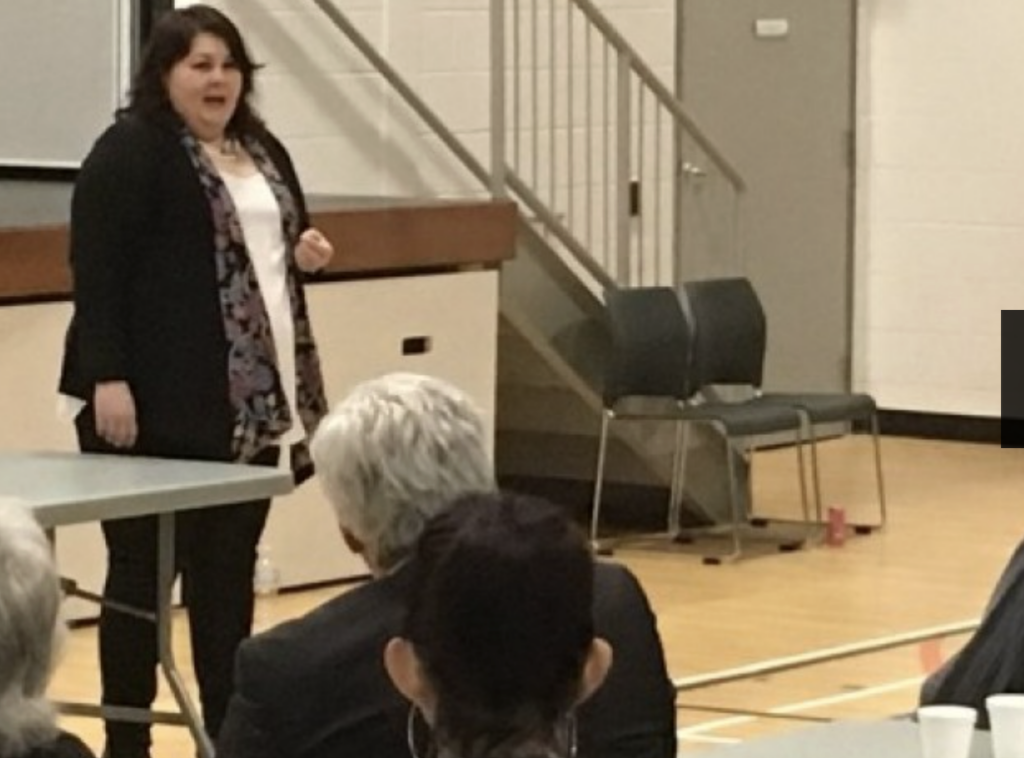
 Reconciliation Regina hosted their Invitation to Participate on Tuesday, welcoming organizations, individuals and businesses in Regina to come together to build a healthy, inclusive community.
There are already 80 plus groups working towards increased awareness of the concept of Reconciliation and to create a plan of action for the Truth and Reconciliation Commission’s Calls to Action for their community.
Regina’s Mayor Michael Fougere spoke at the event held at Regina’s Mâmawêyatitân centre, alongside Treaty Commissioner for Saskatchewan, Mary Culbertson.
“We have to have hope. We have to keep on. If we don’t who will. We’re all here together. No one is going anywhere. We have to learn to work together,” she said.
“Congratulations to Regina. You’re leading in southern Saskatchewan.”
The media attended the event, some of their coverage:
Reconciliation Regina holds ‘pivotal’ first public event
Dialogue an important start as Reconciliation Regina hosts its first public event
Reconciliation Regina holds first meeting at Mâmawêyatitân Centre
Treaty Elder Series held at St. Joseph Parish in Saskatoon: “It is an act of reconciliation itself to be here today”
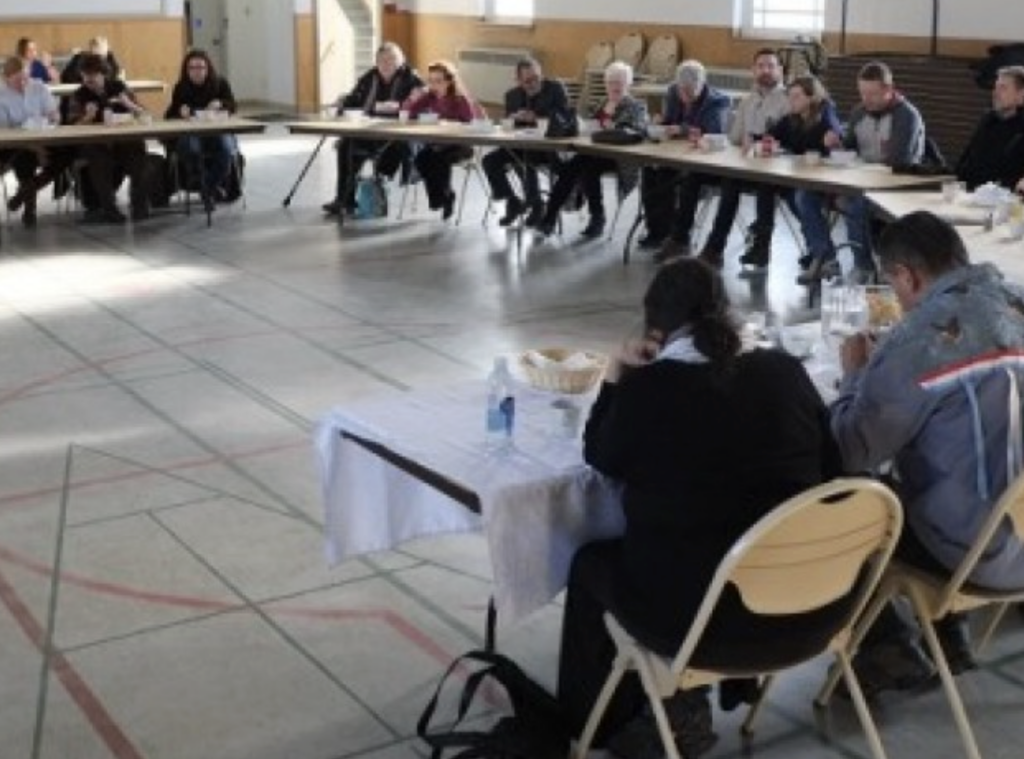
 Parishioners and visitors gathered in a circle at St. Joseph’s Parish Hall in Saskatoon after Sunday Mass Feb. 4, sharing soup and bannock, listening to the experiences and the wisdom of two Indigenous leaders.
Mike Broda of St. Joseph parish offered a traditional welcoming gift of tobacco to knowledge-keeper Lyndon Linklater and Elder Agnes Desjarlais, to open the gathering, part of a Treaty Elder Series in the Roman Catholic Diocese of Saskatoon. Linklater and Desjarlais both work at the Regional Psychiatric Centre, where they provide traditional ceremonies as a path of healing. Myron Rogal of the diocesan Office of Justice and Peace also spoke at the gathering.
Linklater, who is also a member of the Office of the Treaty Commissioner’s Speakers Bureau, described his background and growing up years. Both of his parents – and their parents before them — attended residential schools – his Anishinaabe (Ojibway) dad Walter Linklater in Ontario and later in Saskatchewan, and his Cree mother Maria in Saskatchewan, until she ran away from the school she hated, to be hidden and cared for by her grandmother.
“Like many, many First Nations people, we suffered as a result of impact from these residential schools,” Linklater said. “There is a common story that starts to emerge, when you talk to those who attended residential schools; when you talk to their children and grandchildren.” The aftermath has included damaged families and communities, addiction, and dysfunction.
“Today we recognize this illness, Post-Traumatic Stress Disorder or PTSD,” said Linklater, noting that trauma will impact a person physically, mentally, emotionally and spiritually. “If you have PTSD, all these sociological factors will plague you,” he said. “And every single person that went to these residential schools — they suffered from PTSD, in one form or another.”
Linklater described how his father was taught to reject his traditions, his language, and his identity, to the point where he did not even know that he was Ojibway.
Linklater also reflected on the profound damage caused by removing children from their families. “In the schools, they were so very lonely. I can’t imagine what it must have been like – to be five years old and your mom and dad aren’t there for you, to comfort you, to care for you, to nurture you,” he said.
“We know what it is like to have children, to have grandchildren, and how important it is to have young children feel loved. It is so critical, vital, imperative – if that child grows up without feeling loved, that child is going to be messed up when they get older.” And in Saskatchewan, residential schools were not around for just a few years, but for 122 years, he stressed. “So it is multi-generational.”
The Truth and Reconciliation process has offered a path of healing – for residential school survivors and their descendants who did not always even recognize this obstacle that has been in their path – and for the entire country, which made profound mistakes in its history, said Linklater.
“This is my Canada, this is your Canada, this is our Canada – Canada is the best place in the whole wide world, but it can even be better. And it is up to us as Canadians to make that happen,” he said. “How are we ever going to know where we are going as a country, if we don’t know where we have been? How are we ever going to know not to make the same mistakes, if we don’t even know we made mistakes in the first place?”
Linklater expressed appreciation for the parish event, noting that “for too long we haven’t been able to do this …. We talk about the Truth and Reconciliation Commission and the 94 Calls to Action – you are doing it right now. You are actually participating in it right now.”
Recognizing the impact of residential schools, and coming to a better understanding of that trauma, has enabled many to walk on a long path of healing, including his own family, Linklater described. “What really, really helped us Linklaters, was that we found our culture, we went back to our traditions.”
Diversity is a gift from God, with peoples of many different appearances, languages and cultures worshipping one Creator, said Linklater, describing the many connections and commonalities between Christianity and Indigenous teachings.
“When I found my traditions, when I found my culture, oh my goodness, you would not believe the many similarities, unbelievable parallels,” he said of his own journey. “We have teachings in our culture to try and love one another, to try and work together, to try and get along with one another, to respect one another.”
Elder Agnes Desjarlais also spoke about trauma and healing. A member of the Muskowekan First Nation near Lestock, SK, Desjarlais and her parents attended Muscowequan Indian Residential School.
Even though there were some positive things about her school experience – she loved learning to read, for instance – the damage caused by the residential school system resonated in her family and community, with alcoholism and broken families. Desjarlais recalled the loneliness and fear of going to the school as a child of six, how students who spoke their own language were punished, and how everyone’s long hair was cut off.
The trauma described by Linklater was a reality, she agreed. “It is really true. That was something a lot of us went through – just being taken from our parents, our homes.”
Now the mother of eight, grandmother of 13 and great-grandmother of three, Desjalais said she found healing as an adult when she began to learn about her culture, and became involved in offering traditional teachings and ceremonies.
“Once I started attending some of the ceremonies, I started feeling better about myself and who I was,” she said. “A lot of my family, people where I am from, are really strong Catholics. We all have to learn to respect each other’s way – we all follow the same God.”
Today she offers traditional teachings and ceremonies to women incarcerated at the Regional Psychiatric Centre, and has found herself reflecting on how similar the prison system is to the residential school system. “A lot of the men and women there have parents and grandparents who went to residential school… it is just one big cycle.”
The path of healing is not an easy one, and involves each new generation, she noted, sharing moments of struggle and heartache in her own family. “All my life I’ve tried to do what I can to help people.”
— Kiply Lukan Yaworski
OTC welcoming event
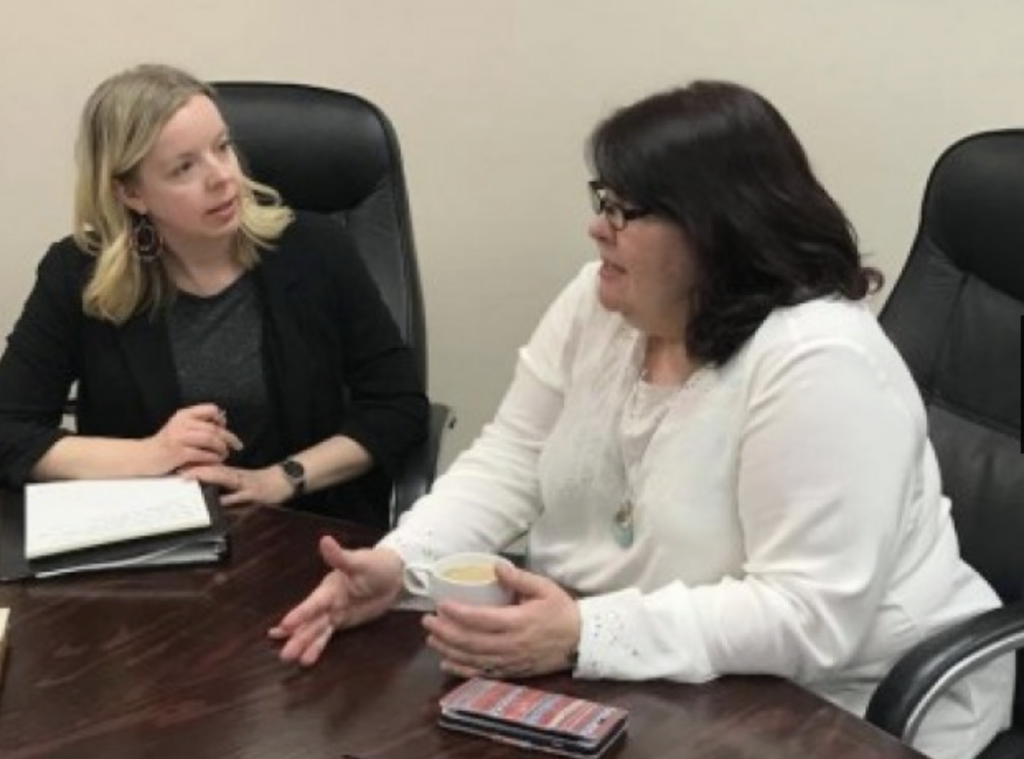
 On Tuesday, the Office of the Treaty Commissioner hosted a welcoming event for the new Treaty Commissioner of Saskatchewan, Mary Culbertson.
It was a great opportunity to meet and have conversation with community partners.
Culbertson begins immediately and will serve as commissioner until January 28, 2021.
To the positions Culbertson brings her extensive experience in public and community service and background in family, criminal and Aboriginal law as well as dispute resolution.
Culbertson is a member of the Keeseekoose First Nation in Saskatchewan and has almost 20 years professional experience working in the federal, provincial and territorial governments and with Indigenous organizations.
The Business Case for Inclusion
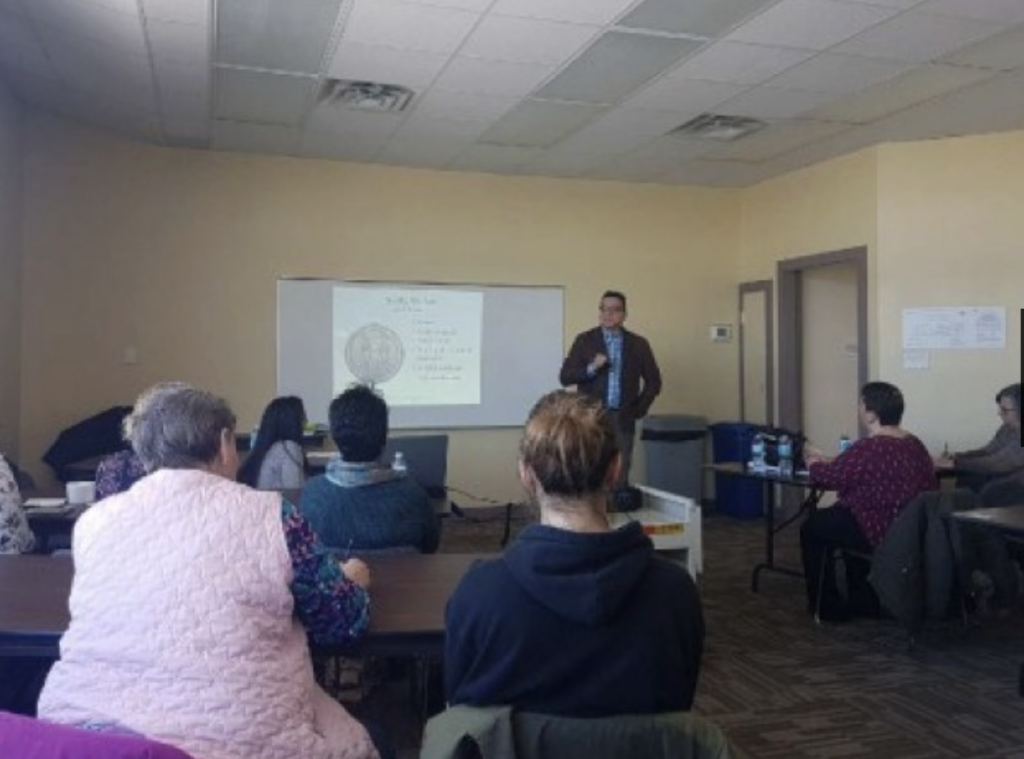
 The Office of the Treaty Commissioner’s Milton Tootoosis presented at the Lloyminster Chamber of Commerce Lunch and Learn event on Wednesday, Feb. 21.
About 15 people, include Lloydminster mayor Gerald Albers, participated in the conversation “The Business Case for Inclusion.”
Milton talked about:
· The Spirit and Intent of Treaty – the promise of an economic livelihood
· Prior to settler contact and the treaties First Nations culture included the concept of livelihood and economic independence as inter-tribal traders
· The traditional economy collapsed when the fur trade and bison economy slumped into oblivion
· Past laws and policies like the Indian Act, Pass System and the Indian Residential School system have negatively impacted First Nations people and their economies
· There is a Call to Action – the TRC Call to Action #92 for positive change and rebuilding of First Nations economy
· There is business case for action and Win-Win outcomes
· A model for Inclusion strategy was shared
· Resources for ongoing self-learning were shared
If you are interested in an OTC speaker for your conference or workshop, visit our Book a Speaker page.
OTC week in review
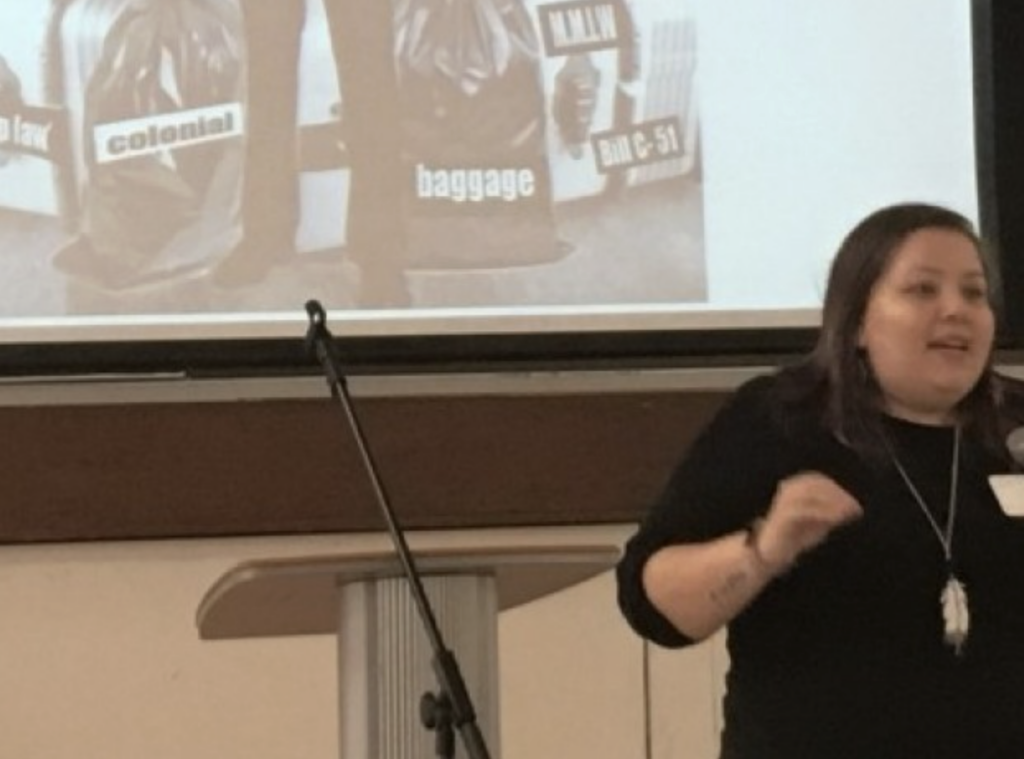
 It was a busy week for staff at the Office of the Treaty Commissioner.
On Thursday, Harry Lafond, Annie Battiste, Lyndon Linklater, and Brenda Ahenakew were among speakers at the Prairie Spirit School Division Professional Development Day, with 115 teachers from the rural area north of Saskatoon.
Milton Tootoosis led an Indigenous Awareness Session on treaty, livelihood and TRC Calls to Actions #92 for staff of Western Economic Diversification staff at the SIIT campus in downtown Saskatoon.
“Milton delivered a very informative session about treaties, reconciliation and barriers that Indigenous communities/entrepreneurs face,” said one of the participants.
Mary Culbertson appointed Treaty Commissioner of Saskatchewan
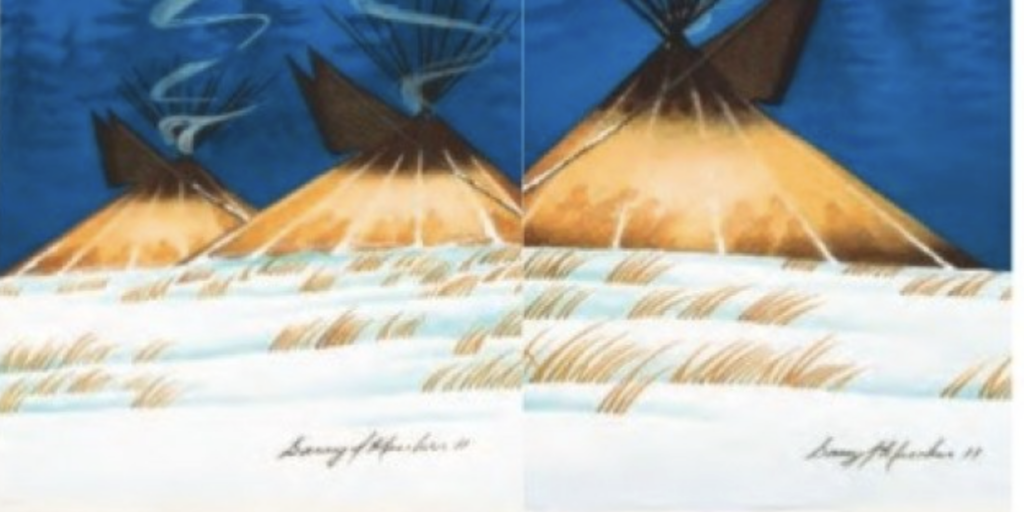
The Office of the Treaty Commissioner welcomes the Federation of Sovereign Indigenous Nations and the Government of Canada announcement of the appointment of Mary Culbertson as the new Treaty Commissioner of Saskatchewan.
“We are excited to welcome Mary Culbertson as the new Treaty Commissioner and look forward to working with her as we continue down the path of Treaty fulfillment and Reconciliation,” said Harry Lafond, OTC executive director.
Culbertson begins immediately and will serve as commissioner until January 28, 2021.
To the positions Culbertson brings her extensive experience in public and community service and background in family, criminal and Aboriginal law as well as dispute resolution.
Culbertson is a member of the Keeseekoose First Nation in Saskatchewan and has almost 20 years professional experience working in the federal, provincial and territorial governments and with Indigenous organizations.
Statement from the Treaty Commissioner of Saskatchewan
Indigenous people need allies and support when a system shows them no justice.
The Office of the Treaty Commissioner watched as the verdict was delivered the public in the trial of Gerald Stanley and saw resounding heart break of the family and friends of Colten Boushie.
There is frustration and disappointment in a flawed system and process that doesn’t treat all people fairly. Today people are crying out that they have not seen justice done in the death of a young man.
Now, more than ever we need to come together as a nation and province-wide community. Reconciliation efforts are not one-sided, it must grow from people together. Reconciliation is about learning the past and choosing to build a better future. It’s understanding each other. It’s building trust.
Our Treaty relationship is in trouble and has been set back once again. Leadership in this province and country which crosses over many Treaty territories, needs to come forward with social and political will to actively invest in true Reconciliation and relationship building, while having zero tolerance for any form of discrimination.
Our Treaties are Treaties of peace, we can no longer let this relationship be divided, we cannot use hateful and divisive language that encourage violent acts, we cannot ignore racial divides any longer, truths need to be spoken and heard. We need to build better systems, free from discrimination.
We need to do better. Saskatchewan needs to do better. Canada needs to do better.
Treaties 1-11 Gathering hosted by Maskwacis Cree 4 Nations
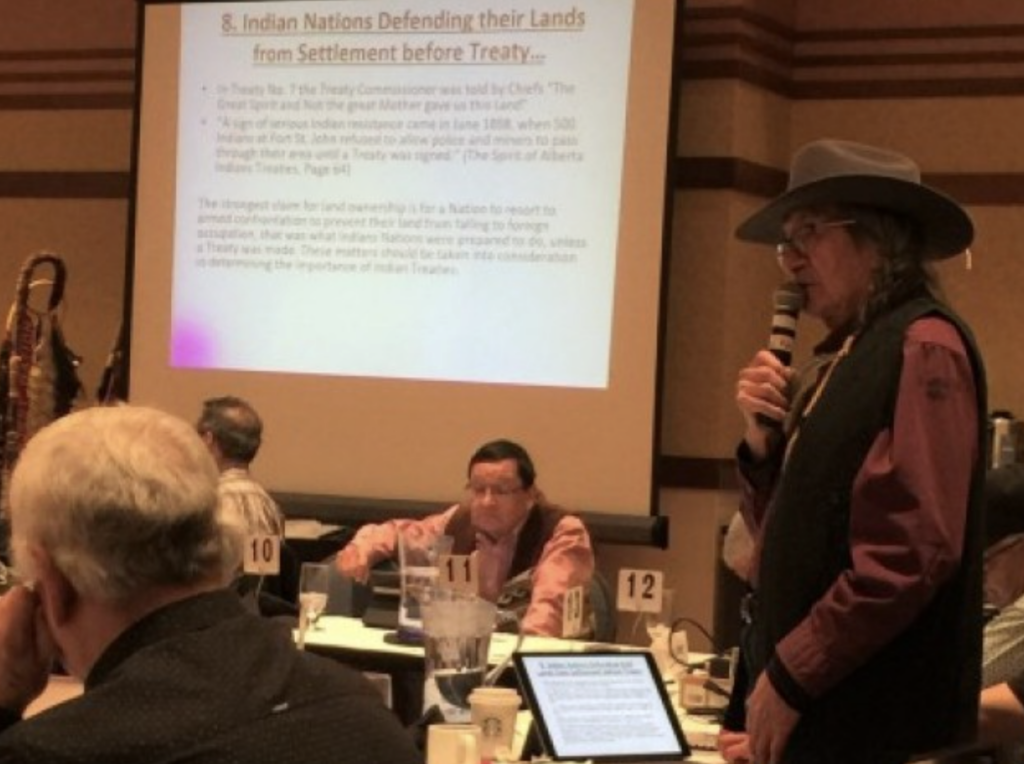
The Office of the Treaty Commissioner’s Director of Livelihood and Economic Independence, Milton Tootoosis attended the Treaties 1-11 Gathering hosted by the Maskwacis Cree 4 Nations.
The two-day gathering was held Jan. 30 and 31 at the River Cree Resort on the Enoch Cree Nation just west of Edmonton.
The gathering had presenters on topics such as the Truth and Reconciliation Commission, United Nations Declaration on the Rights of Indigenous People, land-based treaty, the Medicine Chest, the Indian Act, Child & Family Services, the Maskwacis Education Protocol and Agreement, Treaty Cards and several presentations about the spirit and intent of treaty.
There were many presenters who reinforced the concepts about sovereignty, the spirit and intent and the urgency to find solutions for implementation of many outstanding treaty promises. Several delegates also stressed the importance of unity and working collaboratively for solutions to century old challenges.
“I have attended several Treaty Gatherings and I would have to say there is always a perspective or concept that we all need to be reminded of,” Tootoosis said.
“The constant message being echoed at the gathering was the need for action and a unified approach by all treaty nations for solutions.”
Great Plains College formalizes relationship with Office of the Treaty Commissioner
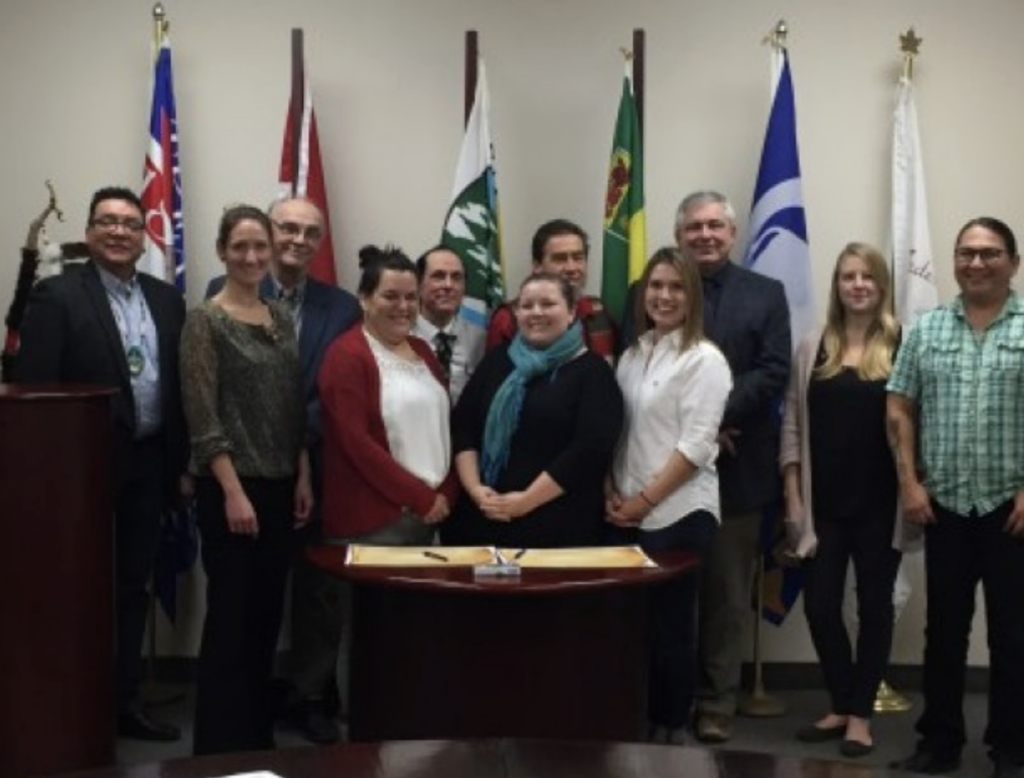
 Great Plains College has signed a strategic alliance with the Office of the Treaty Commissioner, promising the two will work together to educate on Treaties and Indigenous knowledge, and promote an Indigenous inclusive learning environment.
“We thank Great Plains College for their commitment to including Indigenous perspectives and knowledge in their programs and we look forward to working together to promote reconciliation through education,” said Harry Lafond, executive director for the Office of the Treaty Commissioner.
The Office of the Treaty Commissioner recognizes the value and supports the effort of Great Plains College as they facilitate the realization of students’ education goals through the provision of programs and services at the college that are culturally responsive, nurture academic excellence and create a welcoming and positive learning environment, especially in that key first year.
“The Office of the Treaty Commission has had an enormous impact on our student culture and in its support for Indigenous students in particular. The college is committed to incorporating Indigenous perspectives and knowledge in capacity building, community service and teaching,” said Great Plains College vice president academic, Brian Gobbett.
“We are happy to have an ongoing relationship with the Office of the Treaty Commissioner and pleased to formalize it through the signing of this strategic alliance.”
Orange Shirt Day to Honour Indian Residential School Survivors
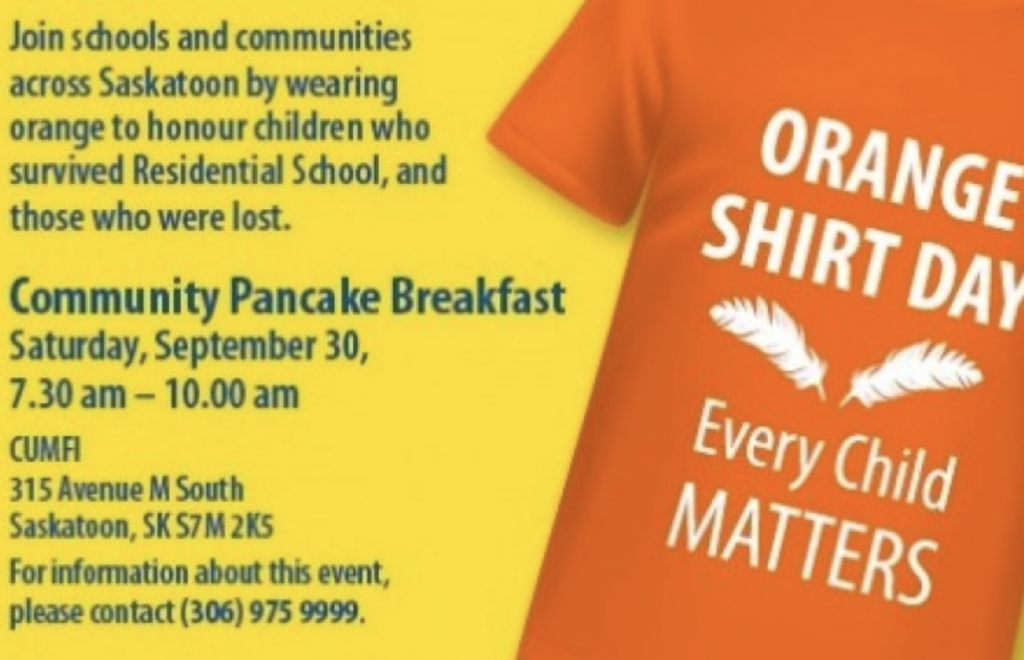
 The City of Saskatoon in partnership with Reconciliation Saskatoon is proud to support Orange Shirt Day activities on Sept. 30, 2017. The day aims to raise awareness of the devastating impact of the Indian residential school system on Aboriginal people and our community.
“As an Indian residential school survivor, we were taught to love God but we were also taught how to hate ourselves as native people,” said Frank Badger, Elder and residential school survivor.
“I still experience feelings of inadequacy and a lack of confidence due to the physical and emotional abuse I received at the school. No kids should experience what I did; we must love our kids and look after them no matter what background they have because every child matters.”
From the 1880s until 1996 when the last school closed, 150,000 First Nation, Inuit and Métis children were removed from their communities and forced to attend residential schools across Canada.
Office of the Treaty Commissioner executive director Harry Lafond is a residential school survivor.
“I am inspired by Elders like Rose Atimoyoo who said, ‘The bringing up of a child can be likened to braiding a willow. It will grow as you braid it. So it is with a child – what he is taught and what is done with him as a child is how he will grow up, just like the braided willow,’” he said.
“Orange Shirt Day reminds us that love breeds love and pain breeds pain. What do we want for our grandchildren?”
All members of the community are encouraged to get involved by wearing an orange T-shirt or clothing item on Sept. 30 and attend the Community Pancake Breakfast planned to honour residential school survivors.
“Orange Shirt Day is an important day for all members of the community to unite in a spirit of reconciliation and honour residential school survivors, their descendants and the children who were lost,” said Shirley Isbister, president of Central Urban Metis Federation Inc.
“The impact of residential schools goes far beyond the children who experienced it firsthand. Even today, five generations later, my family feels the effects resulting from decades of cultural loss and intergenerational trauma inflicted on families.”
The day grew out of the story of six-year old Phyllis Webstad who wore an orange shirt on her first day of residential school. It was forcefully removed from her and her story is now a powerful reminder of the inter-generational trauma that has resulted from decades of cultural loss.