
News
Rural Reconciliation
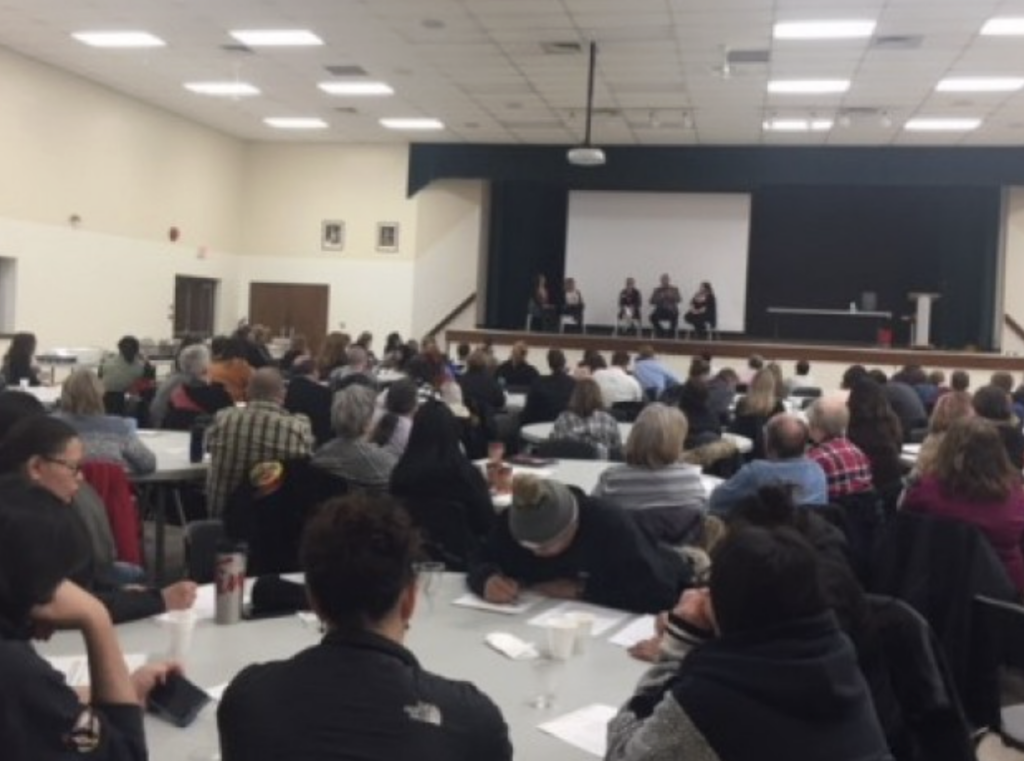
 The first ever Rural Reconciliation: An Educational Gathering held in Warman, Nov. 7 had a great turnout of people from across the community for a day of learning and sharing.
“To see so many individuals from various cultures and heritages all coming together with a common goal of understanding their shared history was absolutely wonderful,” said Amy Seesequasis director of the Office of the Treaty Commissioner’s speaker’s bureau. She was one of the organizers.
“The mood was very energetic and full of excitement as people entered the facility and visited with one another and viewed the displays. I know that for some, it was their first time at an event like this, and they did not know what to expect.”
Mary Culbertson, Treaty Commissioner of Saskatchewan, made opening remarks at the event. The Office of the Treaty Commissioner speaker Dion Tootoosis spoke on the History of Treaties and the Treaty Relationship, and Annie Battiste, on Reconciliation and the Calls to Action. Tootoosis provided the Treaty 6 song and for many it was their very first time hearing the song of their Treaty territory. Eleanore Sunchild also presented.
“After each session, the presenter would have a lineup of individuals who wanted to thank them or share words of encouragement. I feel very positive about this educational gathering and I hope it sets the precedent for other communities to host these sessions,” Seesequasis said.
The group also had the opportunity to view the documentary Reserve 107, with members of the film, Gary Laplante and Leonard Doell.
“It was an excellent way to share a positive and inspiring example of rural Reconciliation.”
This Great Plains College event was hosted in partnership with Office of the Treaty Commissioner, City of Warman-City Hall, Town of Dalmeny, City of Martensville, Affinity CU and Mennonite Central Committee – MCC.
Sunchild, Tootoosis, and Laplante are all part of the OTC speakers bureau.
Yorkton Tribal Council’s Welcome Back to School
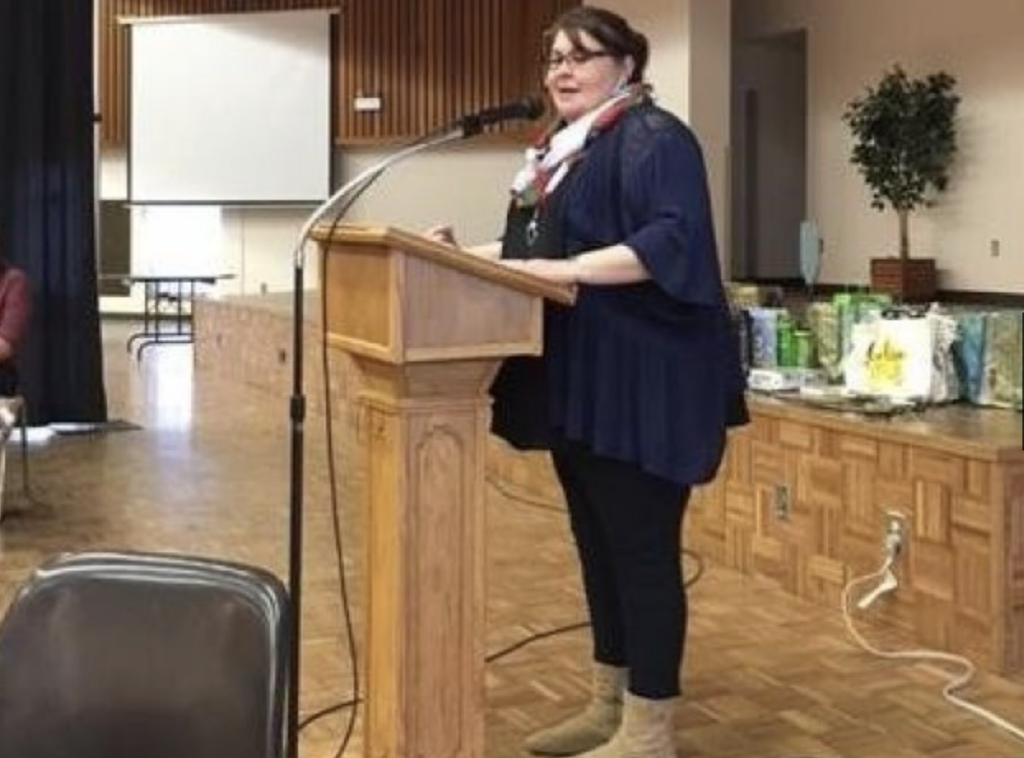
 While gearing up for the new school year, the Yorkton Tribal Council held a Welcome Back to School Professional Development Day.
Mary Culbertson, Treaty Commissioner of Saskatchewan, was invited to speak at the event. She spoke about the chance to make real change and Treaties in the classroom.
During breakout sessions Culbertson spoke about the Office of the Treaty Commissioner’s speakers Bureau and provided examples on the Treaty Six Education Council’s Cultural Year Plan, which showed great examples of how to incorporate teaching treaties in the classroom specifically to a First Nation.
Treaty 10 Gathering
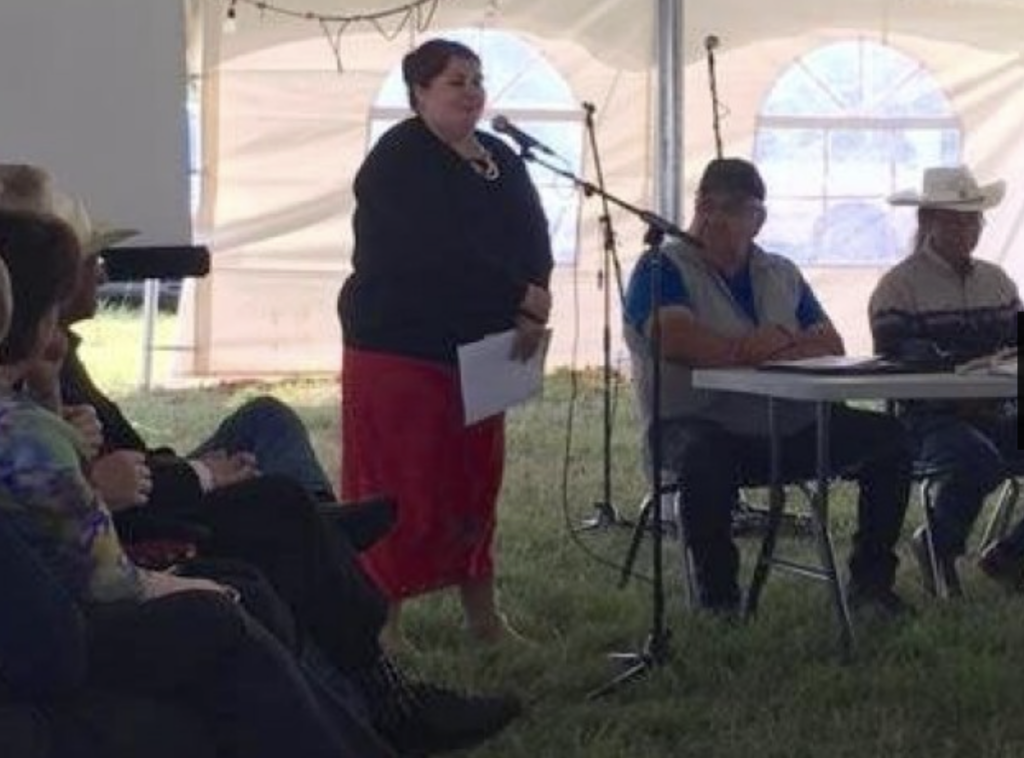
 Office of the Treaty Commissioner executive director, Harry Lafond, sent a dispatch from the second annual Treaty 10 Gathering from English River First Nation’s La Plonge reserve near Beauval.
For the second year in a row, I trekked north to the beautiful landscape of La Plonge in late July and early August. Treaty 10 Gathering brought out the friends I made last years and years past. Elder AJ Felix and Elder Isadore Campbell kept the sessions moving.
The Lt. Governor attended the first day and listened to every presenter until it was time for him to catch his flight home to Regina. Throughout the day, the Lt. Governor moved around the grounds engaging different people in conversation.
Gatherings like this bring out the thoughts and stories of the people and help to create bonds that are so necessary for future work in Treaty implementation
Treaty Commissioner Statement on hate speech online
Freedom of expression is a right, but sometimes people use that to spread messages of hate. The internet has given voices of hatred greater reach, facilitating the dissemination of racism, discrimination and the incitement and promotion of violence.
The words we write have an impact on others.
In Saskatchewan, the Treaty relationship is suffering and made worse by hateful and discriminatory posts online.
The Office of the Treaty Commissioner calls on individuals to join us by investing in true Reconciliation and relationship building, while having zero tolerance for any form of discrimination.
We all need to act responsibly online. We need to do more than simply not get involved in hateful and offensive posts, but also report those who do. We can no longer ignore posts that promote violence against another because of their race, religion, gender, sexuality or anything else.
We need to do better.
We are all Treaty People.
National Indigenous Peoples Day in Battleford remembers the past
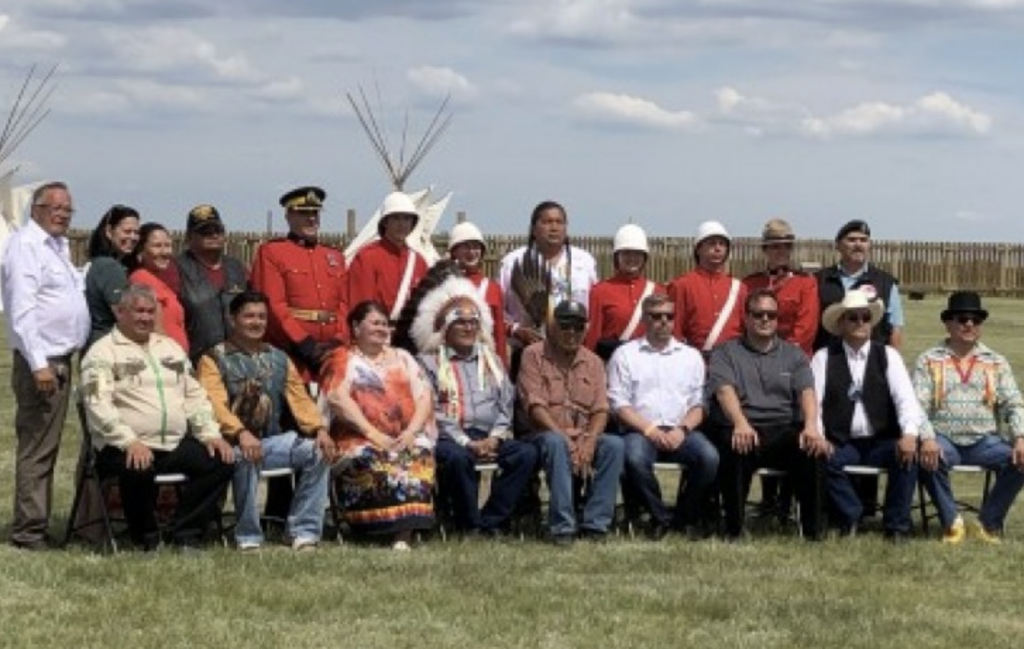
 This group photo was taken on June 21, 2018 during National Indigenous Peoples Day at Fort Battleford to commemorate the eight Indians that were hanged in the fall of 1885, Western Canada’s largest mass execution.
Some of the eight were linked to the Frog Lake Massacre. Without a proper trial and defense they were ordered murderers by Sir John A. McDonald and sentenced to hang. A mass grave was dug below the Fort Battleford location away from the area and hidden for many years before it was rediscovered in the 1960’s-70’s.
A grave marker was finally placed to honour the warriors. Today, there is still no signage of story about the eight. That will change as we move forward in the name of justice and Reconciliation.
Poundmaker and Big Bear were sentenced for treason-felony and served jail time at the Stony Mountain Penitentiary. Poundmaker was released early. He travelled to see his adopted father Crowfoot at Blackfoot Crossing where he died at the age of 44.
Poundmaker’s remains were brought back to his reserve in 1967 where there is a grave site near the famous battle between the Cree/Assiniboine and Col Otter’s 300 men. The battle ended in the Cree/Assiniboine favour in which Poundmaker is credited for stopping the warriors from pursuing the retreating Otter. Poundmaker saved many, many lives that day and prevented further bloodshed and asserted his dream for peace, order and good governance. He did not support Riel’s fight at Batoche as others have assumed. Poundmaker stood good to his word for peace and good relations with the settlers as promised when he accepted treaty six in 1876.
Treaty Commissioner of Saskatchewan, Mary Culbertson, spoke at the the National Indigenous Peoples Day commemoration.
“Remembering and honouring significant events in the course of Canada being shaped, is essential to repairing the fractured reality of the Treaty relationships,” she said after the event.
“It’s this education and this kind of commemoration that is the foundation of repairing relationships on the continued road to reconciliation. We can’t give up.”
Heart of Treaty 6 Reconciliation
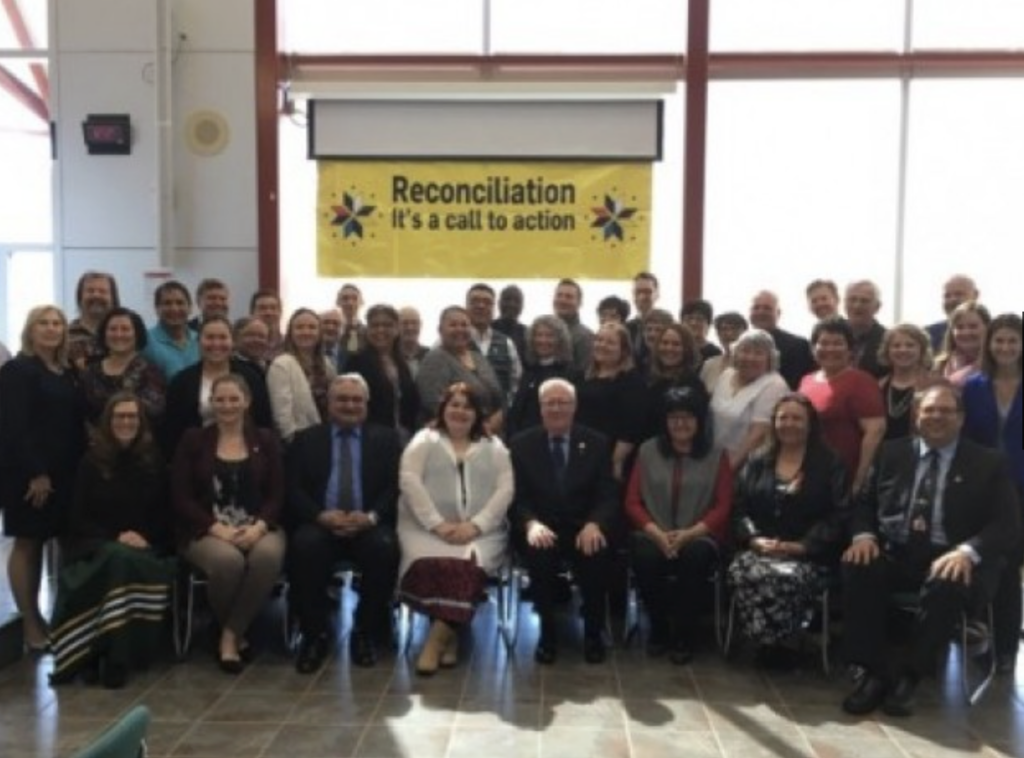
 On April 18, 2018 the partners of Heart of Treaty 6 Reconciliation publicly committed to travelling together on a path of reconciliation. Through a pipe ceremony and public signing of a Commitment to Relationships and Trust, they acknowledged common objectives, principles for working together, and a shared vision for reconciliation.
Heart of Treaty 6 Reconciliation is a group of individuals, community-based organizations, governments, faith communities, and businesses from Onion Lake Cree Nation, Lloydminster, Frog Lake First Nation, and Poundmaker Cree Nation that have been coming together since December 2016 to discuss reconciliation. In the spirit of Treaty Six, entered into at Fort Pitt in 1876, we agree on the need to develop stronger relationships and trust among the communities, organizations and individuals making their home in the Heart of Treaty 6 territory.
The historic event was held at Lakeland College Indigenous Student Lounge, Lloydminster.
OTC Speakers Bureau Gathering
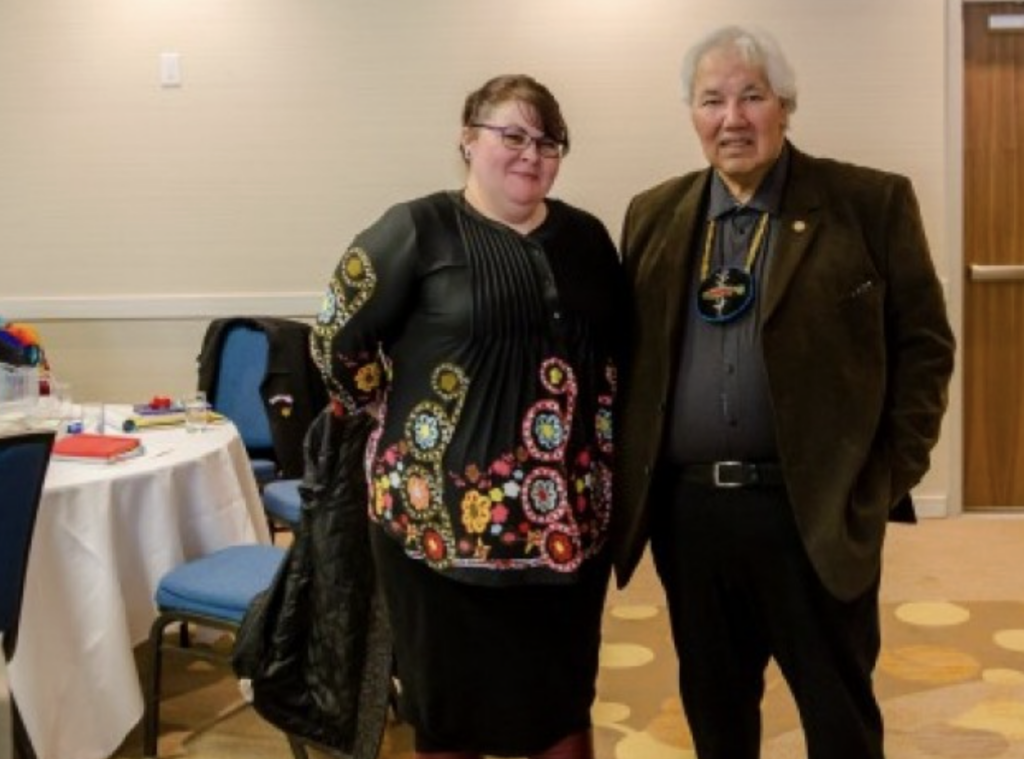
 On Thursday, April 12, the Office of the Treaty Commissioner had a great gathering and learning event with our speakers’ bureau.
Big thank you to our incredible speakers Judge David Arnot and Justice Murray Sinclair.
Find out more about our speaker’s bureau here
OTC provides safe space for Reconciliation
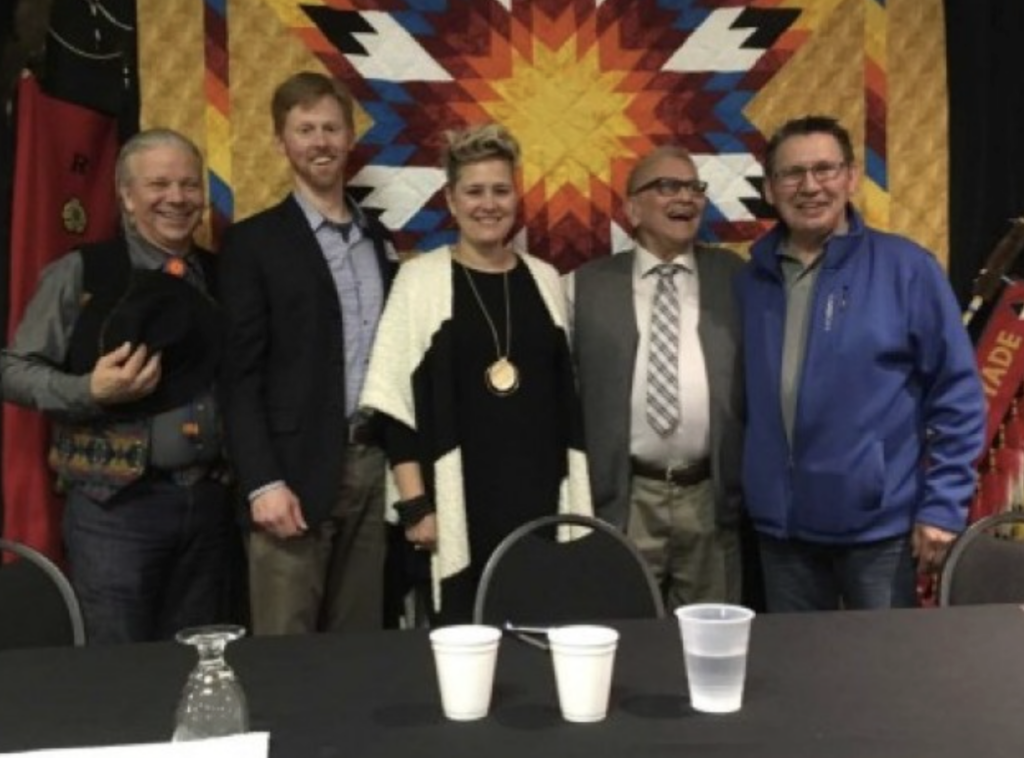
 In a recent Reconciliation forum held as part of the premier Atamiskakewak National Gathering, the Office of the Treaty Commission (OTC) has reassured persons across the province and by extension Canada, that it has created a safe space for Reconciliation.
Atamiskakewak National Gathering was a week-long conference filled with activities, of which Reconciliation was a key focus. One of the forums, “Faith Relations: Journey of Reconciliation,” held at the Heritage Inn in Moose Jaw, SK., a Reconciliation panel was invited to have a frank discussion about different aspects of Reconciliation and the barriers that may slow down efforts to reconcile among indigenous and non-indigenous individuals.
Rhett Sangster, Director of Reconciliation and Community Partnership at the OTC was part of this panel, along with SheLoves Magazine’s writer and editor, Idelette McVicker, Howard Jolly and Chief Dr Robert Joseph. To kick-off the discussions, Audience members were asked to participate in a group of activities in which they were asked various questions. They were asked to state, “What holds them back from having face-to-face conversations about Reconciliation?”
Several individuals took to the mic to express themselves; some citing: fear, anger, hurt, cultural differences, lack of knowledge, prejudice and a lack of safe spaces.
One audience member said, “There is nowhere to go to have these conversations sometimes because of fear and not even in the church you can find a channel to create this conversation.”
The responses triggered a lengthy discussion.
However, the lack of ‘safe spaces’ was an issue that stood out.
Sangster told the audience that one of the OTC’s aim is to create this safe space for conversations in relation to Reconciliation.
“Some of these responses that I’ve heard whether it is fear of saying the wrong thing and prejudice—this is all education and understanding; a need to know what is the right language to use and why this is relevant to your own history. The OTC has a speakers’ bureau with different partners like churches and we will be happy to create this partnership that you’re willing to engage in and we will work with you,” he said.
“We have a website that we try to make it a place to capture stories of good activities happening. There are a lot of great activities happening across the province and country that we’d love to capture about Reconciliation in action. There, you will see what churches and other big communities are doing.”
He added that the OTC also has an event calendar that lets you know where and when events are happening across the province that individuals can be part of. “The other issue of meeting people who are engaging in discussions–we also have an events calendar to capture places where people can get to know each other. There are a lot of activities out there aimed at promoting Reconciliation that you can be part of. There are resources to address these concerns and safe spaces and the OTC helps to promote this platform and is also a safe space.”
— By Sasha-Gay Lobban
Treaty Fun Night
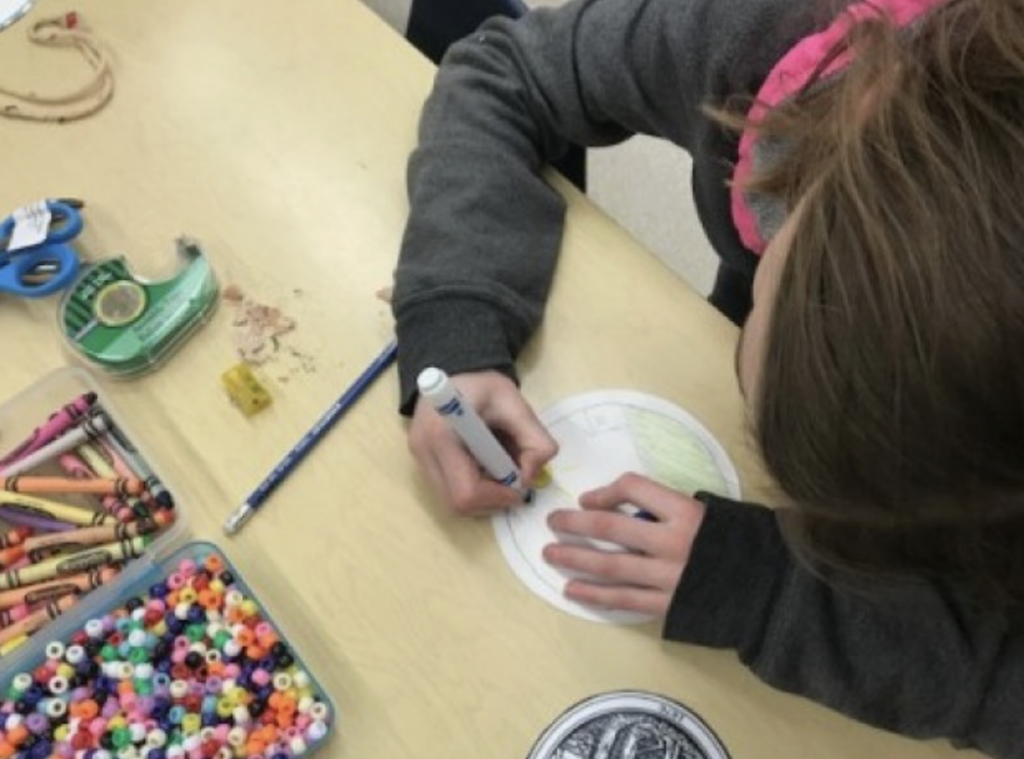
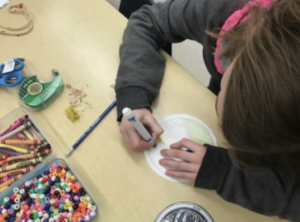 The Office of the Treaty Commissioner partnered with Ecole St. Paul’s school to host a Treaty Fun Night for students and families to learn about Treaties through interactive crafts like Treaty Medal making, Jeopardy Game, Hand Games, Storytelling, and Treaty simulations.
There were about 50 families participating in 15-20 minute activities that rotated from 6:00-8:30 on Mar, 20 at the school. Check out our Facebook page to see some of the great creations
OTC has been working with Ecole St. Paul School since last spring and we wanted to host a Treaty Family night where kids could show the parents how much they’ve learned about the Treaty Relationship.
This was all leading up to this morning’s Treaty Medal unveiling
Treaty 6 flag raising at École St. Gerard School
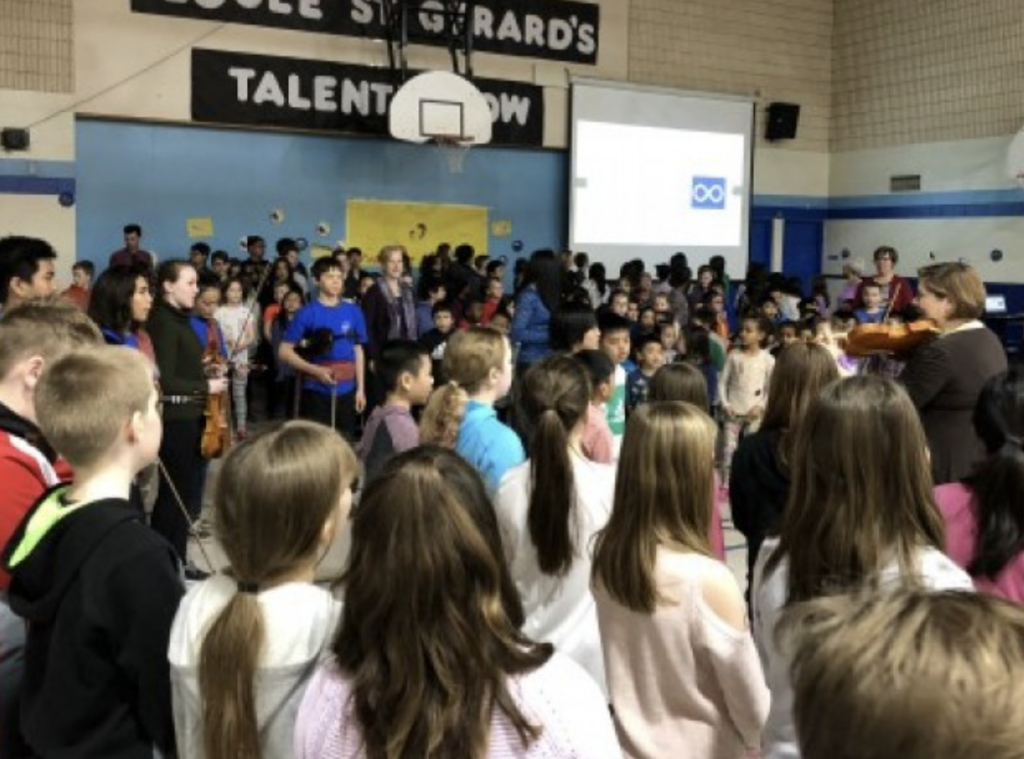
 The Office of the Treaty Commissioner celebrated the Treaty 6 flag raising at École St. Gerard School alongside members of the communities of the Greater Saskatoon Catholic Schools, Saskatoon Tribal Council, Roman Catholic Diocese of Saskatoon, City of Saskatoon and the Central Urban Métis Federation Inc.
This comes as part of a year of learning for staff and students on Reconciliation and the Treaty relationship.
At the Treaty 6 flag raising event, students shared their knowledge, sang the Treaty 6 song accompanied by drummers from St. Frances Cree School, and student fiddlers from St. Michael Community School played the Métis Anthem