
News
New resource coming to Saskatchewan Classrooms
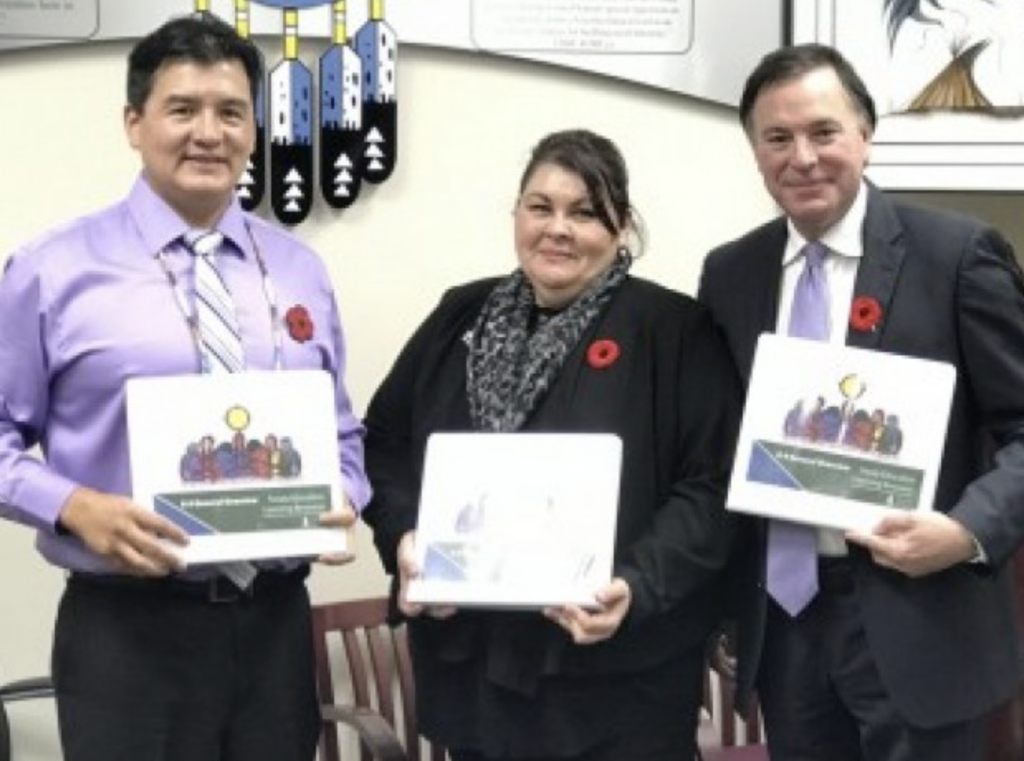
 In celebration of the 10-year of the Treaty resource kit, a new Treaty resource is being rolled out for Kindergarten to Grade 9 classrooms across the province. The new teacher resource builds upon the success of the original Treaty resource kit and was created in collaboration with the Ministry of Education, Elders and educators.
The Kindergarten to Grade 9 Treaty Education Learning Resources is easy to use and includes suggestions for integrating Treaty education into a range of subject areas at each grade. It provides sample learning activities and links related to resource and ensures First Nation and Métis content, perspectives and ways of knowing continue to be a priority with in Saskatchewan classrooms.
“Creating this resource supports all students in learning the true stroy of Canada’s history with Indigenous Peoples and share the important perspectives that surround the making of the Treaties,” said Mary Culbertson, Treaty Commission of Saskatchewan
“We are proud to have worked with our First Nations Elders and educators with the assistance of the Ministry of Education to make these additional Treaty resources a reality for use in the classroom.”
OTC and libraries sign strategic alliance
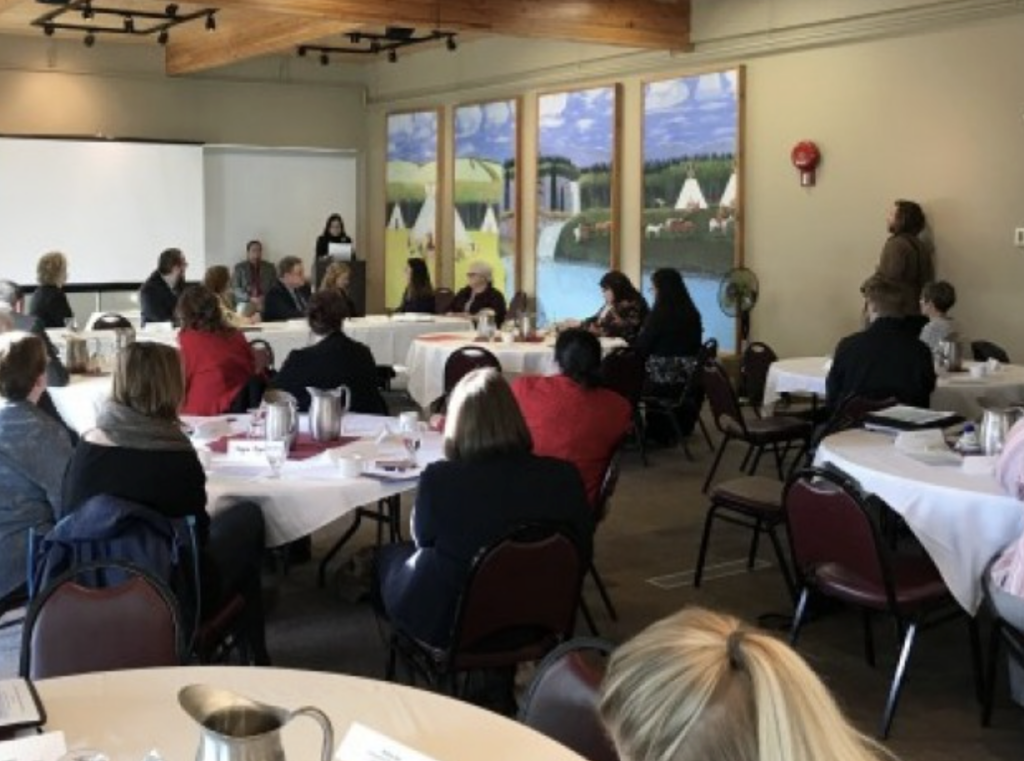
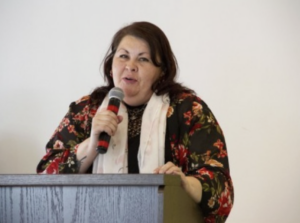
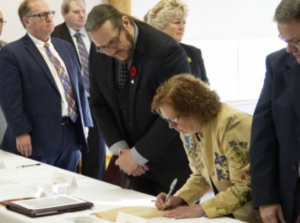
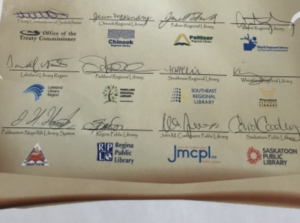
 The Office of the Treaty Commissioner signed a strategic alliance with Saskatchewan public libraries.
The partnership is designed to improve Indigenous access to the public library system and for the libraries to provide treaty education and awareness.
“We’re all people who can make a change and that is what we are doing for future generations,” said Mary Culbertson, Treaty Commissioner of Saskatchewan.
“I look forward to all the great things that will come from this alliance.”
The Saskatchewan Committee on Indigenous Library Services is a driving force behind the positive changes happening in the libraries. Committee chairperson Ruth Barker, said they are working hard to break down barriers, while educating and informing patrons, staff, the board, trustees and the public.
“We’ve got so much work to do yet,” she said.
OTC supports Blanket Exercise
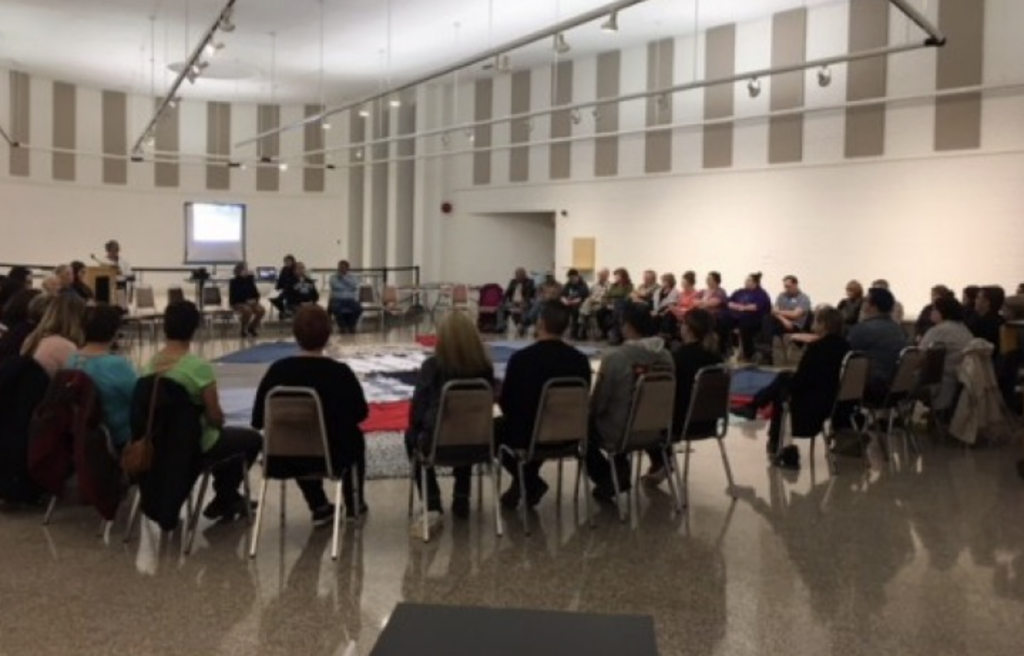
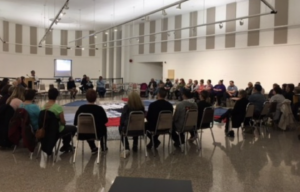 On Oct. 18, the Office of the Treaty Commissioner, Sunchild Law, and the Allen Sapp & Chapel Gallery hosted a Blanket Exercise in North Battleford.
“It was amazing,” said Saskatchewan Treaty Commissioner, Mary Culbertson, of the event turnout. About 50 people attended the exercise, including Order of Canada recipients.
The KAIROS Blanket Exercise is a workshop that explores the nation-to-nation relationship between Indigenous and non-Indigenous peoples in Canada. Blankets arranged on the floor represent land and participants are invited to step into the roles of First Nations, Inuit and later Métis peoples.
According to the KAIROS website, “The workshop helps people to understand how the colonization of this land impacts those who were here long before settlers arrived. It engages people’s minds and hearts in understanding why the relationship between Indigenous and non-Indigenous peoples is often broken and how we can take action together.”
The exercise was facilitated by Iris Acoose and YTC RSHW Support Team.
Orange Shirt Day: Yorkton
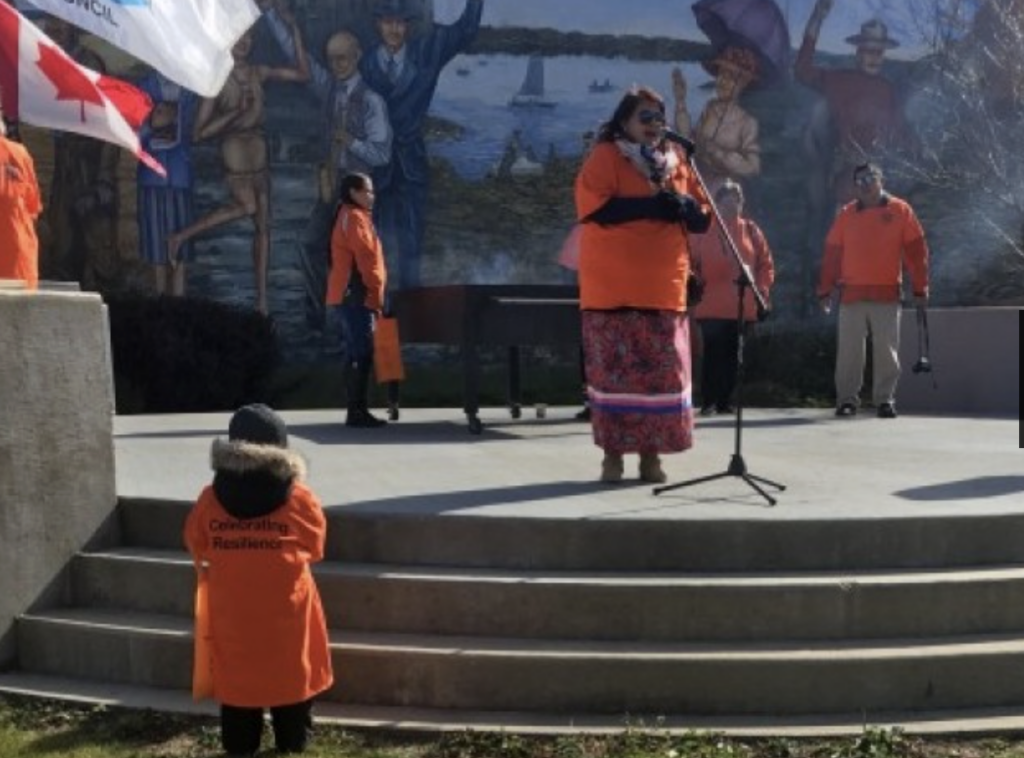
 On Sunday a walk and gathering was held to commemorate Orange Shirt Day in Yorkton.
After a walk there was a barbecue and ceremony. Treaty Commissioner of Saskatchewan, Mary Culbertson, gave opening comments. We sat down with her to ask about the day.
What was it like seeing all the orange shirts?
It was an emotional day for me since I grew up in the area and I was fortunate enough to walk with people from my own First Nation and relatives who are survivors. Motorists drove by honking and waving to show support and community members came out to share a meal together.
Why is orange shirt day important to you?
Orange Shirt Day celebrates resilience. It honours those children who never made it home from residential schools and those who have survived. Phyllis’s story about her orange shirt turned into a movement, a movement that is growing and bringing people together.
Anything else?
Thank you to the Yorkton Tribal Council for putting this day together and to the survivors who shared their stories, Ross Cadotte who attended St. Philips Residential School, Selena Brittain who attended Marieval Residential School and Evelyn Burns who attended Gordons Indian Residential School.
Orange Shirt Day: Saskatoon
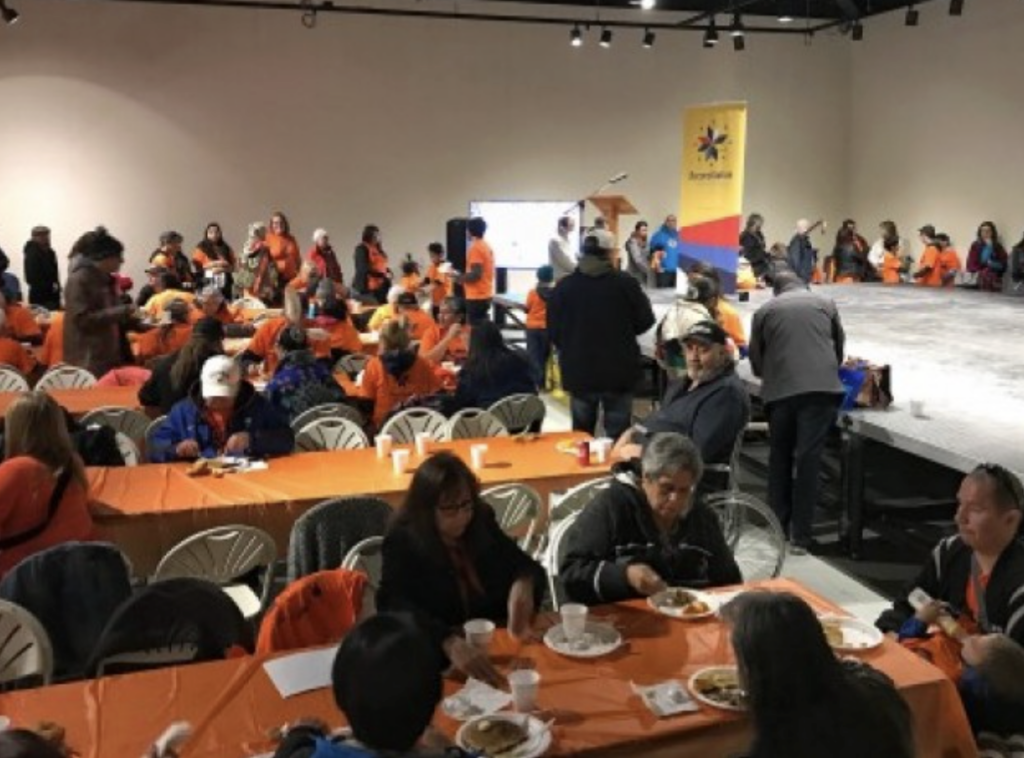
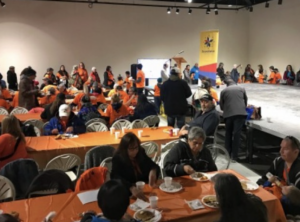
The Western Development Museum was packed on Sept. 30 and everyone was wearing an orange shirt.
The Central Urban Métis Federation Inc. hosted the community pancake breakfast to honour Orange Shirt Day. People received Reconciliation Saskatoon orange t-shirts as they arrived.
“Great turnout,” said one attendee as he surveyed the massive hall with tables full of Elders, families and friends eating pancakes, sausages, oranges and bannock. All the seats were full and the queue for food lined the room.
Rhett Sangster, the OTC’s director of Reconciliation and partnerships, and his family were among the hundreds who attended the event.
“It is great to see so many people wearing orange,” he said.
“It makes me hopeful as people come together, form new relationship, and learn more on our path to truth and Reconciliation.”
Orange Shirt Day is a legacy of the St. Joseph Mission (SJM) residential school commemoration event held in Williams Lake, BC, in the spring of 2013. It started with the story of Phyllis, who had her new orange shirt taken away on her first day of the school and has become a time to raise awareness of the devastating impact of the residential school system on Indigenous people and their descendants.
The date was chosen because it is the time of year in which children were taken from their homes to residential schools, and because it is an opportunity to set the stage for anti-racism and anti-bullying policies for the coming school year.
The phrase “Every Child Matters” has been used as part of the movement to recognize the value of every child and for communities to come together in the spirit of reconciliation and hope for future generations.**
Across Saskatchewan events were held in the week leading up to the Sept. 30 date.
Prairie Prism 2018
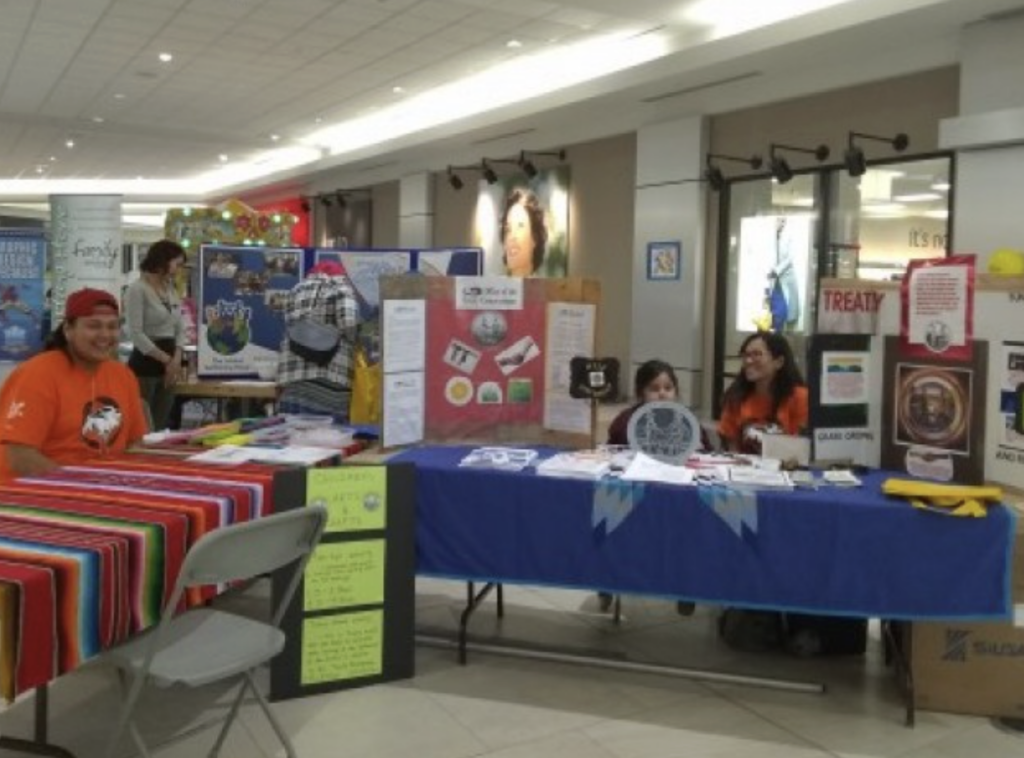
Prairie Prism brings together members of the community such as schools, businesses and potential employers, settlement agencies, multi-faith groups and ethno-cultural communities, to network and collaborate. It is designed as a way to cross cultural divides and decrease possible myths about people and cultures.
Office of the Treaty Commissioner youth representative Langford Keshane-Cote sat at the interactive booth, which featured mini-tipi making while learning of the tipi teachings, and Treaty medal making while learning about the Treaty relationship and the Spirit and Intent of Treaty as symbolized in the medal.
Also, OTC youth representative Kimberly Seesequasis say at the information booth, which featured OTC information, as well as fact sheets on the Treaty history & relationship, Indigenous Awareness and Reconciliation.
Joseph Naytowhow, member of the OTC Speakers Bureau, and Yvonne Chartrand, Vancouver based artist, performed the Red River Jig at Prairie Prism. Joseph provided opening prayer, Treaty 6 song, opening remarks and provided storytelling of the Treaty relationship and of the Indigenous treaty partners.
Regina’s Orange Shirt Day 2018
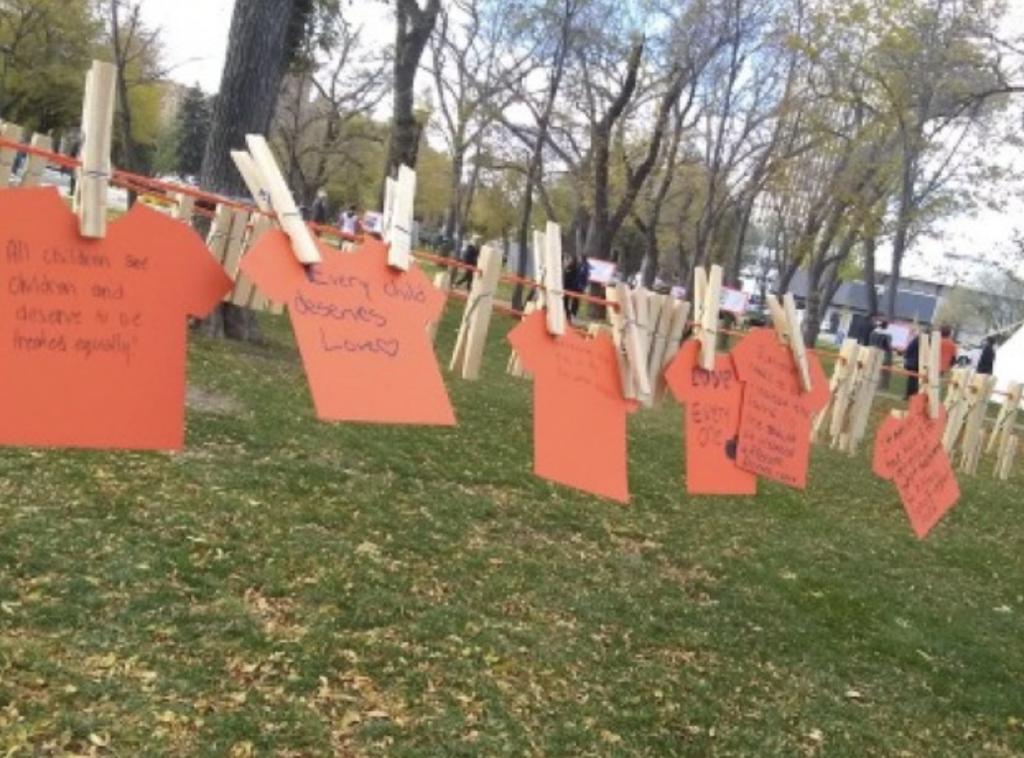
 Office of the Treaty Commissioner director of speakers bureau Amy Seeseequasis attended Regina’s Orange Shirt Day events to deliver words on the importance of the day. She shares those words here:
Orange Shirt Day is an important way for us to collectively honour the Indigenous children who survived Indian Residential School (IRS), and those who did not. There are 80,000 federally recognized IRS survivors, but research shows that number is probably closer to 150,000. One out of every 25 children who attended IRS did not survive and make it back home to their families and communities. There are currently 80 federally recognized IRS, although research shows that between 1840 to 1996, there were closer to 350 IRS operating across Canada.
As Treaty people, we have responsibilities to each other as Treaty partners to honour and respect each other’s shared histories. This particular day reminds us of that shared history, and those shared treaty responsibilities.
Children require love, affection, nourishment and rest to grow and develop in a healthy manner.
When a child is denied those basic human needs they become physically and emotionally damaged, and more often than not, the effects of this can leave lifelong negative repercussions.
Upon Treaty signing, the relationship was severed, and a breach of Treaty took place when on-reserve schools instead became IRS due to legislation imposed under the Indian Act. It became mandatory for Indigenous children to attend and assimilation into non-Indigenous society became the primary focus of these schools. The government appointed the church systems to operate these schools.
Children in IRS were forcibly and traumatically removed from their families, communities and cultures. They were hauled away on the back of cattle trucks while heartbroken parents watched them leave in anguish. If they did not comply, they would face prosecution from the government.
Upon entering these schools they had their culture stripped of them with the removal off all their belongings and the cutting of their hair. Daily life consisted of prayer, work, eat, prayer, school, eat, school, work, eat, pray, sleep, repeat.
However, prayer in their own languages and in their own spiritual practices was denied. Work consisted of labor in maintaining the schools; farming, gardening, cooking, cleaning, sewing. Although there was fresh produce and agro foods, the children were never fed healthy meals. Food was of poor quality and proper nourishment was not received. Rest was not adequate and was hindered from poor quality beds, improper heating, long work hours, and fear of abuse, or suffering from abuse.
Children were subject to inhumane conditions and neglectful and abusive treatment in IRS. The effects of the mental, spiritual, physical and sexual abuses has left a legacy that requires a responsibility by us here presently to honour those IRS survivors and those who did not survive.
The legacy of the IRS has left an intergenerational trauma that has shown itself in the prevalent social issues amongst our Indigenous treaty relations. However, our Indigenous treaty partners are resilient and have retained the ability to share culture and guide the healing of their fellow IRS, and their kin experiencing intergenerational traumas. In the spirit and intent of treaty, which is based on the circular and holistic worldview of our Indigenous treaty partners, we are beginning to demonstrate reciprocity to each other, and are at a time of regrowth and renewal.
We see it with the honouring of our survivors at an event like today’s Orange Shirt Day. Although the treaty relationship was breached with the enactment of the Indian Act and the legislation of IRS, we have to remember that nothing in the circle ever really dies out. Although that treaty relationship may wear thin, and lose strength over time, it can always be reborn again. There is always a continuation of the circle.
By recognizing the history of IRS and honouring the IRS survivors, we are honoring that relationship we have to each other as treaty partners.
Thank you to the City of Regina for organizing this Orange Shirt Day event and inviting the Office of the Treaty Commissioner to participate. I wish you all a good day and a safe weekend.
Yorkton Reconciliation Forum
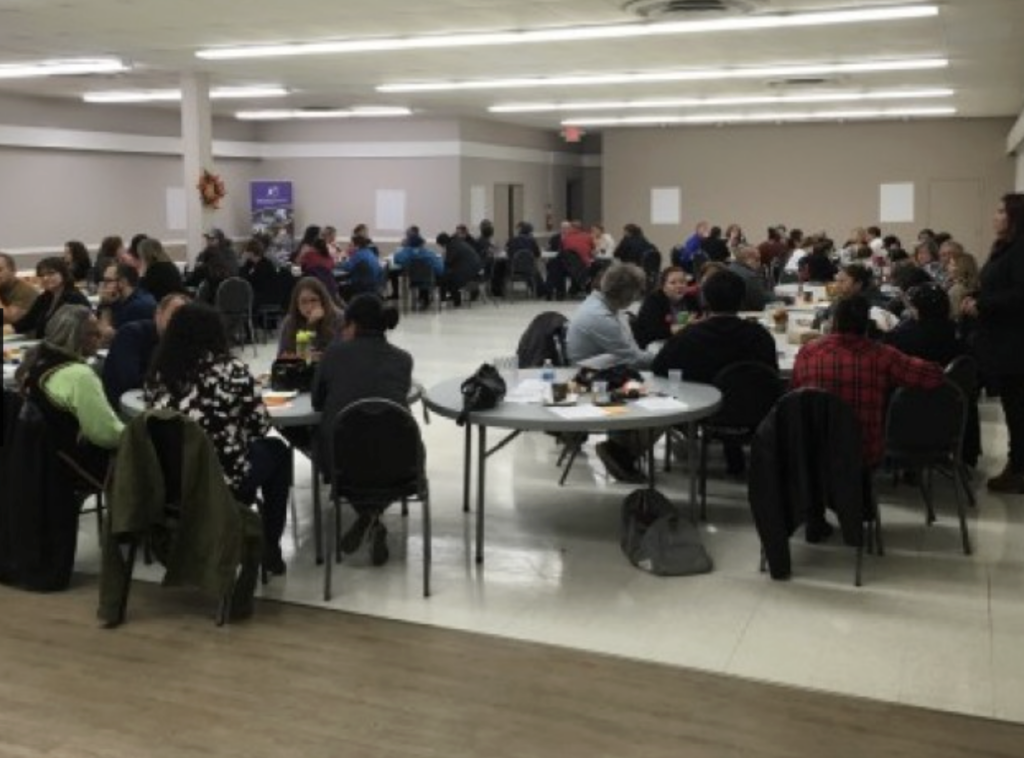
 On Sept. 26, the Office of the Treaty Commissioner came together with the Yorkton Tribal Council and Big Brothers, Big Sisters Yorkton to hold the community’s first Reconciliation Forum.
Treaty Commissioner of Saskatchewan, Mary Culbertson, and OTC’s director of Reconciliation, Partnerships attended, alongside Yorkton’s teachers, politicians, businesses, and community members
“It’s ownership, they’re part of this conversation. They can be leaders, they can make change,” said Culberson to CTV News.
“It’s something our kids and our grandparents aren’t going to be working on so hard because we are starting it.”
The Reconciliation Forum was designed to build relationships and trust, break down barriers, and promote working towards inclusion and Reconciliation.
OTC at the 2018 Saskatchewan Student Leadership Conference
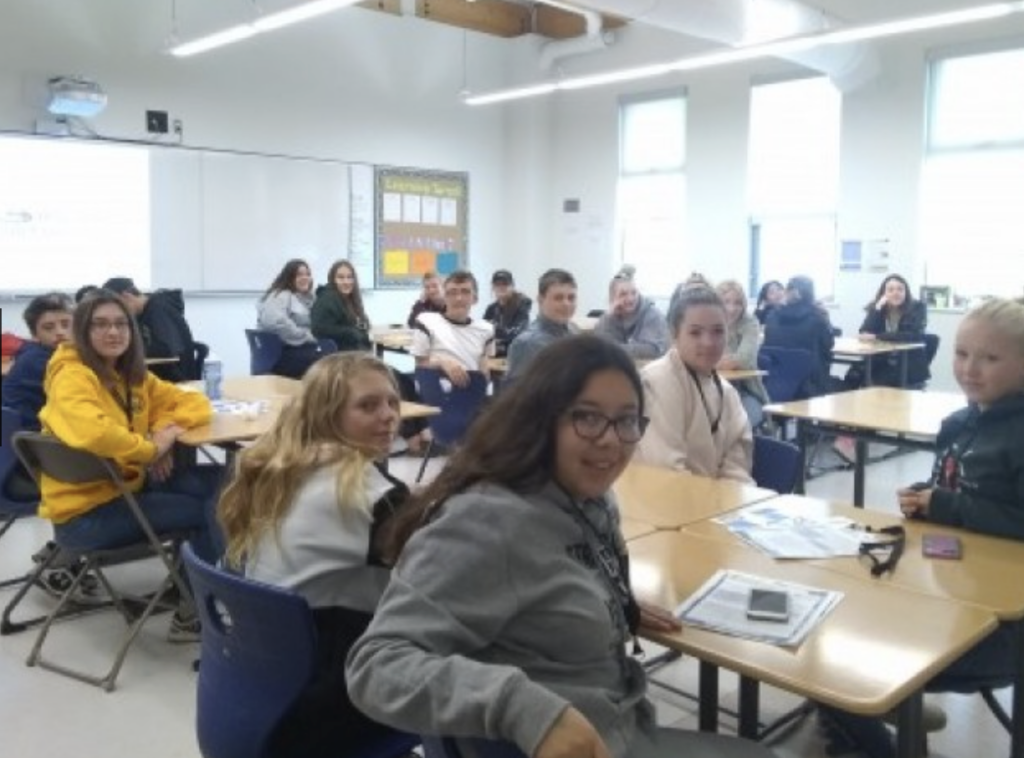
 Students from across the province gathered in Langenburg on Sept. 19 to 21 for the Saskatchewan Student Leadership Conference 2018.
More than 800 students and volunteers were registered for the three days of keynotes, events and breakout sessions.
Office of the Treaty Commissioner’s director of speaker’s bureau, Amy Seeseequasis, facilitated a breakout session on Reconciliation: Fulfilling the Spirit and Intent of Treaty through Cultural Awareness and Positive Race Relations.
The session looked at Treaty history and applicable information (pre-colonial existence, contact & colonization, Treaty signing, Indian Act, Residential Schools, current realities, etc.) with focus on the Spirit and Intent of Treaty, and the roles and responsibilities of the participants as Treaty People.
Amy talked about how Reconciliation for all people begins when we recognize the importance of Treaties and our roles and responsibilities as Treaty people.
Treaty 2 gets new flag
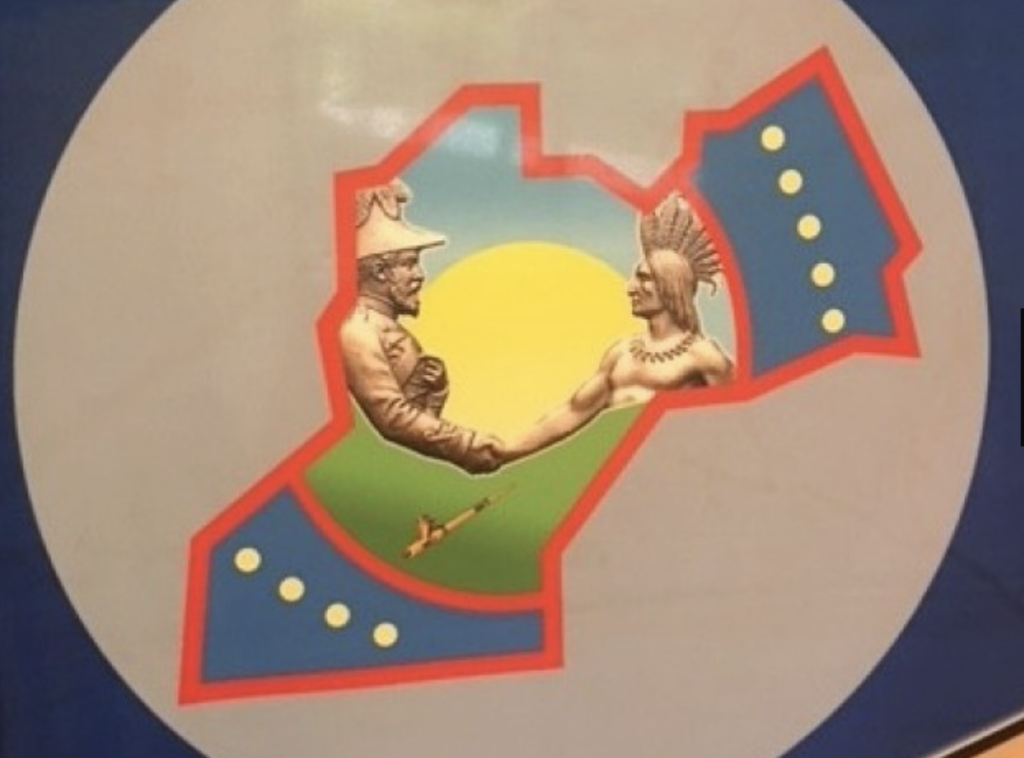
Mary Culbertson, Treaty Commissioner of Saskatchewan is pleased to see a new flag for the people of Treaty 2.
Members of the Treaty territory and their leadership took some time to meet with Culbertson on a recent trip to Ottawa to share their exciting news. They also made further plans to meet again soon and work together on shared histories and Treaty education.
The Treaty Commissioner shared this fact.
“Even through the Chiefs of three bands were signatories to Treaty 4, their people were settled within Treaty 2 territory; White Bear and Ocean Man/Osiya-mani/Kihcikamiwiyin/Kitchi-kah-me-win reserves were settled by Plains Cree, Saulteaux, whereas Assiniboine, Pheasant Rump/Sio-nide and Long Lodge reserved were settled by Assiniboine.
It’s interesting to see that within the maps of the territories you will notice that there are Treaty 4 signatory bands in the Treaty 2 Territory.”