
News
Treaty 6 Medal Repatriation Ceremony
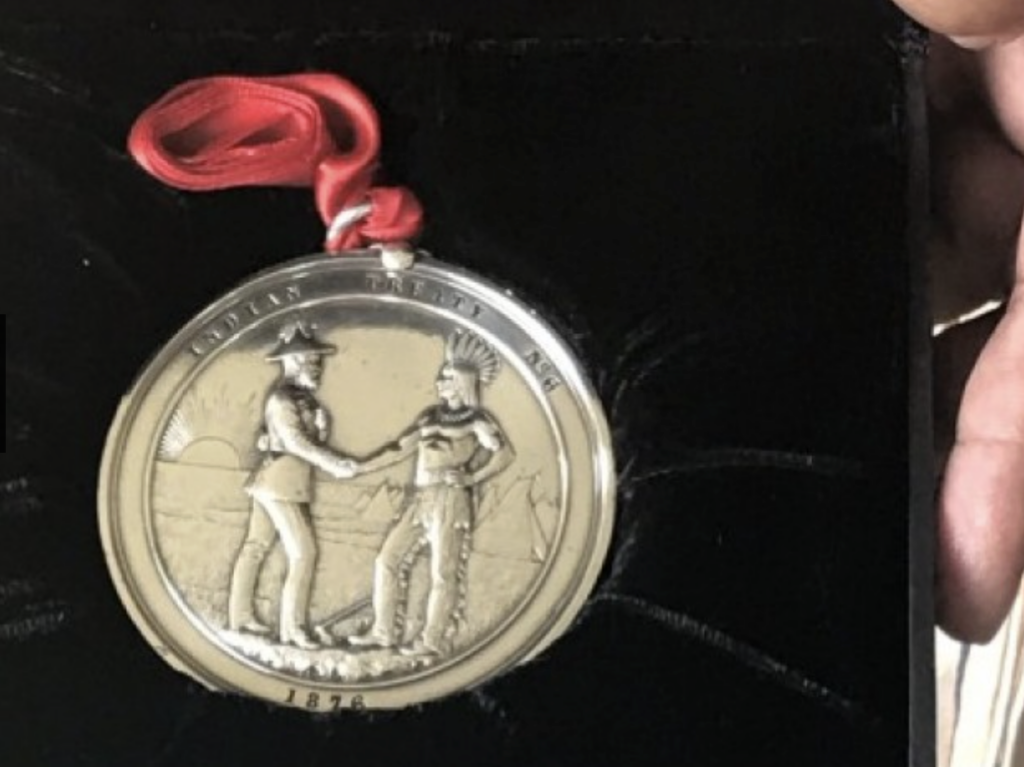
 A stolen Treaty 6 medal has been returned home to Red Pheasant Cree Nation, 134 years after it was taken.
The official repatriation ceremony held at the George Benson Memorial Grounds on July 4, 2019, was attended by people from across North America.
“Lots of people came to celebrate with their relations,” said Treaty Commissioner of Saskatchewan, Mary Culbertson.
Culbertson spoke at the event, sharing what she heard from Former Red Pheasant Chief Craig Wuttunee about how Elders felt with the medal’s return. They said they feel like they have “our heart back.”
“I had to stop talking a couple of times, it was very emotional to feel the treaty medal and the energy that was coming from it being back on the land it was taken from,” Culbertson said.
This Treaty medal was given to Chief Red Pheasant in 1876 at Fort Carlton. After his passing, the medal was removed from his body by the Indian agent who attended the funeral. The medal disappeared for decades, until a curator at the Manitoba Museum found it and a letter suggesting the theft in 2002. This started the process of getting the medal returned to its rightful owners.
Culbertson called the return historic.
“I was thankful that I got to represent a different era, but ashamed for the way the Queen’s messengers in the past behaved.”
The Office of the Treaty Commissioner offers congratulations to the Elders, leadership and the people of Red Pheasant.
Celebrating 140 since Treaty signing at Fort Walsh
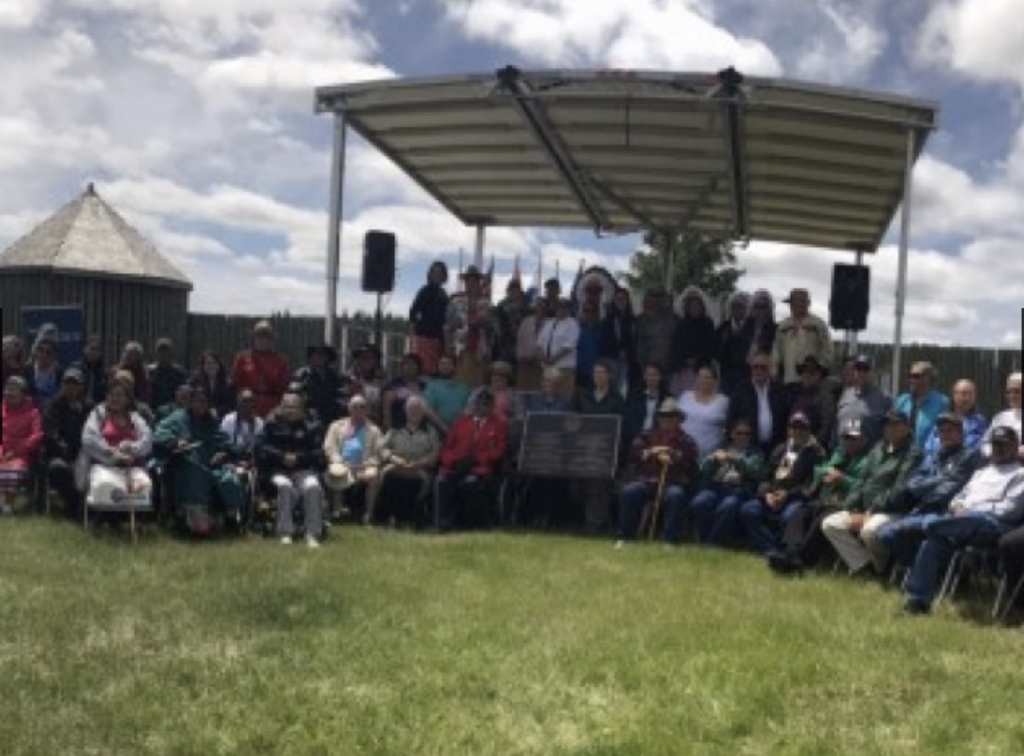
 On July 2, people gathered outside Fort Walsh to commemorate 140 years since Chief Luckyman and Chief Little Pine signed their Treaty.
The event called “Moving forward with reconciliation,” was hosted by Clayton Mclain Memorial Museum, Little Pine First Nation, Luckyman Cree Nation, and Parks Canada.
“It was so nice to be back in my ancestors’ traditional lands. Listening to the chief say it was time for us to return home was moving,” said Trish Greyeyes, executive director of the Office of the Treaty Commissioner.
“Chief Alvin Francis from Nekaneet Frist Nation talked about how he had been telling the ranchers in the area how First Nations people would start returning to this land.”
During the event band members stayed in tipis outside the fort and shared stories. They spoke of how their ancestors would come to the area to pick medicine, and how communities would come together. There were also sad moments, as people talked about the Cypress Hills Massacre, when more than 20 people died in a mass murder.
Passing of Lieutenant Governor Thomas Molloy
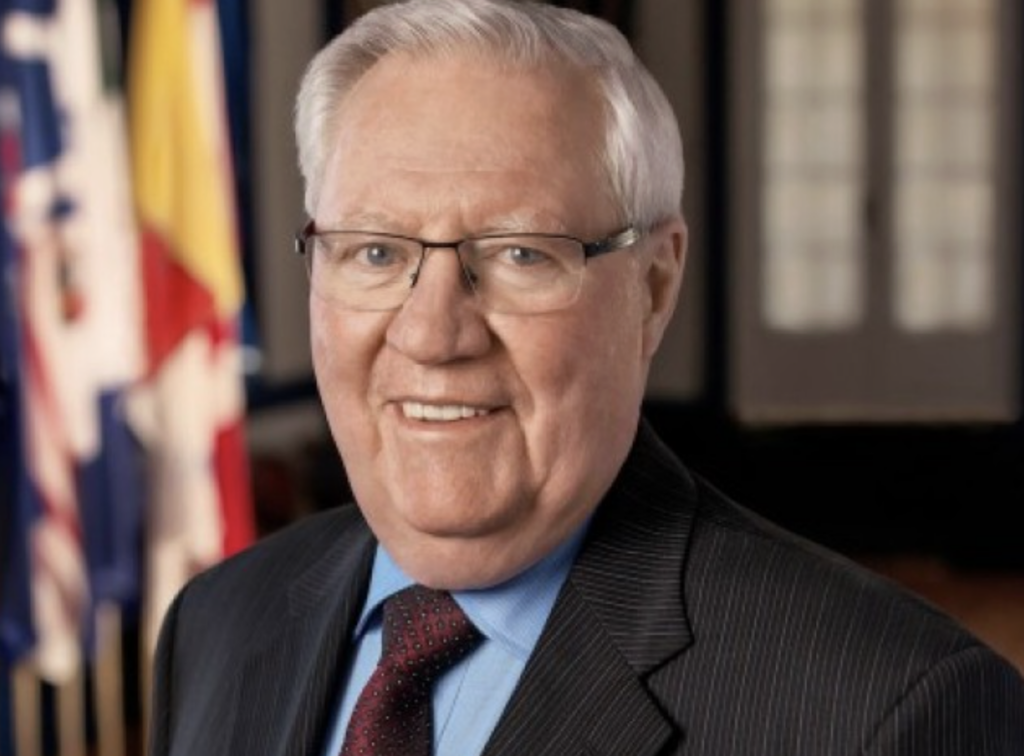
 The staff at the Office of the Treaty Commissioner are heartbroken over the news of the passing of the lieutenant governor Tom Molloy. We send our condolences to his family, friends, and colleagues.
The 22nd lieutenant governor of Saskatchewan passed away on July 2, following a battle with cancer.
Molloy is well known for his work Treaty settlements, including the Nisga’a treaty in British Columbia in 2000, and negotiations, particularly in the discussion that led to the creation of Nunavut.
“He was known for his deep respect for Treaty, and his work towards Reconciliation with Indigenous Peoples,” said Treaty Commissioner of Saskatchewan, Mary Culbertson. “The province has lost an outstanding advocate and role model.”
Molloy’s years of service earned him the Saskatchewan Order of Merit as well as an officer of the Order of Canada.
Witchekan Lake First Nation Treaty day
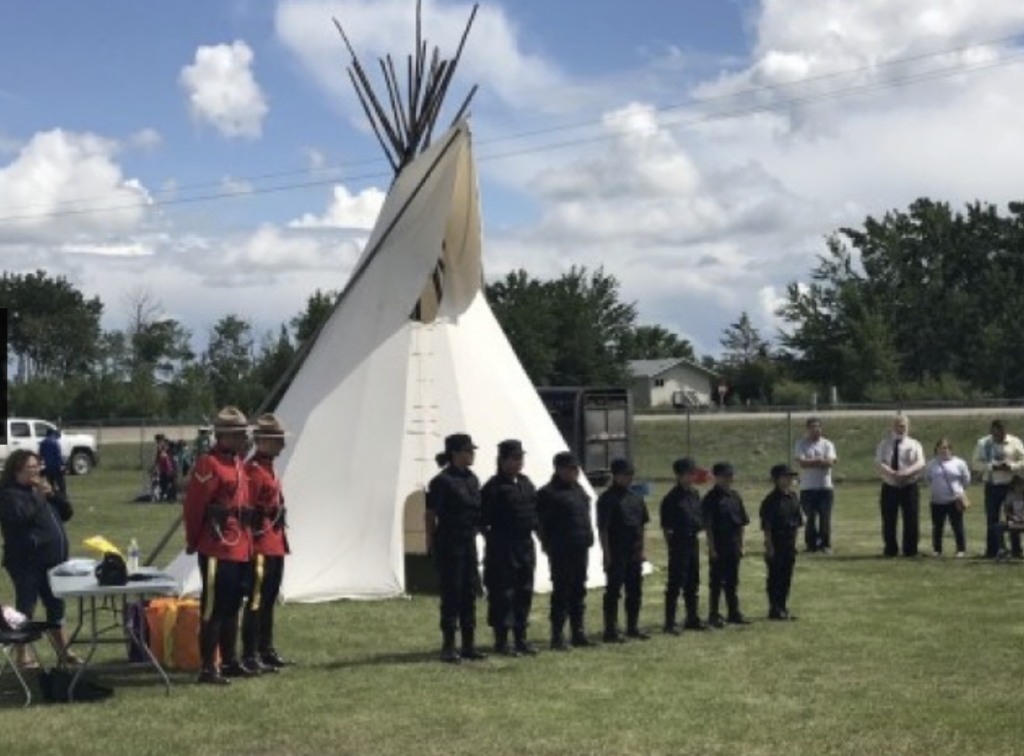
 On Witchekan Lake First Nation, Treaty day was celebrated with hours of activities for both youth and adults.
They had bouncy castles, a petting zoo, horse rides and face painting which managed to keep the young ones busy and having fun. They also hosted a neck bone eating contest for the adults.
Aside from all the play and games, the cultural side definitely played a big role in the day. There was a swearing in ceremony for the newly elected Chief and Council, speeches and a receiving of gifts for all of them. Powwow dancers were present and were able to dance their style for everyone, accompanied by “Iron Horse” drum group. There was also a cadet graduation.
After a delicious lunch was served, Treaty Commissioner of Saskatchewan, Mary Culbertson, gathered everyone together by the three big tipi’s to listen to the re-enactment of Treaty 6 and a re-enactment of when Witchekan adhered to Treaty 6. The play was orchestrated and co-written by two of the OTC’s summer students, Kiannah Cameron and Lahyton Keshane.
At the end of the day was the announcement of Witchekan Lake’s new charter bus. It came driving down the highway honking and the whole crowd couldn’t help but clap and cheer.
Submitted by Kiannah Cameron
Fourth annual Rock Your Roots
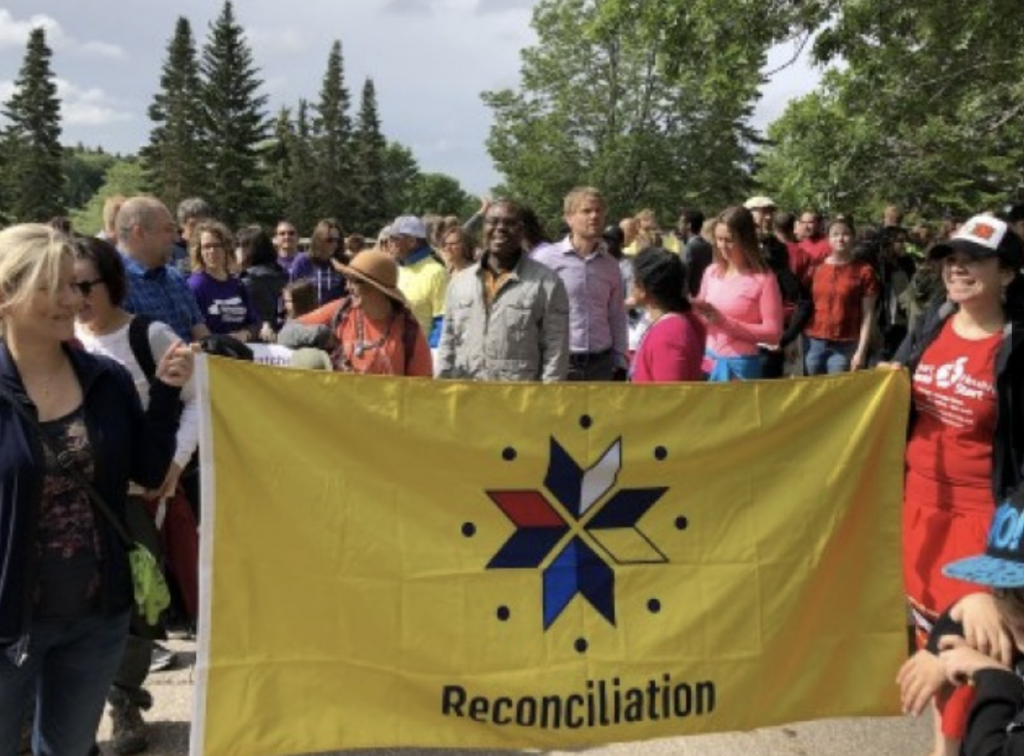
 For the fourth year in a row, thousands of Saskatoon area residents gathered to Rock their Roots in a Walk for Reconciliation.
“For me the walk reassured my heart and mind, that as a community we are working together to make a better future for our children,” said Charmaine Gardiner, Office of the Treaty Commissioner staff.
“Today there was just the human race walking as one.”
The event is held on National Indigenous Peoples Day, encouraging people to join in activities in Victoria Park. The walk recognizes Missing and Murdered Indigenous Women and Girls, Sixties Scoop Survivors, and Residential School Survivors (whose lost birthday were remembered with cupcakes at the event).
Throughout the walk performers from many cultures shared their traditions through music and dance.
“It was a great energy. There was lots of diversity in the crowd and people chatting and smiling and laughing. It was a great community event,” said Rhett Sangster, director of reconciliation and community partnerships at the OTC.
“It started off in a good way, with four pipe carriers leading us off in ceremony.”
OTC’s executive director Trish Greyeyes spent the day supporting elders, ensuring those unable to walk the route could participate by riding in a golf cart.
“It was wonderful. Driving the veteran around, listening to his stories, and watching his face as he witnessed all of those people walk past. He would just shake his head in amazement. It was incredible,” she said.
Rock Your Roots is organized by Reconciliation Saskatoon, a community of more than 100 organizations, non-profits, businesses, faith-communities and partners who have come together to initiate a citywide conversation about reconciliation and provide opportunities for everyone to engage in Calls to Action.
Statement from the Treaty Commissioner of Saskatchewan on the MMIWG inquiry report
The Office of the Treaty Commissioner anxiously awaited the release of the report from the national inquiry into Missing and Murdered Indigenous Women and Girls.
While the inquiry faced harsh criticism and had an extremely difficult journey at the start, their work is paramount in addressing the long-term neglect of Indigenous women and girls – too many have been scared for the safety of themselves or their children.
The report is calling on the Canadian government to recognize the treatment and deaths of Indigenous women and girls as one of the genocides recognized by Canada. This is a courageous and historic statement.
The inquiry and recommendations are key to changing inequitable systems and to the journey of Reconciliation with Canada’s Indigenous Peoples. The OTC believes the inquiry did good work within the structure and short amount of time set out for them by the federal system.
A woman should never feel devalued because of her race and the blood she was born with, and yet across Canada the lives of Indigenous mothers, daughters, and granddaughters are less valued, because society historically and continually made it so.
Canadians, governments and leaders have obligations under the Treaty relationships that were created by their ancestors and the Crown. It is our role and responsibility as beneficiaries of the Treaties to uphold the foundations of peaceful co-existence and mutual benefits.
The Missing and Murdered Indigenous Women and Girls inquiry’s recommendations need to be implemented to recognize and acknowledge a violent history and to support change, so one day we do not need to worry about the safety of our sisters, our mothers, our daughters and our granddaughters.
We look forward to seeing progress on this in the coming weeks and months.
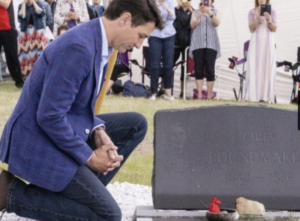
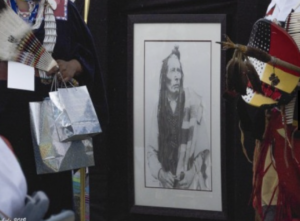
Poundmaker exonerated
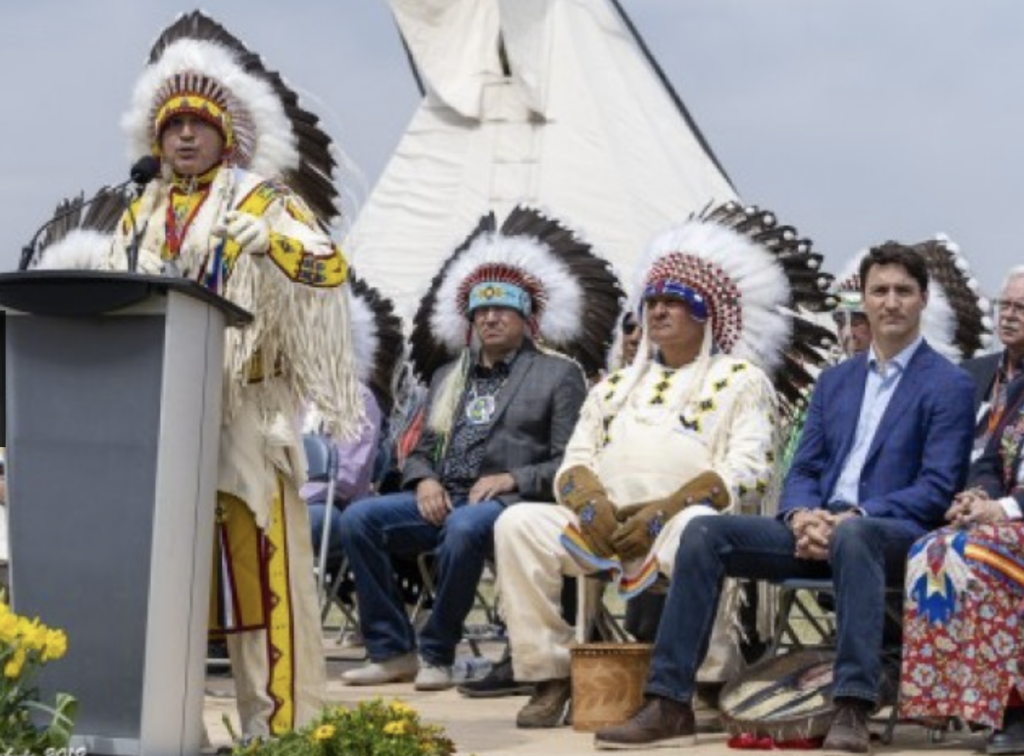
 On May 23, Chief Poundmaker was exonerated, 130 years after he died.
Prime Minister Justin Trudeau was at Poundmaker Cree Nation to offer an apology from the Government of Canada.
Amy Seesequasis, the Office of the Treaty Commissioner Director of Speakers Bureau attended the ceremony.
“I was so happy to be there and so proud. I get emotional when I talk about it because I shared that with my family and forever we will remember that moment when Indigenous Treaty partners were recognized,” she said.
“It was so beautiful, I cried through that whole ceremony because it meant so much to me as an Indigenous person, as Treaty 6, having children that come from Poundmaker and come from a family that are decedents of him.”
In his speech, Trudeau said, “The Government of Canada recognizes that Chief Poundmaker was not a criminal, but someone who worked tirelessly to ensure the survival of his people, and hold the Crown accountable to its obligations as laid out in Treaty 6.”
The recognition that the unjust conviction of Chief Poundmaker has and continues to have an impact on the Cree Nation, was key for Seesequasis.
“This is that moment of real truth and reconciliation because our prime minister, our leader of this country took it upon himself to recognize that legacy and do something about it,” she said.
OTC’s Director Reconciliation and Community Partnerships, Rhett Sangster, travelled to the event with his family.
“I thought it was a great opportunity for my kids to experience a moment of history,” he said, adding that Reconciliation is about shared understanding of history.
History is “more easily understandable when you’re on the site.”
Sangster said he is so happy for the people of Poundmaker Cree Nation, “I think it was a healing day.”
[Editor’s Note: Thank you to Arvid Kuhnle for the images from the Chief Poundmaker exoneration ceremony]
Regina school hosts Treaty Fair
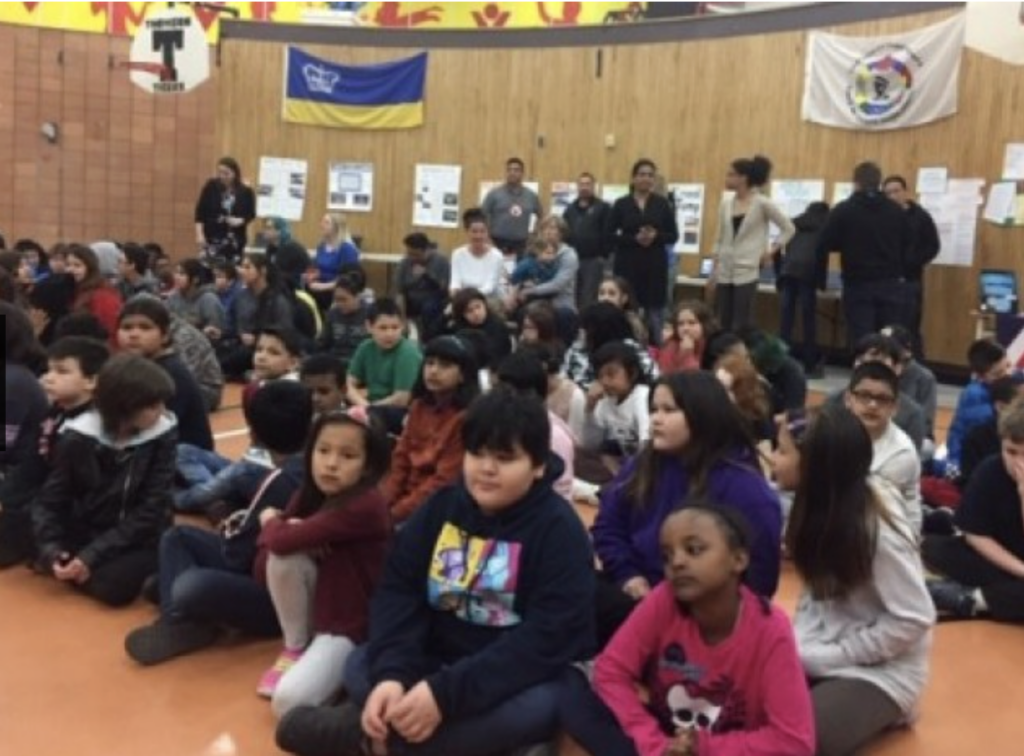
 Treaty Commissioner of Saskatchewan Mary Culbertson spoke at Thomson Community School in Regina on April 17, at a Treaty Fair that was dedicated to Noel Starblanket.
Mary talked to students, teachers and members of the public about the importance of the responsibility to learn about Treaties and to share the that knowledge because We are All Treaty People.
The Treaty Fair initiative included classroom displays with examples of how they learned about Treaties by connecting to the Saskatchewan Treaty Outcomes for their grade level. There were interactive stations with art, PowerPoint presentation, videos and a reenactment of the annuity payment ceremony at Treaty Days.
There was also a hands-on display on traditional uses of buffalo, how symbols honour Treaty long ago and today, language loss and language revitalization efforts, oral history and the residential school experience. This helped participants gain an understanding of historical and contemporary components of treaty and helped everyone connect to reconciliation through Treaty Education
Statement from the Office of the Treaty Commissioner on the passing of Noel Starblanket
It is with heavy heart that the Office of the Treaty Commissioner acknowledges the passing of respected leader, elder and knowledge keeper Noel Starblanket. We send our condolences to his children, his grandchildren, his spouse, his siblings and his nation of Starblanket.
“It is hard to say goodbye to a mentor, a kind man and a brave survivor. This is an incredible loss, but we will be left with memories of Noel,” said Treaty Commissioner, Mary Culbertson.
Noel rooted his life in culture and tradition, he believed in Reconciliation and spoke about its importance, and he shared his knowledge through leadership and as an educator.
Through his work as a speaker in the OTC’s speakers’ bureau, and as an elder for the Teaching Treaties in the Classroom, Noel reached hundreds of educators in the oral history of treaties.
A wake service will be held beginning at 12 pm to 2 pm at First Nations University in Regina and will then commence at 4 p.m. Thursday at the Wa-Pii Moos-toosis, White Calf Gym and the funeral will be held at 11 a.m. Friday.
“If you want Treaty education to succeed, your message cannot be about bitterness, anger or resentment, your message has to be about hope and moving forward together,” — Elder Noel Starblanket
Preparing to commemorate the Woodland Cree 1889 adhesion to Treaty 6
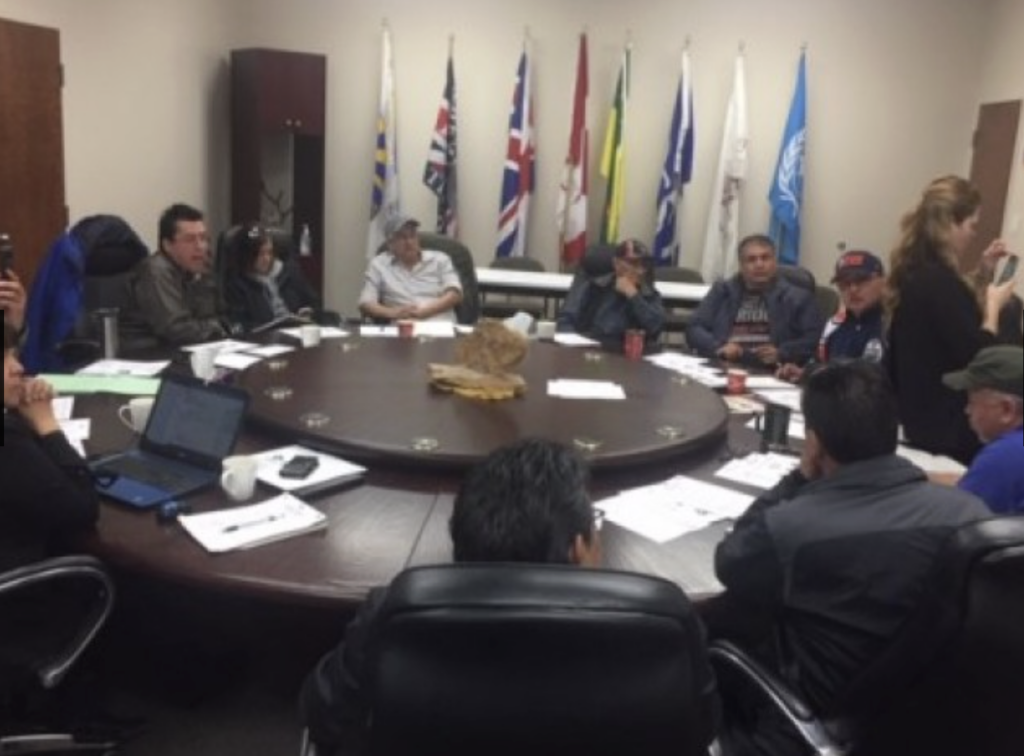
 Planning underway for the 130th anniversary of the Woodland Cree negotiated adhesion to Treaty 6.
Treaty Commissioner of Saskatchewan, Mary Culbertson, says she is honoured to be part of the commemoration celebration and its planning.
On Feb. 11, 1889, Woodland Cree negotiated adhesion to Treaty 6. They negotiated this adhesion on the Ice of Montreal Lake.
“Askipago” only the land, they asked about the water, the fish the fur bearing animals and were told “Tapwe Askipago” only the land the Commissioners wanted access to.
In this 2016 video Harold Johnson speaks and show the site at Molanosa, Saksatchewan where the adhesion to Treaty 6 took place.