
Speakers Bureau
Tom Roberts
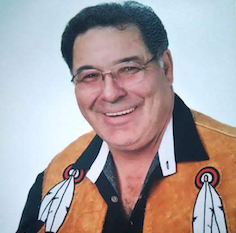
Tom was born in Stanley Mission, Saskatchewan on the banks of the mighty Churchill River. He attended residential school in Prince Albert. He then became a C.B.C. radio broadcaster and host of “Keewatin Country.”
After a successful career in broadcasting, he served as interpreter/translator for Residential School Hearings, during of which a successful collaboration of “the boat burning project” he was offered a job and was hired as a Residential school counsellor. This gave Tom the capacity to work with former residential school students. His wealth of experience and knowledge of the land reawakened his love to speak publicly to classes and at conferences as a lecturer on the effects of the residential school experience had on his life. He was also instrumental in erecting a monument in honoring residential school survivors in La Ronge. His duties as a Residential school counsellor, included prepping clients for their hearings and translating from Cree to English and English to Cree when needed.
On his spare time Tom returns to his native roots and enjoys boating, snowmobiling and visiting the trappline.
Peace Akintade
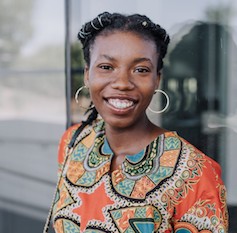
Peace Akintade is an African Canadian Poet, Public Speaker, and Thespian residing in Saskatoon Saskatchewan. She is currently Saskatchewan Youth Poet Laureate, and co-coordinator of Write Out Loud, a Saskatoon-based Youth Poetry Community.
She is a former member of the Youth Advisory Council for the Tim Horton Children Foundation, and currently she is part of the Office of the Treaty Commissioner Speaker’s Bureau as well as being an active member of the Truly Alive Youth and Family Foundation Inc [TAYFFI] as a Youth spokesperson.
For a year, Peace Akintade was involved with the OTC Youth in Service and the OTC Youth Speakers Bureau where they learned about Indigenous history, and participated in activities towards reconciliation in Saskatchewan.
She wishes to help people understand the impact of colonialism, sharing her experiences growing up in Kuwait, Nigeria, and Canada, and relearning her culture in the face of colonization.
Joely BigEagle-Kequahtooway
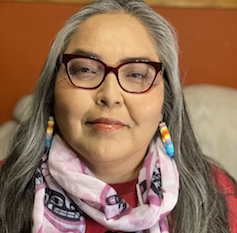
Joely BigEagle-Kequahtooway is an interdisciplinary artist whose main source of inspiration is Tatanga aka Buffalo. She is a fashion and textile designer, visual artist, beader, storyteller and co-founder of the Buffalo People Arts Institute. She comes from a long line of Buffalo hunters and is Nakota/Cree/Saulteaux from the White Bear First Nations – signatory to Treaty 4.
She has degrees in Civil Engineering from the University of Calgary and Mathematics from the First Nations University of Canada. She loves to incorporate mathematics and geometry in her artwork and is inspired by the perfect symmetry in nature.
Her mantra envelopes everything Buffalo as it connects her to ancestral memories, the land and is the manifestational glue that keeps her world together
Topics:
The Treaties: Treaty History, Treaty Relationship, Treaty Responsibilities, Spirit and Intent of Treaty
The Indian Act: History of the Indian Act, Negative Implications, Indian Residential Schools, Current Issues
Indigenous Culture: Worldview, Language Systems, Tribal/Nation Systems, Pre-Contact History, Colonial Decimation of Culture, Cultural Resilience
*storyteller, cultural resource, author, multi-disciplinary artist
Lorne Kequahtooway
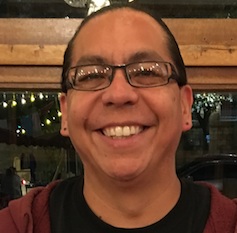
Originally from Zagime Anishinabek First Nation in Treaty Four Territory, Lorne Kequahtooway is dedicated to sharing and preserving his culture with others in Saskatchewan. Lorne is co-founder of Buffalo People Arts Institute where he currently teaches cultural awareness through storytelling and community engagement around an interactive buffalo hide-tanning experience.
Topics:
The Treaties: Treaty History, Treaty Relationship, Treaty Responsibilities, Spirit and Intent of Treaty
The Indian Act: History of the Indian Act, Negative Implications, Indian Residential Schools, Current Issues
Indigenous Culture: Worldview, Language Systems, Tribal/Nation Systems, Pre-Contact History, Colonial Decimation of Culture, Cultural Resilience
*storyteller, cultural resource
Sheldon Krasowski
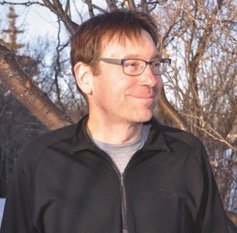
Sheldon Krasowski was born in Treaty Six territory in Saskatoon and attended the University of Saskatchewan and received a BA with a major in Indigenous Studies from the University of Saskatchewan in 1995. In 1998 he received an MA in Indigenous Studies from Trent University and completed the thesis “A Numiany” The Prayer People and the Pagans of Walpole Island First Nation.” In 2011, he received a PhD in history from the University of Regina for the dissertation, “Mediating the Numbered Treaties: Eyewitness Accounts of the Numbered Treaties Between the Crown and Indigenous Peoples, 1871-1876.” This research became the basis for No Surrender: The Land Remains Indigenous which was published by the University of Regina Press in 2019 and includes a foreword by Dr. Winona Wheeler.
Dr. Krasowski has taught in both history and Indigenous Studies departments at First Nations University of Canada; Vancouver Island University; the University of Saskatchewan; Blue Quills First Nations College; the University of Calgary; and Athabasca University. He has completed research for the Assembly of Manitoba Chiefs, the Metis Nation of Ontario, and is currently a co-investigator on a research project with the Montreal Lake Cree Nation on the Treaty 6 Adhesion of 1889. Sheldon began his research journey with the office of the Treaty Commissioner in 1998, and after a hiatus of almost 20 years is currently the Director of Research and Archives at the Office of the Treaty Commissioner in Saskatoon.
Topics:
The Treaties: Treaty History, Treaty Relationship, Treaty Responsibilities, Spirit and Intent of Treaty, Treaty Land Entitlement
The Indian Act: History of the Indian Act, Negative Implications, Indian Residential Schools, Current Issues
Indigenous Culture: Worldview, Language Systems, Tribal/Nation Systems, Pre-Contact History, Colonial Decimation of Culture, Cultural Resilience
Treaty Implementation: Resilience and Revitalization, Honoring Treaty Promises
*Author “No Surrender”
Serena Gamble
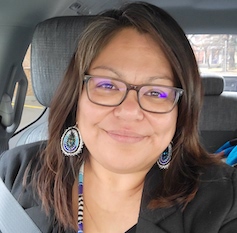
Serena Gamble is a member of the Beardy’s & Okemasis Cree Nation and a proud nêhiyaw women, mother and Kohkom. Serena is an educator that has a passion for Treaty Education, Reconciliation and inclusion of Indigenous ways of knowing & being.
Inspired by her granddaughter, community, and younger generations of today, her session will move the dial as we seek to honour Indigenous voices and stories to move us to a place of Truth and Reconciliation in this country, province and within our Treaty 6 territory.
It is in her heart to help foster relationships, share our Indigenous experiences, and to celebrate Indigenous resiliency and existence as Nations.
Topics:
Treaty History: Treaty Relationship, Treaty Responsibilities, Spirit & Intent of Treaty
The Indian Act: History of the Indian Act, Negative Implications, Indian Residential Schools, Current Issues, Constraints & Impacts, Pass System, Contemporary Realities, 60’s scoop, Trauma Informed Communication/ Approaches
Indigenous Culture: Worldview, Language Systems, Tribal/ Nation Systems, Pre-contact History, Colonial Decimation of Culture, Culture Resilience, Strength of Women, Womanhood, Language & Ceremony
Cree Language Instruction: Basic beginner level
Myth’s & Misconceptions
Powwow
Treaty Implementation: United Nations Declaration on the Right of Indigenous Peoples, Principles of Reconciliation, Truth & Reconciliation Commissions Calls to Action, Resilience & Revitalization, Honoring Treaty Promises
Positive Race Relations: Multicultural Inclusivity, Human Rights, Race Relations & Diversity, and Cultural, Social & Economic Rights
Indigenous Language: Connecting to Language, Language as Medicine, Storytelling
Youth Advocacy & Leadership
Anti Racism Education: Colonization, Allyship, How inequity has been normalized
Anti Oppressive Education: Intercultural Communication, Social Location
Senator Margaret Bear
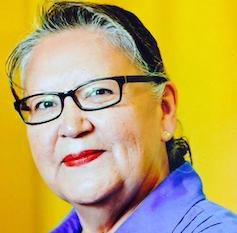
I am a proud nehiyaw woman from the Ochapowace Nation, Treaty 4 Territory.
As a lifelong learner, I bring 51 years of grassroots and leadership experience, knowledge, and life’s teachings. What a blessing it is to have come full circle in life. I now desire to include in my life’s journey time for self, family and to serve my people in other capacities. Life is so precious; every breath is a gift. I embrace every life’s breath with gratitude. I am thankful for yesterday, grateful for today and hopeful for tomorrow. My goal in life is to pass on my knowledge and teachings of our elders, past leaders, and ancestors, especially to our young generations to ensure they have an understand of where we come from and where we are going. This is the role of the kehtea-yak, old people.
Today, I’m most humble and honoured to serve as Senator of my Nation, along with Southeast Treaty 4 Tribal Council and the Federation of Sovereign Indigenous Nations. My role as Senator is an advisory and guidance capacity in the areas of inherent and Treaty Rights obligations, Indian government, Indian history, and tradition. I will continue to support our leadership and people at the community, regional, national, and international levels on matters that affect us.
In May 2023, I retired from my political role as okimaw iskwew (woman Chief in Cree) of my Nation. In May 2014, I was elected as Ochapowace Nation’s first okimaw iskwew, a momentous historic achievement. After many years living away from my community in urban and rural areas, I returned home to contribute to our Nation building, self-determination and community development. As okimaw iskwew, I served my Nation for a period of three consecutive terms, nine years in total. Prior to this, I served as Band Councillor for 14 years. During my tenure in leadership positions, I held many portfolios and mandates, including inherent and Treaty Rights.
As a young girl growing up in the 1950’s, I grew up in an era with no electricity, plumbing and running water in the home. I lived in a two-story log house in the picturesque Qu’Appelle Valley, surrounded by bush and nearby Qu’Appelle River. I recall a ‘living off the land’ lifestyle. While we had the opportunity to play as children, chore responsibilities around the home were paramount to avoiding the hardships in life. As a young girl, I loved making playhouses in bushes where we lived. While I found playhouses fun, I gained life skills that would benefit me when I became a mother. Today, preserved as a historic site, our homestead foundation remains in the middle of an open farm field. At times, I find myself going to that spot reminiscing my past childhood life experiences.
My father, Henry Bear, a WW2 veteran, was a hunter and trapper. My mother, Madeline, was a homemaker. My parents both attended residential school as I did.
As a teenager and adult, I experienced urban life for many years. In 1972, I graduated from Regina’s Balfour Technical High School. I was immediately employed by the Federal government, Health Canada, Medical Services Branch (now known as First Nations & Inuit Health Branch). My other employers included SIGA and my own Nation.
I began my own family, raising three children, as a single parent. My eldest daughter, Shauna was deceased in 2021 from cancer and shortly after her passing, I was blessed with a chapan (great-grandchild). Today, my middle child, Allison is employed with SIIT in Saskatoon and Anthony, my youngest is a RCMP officer in Prince Albert. Both have their own families and independence.
I look forward to sharing my knowledge an experience as a female leader with the young people in the schools and communities. It is a way of giving back and at the same time, telling our history and stories as we see it.
Marie (Sharon) Meyer
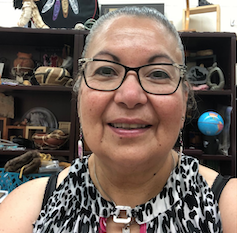
Sharon Meyer is a Treaty Status member of Treaty Six, Beardy’s and Okemasis Cree First Nation. Retired as of June 2023 – after serving thirty-two years of education. She had served in the role as a classroom teacher, principal in elementary and high school, and administration in the provincial and federal education system. The last twelve years had served as a First Nations, Metis, and Inuit Education Consultant for the North East School Division. Presently, a representative for the OTC Speakers Bureau.
Sharon is a mother of two adult daughters, and Kokum to four grandchildren. Her marriage (2012) moved her to the Carrot River district where she currently resides. She is a Medicine Wheel Knowledge keeper, and a storyteller sharing many teachings regarding personal childhood, adult, and cultural experiences. She is also a Blanket Exercise facilitator.
She is currently a committee member of the Nipawin Reconciliation, OTC Wisdom Circle, and Saskatchewan Archaeology Society.
Sharon looks forward to sharing her knowledge and teachings with your group.
Topics:
Indigenous Culture: Worldview, Pre-Contact History, Colonial Decimation of Culture, Culture Resilience, Strength of Women, Womanhood
The Treaties: Treaty History, Treaty Relationship, Treaty Responsibilities, Spirit & Intent of Treaty
The Indian Act: History of the Indian Act, Negative Implications, Indian Residential Schools, Pass System, 60s Scoop
Treaty Implementation: Principles of Reconciliation, Truth and Reconciliation Commission’s Calls to Action, Honouring Treaty Promises
Lyndon J Linklater
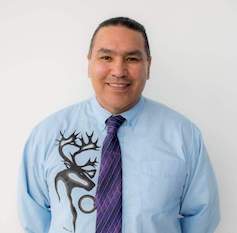
Lyndon J Linklater is a traditional knowledge keeper and storyteller. He has an educational background in Indian Social Work, Indian Studies and some law.
He is a citizen of the Thunderchild First Nation (Plains Cree) in Treaty 6 and has roots in Couchiching First Nation (Fort Francis, Ontario) in Treaty 3.
Presently, Lyndon shares work with the Remai Modern Art Museum in Saskatoon as their Indigenous Relations Advisor providing advice to their board and staff and delivering cultural programming.
He is the longest serving member of the Office of the Treaty Commissioner’s Speakers’ Bureau, since he was appointed in 2000. Over the years, he has spoken to tens of thousands of people, delivering awareness and enlightenment on Treaty and First Nation worldview.
He is a powerful story teller that utilizes First Nation teachings that involve knowledge of ceremonies and mixes humour to deliver a poignant message
Topics:
The Treaties: Treaty History, Treaty Relationship, Treaty Responsibilities, Spirit and Intent of Treaty
The Indian Act: History of the Indian Act, Negative Implications, Indian Residential Schools, Current Issues
Indigenous Culture: Worldview, Language Systems, Tribal/Nation Systems, Pre-Contact History, Colonial Decimation of Culture, Cultural Resilience
Positive Race Relations: Race Relations and Diversity, Multi-Cultural inclusivity
Treaty Implementation: United Nations Declaration on the Rights of Indigenous Peoples, Principles of Reconciliation, Truth and Reconciliation Commission’s Calls to Action, Resilience and Revitalization, Honoring Treaty Promises
*singer, drummer, storyteller, cultural resource
Kevin wâsakâyâsiw Lewis
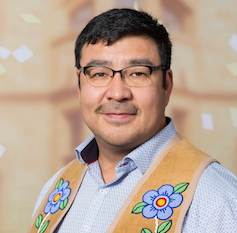
Dr. Kevin wâsakâyâsiw Lewis is a nêhiyaw (Plains Cree) instructor, researcher and writer.
Dr. Lewis has worked with higher learning institutions within the Prairie Provinces of Manitoba, Saskatchewan and Alberta in the areas of Cree Language Development and Instructional methodologies. His research interests include language and policy development, second language teaching methodologies, teacher education programming, and environmental education.
For the past 15 years, Dr. Lewis has been working with community schools in promoting land and language-based education and is founder of kâniyâsihk Culture Camps a non-profit organization focused on holistic community well-being and co-developer of Land-Based Cree Immersion School kâ-nêyâsihk mîkiwâhpa.
Dr. Lewis is from Ministikwan Lake Cree Nation in Treaty 6 Territory.
Topics:
The Treaties: Treaty History, Treaty Relationship, Treaty Responsibilities, Spirit and Intent of Treaty
The Indian Act: History of the Indian Act, Negative Implications, Indian Residential Schools, Current Issues
Indigenous Culture: Worldview, Language Systems, Tribal/Nation Systems, Pre-Contact History, Colonial Decimation of Culture, Cultural Resilience, Cree language instruction
Teaching Treaties in the Classroom facilitator :(primary, secondary, post-secondary), Treaty Kit facilitation (primary, secondary, post-secondary)
*storyteller, ecology and horticulture, traditional medicines, language revitalization