
News
Statement from the Office of the Treaty Commissioner on the James Smith Cree Nation tragedy
Our team at the Office of the Treaty Commissioner, like everyone in this province, is shocked and devastated by the tragedy that is unfolding in Saskatchewan. We are thinking of those families and communities who have lost loved ones and of those who were injured in these horrific acts of violence.
We offer our condolences to the people and loved ones of James Smith Cree Nation, Chakastaypasin and Peter Chapman Cree Nation and the town of Weldon.
We call on governments and people across the province to work together to ensure that the people of James Smith Cree Nation – James Smith Cree Nation, Chakastaypasin Band, and Peter Chapman Band – are supported and their resilience strengthened during this tragedy.
We ask that the state of emergency is respected as the community responds to his critical incident.
Our hearts break with those who are affected and we will support all those affected in any way we can.
Statement from the OTC
Today when Justice Michelle O’Bonsawin takes her seat on the Supreme Court of Canada bench, she is making history.
She is the first Indigenous Supreme Court justice. Not only is she experienced in human right, privacy, labour and employment law, O’Bonsawin has worked with how these relate to criminal and Indigenous law, including her PhD, which focused on Gladue principles.
The Office of the Treaty Commissioner celebrates this appointment and the example O’Bonsawin is setting for Indigenous women today and for future generations. It is so important that we see the ongoing engagement of Indigenous women in our society.
This appointment is particularly meaningful to the Treaty Commissioner of Saskatchewan, who was the first member of the Keeseekoose First Nation to earn a Juris Doctor from University of Saskatchewan Law and practice law in Saskatchewan. Commissioner Mary Culbertson has had the honour of being legal counsel for Indian residential school survivors and knows the tremendous amount of work and sacrifice that goes into to being a lawyer.
Each Indigenous person who sits in a leadership role is an incredible example of what is possible, especially when those people sit in what are traditionally colonial systems.
Powwow and Buffalo Treaty
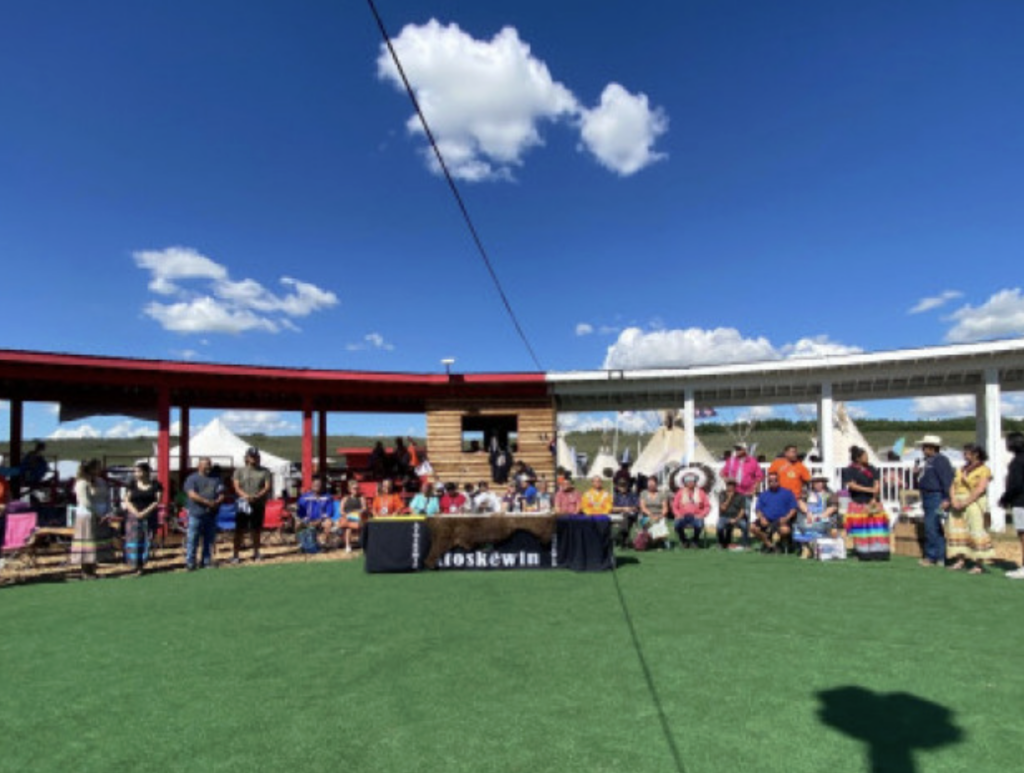
 The Treaty Commissioner of Saskatchewan, Mary Culbertson, was honoured to attend the Battlefords Agency Tribal Chiefs Inc. Powwow at Sweetgrass First Nation for a Grand Entry and the Buffalo Treaty signing on Wednesday.
During the Powwow, First Nations leadership signed this Treaty document during a special ceremony. The signing represents First Nation communities coming together to work collectively, live and nurture each other, and provide a safe space for buffalo across their territories. Learn more about the Buffalo Treaty here
The Office of the Treaty Commissioner shared information about the work of our office, Treaty Education, and more, at a display booth set up at the powwow grounds. We were pleased to have OTC team members there to answer questions and experience the events.
More about the Powwow
BATC Powwow at Sweetgrass brings nations together
International Day of the World’s Indigenous People
The United Nations declared the day at Aug. 9, marking the first UN Working Group on Indigenous Populations 40 years ago in 1982. This year the theme is The Role of Indigenous Women in the Preservation and Transmission of Traditional Knowledge.
This day and this theme resonates with the work of the Office of the Treaty Commissioner.
We know that Indigenous women, especially Elders and Knowledge Keepers, are key in preserving and sharing traditional knowledge. However, despite their important role with knowledge, in leadership, and as caretakers, too often they are impacted by discrimination based on gender, class and ethnicity. Missing and Murdered Indigenous Women, Girls and 2 Spirit People are still a significant issue in Canada.
This International Day of the World’s Indigenous People, we ask people to take time to learn about the issues facing Indigenous women, but also celebrate some of the incredible stories of Indigenous women in leadership, activism, arts, and more.
Statement from the OTC
Violence rooted in racism and hatred continues in this province. It was again shown in a video shared on social media this week, when an Indigenous man was attacked in the backyard of his friend’s house, his young daughter in the nearby truck.
The friend is Office of the Treaty Commissioner Speaker Bureau member lawyer Eleanore Sunchild, who circulated the footage and shared it with RCMP. We are grateful she had those cameras to catch on video what often goes ignored.
According to RCMP one man has been charged with assault and the investigation is continuing.
We struggled with this statement, it’s so frustrating, we make the same statements over and over and it can feel like nothing changes.
This isn’t enough. We need to do more to prevent this kind of violence and to make our cities and towns safe for all. Our communities need to come together. It is only by calling out racism and by acting to stop the racist actions of others that we can start to work towards reconciliation. We need a society where no Indigenous person will have to worry about what road they stop on, what street or neighborhood they are in, or if they’re going to be accused because of how they look and who they are. If this incident hadn’t happened around our advocate, who knows what to do and who has support, would this have gone unnoticed and not talked about?
We know that these incidents of violence and hate cause further division and fear. It shows the ugliness of racism. There must be zero tolerance for racism or discrimination in any form. No child should have to witness their parent being assaulted, by someone who think they have a right.
Have difficult conversations, be an ally, educate yourself and those around you, don’t ignore the discriminatory words and actions of others, and be a good human being.
We live in times that are better than what our parents and grandparents went through, but we will keep seeing these acts of violence again and again unless we do the work now that will make a better future for our children and grandchildren. What are we leaving them? Do we want it to be a land of hate and violence or a legacy that reflects how hard we worked for generations to make their own land safe for them to walk on?
OTC celebrates the 2022 graduates
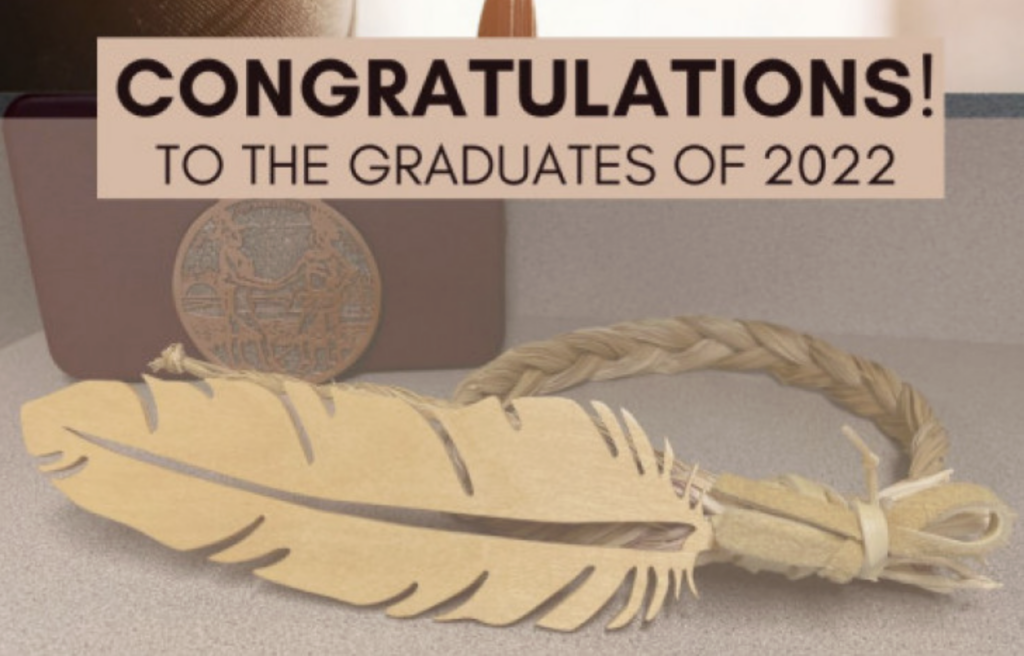
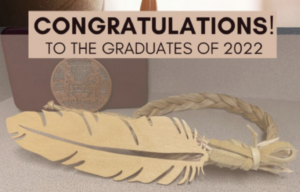 Graduation is a significant milestone in a person’s life. It is an accomplishment that deserves recognition, so with this in mind, the Office of the Treaty Commissioner congratulates all grads!! Your perseverance through this pandemic to fulfill the Treaty Right to education the way our ancestors intended when they negotiated the treaties is inspirational. We must make them proud and persevere, creator never puts before us more than we can endure.
You’ve worked so hard and deserve the recognition coming your way. Take pride in how far you have come, we are looking forward to seeing how far you can go. There are so many ways you can and will be able to have an impact. Show people your spirit is strong. Show them what you can do.
Congratulations!
Site showcases local story of reconciliation in rural Saskatchewan
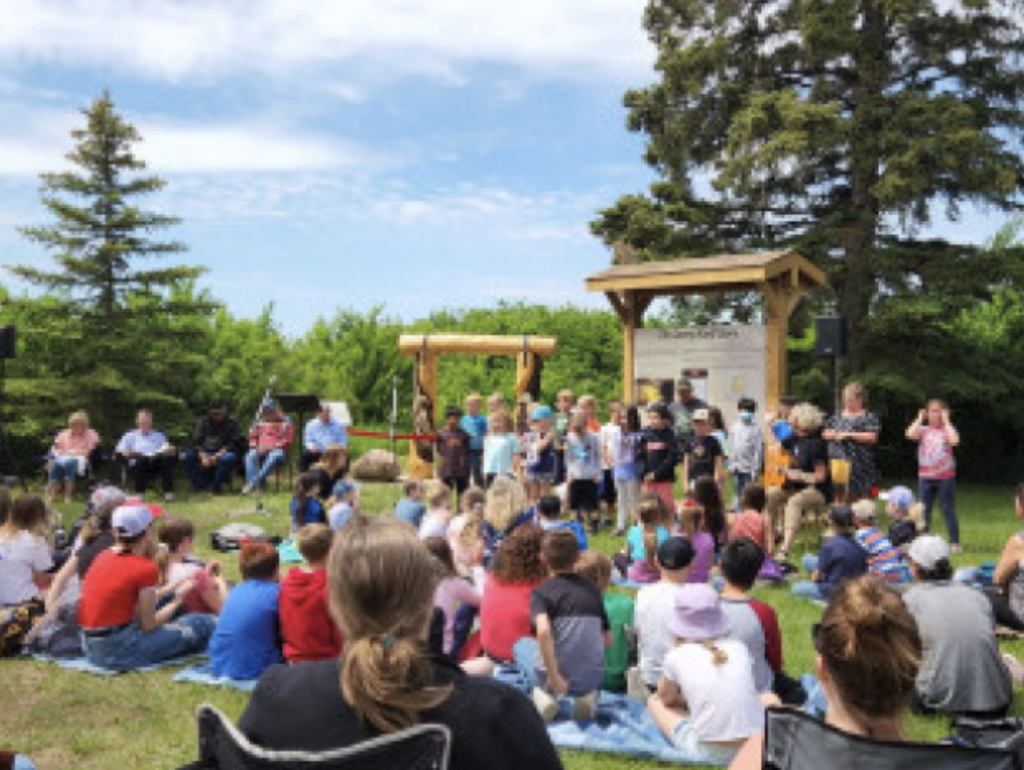
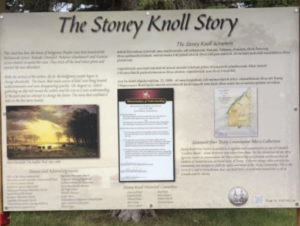
 On June 22, the Office of the Saskatchewan Treaty Commissioner co-hosted the official opening of the Stoney Knoll Interpretive Site in a public ceremony.
The Stoney Knoll First Nation tells a story of Indigenous and non-Indigenous relations on the prairies and how two opposing groups found a path of reconciliation through the barriers set up by the past mistakes of the Canadian Government, and offer a chance to right these wrongs.
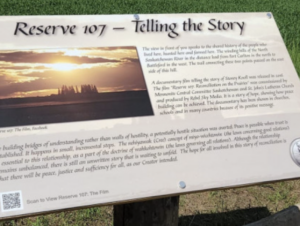
Reserve 107, with the focal point of Stoney Knoll (opwashemoe chakatinaw) in the RM of Laird, between Waldheim and Rosthern, was land originally reserved by Treaty for the Young Chippewayan Cree band. After 1897 it was illegally taken and sold to Mennonite and Lutheran settlers.
In 2006, a Memorandum of Understanding was signed by representatives of the Young Chippewayan First Nation, Mennonites and Lutherans, to work together for “a timely and respectful resolution of the issues which history has left to us.”
This new Interpretive Site grew out of the vision of local Mennonite landowners Wilmer & Barb Froese, who desired to have a permanent, visible record of this on-going story of reconciliation. The site has been developed by the Stoney Knoll Historical Committee in collaboration with the local St John’s Lutheran congregation, members of the Young Chippewayan/Stoney Knoll First Nation, and the Office of the Treaty Commissioner.
The site is intended to be a welcoming space for Indigenous people and others who have heard the Reserve 107 story. It holds significant cultural, spiritual, educational, and tourism value for the region and beyond.
“This is a story of bridge-building and peacemaking,” said Wilmer Froese.
At the site is a series of storyboards with the history and significance of the area. There is also a gathering circle where guests can pause for reflection, discussion, or prayers. At the entryway will be a wood-carving art, “Portal of Healing” by Osler artist Michelle Thevenot.
Learn more about the relationship between these communities in the 2015 award-winning documentary Reserve 107: Reconciliation on the Prairies.
OTC celebrates NIPD
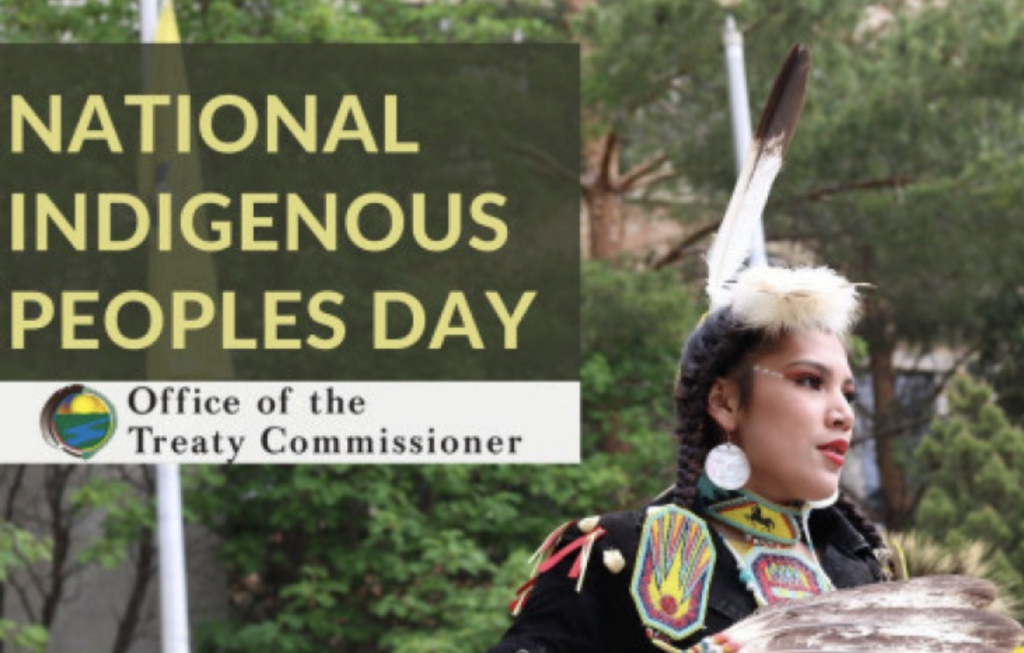
 The Office of the Treaty Commissioner is pleased to join those across the country in celebrating National Indigenous Peoples Day.
Every June 21, it is very important that Canadians take time to celebrate the heritage, cultures, and contributions of First Nations, Inuit, and Métis people. It’s important to reflect on the history of our country, but also recognize that Indigenous cultures continue to flourish and these need to be celebrated. It’s also important to learn about the differences in our beautiful languages, worldviews, and beliefs.
For so many years the celebrations of Indigenous Peoples were not allowed, languages were not able to be spoken, powwows and dances banned, and histories were not shared. Having a day now starts to undo this harm, but protection for our languages, cultures, and communities needs to continue year-round.
There are so many exciting events happening around Saskatchewan to celebrate the day from a powwow in North Battleford and a flag raising in Nipawin, to events at Victoria Park in Saskatoon, and the afternoon of events in Regina. In Pinehouse there is the Pinehouse Elders Gathering, and the Lac La Ronge Indian Band celebrates the Woodland Cree Wellness Centre opening. We encourage you to find something near you and celebrate.
OTC celebrates Chief Marie-Anne Day Walker-Pelletier
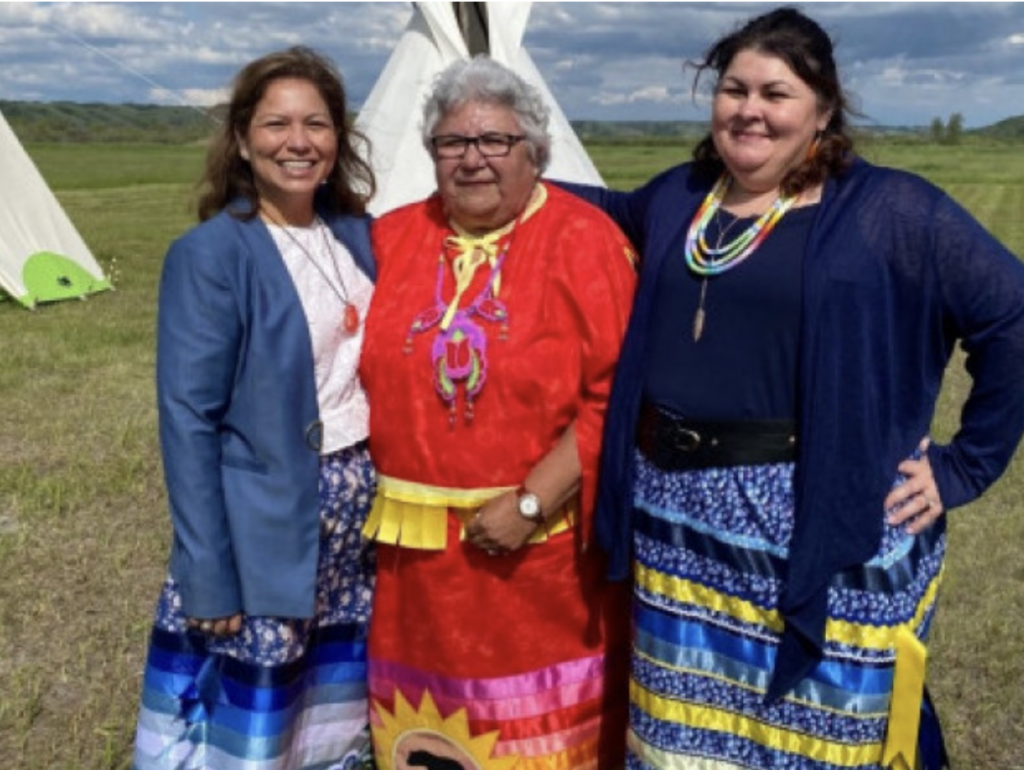
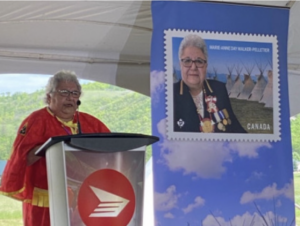
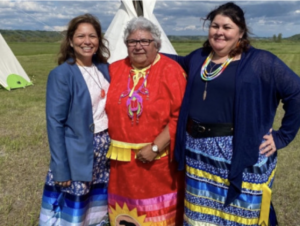 The Treaty Commissioner of Saskatchewan, Mary Culbertson, was thrilled to attend the event for the event to celebrate Chief Marie-Anne Day Walker-Pelletier. Canada Post launched a stamp recognizing her achievements and service to her community on June 15 on Treaty 4 territory.
As leader of the Okanese First Nation in Saskatchewan, Chief Marie-Anne Day Walker-Pelletier served the most consecutive terms ever by an elected First Nations chief in Canada.
She is a committed advocate of social reform, and an inspiration to women leaders across the country. Day Walker-Pelletier was appointed a Member of the Order of Canada in 2018 and invested in 2019. She also received the Saskatchewan Order of Merit in 2021.
We thank her for her perseverance, for kindness, for role modelling the principles in her leadership at home, regionally, nationally, and on the international stage.
The stamp becomes available on June 21, 2022, National Indigenous Peoples Day, along with stamps honouring Indigenous leaders Harry Daniels and Jose Kusugak.
More information and links to the stamps
OTC meets with Treaty Relations Commission of Manitoba
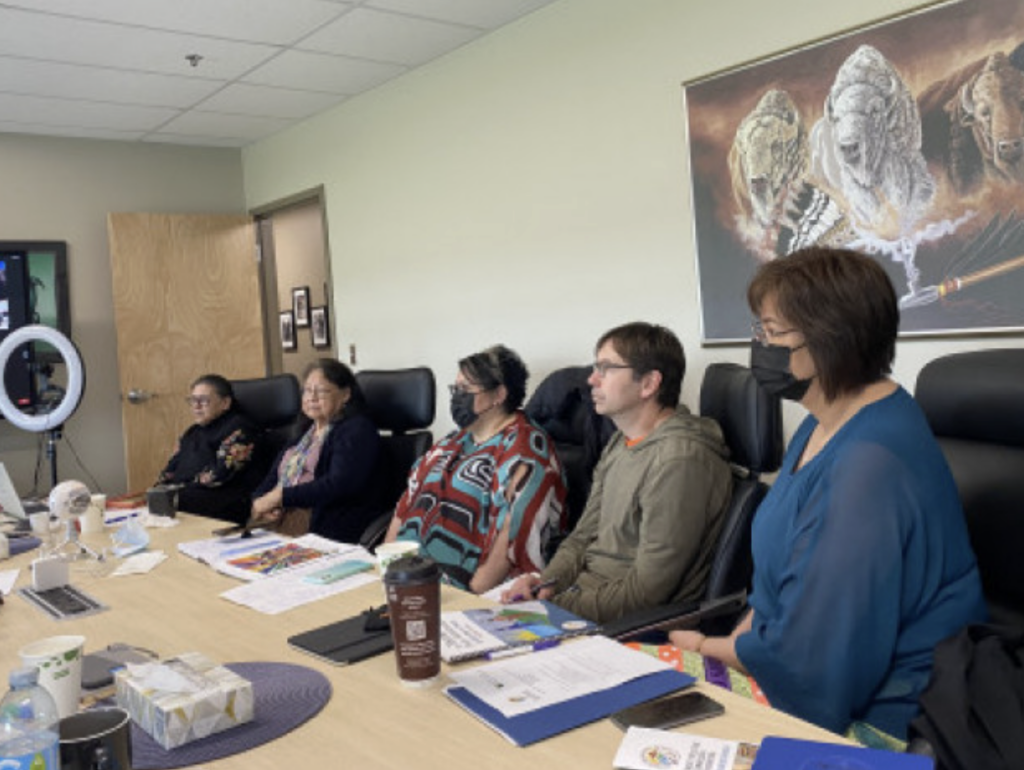
 The Treaty Commissioner of Saskatchewan, Mary Culbertson, and members of the OTC team were thrilled to travel to Winnipeg late last week to meet with Manitoba Treaty Commissioner Loretta Ross and the team from the Treaty Relations Commission of Manitoba.
It was an excellent opportunity for networking and knowledge sharing, as both commissions are working hard to ensure full Treaty implementation. The relationships built during these meetings will continue through collaborations moving forward.
While there, the OTC Director of Research and Archives Sheldon Krasowski recorded an episode of the Manitoba TRCM podcast, Let’s Talk Treaty about his book “No Surrender, The Land Remains Indigenous.” Listen to it here