
News
OTC supports call for Papal visit to Saskatchewan
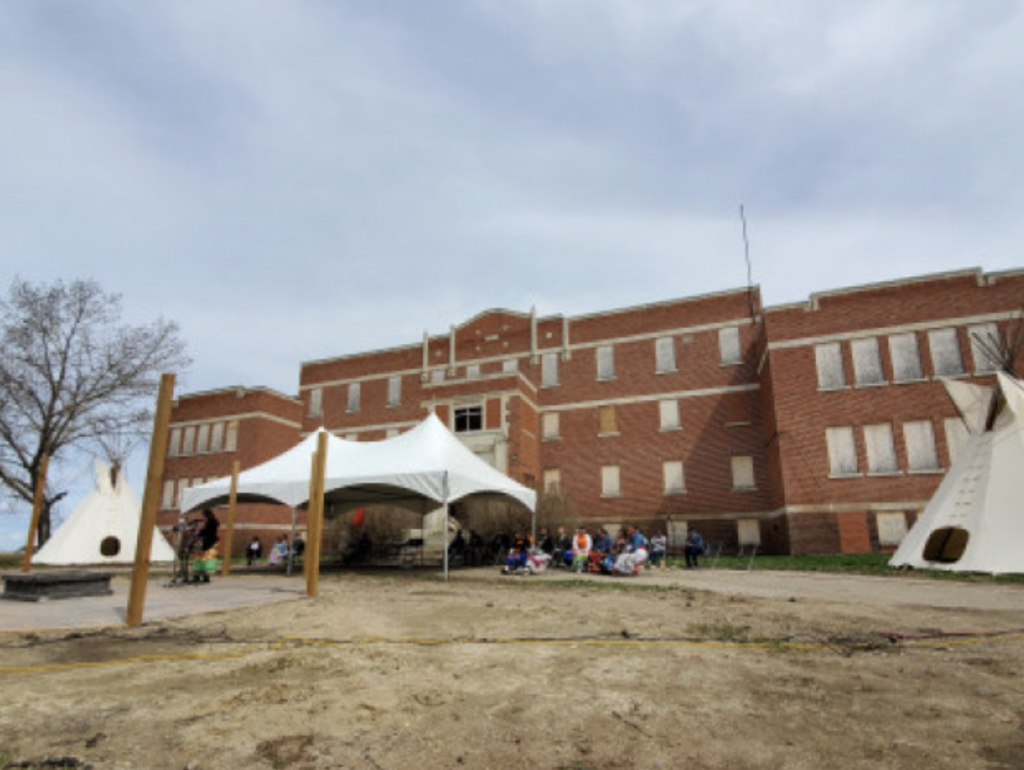
 The Office of the Treaty Commissioner supports the call by the Federation of Sovereign Indigenous Nations and Muskowekwan First Nation to the Canadian Conference of Catholic Bishops to arrange for the July 2022 Papal visit to include the Muskowekwan Indian Residential School.
As the last standing residential school in Saskatchewan, it’s important that the head of the Catholic church sees where abuses took place, to truly begin to understand the long-standing impacts of the school system.
“While a visit by the Pope to Canada to visit Indigenous communities fulfils a promise made to the delegation that visited in early 2022, it is not complete without a visit to Saskatchewan, the province with one of the highest numbers of Indian Residential Schools in the country. The Muskowekwan Indian Residential School is a reminder of the abuses against our people, and must be witnessed and the true history understood, for reconciliation to be possible,” said Mary Culbertson, Treaty Commissioner of Saskatchewan.
“Along with witnessing the impacts, we call on the Catholic church to make records available that residential school survivors, their families and their communities are so desperately seeking.”
During an event at the school to make this call to action on Monday, FSIN Chief Bobby Cameron said they have invited the papal delegation to the province. “We had told them, you come to our region, our traditional lands, where there’s a large standing school here in Muskowekwan … where it means something for the people.”
The event also featured an opening prayer from Joan Manitopyes, honour song from Grey Buffalo, statements from Chief Jamie Wolfe, Culbertson, Bishop Donald Bolen, and Councillor Vanessa Wolfe. Survivors also shared their words including Roland Desjarlais, Elaine Severight, Leon Wolfe Sr., and Marie-Anne Day Walker-Pelletier.
“I call on not only the Holy See but the Canadian Conference of Catholic Bishops to use their influence to have the Holy Father attend the Muskowekwan Residential School which still stands as our Canadian stark reminder of the genocide the government and the church worked in partnership together to erase our Indigenous peoples,” Day Walker-Pelletier said.
The Yorkton Tribal Council residential school support workers also attended the event.
If you are a residential school survivor or have been impacted by the residential school system and need help, you can contact the 24-hour Indian Residential Schools Crisis Line at 1-866-925-4419, or the Indian Residential School Survivors Society toll free line at 1-800-721-0066.
Statement from the Office of the Treaty Commissioner
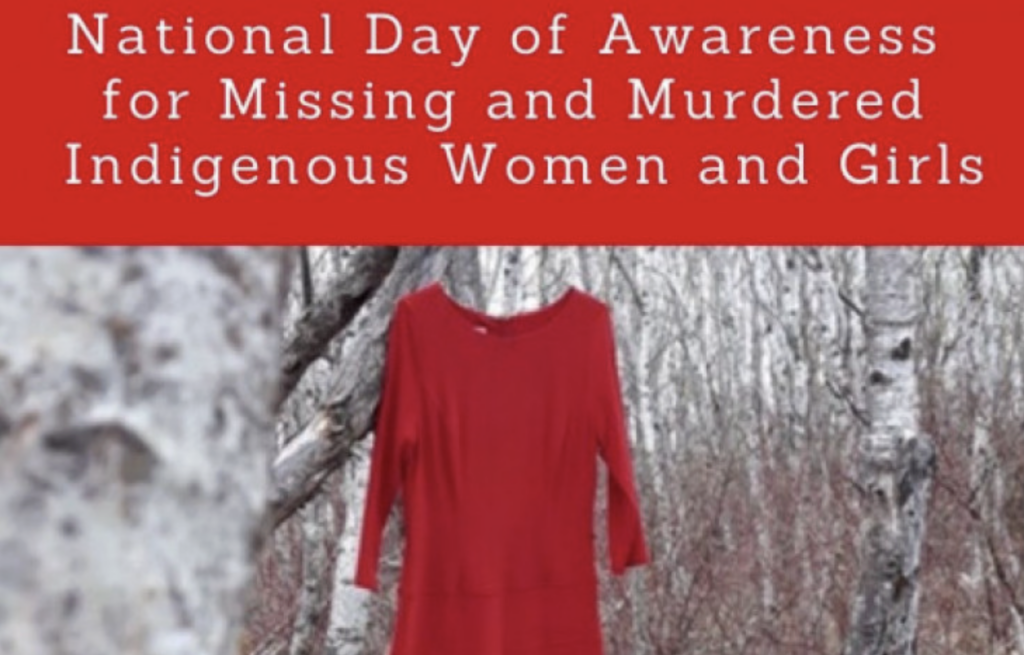
 The Office of the Treaty Commissioner calls on you to wear red on May 5.
May 5 is a day when we remember and honour the lives of missing and murdered Indigenous women, girls and two-spirit people in Canada. Red Dress Day is about raising awareness of the crisis.
Red Dress Day started as part of the REDress project created by Indigenous artist Jamie Black who used red dresses to bring focus on the issue – wearing red and hanging a red dress became a way show solidarity with the families and loved ones left behind.
The red dress has become a symbol for the thousands of Indigenous women who have gone missing or been murdered in Canada over the years. We know that often these deaths and disappearances are not investigated.
National Inquiry into Missing and Murdered Indigenous Women and Girls’ final report showed that human and Indigenous rights abuses are the root causes behind Canada’s rate of violence against Indigenous women, girls and 2SLGBTQQIA people.
Along with wearing red, the OTC calls on people to become familiar with the Calls to Justice from the inquiry, and work to make their workplaces, organizations, and lives, safer for all Indigenous Peoples.
We know that in the past year people have become more aware of the abuses and injustices faced by Indigenous People, with the remains of children being found on former residential school sites. People are upset and they want to know what they can do. Awareness of the prejudice faced by Indigenous women, girls and two-spirit people, and understanding the truth of the residential school system are an important step, as all of this trauma is connected.
Along with wearing red, and learning more, consider attending an event on May 5, like the candle-light vigil at Wanuskewin hosted by FSIN.
Bishop Murray Treaty Medal Installation
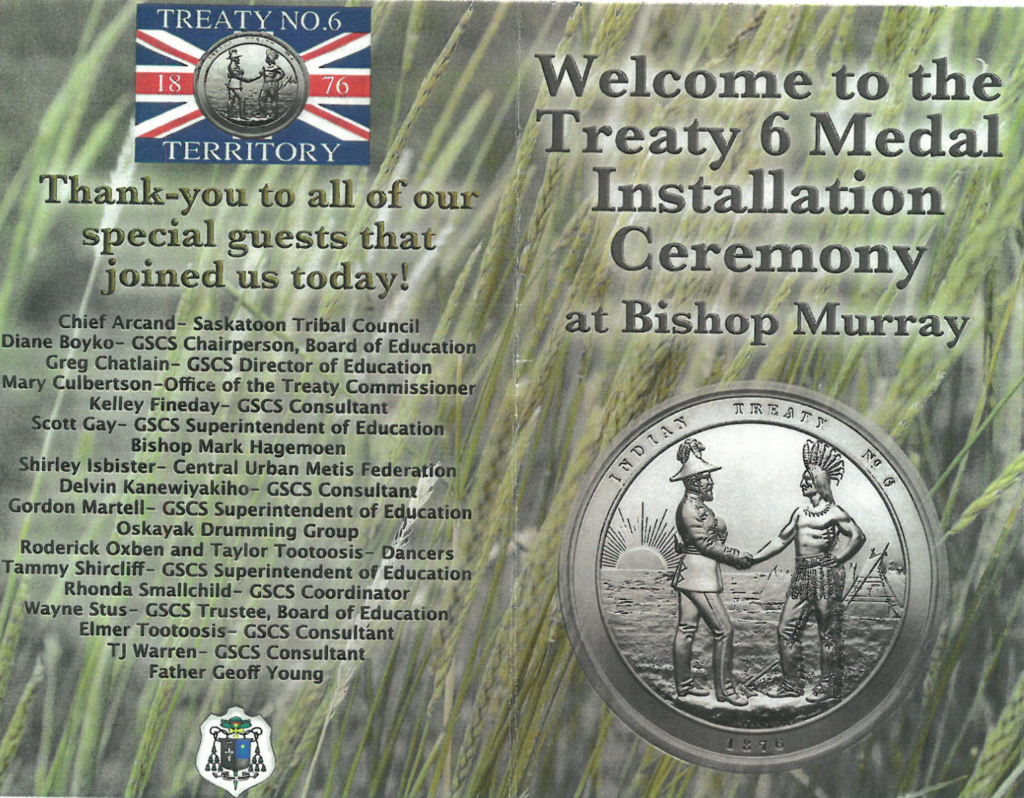
 On April 5, 2022 Bishop Murray High School installed in the Treaty 6 medal into their building to be a symbol of their history, relationship with the land, and in recognition that We Are All Treaty People. The medal is a replica of the medals originally presented to participating First Nations Chiefs in commemoration of the Treaties.
The Office of the Treaty Commissioner applauds the actions of Bishop Murray and the steps they are taking towards reconciliation.
The event began with a Grand Entrance and the Treaty 6 song. Treaty Commissioner of Saskatchewan Mary Culbertson was pleased to speak alongside other dignitaries from across the community.
Statement from the OTC on the papal apology
The Office of the Treaty Commissioner listened to the formal apology from Pope Francis delivered today from the Vatican to the Indigenous delegation visiting Rome.
We humbly thank the survivors and delegates from across Turtle Island and especially Dr. Marie-Anne DayWalker-Pelletier for her bravery as a survivor in attending the audience with the Pope. She presented him with small beaded moccasins, not as a gift but as a commitment. He must bring them back in a visit to Canada which he also announced today.
Particularly notable were the Pope’s words about why he feels indignation after hearing the stories from elders, youth, and residential school survivors – “because it is not right to accept evil, and even worse to grow accustomed to evil as if it were an inevitable part of the historical process” – he said before speaking on how ideological colonization remains rampant all over the world.
The acknowledgement of the systemic discrimination faced by Canada’s Indigenous people is an important step in the work of the Catholic church in reconciliation. But it is only a small step.
The residential school system shattered the Treaty promise of education for Indigenous People. It’s one of many Treaty promises that still remain unfilled today. Full implementation of Treaty is key to reconciliation.
There needs to be unrestricted access to the records that residential school survivors, their families and their communities are so desperately seeking. This information cannot reverse the damage caused by residential schools, but it can support the healing process.
There needs to be an apology for the abuses inflicted through residential schools, when the Pope comes to Canada on his trip to visit Indigenous families. This was requested by residential school survivors and their wishes need to be honoured. Muskowekwan First Nations has one of the few remaining schools left standing. The OTC hopes and encourages the Pope to make the trip to our Treaty 4 territory and to Muskowekwan for this apology.
Today’s apology has opened a path for many to move forward, while others still feel conflicted. Emotions are high. We need to continue the journey along this path towards reconciliation, which means continuing the work to seek truth and justice, and raise awareness when it comes to the true history of the genocide that has taken place. Truth comes before reconciliation. This truth must be honoured and cannot be ignored. We must understand the impact and harms of residentials schools intergenerationally. Our hearts must always be seeking compassionate understanding of what Indigenous people have had to and continue to endure.
If you are a residential school survivor or have been impacted by the residential school system and need help, you can contact the 24-hour Indian Residential Schools Crisis Line at 1-866-925-4419, or the Indian Residential School Survivors Society toll free line at 1-800-721-0066.
International Day for the Elimination of Racial Discrimination 2022
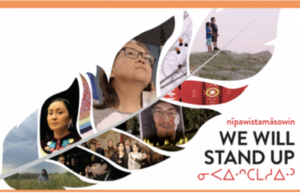 Every year on March 21, we mark the International Day for the Elimination of Racial Discrimination.
It’s a day to recommit to making change and to working towards the elimination of all forms of racial discrimination.
On the International Day for the Elimination of Racial Discrimination, the Office of the Treaty Commissioner calls on individuals to join us by investing in true Reconciliation and relationship building, while having zero tolerance for any form of discrimination.
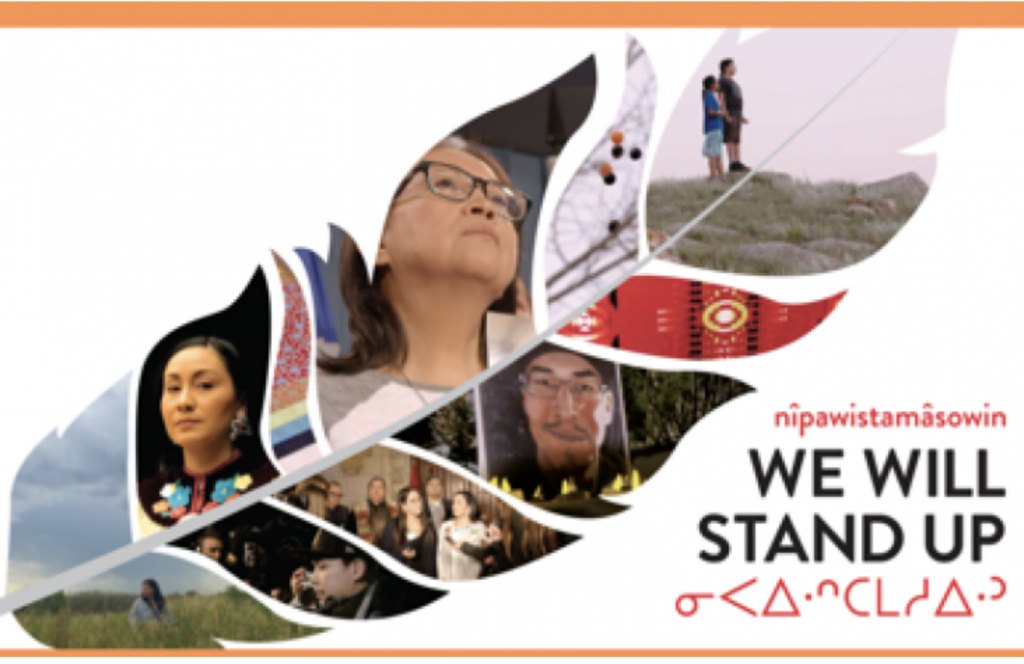
This year we ask you to become involved by watching We Will Stand Up, a film by Tasha Hubbard looking at the death of Colten Boushie, the acquittal of Gerald Stanley, and the impact of colonialism and racism on the prairies.
In February the OTC hosted a screening and panel discussion with Treaty Commissioner Mary Culbertson, Colten’s mother Debbie Baptiste, his uncle Alvin Baptiste, Elder Jenny Spyglass, lawyer Eleanore Sunchild, Treaty Land Sharing Network member Mary Smilie, and FSIN Chief Bobby Cameron.
We invite you to watch the film, We Will Stand Up (available for free here at the National Film Board), and then watch this important discussion. Share it with friends and family, get everyone you know involved in eliminating racial discrimination.
The Story of a National Crime
 The Office of the Treaty Commissioner is pleased to be part of a podcast, The Story of a National Crime, created to mark 100th anniversary of a publication by the same name.
The document was written by Dr. Peter Henderson Bryce and contained evidence of neglect, negligence and harm to First Nations children and their communities. It was designed to appeal for justice and his condemnation of federal inaction.
The podcast looks at the practices, policies, and official correspondence to reveal the intentional actions and acts of indifference that contributed to poor health and lethal outcomes.
In the final episode about how people and organizations are supporting survivors and families find out what happened in sanatoria and segregated hospitals in Manitoba, Saskatchewan, and Alberta, OTC Executive Director Angie Merasty and Director of Archives Sheldon Krasowski describe barriers to accessing records and how knowing what happened and sharing experiences contribute to Survivors’ healing
“If the Office of the Treaty Commissioner can make it easier for any First Nations person looking for any kind of a record of their loved ones, whether it be in the sanatoriums or the Residential Schools, then we are here to help,” Merasty said.
Listen to the entire podcast here, and then do more download the listening guide, and use the discussion questions to have conversations with family, friends and colleagues.
Trigger Warning: The podcast contains material that some listeners could find triggering. If you are a Residential School Survivor or Intergenerational Survivor, you can access support through the National Indian Residential School Crisis Line at 1-866-925-4419.
Statement from the Office of the Treaty Commissioner
The team at the Office of the Treaty Commissioner is horrified as we watch the news out of Ukraine.
To see a country under siege, to witness the violence, displacement, and fear, from a distance is heartbreaking. We denounce the military actions of Russia and stand with Ukraine.
We hope that the resilience and strength of the Ukrainian people will guide them through this difficult time.
Ukrainian immigrants have been our Treaty partners and neighbours to our communities across Saskatchewan since they arrived in the late 1800s. We have long-standing relationships across the Treaty territories.
We share some stories, and like Indigenous People, Ukrainians living in Saskatchewan have rich culture and history. Our Kookum scarves, which were originally gifted from Ukrainian people have become iconic in many Indigenous nations across the Prairies. Many Indigenous people are wearing those scarves now in a show of solidary with Ukraine.
We see this and other acts of unity happening across the province, from people attending rallies, to Nestors Bakery, a Ukrainian bakery in Saskatoon, repeatedly selling out of their Ukrainian Flag donuts. People are supporting relief efforts.
We encourage people to stand in together during this time. Let’s support each other.
We Are All Treaty People.
Holy Trinity Treaty Medal Installation
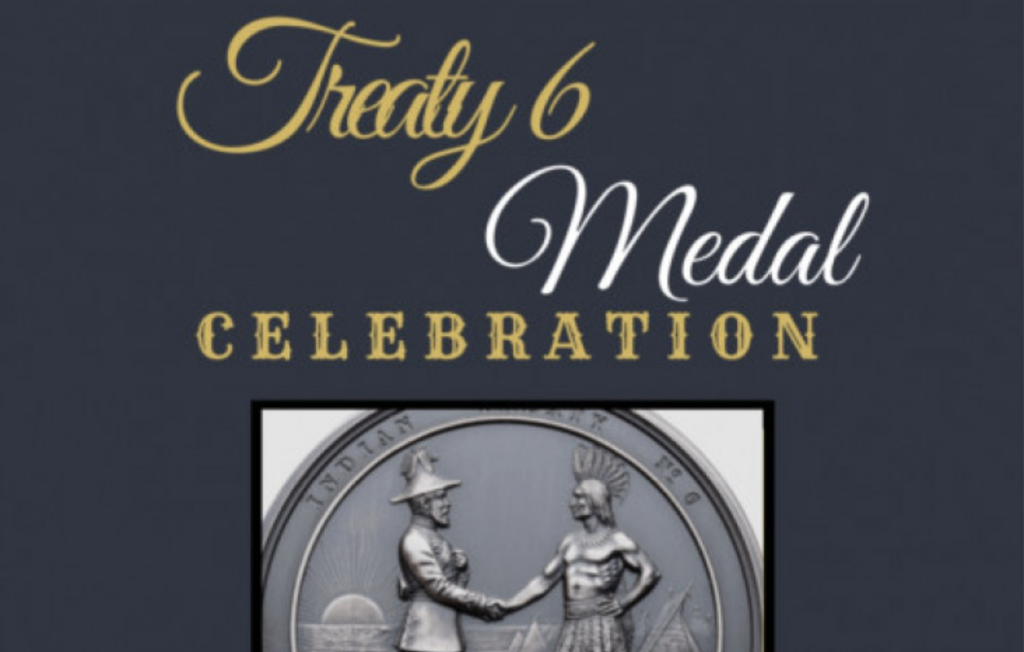
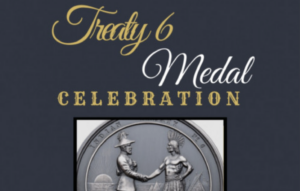 The Office of the Treaty Commissioner congratulates the Holy Trinity Catholic School in Warman for their installation of a Treaty medal.
The celebration, held as a combination online and in-person event, included performances from students – kindergarten kids recited a Treaty poem, Grade 5/6 students presented on the TRC Calls to Action and there were Tipi Teachings by Grade 4 students, among other thoughtful presentations, and the blessing of the medal.
Treaty Commissioner of Saskatchewan Mary Culbertson joined remotely, and spoke about a lack of Treaty knowledge in schools when she was growing up, and how happy she is to see that change that is happening.
“Having a medal to look at as a symbol of a relationship that was a framework for building Canada is a very significant step in being good Treaty partners,” she said.
You are enriched through your school environment and you can take that home and teach your families about the Treaty relationship, she said.
Statement from the Treaty Commissioner of Saskatchewan
On Feb. 15 came the announcement that confirmed what everyone from the Keeseekoose First Nation already knew to be true. There were unmarked graves. Ground-penetrating radar revealed 54 graves at the sites of Fort Pelly and St. Philip’s Residential schools.
I come from this community; I grew up with these institutions casting a terrible legacy on our nation. I grew up hearing the stories, the oral history. We didn’t look outside at night; we didn’t play near those areas because we knew that bad things were there. The fear was instilled in us and we didn’t go there.
We knew that children died, we knew that children were killed, that there were graves, that children never were seen again. The technology is just helping us to show the rest of Canada what Indigenous people already know.
According to official records, there were two student deaths at St. Philip’s and two at Fort Pelly. The radar found 12 and 42 respectively. Official records also talk about widespread abuse at the former schools, and mistreatment of students at these institutions.
The TRC reported that approximately 3,200 children died in the residential schools. We know as Indigenous people this was not all. Now the rest of the world knows too; it is the truth.
Canadians need to face what has happened in the history of the country. We need to come together and keep speaking and exposing the truth. For reconciliation to happen we must understand the truth.
Our community is now working to identify who are in those graves, and will maintain the site. The goal is to create a virtual museum to house these records and educate.
For the children who never came home, for our children yet to come, may this never happen again.
Mary Culbertson, Treaty Commissioner of Saskatchewan
Indigenous Storytelling Month at the OTC
 In honour of Indigenous Storytelling Month, the Office of the Treaty Commissioner has been hosting events throughout the month of February, with hundreds of people in attendance.
Storytelling is a time-honoured tradition in Indigenous culture. It’s valued because it passes on traditional knowledge, but also entertains, and shares memories. Oral history shares information from generation-to-generation.
On Feb. 7 we were joined by Fawn Wood for her session on Storytelling through music and culture, and Aarron Tootoosis for a session on The Story of the Medicine Chest Clause.
On Feb. 14, Joely Kequahtooway deepened our knowledge with her session Buffalo Resilience: Storytelling through the Arts, and Chris Scribe made us laugh and feel love as he shared stores of Indigenous knowledge.
“If you have a belly button and you were brought to this earth by a mother then you can always connect to this sacred hoop of knowledge,” he said, explaining Indigenous ways of knowing.
He spoke to how information shared through beauty and power is something you always remember and this beauty exists within Indigenous knowledge.
The OTC offers these sessions for free to help people have the opportunity to learn and experience culture through storytelling.