
News
OTC hosts We Will Stand Up discussion
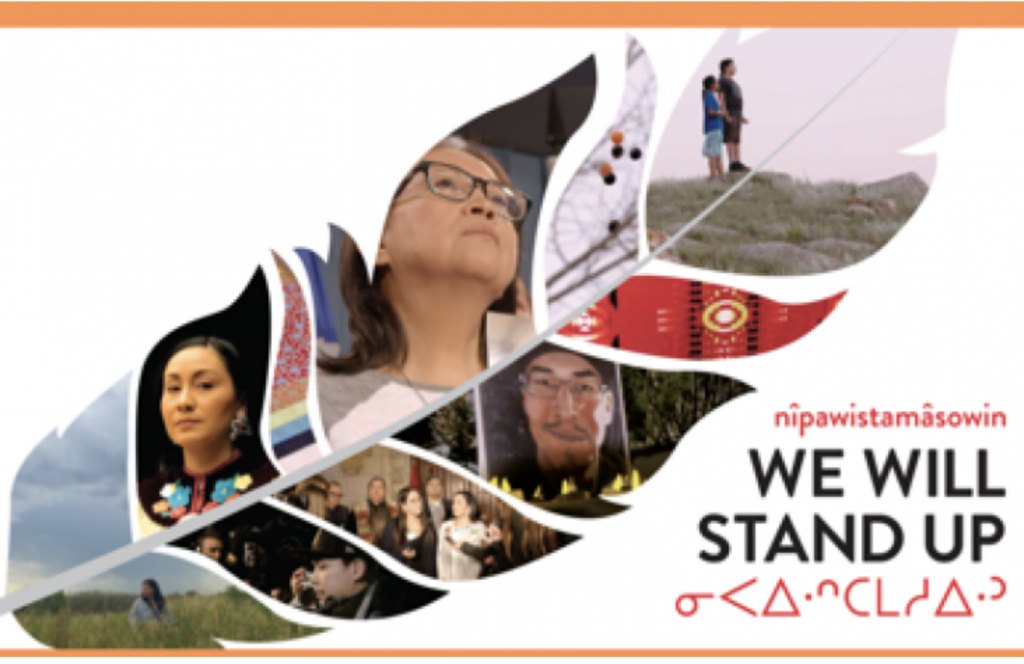
 The Treaty Commissioner of Saskatchewan hosted an event Feb. 9 bringing together people to speak about the legacy of the Gerald Stanley verdict.
On Feb. 9, 2018 Gerald Stanley, a white Saskatchewan farmer was acquitted of killing of 22-year-old Colten Boushie.
The event started with the viewing of We Will Stand Up, a film by Tasha Hubbard looking at the death, the acquittal and the impact of colonialism and racism on the prairies.
Hubbard joined Treaty Commissioner Culbertson, along with Colten’s mother Debbie Baptiste, his uncle Alvin Baptiste, Elder Jenny Spyglass, lawyer Eleanore Sunchild, Treaty Land Sharing Network member Mary Smilie, and FSIN Chief Bobby Cameron for a panel discussion.
About 70 people joined the event online.
Debbie and Alvin spoke about missing their family member, the mistreatment of family by the RCMP, and their upset and anger at a lack of inquest or apology.
“Colten may be gone, but he’s not forgotten, he’s still in our heart,” Alvin said.
Mary Smilie spoke about the creation of the Treaty Land Sharing Network as a response to the verdict.
“To bring landholders together to honour the idea of treaties,” she said, emphasizing that there needs to be land sharing as part of reconciliation.
“Our way forward is through the land, with the land, and understanding the land in a brand-new way.”
During the event Hubbard talked about the launch of a new resource developed to support Indigenous families so they can be more informed about the legal system.
There was important discussion on rights, changes to policing, and the importance of standing together, speaking up.
“We need to heal from the generations and generations of trauma,” said the Treaty Commissioner. “If we do not heal our nations, communities and people, then our treaties mean nothing. That is the work we have to do, and we have to do it together.”
See more news coverage on the event here:
Film screening and panel discussion mark four years since Gerald Stanley acquitted in killing of Colten Boushie – MBC Radio News
Four Year Anniversary Of Gerald Stanley’s Acquittal In Death Of Colten Boushie – CJWW
OTC Moves to a New Location

 New Year, New Us
The Office of the Treaty Commissioner is making a move to a bigger home. As our programs and the importance of our work continues to grow, we have gotten larger than the space we are in.
We are moving the OTC Library and Archives, speakers bureau, Teaching Treaties in the Classroom, and reconciliation team across the parking lot to our new location in the English River Business Complex.
We looking forward to the new space and working next to our neighbours including the Saskatchewan Indigenous Cultural Centre.
The move is happening Jan. 24-28 and we will be set up at our new office by Feb. 1, 2022.
Please update your records with our new address 303-2555 Grasswood Road East, Corman Park, SK, S7T 0K1. Our emails and phone numbers remain the same.
Province and Office of the Treaty Commissioner Partner on First-in-Canada Treaty Boundary Signage
 (Released by the Government of Saskatchewan)
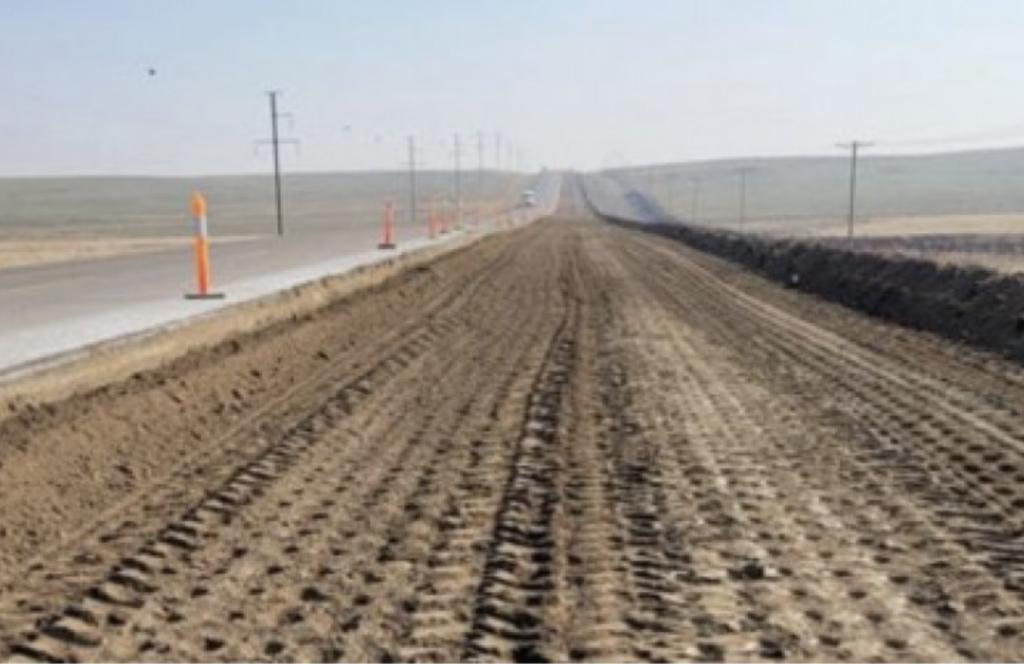
The Government of Saskatchewan is supporting the Office of the Treaty Commissioner’s application for official Treaty boundary signage in the province.
“The Government of Saskatchewan is proud to work in partnership with the Office of the Treaty Commissioner to support and invest in this first-in-Canada initiative,” Minister Responsible for First Nations, Métis and Northern Affairs Don McMorris said. “The treaty boundary signage will help further treaty awareness and education in our province, and support our work toward reconciliation.”
Currently, the Ministry of Government Relations and the Ministry of Highways are coordinating the work, hand-in-hand with the Office of the Treaty Commissioner. The signage will follow provincial highway standards, with the final design being overseen by the Treaty Commissioner. The Ministry of Highways will then co-ordinate the manufacturing and installation of the first sign, planned for winter-spring 2022.
“This is the start of a much-needed public recognition of the Treaty Territories in Saskatchewan,” Treaty Commissioner of Saskatchewan Mary Culbertson said. “The path to reach this point was long and involved conversations about our history and the desire of our Knowledge Keepers, who wanted to see these signs. It marks the beginning of a process being undertaken to one day ensure every border driven past in these territories will have a demarcation. We want everyone to know they are here because of Treaty.
“Acknowledging the territories that we are on and accepting they are the foundation of Saskatchewan and Canada is so important to the Treaty relationship and reconciliation. It may be a small step, but the signs will be here for a long time. The people who worked on this are looking forward to the Government of Saskatchewan support. This action will start conversations and these discussions lead to education, knowledge and change.”
Statement from the Office of the Treaty Commissioner
The Office of the Treaty Commissioner congratulates the six people to be invested into the Saskatchewan Order of Merit, this November.
Among them are professor Solomon Ratt, who teaches Department of Indigenous Languages, Arts, and Cultures at the First Nations University of Canada, and Chief Marie-Anne DayWalker-Pelletier, C.M., the longest serving female chief in Saskatchewan, and Dr. Michael Bishop (who as a long-serving physician in Kamsack delivered Treaty Commissioner Mary Culbertson).
Commissioner Culbertson was pleased to see these individuals recognized for their contributions to the province and reflected on their role in her life.
“I took a class with Solomon Ratt, and Chief Marie-Anne, she has been an inspiration and role model,” she said.
The commissioner works to share the influences of these individuals with others, championing women in leadership and encouraging the importance of Indigenous languages.
The Saskatchewan Order of Merit was established in 1985 to recognize excellence and achievement from outstanding Saskatchewan citizens.
Bi-Giwen: Coming Home – Truth Telling from the Sixties Scoop
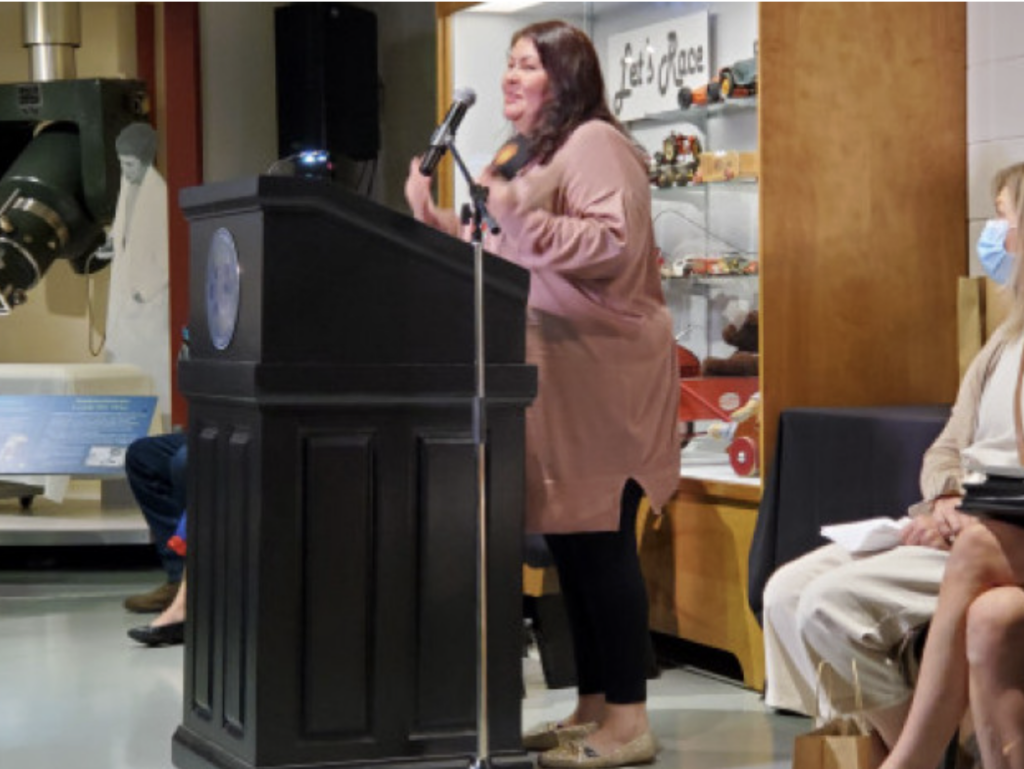
 The Treaty Commissioner of Saskatchewan, Mary Culbertson, was honoured to speak at the opening of the exhibit Bi-Giwen: Coming Home – Truth Telling from the Sixties Scoop in Saskatoon.
The Sixties Scoop Indigenous Society of Alberta (SSISA), in partnership with the Western Development Museum – Saskatoon and the Legacy of Hope Foundation, is bringing the Bi-Giwen: Coming Home – Truth Telling from the Sixties Scoop exhibition to various Saskatchewan locations. The first of its kind exhibit shares the experiences of survivors, including twelve personal testimonials of strength and resilience.
The exhibit is traveling to Regina, Saskatoon, Prince Albert, North Battleford, Yorkton and Swift Current.
OTC marks Orange Shirt Day
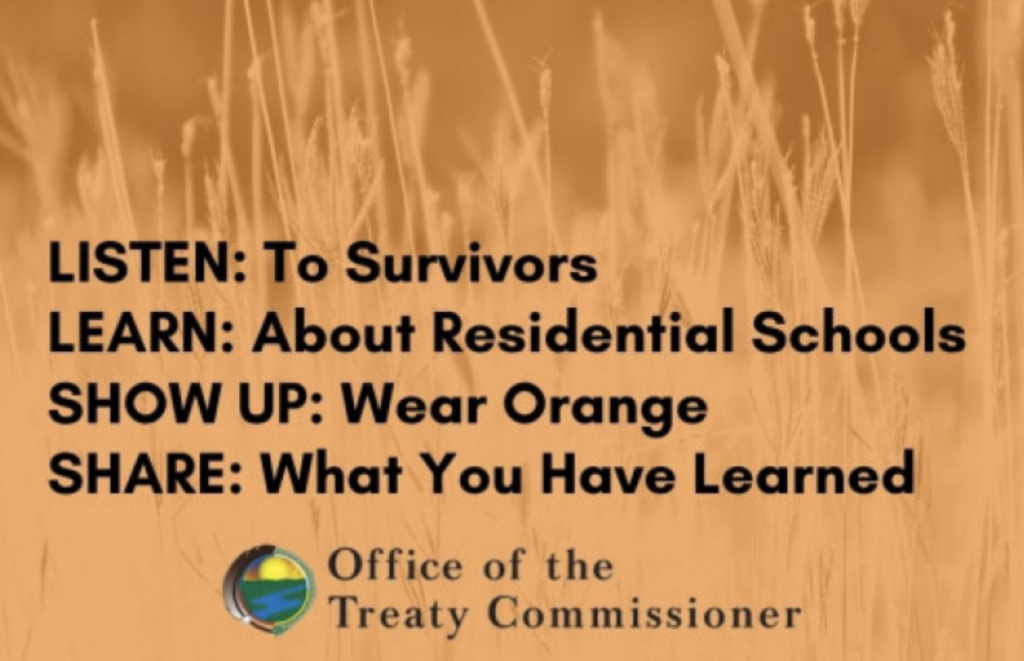
 The National Day for Truth and Reconciliation on Sept 30 is the opportunity to recognize and commemorate the tragic history and ongoing legacy of residential schools, and to honour the survivors, their families and communities. The day was established in response to the Truth and Reconciliation Commission of Canada: Calls to Action.
Also known as Orange Shirt Day, wearing orange on September 30 continues to be a way to honour Residential School Survivors. Orange Shirt Day was inspired by the story of Phyllis (Jack) Webstad, who had a beautiful orange shirt, bought by her grandmother, that was taken from her as a six-year old on her first day at residential school.
Some of our team at the OTC share their perspectives on the importance of Sept. 30.
Treaty Commissioner of Saskatchewan, Mary Culbertson
“Residential schools only closed here in this province in 1996. We are surrounded by survivors and intergenerational survivors of all ages, their experiences must be honoured and it is our generation today and our next generations that are in our schools that will carry forward the understanding and education about these experiences and these systems that have caused such devastating effects on culture, language, identity and families. Reconciliation is about the truth, repairing relationships, building relationships. Without the truth there can be no reconciliation. Building relationships is vital to the restoration of Treaty relationships in this province. We need to ensure we are taking the time this day and throughout the days and years coming as recoveries of burial places of children will be coming to light. We have intergenerational trauma, but we have journeys of intergenerational healing too.”
Angie Merasty, Director of Operations
“The Indian Residential School Legacy continues to this day. This is a terrible legacy for Canada. First Nations children were taken from their homes, ripped from their parents arms. It happened and it can’t unhappen. This is the true history.
The significant disparities in education, health, and income between Indigenous people and other Canadians still affects Indigenous people negatively. We face high rates of poverty, food insecurity, mental and physical health issues, addictions and death by suicide.
Despite everything that has happened, we are still here! We are still standing, moving forward. We are educated. We are employed. We contribute to society no matter where we live! We are making great contributions in every community, town, city we live in.
Orange Shirt Day is a very important and special day. It is the National Day of Truth and Reconciliation. It is a chance for everyone to learn about the Residential Schools, remember all the children who never made it home and honour the survivors that did.
My hope is that every single Canadian takes a moment to listen, to learn and to share what they have learned with others. Acknowledge the shared history, acknowledge that you cannot have reconciliation without the truth and lets all make sure that it doesn’t ever happen again.”
Kalina Alexis, Executive Assistant, Treaty Commissioner Culbertson
“This year Orange Shirt Day comes with extremely heavy hearts as 6,509 indigenous children have been unearthed from mass graves. It is time to bring our children home. As Indigenous people we are hurting, angry, and we are grieving. So, in the wise words of Larissa Crawford I’d like to say, “If you feel the need to frantically preform truth and reconciliation this week – don’t. Fulfill the responsibility of listening, sit with the discomfort of your ignorance and inaction, and let that inspire you to never feel this way again.”
Rhett Sangster, Director, Reconciliation and Community Partnerships
“Orange Shirt Day for me is a chance to honour the Survivors of the Indian Residential Schools and to acknowledge the trauma that they and their families have endured and continue to endure as a result of Canada’s attempts to assimilate Indigenous people. As a father, I think about my own school age children, and try to imagine what it would have been like to have my children taken away to a school far from home, where they would have learned that my language and culture was inferior and in need of “civilizing”. I take the advice of Survivors and I hug my kids close, thankful that I’ll never have to endure such a nightmare. And I resolve myself to humbly do what I can to make things right – to promote wahkotowin on the Treaty territory that I so love.
On September 30 I’ll be speaking to the Saskatchewan fransaskoises school division about how teachers and schools can advance truth and reconciliation. Then I’ll go with my family to Wanuskewin to be on the land and to take in the activities they are organizing for National Truth and Reconciliation Day.”
Amy Seesequasis, Director of Public Education
“Orange Shirt Day and the national day of Truth and Reconciliation is an important day to recognize the legacy of residential schools and honor those who survived, those who did not, and those affected by the intergenerational traumas of that legacy. It is a day to recognize the truth, although difficult and hurtful, so that we can have meaningful reconciliation. For over 150+ years Indigenous children attended residential schools and the impact has had profound impact generation after generation. We know many of our kin did not return home from these government and church run institutions, and we continue to search for them and honor them today and everyday day.
For myself, as an Indigenous woman who is the first generation in my family line to not have attended, I will spend the day with my loved ones. Together, we will honor my Dad, my in-laws, all my aunts and uncles, my paternal and maternal Kohkum and Moshum, and all survivors of residential schools, as well as our kin who did not make it home. We will do so by sharing in eachother’s company, laughter, affection and love, because in these schools our Indigenous kin were denied this.
Today is a day to honour and recognize, but also to become more aware, more educated, more compassionate and more accountable to Indigenous people. This can be achieved by learning their histories, listening to their stories and truths, and respecting their rights, dignities, causes, cultures, communities, languages, and children.”
Every Child Matters Walk
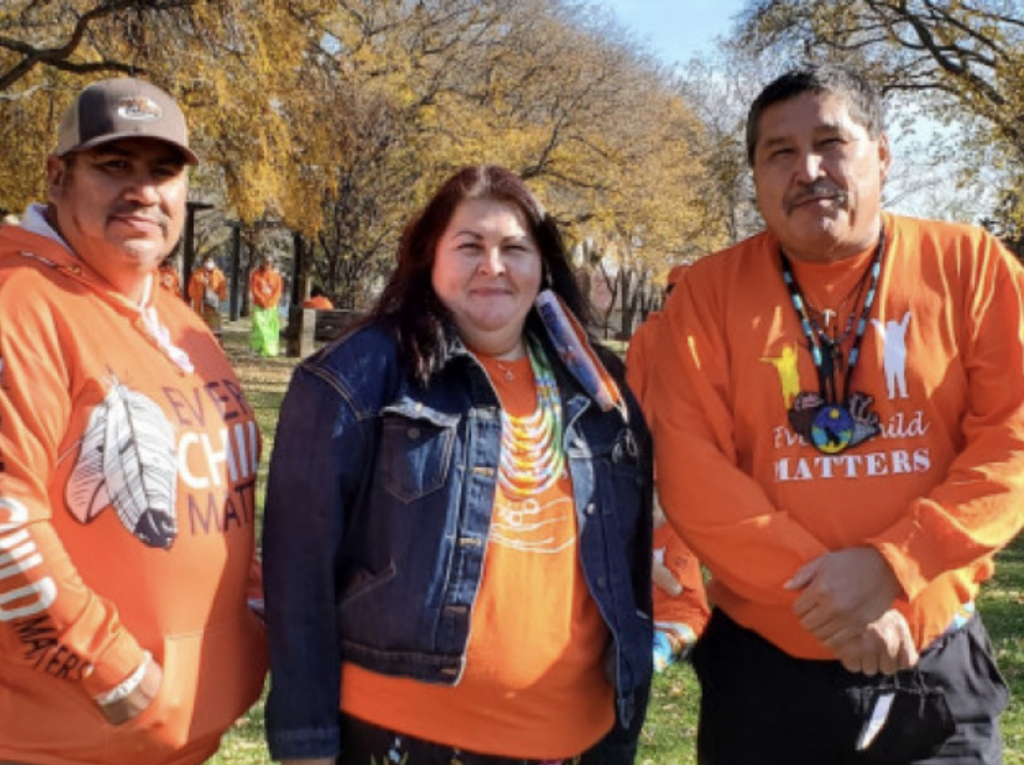
 The Treaty Commissioner of Saskatchewan, Mary Culbertson, and some of the OTC team joined the Prince Albert Grand Council Every Child Matters Walk in Prince Albert on Sept. 29, 2021.
The walk was hosted to honour the Survivors and children impacted by the Indian Residential Schools as a lead up to the first National Day for Truth and Reconciliation in Canada.
After an opening prayer and drum group honour song, the walk moved from Prince Albert’s MMIWG monument to Kinsmen Park for speeches by dignitaries including the Treaty Commissioner.
The OTC was very pleased to be part of this important event for Orange Shirt Day.
OTC congratulates Gilbert Kewistep for award
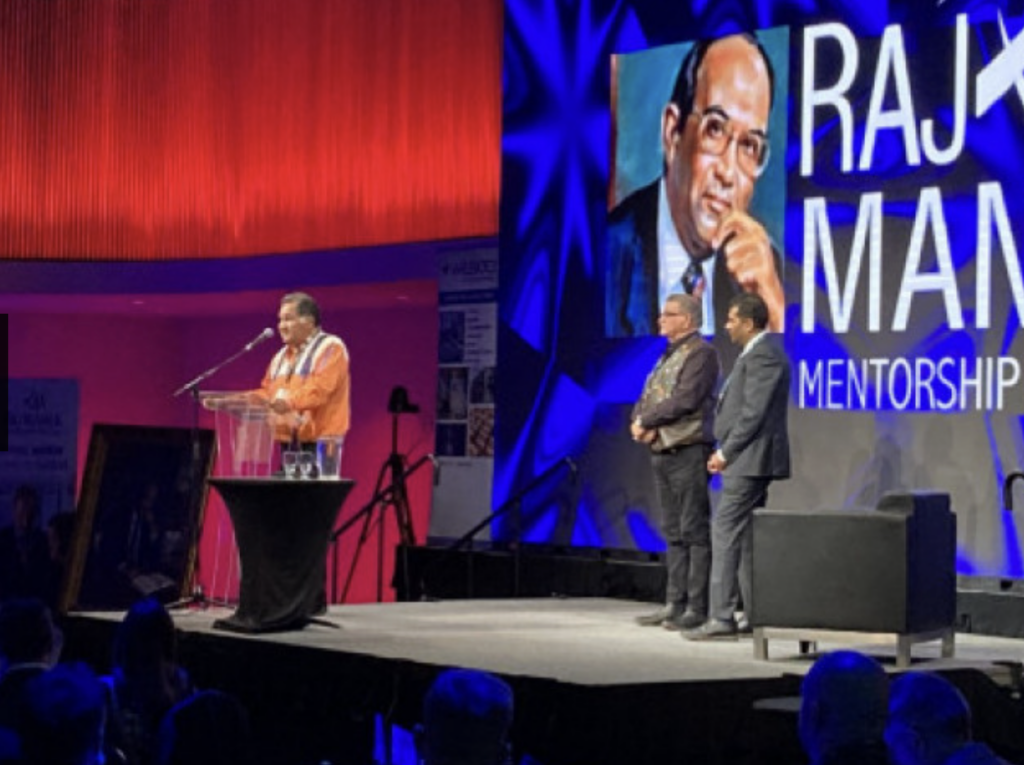
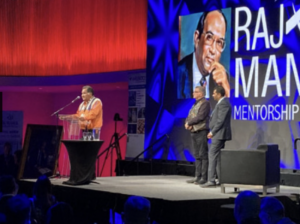 The Office of the Treaty Commissioner congratulates Gilbert Kewistep for being the 2021 recipient of The Ravi Maithel Find-A-Way Award.
This award is designed to honour people who accomplish a task that others thought was impossible. Gilbert’s drive and support of reconciliation in Saskatchewan makes him so worthy of this recognition.
Gilbert has contributed time, energy, and knowledge towards the foundation of three reconciliation circles – Reconciliation Saskatoon, Prairie Rivers Reconciliation and Yellow Quill Reconciliation. He is a residential school survivor, a knowledge keeper, a professor of social work at the First Nations University of Canada, and he works to support many initiatives in his community.
Gilbert continues to be an inspiration to all of us working on reconciliation and Treaty implementation. The OTC team was so pleased to be able to celebrate this honour with him and see him receive the much-deserved recognition at a ceremony in Saskatoon Sept. 16.
OTC and Reconciliation Nipawin host event
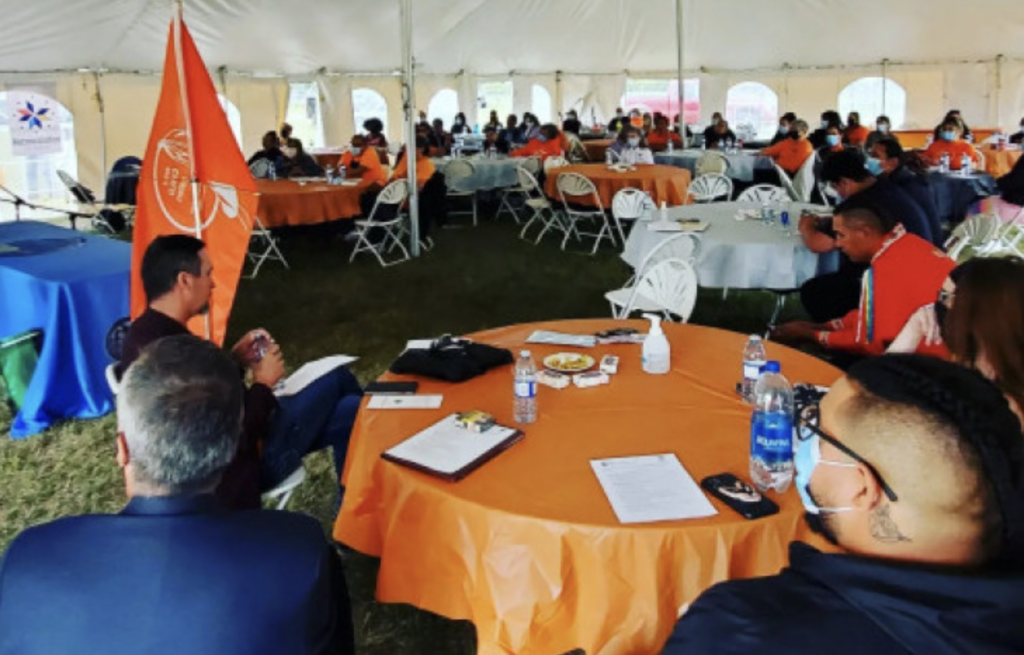
 The Office of the Treaty Commissioner was so excited to support Reconciliation Nipawin in hosting a two-day gathering of Indigenous and non-Indigenous community members, and residential school survivors.
The event, Fulfilling the Promises: Treaty right to Education for Residential School Survivors, was held Aug. 18 and 19, and gave space for survivors to tell their stories.
The OTC team were joined by His Honour, the Lieutenant Governor of Saskatchewan, Russ Mirasty, Treaty Commissioner, Mary Culbertson, the RCMP, President of the Law Society of Saskatchewan, Falouke Lasoban, and other dignitaries from Treaty 5.
The OTC encourages people to listen, learn from, and share the stories of residential school survivors. It’s important that today Canadians understand what was done to assimilate Indigenous people into Canadian culture.
The event ended with, “Truth and Reconciliation through Treaty Implementation: A Journey To Wahkotowin.”
Statement from the Office of the Treaty Commissioner
The Office of the Treaty Commissioner mourns the loss of Black Lake Denesuline Nation Chief Archie Robillard and send their condolences to his family, friends and community.
His niece Simona Fern remembers him this way.
“He worked very hard for the betterment of his community and was always true to his word. He was a great leader with a strong faith in God. He only wanted what was best for everyone and treated everyone he knew with respect and equality. He didn’t have much but he would always help and support those in need. He was a very well-respected man and our family loved him very much. He will be greatly missed by all who knew him.”
Losing leaders is always difficult, but we know their memory lives on through their teaching and positive impacts on others.
The wake for Chief Robillard begins Aug. 11 and the funeral will be held in Black Lake on Saturday. (Details here)