
News
A Statement from the Office of the Treaty Commissioner
The Office of the Treaty Commissioner has long been anticipating the findings and recommendations from the Civilian Review and Complaints Commission for the RCMP’s conduct into the handling of the Investigation of the Death of Colten Boushie and the Events that Followed.
It is crucial to have an independent body to review any police handling of investigations when complaints are made, but it should not have taken more than four years for the family of Colton Boushie to see this small form of justice.
The Commission found, “the police’s conduct towards Ms. Baptiste with respect to her sobriety and her credibility was discriminatory on the basis of her race, or national or ethnic origin.” The Commission also found the RCMP media releases and communications after the killing were found to be suggesting the victim was guilty of wrongdoing.
These releases were seen to stoke the fires of racialized hate speech that continues to be felt. It is important to have the RCMP take responsibility for the way Indigenous people, and the family and friends of Colten Boushie were treated and are still being treated. The hate speech continues and needs to be investigated and prosecuted without hesitation.
We call on the RCMP to implement the Commission’s recommendation that minimum cultural awareness training be provided for all RCMP employees bearing in mind the factors identified in recent inquiries. We want that to go one step further with the RCMP ensuring that cultural awareness training includes information from the calls to justice, the calls to action, and the basic human rights that are enshrined in the Canadian Charter of Rights and Freedoms.
The OTC is committed to working with the RCMP depot with our speaker’s bureau members to offer cultural sensitivity and worldview training. However, it is only the first, small step one that does not meet the needs required to change systems
They RCMP needs to do better and they must do better and can do better. It is up to the leadership in the RCMP to make the changes. There has to be better recruitment standards. There needs to be in depth training about the history of RCMP and why long-term, fractured relationships with Indigenous people has left a legacy of mistrust. We need education about anti-racism, white supremacy, colonization affects, and about the systems that were forced onto Indigenous people and enforced by the RCMP: residential schools, the child welfare system, and the Indian Act.
It shouldn’t have taken this long to have cultural awareness training for all RCMP staff. It shouldn’t have taken the death of an Indigenous youth to put the wheels in motion to ensure that a policing body that works on reserves across the country has cultural awareness. We need to see the changes now so our children and grandchildren in 20 years don’t need to see history repeating itself. We hope that with this report change can begin so no other family has to be treated with discrimination during an investigation because of the color of their skin and on the land where they are the first people.
Statement on the International Day for the Elimination of Racial Discrimination
Every year on March 21, we mark the International Day for the Elimination of Racial Discrimination.
It’s a day to recommit to making change and to working towards the elimination of all forms of racial discrimination.
While the day began in remembrance of the day police in Sharpeville, South Africa, opened fire killing 69 people at a peaceful demonstration against apartheid laws in 1960, it’s as important now as ever here in Saskatchewan.
We have long had a rocky relationship between Indigenous and non-Indigenous people in Canada. Issues surrounding the failure of full Treaty implementation, limiting of land rights, socio-economic impacts, stereotyping, and mistrust have led to a place where we see messages of hate spread online, violence in front of us and to us along with the existing, and systematic discrimination.
Across these lands we have seen bloodshed of Indigenous people and we are still hurting from it today, the killings of Colten Boushie and Tina Fontaine, and massacres like Wounded Knee, Cypress Hills, and the hangings at Fort Battleford.
How we act, what we believe, and what we say, has an impact on others, it is what we are teaching our children and our peers. In Saskatchewan, the Treaty relationship is suffering and while strides might seem to be made, we have a long way to go to see Treaty implementation the full spirit and intent of what our ancestors intended the Treaty relationship to be.
On the International Day for the Elimination of Racial Discrimination, the Office of the Treaty Commissioner calls on individuals to join us by investing in true Reconciliation and relationship building, while having zero tolerance for any form of discrimination.
We need to do more than simply not get involved. We need to say this ends now and stand beside one another.
Across Saskatchewan people of action are coming together to build relationships, trust and understanding in an effort to make positive change and further a mandate of Truth and Reconciliation through our Treaty relationship. Join them. Start on your path of reconciliation. Learn more about your neighbours. Be part of the OTC’s for Vision for Truth and Reconciliation through Treaty Implementation
We believe that if we can come together on a common vision for success, that we can better work together, and create a better future for our children and grandchildren. One where everyone is equal and not judged on how they look, what their last name is, or where they are from.
We need to do better.
The Office of the Treaty Commissioner celebrates Chief Tammy Cook-Searson
 The Office of the Treaty Commissioner congratulates Chief Tammy Cook-Searson on receiving the 2021 Indigenous Women in Leadership Award.
According to the release from the Canadian Council for Aboriginal Business Cook-Searson was selected because she is the embodiment of what their award was designed to celebrate, she “is passionate, driven and a true ground breaker.” And this is exactly what Chief Cook-Searson is.
Cook-Searson was the first woman Chief of the Lac La Ronge Indian Band and has gone on to serve six terms. During this time also serves as president of the band-owned Kitsaki Management Ltd., which employs nearly 1,000 people and owns or manages more than a dozen companies.
She has lobbied for funds to build a wellness, treatment and recover centre, and supported the community during a wildfire crisis, where she stayed steadfast and exuded calmness and leadership throughout. She is a tireless advocate on behalf of her people.
The OTC encourages and supports women to become leaders in their community. We celebrate Cook-Searson for her trail blazing work and the example she has set for women today and for our future generations of young women.
International Women’s Day Statement from the Treaty Commissioner
Happy International Women’s Day.
Every year at this time we take the day to celebrate the social, economic, cultural, and political achievements of women, but equally importantly it’s a time to renew the lobby for the full equality of women and gender parity.
As the first female Treaty Commissioner of Saskatchewan, I know the struggles that can be faced by women in positions of service as they work to break the glass ceiling and continuously strive to be viewed as equals and make space in governance and business.
I am optimistic for the change I see happening.
- Darlene Brander became the CEO of Wanuskewin, while continuing the role as the chair of the SPS Board until 2020;
- Jacqueline Ottmann at the Office of Vice-Provost, Indigenous Engagement is doing great work to make change at the University of Saskatchewan;
- Mayor Sandra Masters is the first woman elected mayor of one of the major Saskatchewan cities;
- Betty Nippi–Albright became the first First Nations MLA for an urban centre in the province during the 2020 provincial election;
- Chief Gwen O’Soup at the age of 24 who was the very first elected woman Chief of a First Nation in 1954;
- Chief Marie-Ann Daywalker Pelletier was the longest serving elected Chief in Canada when she retired in 2020, and has been honoured for her contributions and sacrifices for First Nations women and her nation of Okanese;
- Deborah A. Charles became the CEO of MBC Radio in 2019, while continuing her role on the APTN Board of Directors.
We are seeing more and more First Nations and organizations embracing the roles of women as leaders once again. There are many great examples of Indigenous women doing incredible work, too many to name, but we still have a long way to go to ensure all women, in particular Indigenous women are safe, healthy, and taking on a bigger role in our society.
At the Office of the Treaty Commissioner we, support the fight to end any discrimination against women; promote good Treaty relationships that are based on principles of mutual recognition, mutual respect, and shared responsibility; and encourage women to participate in leadership and governance at all levels.
We believe that we need to work together to make the world safer for women and girls, especially Indigenous women and girls. This year we have been sharing the MMIWG Calls to Justice from Reclaiming Power and Place: The Final Report of the National Inquiry into Missing and Murdered Indigenous Women and Girls. We appreciate how many of you have been sharing those messages and looking at how to make changes in your lives and industry.
Take the time to appreciate the women in your life, a mother, daughter, wife, friend, colleague, and commit to ensuring they, and all women, have the ability to pursue their dreams.
T-shirt supports OTC’s Youth In Service Program

 The Office of the Treaty Commissioner is partnering with Awasis Boutique to support youth programming.
For every Human-Kind t-shirt sold by Awasis Boutique, $5 will be donated to the OTC’s Youth in Service program.
Youth in Service is a collective of youth from across the province with the goal of implementing Treaty through reconciliation efforts. They meet every two weeks to learn from each other and guest speakers and work towards a for a better future for all.
Awasis Boutique is the first Indigenous owned and inspired kids fashion design label in Western Canada. Owner and founder Christine Marie, says she believes a simple way to work on the calls to action for reconciliation is through partnerships between Indigenous and non-Indigenous people.
The t-shirt design came to be that way, she said by joining forces with Kathleen Germs, a non-Indigenous teacher, and creating a design that together represents unity, reconciliation and kindness. She is thrilled to support Youth in Service.
“This program was designed to engage Indigenous and non-Indigenous youth in reconciliation. Amazing program, right? Lines right up with our message behind the tee, so that is why we felt that OTC would be a good fit,” she said.
“Yes, we still have a way to go when it comes to dismantling racism and acting on the calls to reconciliation, but one step at a time is a step in the right direction.”
The t-shirt features three raised fists (with different skin tones) in solidarity and the words human-kind.
“It’s a great representation of unity. Despite the colour of our skin, we are all human beings, and we all deserve kindness. Respecting diversity and providing all humans with equal rights is what reconciliation is about, and I think this design speaks to that in a good way,” said Amy Seesequasis, the OTC’s director of public education.
“Christine is an Indigenous entrepreneur and I felt it was important to work with a business that values Treaties and reconciliation. Her designs are not only fashionable, but educational as the wording and designs spark conversation about Indigenous Treaty partners.”
Awasis Boutique began as Christine set out to provide a safe space for Indigenous peoples, right from infancy, to wear products that highlight their culture and language.
“Representation matters, so I set out to help fill this gap,” she said.
The business aims to foster healthy relationships between Indigenous and non-Indigenous peoples through business collaborations and transactions, to educate non-Indigenous peoples about Indigenous culture and to give back.
Statement from the Office of the Treaty Commissioner
The Office of the Treaty Commissioner is so excited to offer congratulations to Louise Bernice Halfe – Sky Dancer for her appointment as Canada’s Parliamentary Poet Laureate.
Halfe’s first published poetry appeared in Writing the Circle: Women of Western Canada. She has since published four collections. Her latest work awâsis – Kinky and Disheveled will be released in the spring of 2021. She is widely recognized for weaving Cree language and teachings into her works. In 2005, she served as Saskatchewan’s second Poet Laureate.
During the two-year appointment, Halfe will write poetry, especially for use in Parliament on important occasions, sponsor poetry readings, and advise the Parliamentary Librarian regarding the Library’s collection and acquisitions to enrich its cultural materials.
The OTC celebrate the work of Indigenous women and know voices of Indigenous artists are key to shaping Canadian culture. Halfe’s appointment is incredibly important on both fronts. We know we will continue to see more great things from her.
Office of the Treaty Commissioners opens archive containing historical Treaty materials
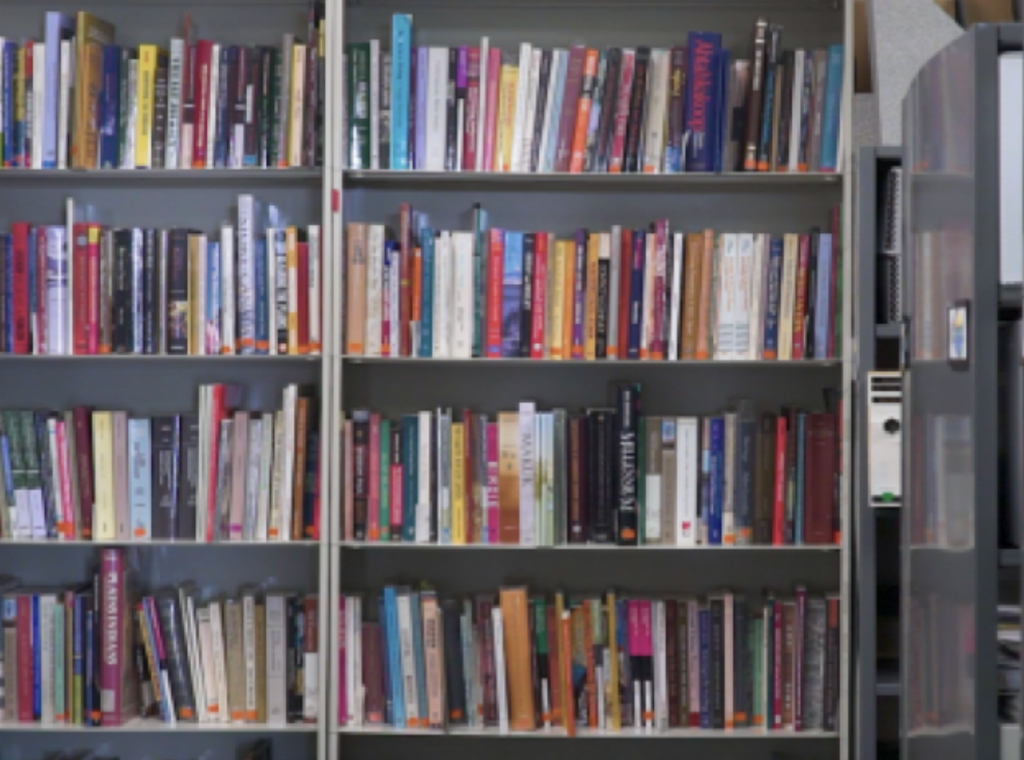
 The Office of the Treaty Commissioner is pleased to announce the opening of the OTC Library and Archives. Since the foundation of the office in 1989, Treaty Commissioners of Saskatchewan have collected and stored documents, but for the first time this collection has been catalogued and is being made available to the public.
“This is a momentous day for the office. It is important that communities have access to historical materials on Treaties between Crown and Indigenous Nations to help us all move towards full Treaty implementation,” said Mary Culbertson, Treaty Commissioner of Saskatchewan.
“To begin we will offer the catalogue these resources virtually through the Saskatchewan Archives Information Network and as soon as COVID-19 protocol allows, we look forward to welcoming people to the office to use the resources in our reading room.”
The library contains books, articles, academic theses, and unpublished manuscripts. Historical materials include resources on Treaties Two, Three, Four, Five, Six, Eight, and 10, as well as Canada’s pre- and post-confederation Treaties. Significant collections include files relating to Treaty Land Entitlement in Saskatchewan, the development of Treaty Education, and Treaty case law.
“It’s very exciting for us to share these resources with the public, especially the significant collection of Treaty Oral histories from Elders in all Treaty areas. Oral histories and traditions are often forgotten or overlooked, so it was very important for the OTC to ensure their survival,” said Sheldon Krasowski, research and archives coordinator for the OTC.
A team of staff and volunteers took months sorting through boxes of resources, before cataloguing and offering them to the public.
The Office of the Treaty Commissioner thanks the Saskatchewan Council for Archives and Archivists for their support in this project.
Statement from the Office of the Treaty Commissioner
The Office of the Treaty Commissioner is heartbroken by the news of the deaths of strong leaders and knowledge keepers.
This week we lost a strong advocate for northern Saskatchewan Grand Chief Ron Michel. He served as chief of the Peter Ballantyne Cree Nation and went on to serve as chief of the Prince Albert Grand Council for 12 years. He spent most of his life working for his communities in the north. Even after retirement from politics, he gave back becoming a senator for PAGC.
“I was fortunate enough to be able to have sat with him and listen to him on his thoughts about Treaty,” said Treaty Commissioner of Saskatchewan, Mary Culbertson. “He was always smiling when I’d see him.”
On Monday, FSIN Senator Theresa Stevenson passed. She is very well known for co-founding the long-running, inner-city hot lunch program in Regina, Chili for Children. Stevenson also was a long-time leader on the Saskatchewan First Nations Women Commission.
We also lost Chief Albert Scott was Saulteaux from Kinistin Saulteaux Nation. He was a leader, who was involved in teaching culture and language and keeping his traditions alive. Through the years Chief Albert Scott lifted the Pipe for the Office of the Treaty Commissioner and he supported our work.
On Dec. 16, Elder Jacob (Jake) Pete of Little Pine First Nation passed. Throughout his career as an officer, Pete broke barriers in policing in Canada. When he retired, he contributed to the safety and vision of his community. He believed solutions could be found in Indigenous traditions.
Terry Atimoyoo ensured that the oral history around Big Bear continued living. He told the stories and helped in organizing the descendants of Big Bear Gatherings. The gatherings would feature and assembly area to encourage sharing stories.
We are in difficult times, and it is made worse when we cannot gather to support each other in person because of COVID-19. We aren’t able to do this, and it weighs heavy on everyone. But, do what you can, stay safe and keep your loved ones safe with physical distancing, wearing a mask and refraining from gatherings and unnecessary travel. One day we will all be together again if we keep safe now that time will be soon.
While we have lost our knowledge keepers, their teachings will go on. We will miss them.
ANTA honours new logo creator
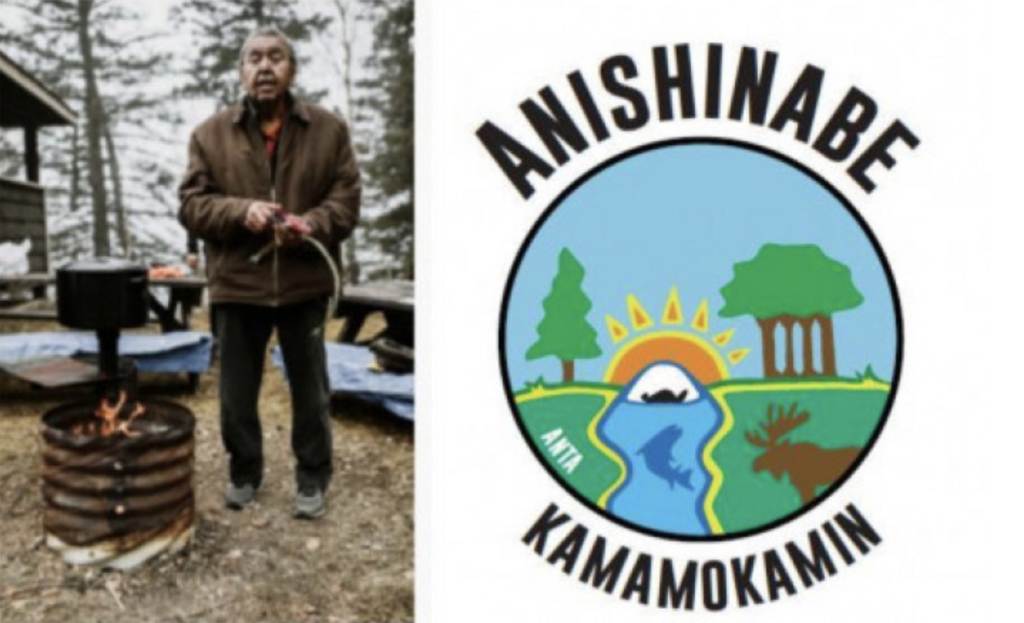
 Anishinabe Nation Treaty Authority is honouring Francis Bird as they share their new Treaty logo.
The logo, finalized in 2021, was guided by Francis, who after ceremony and prayer about the logo contacted the office to share what he had seen – nature with trees and water.
He also provided a piece of paper with the word Kamamokamin, put the translation under it, and “said it means: Do this together. He said it means we are working together on this project, walking side-by-side with each nation and it displays our unity,” said a press release from the Anishinabe Nation Treaty Authority (ANTA).
Francis grew up in the bush in Hudson Bay, Peepaw area and worked in the bush most of his life. His traditional name was Gihmownihbihnace, he was a ceremonialist and carried his grandfathers and uncles’ ceremonial lodges.
With that history, and knowledge of his culture and language, Francis’ ideas lead to the office contacting a First Nations graphic artist who started pulling the elements together to develop the ANTA logo.
The final version shows Saskatchewan trees, spruce and tamarack, Saskatchewan animals beaver, moose, and fish, symbolizes Treaties through pictures as long as the sun shines, the grass grows, and the river flows.
ANTA says the insight from Francis Bird was the most important part of bringing the Treaty logo to life and “we can’t thank him enough.”
Francis Bird passed this summer, so ANTA is looking to honour his contributions by sharing this story and giving him credit for his hard work developing the Treaty logo
“His words and guidance will always be with Anishinabe Nation Treaty Authority…Mikwec Gihmownihbihnace, your encouragement and guidance will always be with us.”
The Office of the Treaty Commissioner is grateful to the Anishinabe Nation Treaty Authority for sharing the story. We honour Francis Bird alongside the community as we celebrate their new logo.
Partnering to support youth
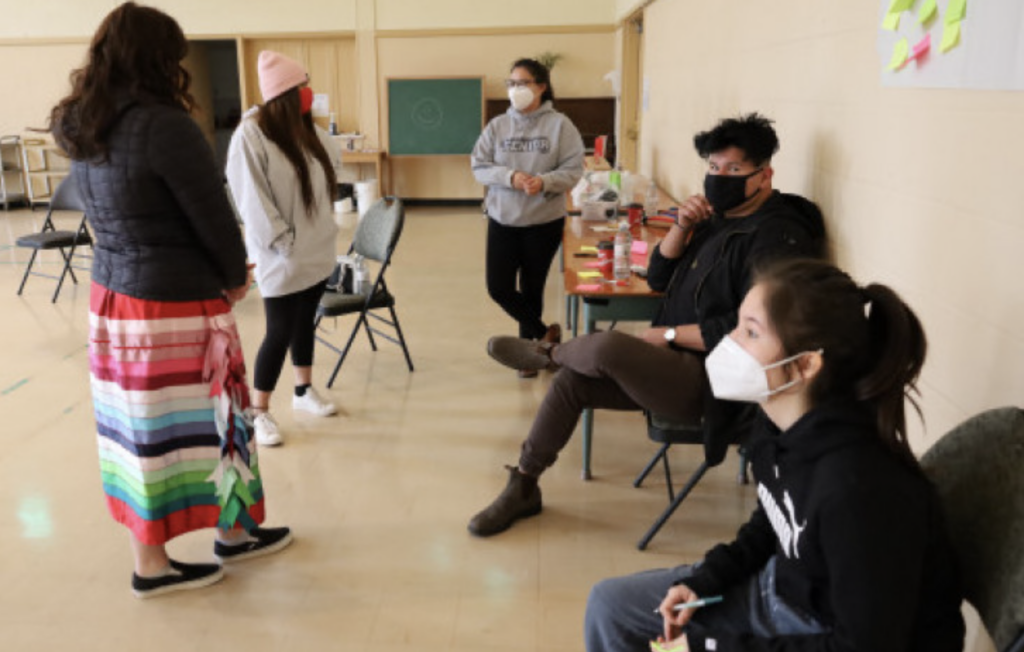
 The Saskatoon Open Door Society (SODS) and the Office of the Treaty Commissioner (OTC) have committed through signing a Memorandum of Understanding to an ongoing positive partnership to foster and build strong relationships between children of Indigenous communities and new immigrants.
Through this initiative, children and youth from both communities will have opportunities to learn and absorb each other’s cultures and form long lasting bonds for a harmonious future in Canada. Working together SODS and the OTC will develop a cultural exchange program that provides youth an opportunity to interact, share history, and learn from one another.
“The OTC is pleased to be partnering with the Saskatoon Open Door Society to grow relationships between students and see them not only exchange information, but their aspirations and dreams. Youth are key to reconciliation and the future of the Treaty relationship,” said Mary Culbertson, Treaty Commissioner of Saskatchewan.
“Creating this partnerhip supports newcomer youth in learning the true story of Canada’s history with Indigenous peoples, promotes Treaty Awareness and Treaty Implemtnation though understanding identity and the roles and responsibilities associated with We are all Treaty People.”
The partnership aims to promote language retention and revitalization. By recognizing the importance of keeping languages intact, the Memorandum of Understanding makes a commitment to keep our cultures strong. There is an urge for cultural information and inclusive cultural practices focusing on diversity, anti-racism, reconciliation and Treaty implementation within First Nation, Metis and immigrant youth and their families making Saskatoon their home. This empowering cultural amalgamation will bring strength to Saskatoon community by building stronger leaders and role models for our community.