
News
OTC at the Treaty 10 Gathering
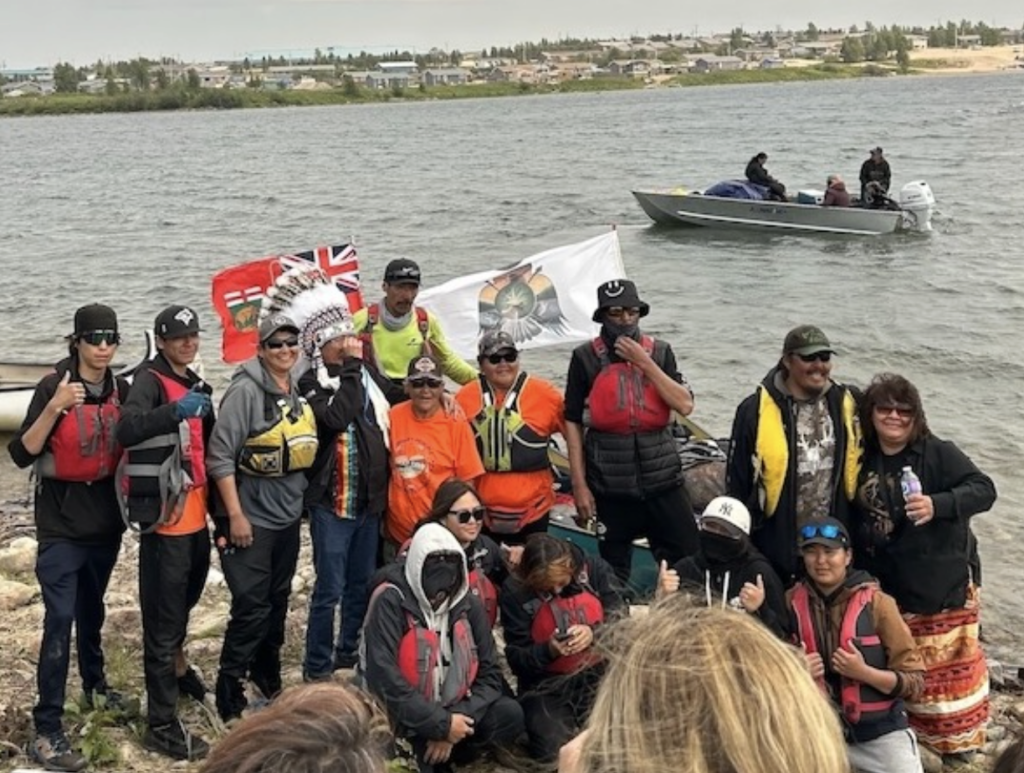
 Treaty Commissioner of Saskatchewan, Dr. Kathy Walker, was pleased to attend the Treaty 10 Gathering this July held at Hatchet Lake.
“The gathering provides a way for nations to come together on an annual basis to renew the terms of Treaty 10,” said Walker. “The event brings together kêhtêyak, leaders, citizens and young people to breathe life into the Treaties with our words and actions, and thereby strengthen the Treaty relationship.”
The event started in a good way with a prayer by an esteemed Dene Elder and Dene and nêhiyawak drumming. Elders and knowledge-keepers shared their knowledge of Treaty history, provided cultural demonstrations, such as hide tanning, and spoke of the remarkable strength and resilience of the generations who walked before us. A major highlight was the arrival of youth paddlers who arrived in canoes at the site, following a traditional waterway route of Treaty 10 Nations. Hatchet lake Denesuline nation citizen Rosalie Tsannie also received well-deserved, special recognition for her lifelong leadership.
Treaty 10 includes First Nations in the northern part of Manitoba, northeastern Saskatchewan, and a small part of east central Alberta. The Treaty was first agreed to on Aug. 28 1906 at Ile a la Crosse; Sept. 19, 1906 at Canoe Lake; and on August 19, 1907 at Lac la Hache at Lac du Brochet on the north end of Reindeer Lake.
With regard to the making of Treaty 10, Denesuline Elder Louie Benoanie from Hatchet Lake stated in the 1990s:
“The people loved their land, they wanted to keep their land, they wanted to live on their land. The runway, the water, the fish, the water-fowl, everything—we don’t want to be bothered [in] exercising our traditional way of life. If you can guarantee us that he will make the treaty as what the people want and that’s what I understand of the treaties. The way I look at it, the way I understand it today.”
When First Nations signed on to Treaty 10, protecting their way of life and securing livelihoods for the community were emphasized. At the time Indigenous people were experiencing falling fur prices, scarcity of game, and miners encroaching on their communities.
Work still continues today to ensure the full implementation of the Spirit and Intent of Treaty 10 and all the numbered Treaties.
150 Years of Treaty 5
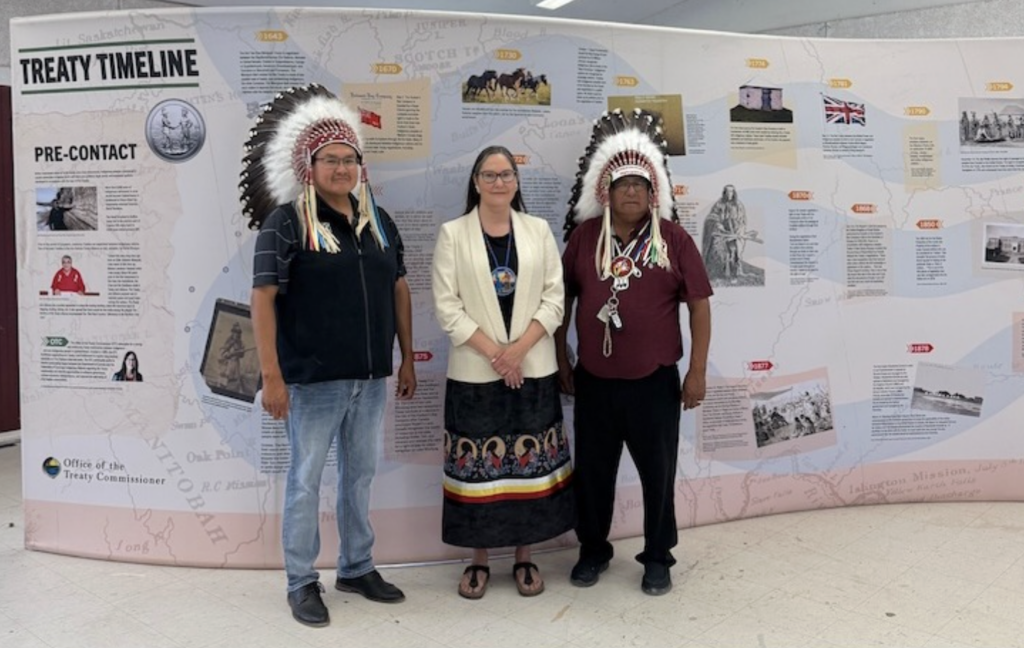
 The Office of the Treaty Commissioner was pleased to travel to Red Earth Nehiyawak Nation or Mihkoskiwakak Nehiyawak with the Treaty Timeline to commemorate 150 years of Treaty 5.
Treaty Commissioner of Saskatchewan Dr. Kathy Walker met with Chief Zachary Whitecap and Vice Chief Fabian Head for their Treaty Days.
Alongside the Mihkoskiwakak Nehiyawak, Cumberland House Cree Nation and Shoal Lake Cree Nation are commemorating 150 years of Treaty 5 with the Oji-cree, Ojibway (Anishinabek), Cree, and Denesuline nations that belong to Treaty 5, which encompasses over 1 million acres.
Treaty 5, also known as the Winnipeg Treaty, was agreed to on Sept. 20, 1875 (Berens River) and Sept. 24, 1875 (Norway House) with adhesions in the following years. It includes communities in central and northern Manitoba as well as small areas of Saskatchewan and Ontario.
To commemorate 150 years of Treaty 5, Elders, leadership and citizens from many nations, language groups, and areas will gather at Berens River First Nation to renew the Spirit and Intent of Treaty, their relationship to the land, and their right to earn a living from the land.
A Summit of Treaty 5 Sovereign Nations hosted by Berens River First Nation will take place on September 18th, 19th, & 20th, 2025. You can find more information here
White Bear First Nations Celebrates 150 Years of Treaty 4 Adhesion
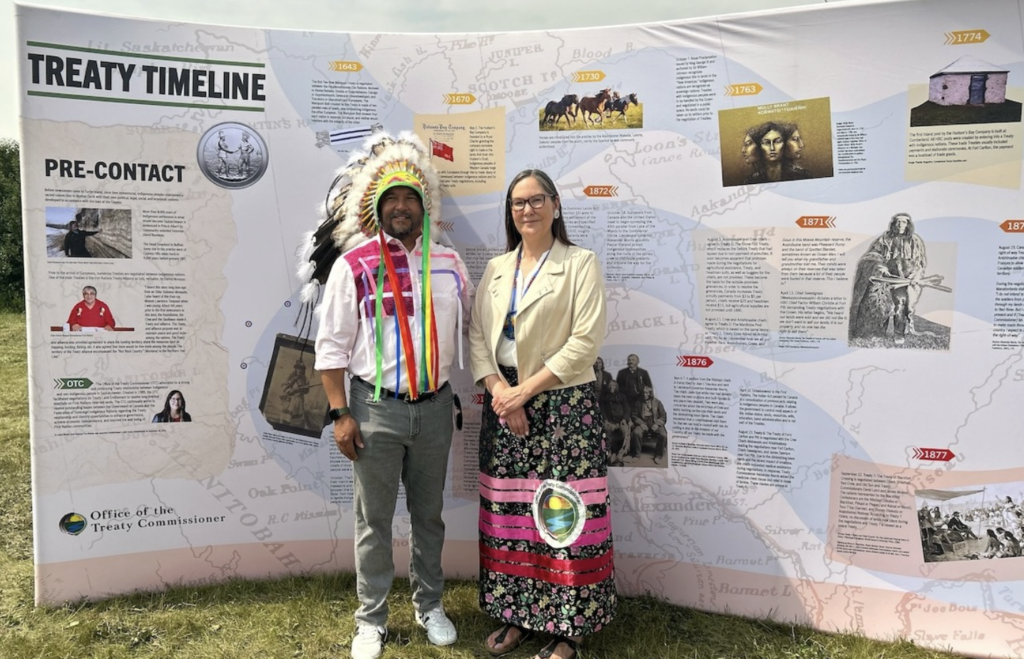
This weekend White Bear First Nations celebrates 150 years of Treaty 4. While the initial signing of Treaty 4 occurred in 1874 at Fort Qu’Appelle, White Bear First Nations became signatories the following year, in 1875.
This historic moment is being honoured by the community and at their powwow.
During a recent visit to White Bear First Nations, Chief Jonathan Pasap shared with the Treaty Commissioner of Saskatchewan, Dr. Kathy Walker, the importance of recognizing the anniversary, not just as a historical date, but in recognition of the Treaty that is still in place today.
“Treaty 4 is a sacred covenant that continues to be the foundation of the relationship between First Nations and the Crown,” said Commissioner Walker. “The commemoration provides a time for reflection, celebration, and continued commitment to the Spirit and Intent of Treaty 4.”
The powwow will bring together dancers, drummers, elders, knowledge keepers, and community members to celebrate culture and resilience.
The Office of the Treaty Commissioner is pleased to support the gathering with the Treaty 4 Timeline display, which provides a visual representation of our Treaty history on these lands.
First official Treaty Commissioner visit to Athabasca Nations
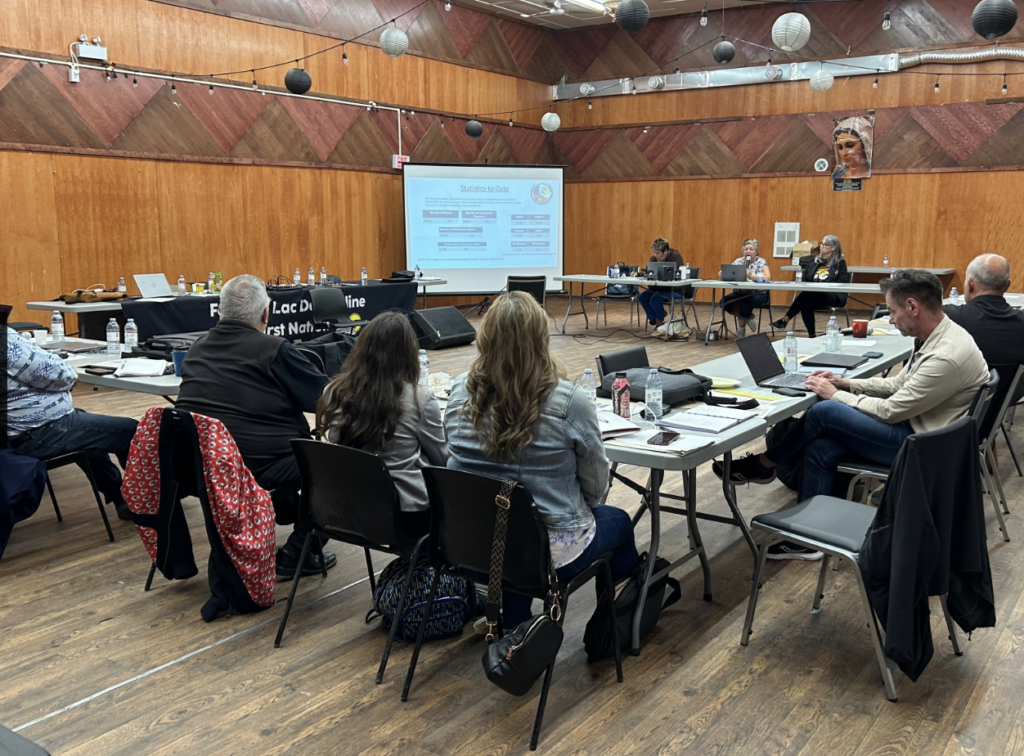
 The Treaty Commissioner of Saskatchewan, Dr. Kathy Walker, travelled to the Athabasca region in northern Saskatchewan as part of a community engagement trip organized by Vice-Chief Joseph Tsannie and the Prince Albert Grand Council. This trip represents the first in-person visit of the Treaty Commissioner to these Athabasca communities.
In Fond Du Lac and Black Lake Denesuline Nations, Commissioner Walker was honoured to meet with leadership and communities.
The Commissioner provided updates on the OTC roles and responsibilities and discussed how the office can better support the Athabasca First Nations in their Treaty claims and Treaty education.
“Meeting and talking with the leadership and citizens makes you more aware of the strengths of the Athabasca Dene nations, but also of the challenges they face.”
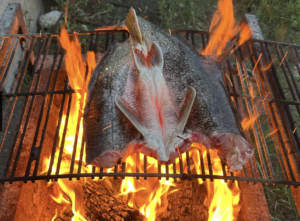
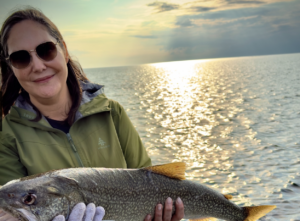
The Commissioner travelled with a group of directors from PAGC, the First Nations Health Ombudsperson Office, PADC, Northern Lights CDC, Athabasca Basin Developments and Associated Engineering and were welcomed with great warmth and hospitality that included a fish fry, tea, and great fishing.
The meetings took place over two days and as updates were provided, a number of Treaty issues specific to the north, were raised, which the OTC will be following up on.
Treaty Commissioner marks the summer solstice
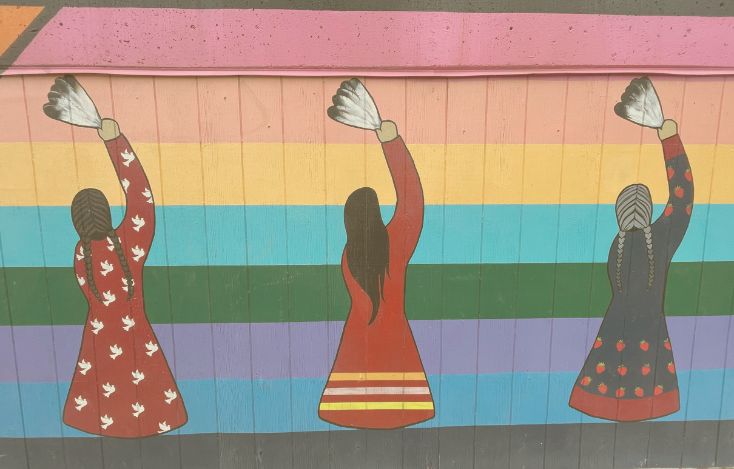
 On June 21, National Indigenous Peoples Day, Treaty Commissioner of Saskatchewan Dr. Kathy Walker, traveled to White Bear First Nation to mark the summer solstice through ceremony, connection, and honouring women.
Hosted by Joely BigEagle-Kequahtooway and the Buffalo People Arts Institute, the day included a gathering and sharing circle and a Matriarch and Two-Spirit pipe ceremony.
“The summer solstice has been referred to as the Indigenous New Year,” said Commissioner Walker. “It marks a season of renewal. Being at White Bear surrounded by so many strong women exercising their ceremonial roles, was reinvigorating.”
The pipe ceremony brought together pipe carriers from across Saskatchewan, including Two Spirit carriers and Matriarchs from Red Pheasant, Peepeekisis, and White Bear. About 10 pipes were lifted in ceremony.
“Women have always held important roles in our nations. Ceremonies like this remind us of what was disrupted through colonization and what we are working to restore.”
The significance of place and history was part of the day. This year marks the 150th commemoration of Chief White Bear’s signing of Treaty 4 in 1875. As women gathered in ceremony, an additional community ceremony honouring Chief WhiteBear’s pipe was held. Chief Jonathan Pasap shared words with those gathered, joined by his three-year-old daughter.
National Indigenous Peoples Day
 June is National Indigenous History Month, an opportunity to recognize not only the historic contributions of Indigenous peoples to the development of Canada, but also the strength of present-day Indigenous communities and their promise for the future.
At the heart of the month is National Indigenous Peoples Day, held annually on June 21, a time to recognize, honour, and celebrate the heritage, culture, and contributions of First Nations, Inuit, and Métis Peoples across Canada.
“Being on the land is healing,” said Bobby Cameron, Chief of the Federation of Sovereign Indigenous Nations (FSIN), in an interview reflecting on National Indigenous Peoples Day.
He talked about coming from a long line of fishers, hunters, trappers, and gatherers and the importance of the land.
“It gives you the understanding that Mother Earth is still in charge of us all”
Watch the full video here: Chief Bobby Cameron Reflects on National Indigenous Peoples Day
While June offers a moment to celebrate, it also offers a challenge: Don’t let this awareness end with the month. The work continues.
“It’s a time to celebrate vibrant Indigenous cultures and contributions, but also a reminder of our shared responsibility to honour the Treaties,” said Dr. Kathy Walker, Treaty Commissioner of Saskatchewan.
“Treaty rights are not just about history: the Treaties are living documents, a blueprint for living together and reconciliation.”
The National Day for Truth and Reconciliation (Orange Shirt Day) takes place on Sept. 30. Between now and then, the Office of the Treaty Commissioner invites all Canadians to set a personal goal toward reconciliation.
What can you do over the next 100 days to grow your understanding and commitment?
Read a book by an Indigenous author
Watch a documentary or listen to an Indigenous podcast
Attend a community event or cultural celebration
Support Indigenous businesses, artists, and storytellers
Learn about the Treaties that govern the land you live on
Reflect on how colonial systems have shaped today’s inequalities
Commit to conversations with your family, workplace, or school
Let National Indigenous History Month inspire you and Orange Shirt Day be your next milestone. Let every day between now and then be a step on the journey to truth, reconciliation, and honouring Treaty.
Treaty Commissioner attends Women, Peace, and Security Conference
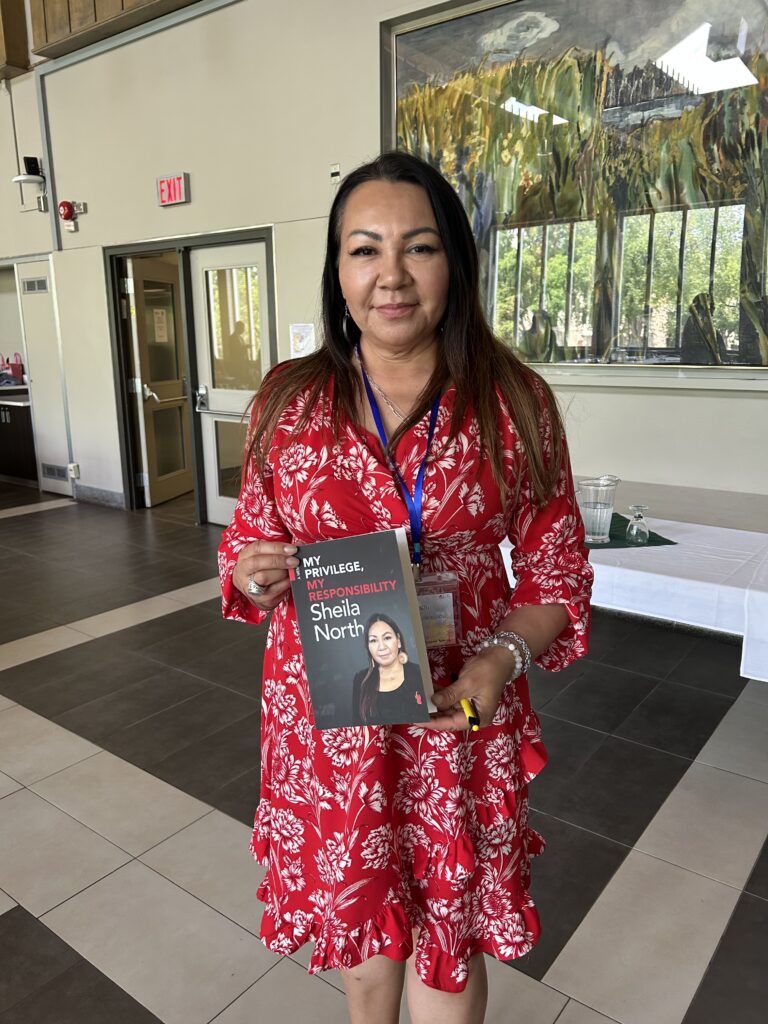
At the 25th anniversary conference of the Women, Peace, and Security (WPS) on June 19, Treaty Commissioner of Saskatchewan, Dr. Kathy Walker, chaired a panel discussion titled Priorities and Lessons on the Crisis of Murdered and Missing Indigenous Women and Girls.
The panel focused on the issue of MMIWGS+, with panelists focusing on how peace and security issues impact this issue- particularly policing and the criminal Justice system in Canada.
“Addressing gendered violence is essential to upholding the Spirit and Intent of Treaty,” said Commissioner Walker. “It is because of breaches of Treaty that Indigenous women and mothers have been targets of systemic violence.”
The discussion brought together voices with experience in media, law enforcement, research, and advocacy to address the crisis of gendered violence, community safety, and the systemic failures that have endangered Indigenous women, girls, and Two Spirit people across Canada.
Panelists included:
Sheila North, former Grand Chief of Manitoba Keewatinowi Okimakanak and a trailblazing journalist, widely recognized for sparking the use of the hashtag #MMIWG2S
Emma Kytwayhat, retired RCMP officer, ceremonial knowledge keeper, and member of Makwa Sahgaiehcan First Nation
Karen Pelletier, retired RCMP officer who shared her frontline experiences as an Indigenous woman in policing
Kerry Benjoe, journalist with Eagle Feather News, speaking to the power of storytelling and lived experience
Sheldon Krasowski, historian and Director of Research at the Office of the Treaty Commissioner, who spoke alongside OTC practicum student Maria Hirsi.
The Office of the Treaty Commissioner premieres Voices of Treaty 4
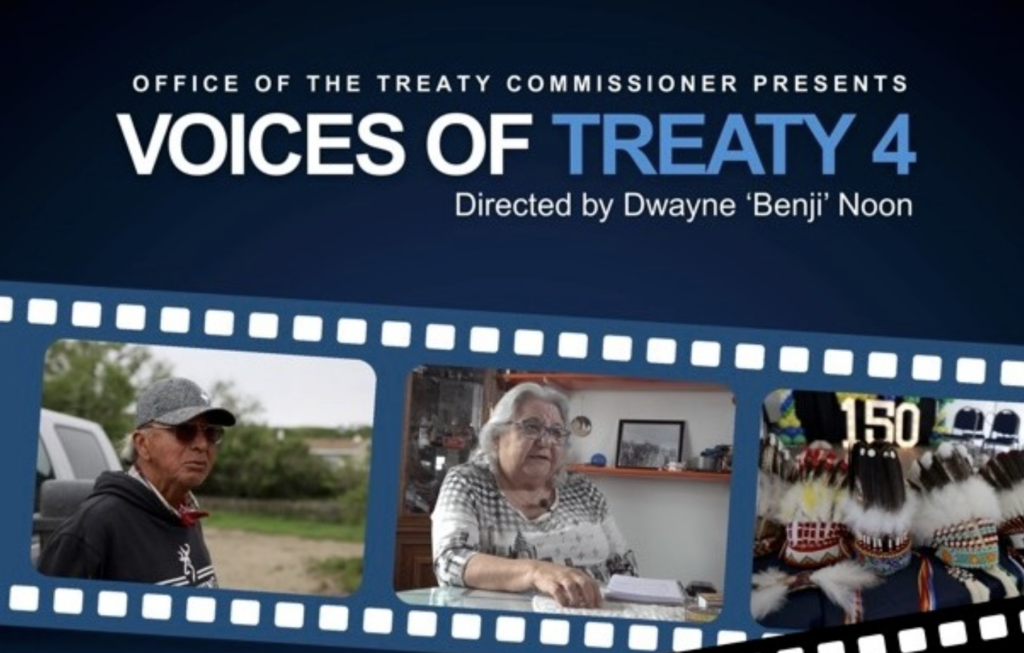
 On Mar. 31 the Office of the Treaty Commissioner hosted the premiere of Voices of Treaty 4, a documentary created as part of the 150-year commemoration of Treaty 4.
“Our office is so excited to share this important piece of our Treaty history and are so thankful to the citizens of Treaty 4 for their support and cooperation throughout this project. It would not have been possible without them,” said Dr. Kathy Walker, Treaty Commissioner of Saskatchewan.
“When the project began last year, our goal was to support the preservation of our valuable oral history and narratives, which is a crucial step in our truth and reconciliation journey.”
The film features voices from Zagime Anishinabek, Piapot First Nation, Rolling River First Nation, George Gordon First Nation, Kahkewistahaw First Nation, Kawacatoose First Nation, Okanese First Nation, Cote First Nation, and others. For nearly a year a team from the Office of the Treaty Commissioner travelled across the Treaty territory to gather interviews and footage at community events.
“Collecting oral history from Elders and knowledge-holders was not a typical interview process. It was based on deep, respectful relationships and local protocols,” said Benji Noon, the film’s director. “It was truly an honour to speak with all the people in the documentary. I learned so much.”
The documentary will become a resource for Treaty 4 First Nations, preserving and uplifting their voices and knowledge. Voices of Treaty 4 will also be shared with schools, community centres, and other interested institutions, serving as a tool for education and to further the dialogue on truth and reconciliation.
All Treaty people, Saskatchewan residents and Canadians, both Indigenous and non-Indigenous, Indigenous will be able to learn more about the shared history and better understand how we can all move forward towards truth and reconciliation. We invite everyone to watch the film.
The creation of Voices of Treaty 4 was made possible with the support of Heritage Canada.
National Indigenous Languages Day
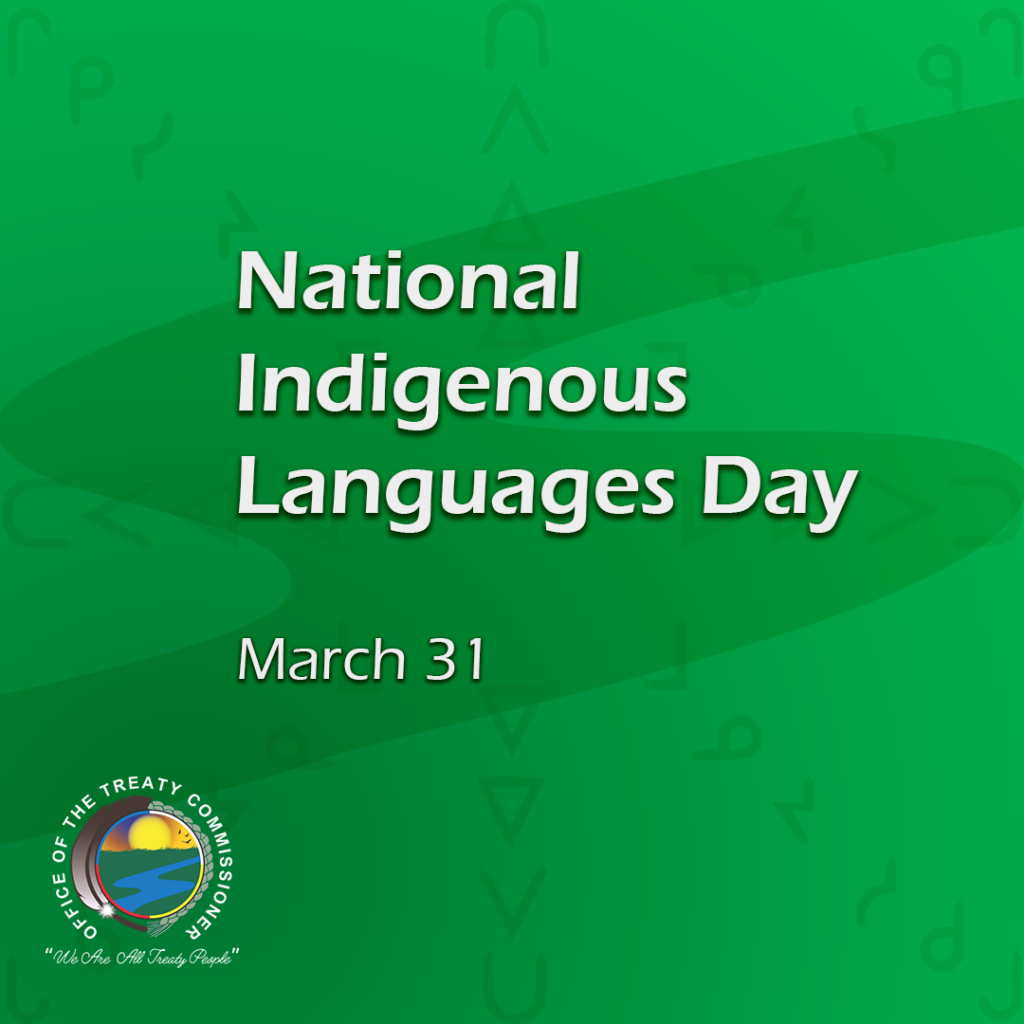
 Today is National Indigenous Languages Day, an opportunity to honour the diverse languages of the lands that make up Canada. March 31 provides the time to reflect on the importance of language as a connection to Indigenous culture, tradition, identity, and land.
“While living the Treaties, we must honour the languages that were spoken during the time of Treaty making. As the Treaties promoted peace, cooperation, and mutual respect, preserving Indigenous languages ensures the spirit and intent of Treaties are upheld,” said Treaty Commissioner of Saskatchewan, Dr. Kathy Walker.
“Language allows people to communicate their stories, ways of life, and knowledge and allows it to be passed down through generations. It’s more than preserving words, it’s about protecting and strengthening our ties as nations and with the land.”
There are more than 70 Indigenous languages across Canada.
The Office of the Treaty Commissioner celebrates the initiatives being carried out by many First Nations and language warriors as they work to revitalize and strengthen Indigenous languages. These efforts are key in maintaining traditional knowledge and ways of knowing.
As the International Decade of Indigenous Languages (2022-2032) continues, the OTC echoes the call to promote the use of Indigenous languages worldwide. The increasing normalization of Indigenous languages gives us hope that one day we can see all Indigenous languages thriving.
Today serves as a call to action for all of us to recognize the importance of these languages and contribute to their survival.
Resources on Indigenous Language
Montreal Lake Cree Nation Woodlands Cree language app
Lac La Ronge Indian Band’s Learn Cree website & resources
File Hills Qu’Appelle Tribal Council Language Learning
Statement on the identification of Ashlee Shingoose
The Office of the Treaty Commissioner is saddened to learn that the previously unknown Mashkode Bizhiki’ikwe, or Buffalo Woman (a name given by community members) has been identified as Ashlee Shingoose.
We send our prayers to Ashlee’s family, friends, and community during this difficult time and trust that this knowledge about their loved one will help them in their healing process.
The OTC is pleased to learn that Manitoba Premier Wab Kinew has promised a search to find her remains and is echoing the family’s call for it to begin swiftly, so Ashlee can finally go home.
If you are in need of immediate support;
Hope for Wellness Help Line (24/7 days): 1-855-242-3310
Missing and Murdered Indigenous Women and Girls Crisis Line: 1-844-413-6649
First Nations and Inuit Hope for Wellness Helpline: 1-855-242-3310
National Suicide Prevention Line: 1-833-456-4566