
News
International Day for the Elimination of Racial Discrimination
 Today, as we observe the International Day for the Elimination of Racial Discrimination, the Office of the Treaty Commissioner calls on everyone to stand with us against racial discrimination and injustice.
March 21 is a day to recommit to making change and to working towards the elimination of all forms of racial discrimination. We can do this by living the Treaties, by investing in true reconciliation and relationship building, and having zero tolerance for any form of racism.
The day began in remembrance of the day police in Sharpeville, South Africa, opened fire, killing 69 people at a peaceful demonstration against apartheid laws in 1960. Its significance is as important now as ever here in Saskatchewan.
It serves as a reminder of the work that still lies ahead to ensure everyone, regardless of race or ethnicity, is treated with dignity, respect, and equality.
At the OTC, we are committed to the principles of mutual respect as foundational to the relationships between Indigenous and non-Indigenous peoples. The numbered Treaties represent the promise of respect, understanding, and cooperation. These promises must be upheld. We must confront the legacies of colonialism, racism, and exclusion by taking steps to ensure Indigenous voices are heard, rights are protected, and Treaties are implemented.
On the International Day for the Elimination of Racial Discrimination, we can reaffirm our goal of building a society where all individuals are free to live without fear of prejudice or discrimination.
Statement on the recovery of Morgan Harris
The Office of the Treaty Commissioner offers our love and condolences to the family and friends of Morgan Harris. May the discovery of her remains provide her family with a sense of closure and allow their healing to continue. Morgan is finally going home and her family can say goodbye in peace.
Throughout this difficult time, the resilience and resolve of the families has been incredible as they fought to find their loved ones. Morgan’s family has demonstrated constant strength and unwavering determination in their search for justice.
We stand in solidarity with Morgan’s family and all families and communities who have lost loved ones through horrific acts of violence and who struggle to find justice.
Anyone affected by the issue of missing and murdered Indigenous people can access support through the 24-hour hotline at 1-844-413-6649.
Celebrating Our Matriarchs
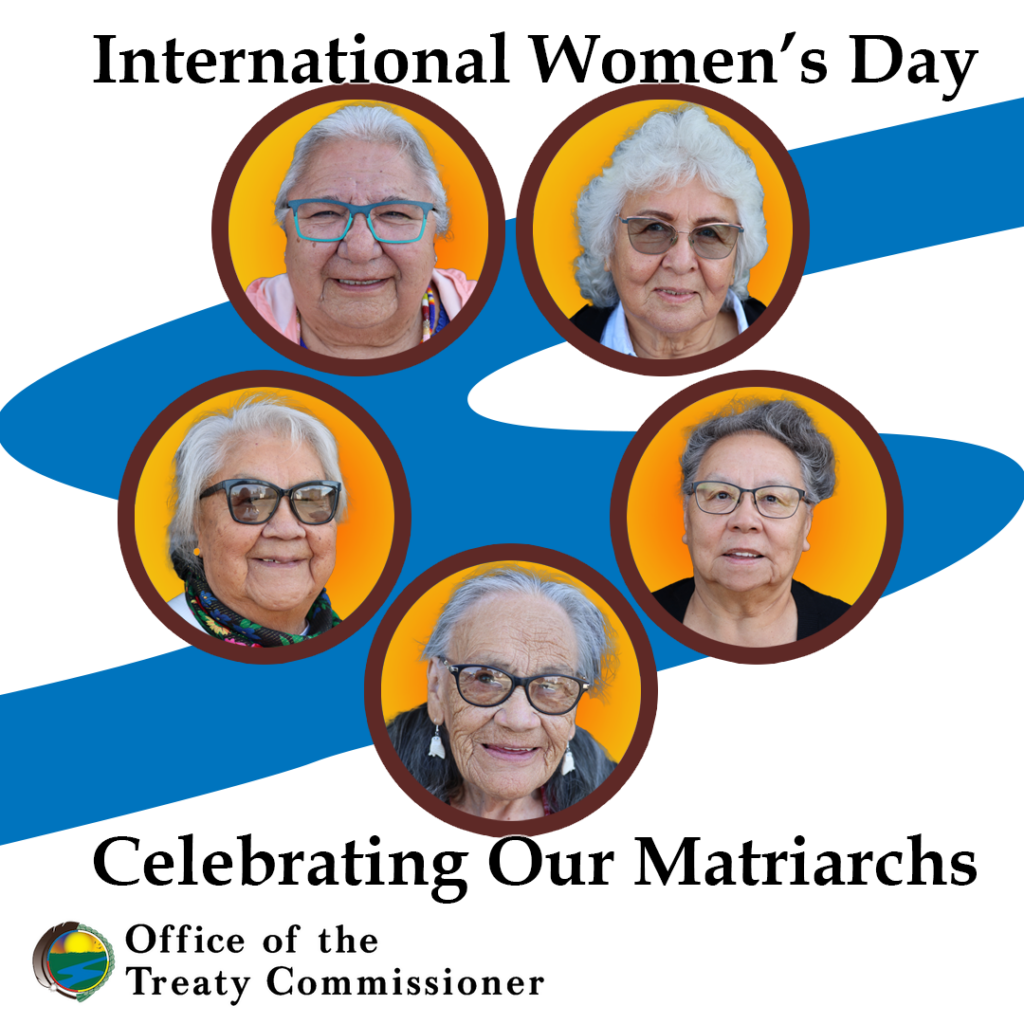
 This International Women’s Day we are Celebrating Our Matriarchs and recognizing the incredible women who sit on our Treaty Kihci-Anishinabe Atnedhe kihtehayah Council. We are so grateful for the time they share with the Office of the Treaty Commissioner team.
Chief Marie-Anne Day Walker-Pelletier
Chief Day Walker-Pelletier is a lifelong advocate of language preservation, traditions, and Treaty rights. She was Chief of Okanese First Nation from 1981 to 2020 and sat as part of the Saskatchewan First Nations Women’s Commission.
She is a member of the Order of Canada and in 2021 received a Saskatchewan Order of Merit. In June 2022 Canada Post unveiled a new stamp in her honour.
Gladys Wapass-Greyeyes
Language plays a foundational role in the transmission and preservation of culture and for more than 30 years Gladys has made this her commitment: teaching Cree (Nehiyaw) in First Nations schools including Thunderchild and Muskeg Lake.
As an Elder in Thunderchild and invited to many communities, she is a role model to many, mentoring the next generation to make a positive impact.
Senator Jenny Spyglass
Senator Spyglass made history in 2019 as the first woman appointed to the Battlefords Agency Tribal Council and the Federation of Sovereign Indigenous Nations Senate.
This comes after work as the chief and long-time councillor of Mosquito Grizzly Bear’s Head Lean Man First Nation. Her contributions were recognized with the naming of an arena in her honour in December 2024.
Senator Amanda Louison
Senator Louison has a long history of supporting women and advocating for Indigenous communities, sitting as part of the Saskatchewan First Nations Women’s Commission and a director with the Saskatchewan Indian Equity Foundation.
She was a band councillor for 12 years for the Kahkewistahaw First Nation and served as Chief for a term.
Georgina Musqua
Along with being a member of the OTC Treaty Kihci-Anishinabe Atnedhe kihtehayah Council, Georgina speaks about Treaty, Indigenous worldview, and Indigenous ways of knowing as part of the OTC Speakers Bureau. By fluently speaking her Anishinabe language and practicing her culture in everyday life, the Kihci-Anishinabe from Keeseekoose First Nation sets an example for others.
Celebrating 25 Years of Treaty Elders of Saskatchewan and Honouring Jacob Bill
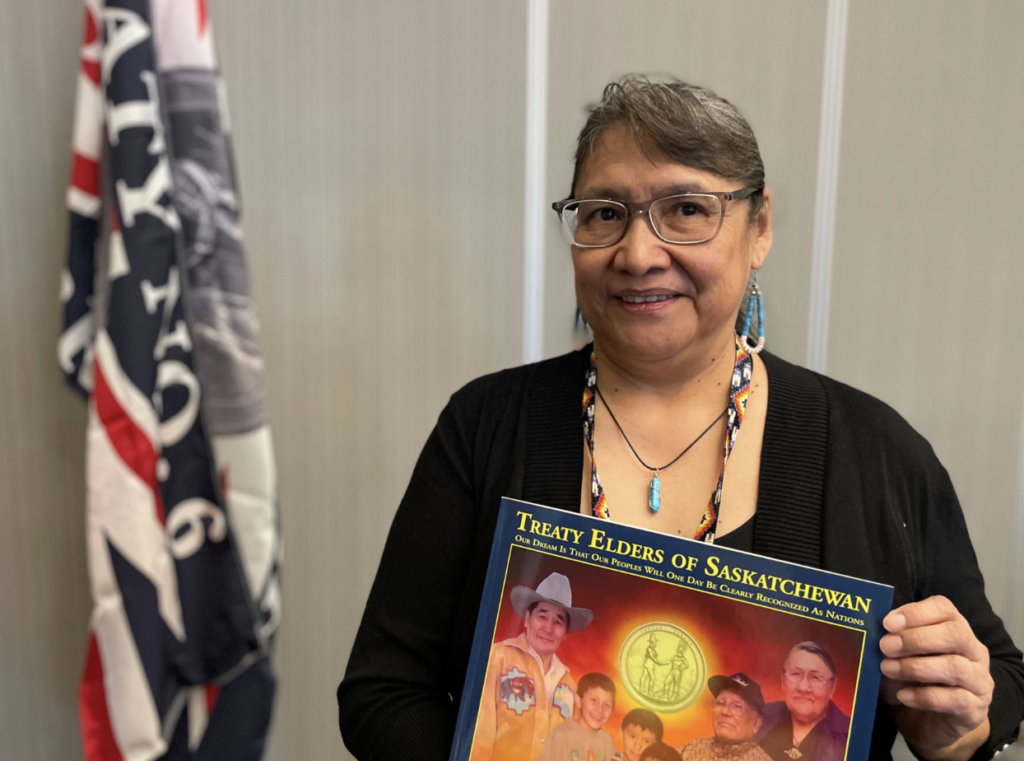
 Sasktoon, Saskatchewan – The Office of the Treaty Commissioner (OTC) launched a year of commemoration to celebrate the 25th anniversary of the book, Treaty Elders of Saskatchewan: Our Dream Is That Our Peoples Will One Day Be Clearly Recognized as Nations.
Published in 2000, Treaty Elders of Saskatchewan captures the voices and teachings of Elders from the five Treaty territories. The authors Harold Cardinal and Walter Hildebrandt conducted an extensive truth-gathering effort with the aim of gathering oral histories, traditions, and wisdom about the Treaties. This became an invaluable perspective on the historical and ongoing relationship between First Nations and Canada.
“For the past 25 years, the book has been a key resource for people working on Treaty-related issues, as it ensures that the fundamental teachings of the Treaties are preserved,” said Dr. Kathy Walker, Treaty Commissioner of Saskatchewan.
“I have had people tell me, over and over again, how often they go back to the book for information, that their copies are marked up with post-its. Treaty Elders of Saskatchewan has played a very important role in the work of academics, lawyers, policy makers, and politicians.”
Jacob Bill, who was 76 when he was interviewed for the book, remains a living testament to the wisdom shared by the Elders. He turns 101 on Mar. 7.
“It is individuals like Jacob who help deepen our understanding of Treaty,” said Chief Bobby Cameron during the event.
Despite the comprehensiveness in setting out key doctrines for living in peace and harmony with all our relations, this book remains an outline, waiting to be lived and filled in with deeper understanding by Treaty Elders today and by each one of us.
See more on the event:
Treaty commission celebrates ‘Treaty Elders of Saskatchewan’
Office of the Treaty Commissioner celebrates 25th anniversary of Treaty Elders of Saskatchewan
OTC celebrates buffalo transfer to Sask. First Nation
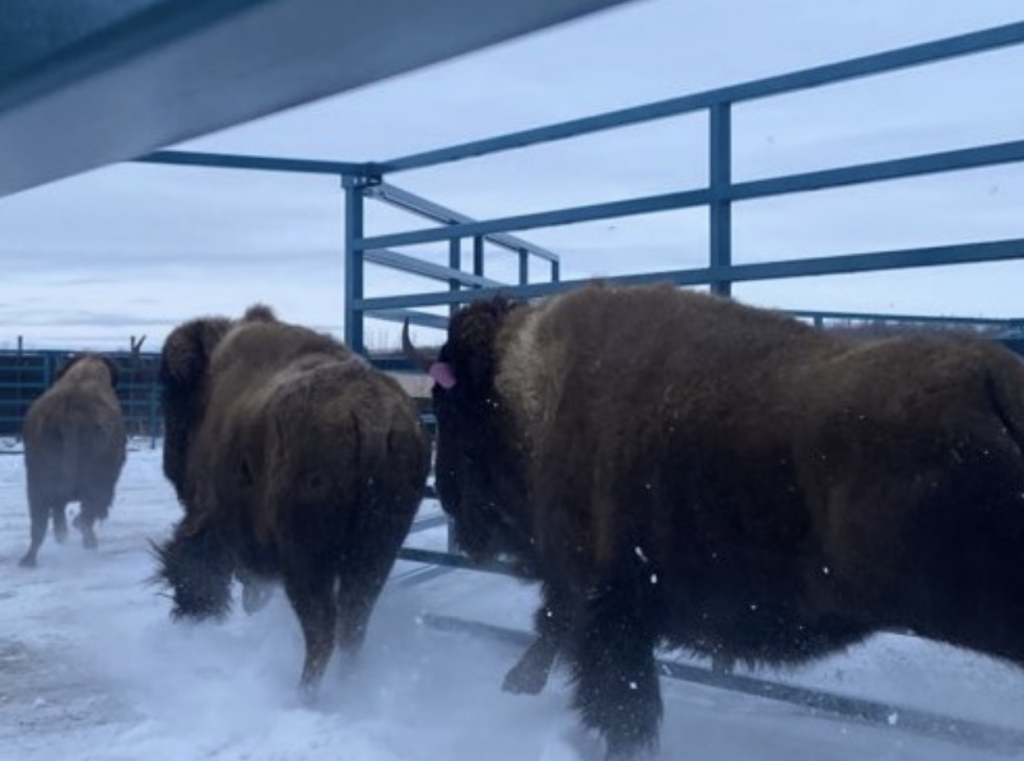
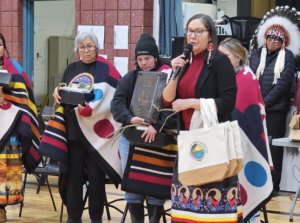
 The Office of the Treaty Commissioner team was so pleased to attend the transfer of buffalo to their traditional territory on the Mosquito Grizzly Bear Head Lean Man First Nation at the end of January.
“We got bundled up with ski pants and everything because it was so cold, but worth it,” said Hailey Morin, a First Nations Youth Mentee at OTC.
“As the drivers were pulling up a group of Indigenous drummers were singing and smudging the buffalo. Then they opened the doors to let them free. They all came running one after another and some stopped and looked at us then continued their way.”
“It was a very emotional day. We all got goosebumps when the buffalo were being transferred,” said Elaine Sutherland, OTC Director of Education.
Dr. Kathy Walker, the Treaty Commissioner of Saskatchewan, brought greetings and shared words alongside Elders, Chief Tanya Stone, Vice-Chief David Pratt, and others.
The OTC acknowledges the leadership of the Chief and Council of Mosquito-Grizzly Bear’s Head-Lean Man First Nation in signing on and implementing the Buffalo Treaty. This Treaty is about strengthening and breathing life into the First Nations’ relationship with the buffalo.
The buffalo that were transferred in this event are originally from Yellowstone National Park and were initially sent to Fort Peck Nation. As the herd grew, the Nation wanted to give buffalo to a Nation across the Medicine Line.
“It was so beautiful to have witnessed this and I’m so thankful and grateful to have been there with them,” said Hailey.
Statement on the deaths at Carry the Kettle Nakoda Nation
The Treaty Commissioner of Saskatchewan and the team at the Office of the Treaty Commissioner offer our deepest condolences to the families and loved ones affected by the loss of four people on Carry the Kettle Nakoda Nation this week.
“We were devastated to hear of the deaths and stand in solidarity with the community as they deal with this tragedy. Our hearts are with those who have lost loved ones,” said Dr. Kathy Walker, Treaty Commissioner of Saskatchewan.
The OTC acknowledges the efforts of Carry the Kettle leadership to take steps to ensure healing can begin to take place by opening the community hall for people to visit, pray and smudge.
The road ahead will be challenging, but our collective support can help carry Carry the Kettle Nakoda Nation through this difficult time. By living the Treaties, we are reminded of our shared responsibility to support one another through difficult times.
Invitation for British Crown to attend Commemoration of Treaty 6
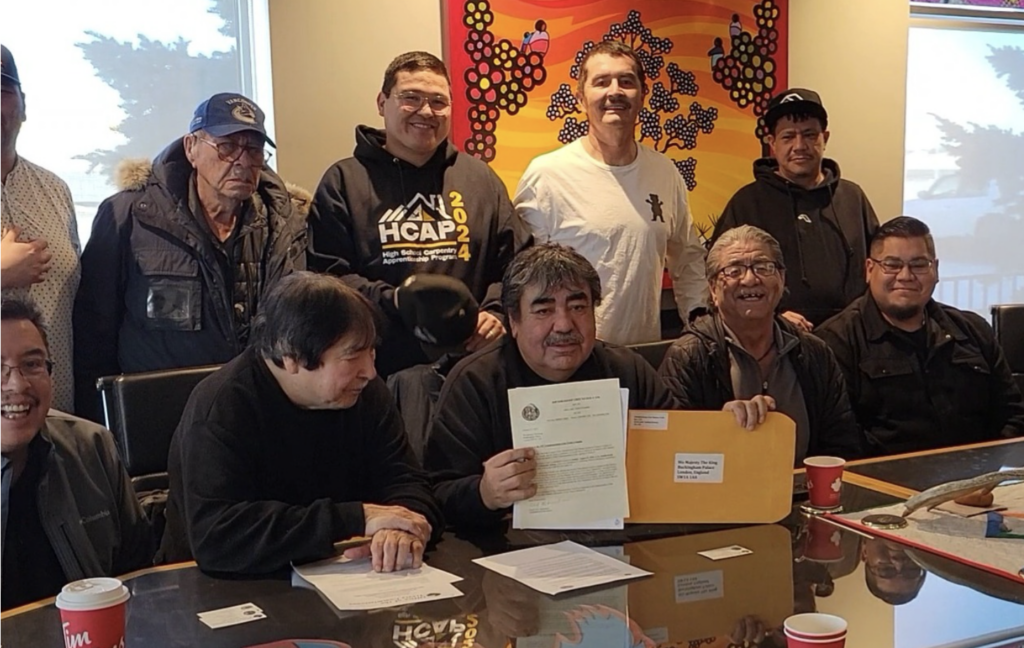
 Chief Larry Ahenakew and the Ahtahkakoop Cree Nation are extending an official invitation to His Majesty the King to attend the 150th Commemoration of Treaty 6. The Office of the Treaty Commissioner is pleased to support this significant act of Treaty renewal.
The commemoration will take place in the summer of 2026 and the attendance of the British Crown would reinforce the continuity of the Crown’s relationship with First Nations in Treaty 6 and strengthen the relationship between the Crown and First Nations.
“The significance of the pipe ceremony at the conclusion of negotiations, the oral history of our Elders, and the signing of Treaty 6 on August 23, 1876 have long demonstrated that this relationship will last for as long as the sun shines, grass grows, and rivers flow,” said Chief Ahenakew.
This landmark event will honour the collective vision of the 1876 Treaty signatories to forge an irrevocable Treaty relationship based on mutual respect, mutual sharing, peace and friendship.
“When I was approached by Chief Ahenakew about supporting the invitation, I immediately saw the importance of His Majesty’s attendance at such an important milestone,” said Walker.
“We can use our office in its role of intermediary for the Treaty Table to advocate alongside Ahtahkakoop Cree Nation, in particular to parliamentary offices and government representatives.”
This morning, the letter was signed in the OTC boardroom and it will be mailed this week.
OTC hosts Wisdom Circle Gathering
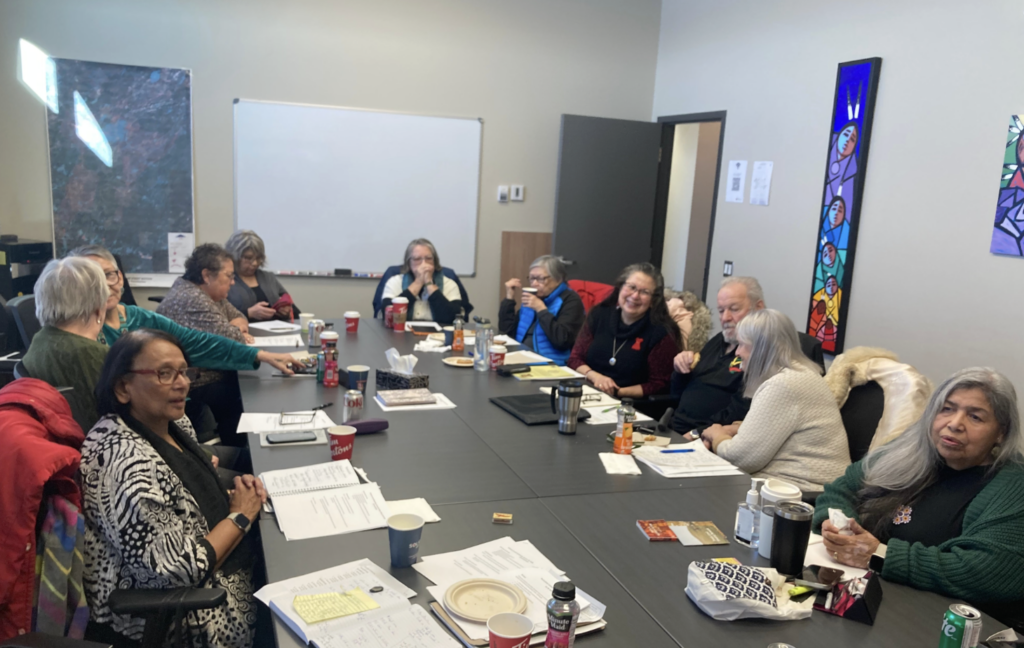
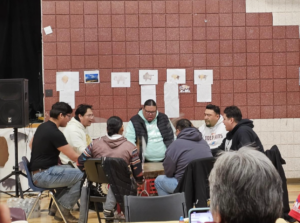
 The Office of the Treaty Commissioner was pleased to host 15 wisdom holders from Reconciliation Circles across the Treaty Territories to discuss next steps for Truth and Reconciliation work in Saskatchewan.
“It was great. They are a group of Indigenous and non-Indigenous people who care a lot about reconciliation in their communities. It’s cool to see them come together and make relationships with one another,” said Rhett Sangster, the OTC director reconciliation and community partnerships.
“They come together and talk about ways of doing things and put it into practice.”
This was the fourth time the group gathered.
This gathering is part of the work of the OTC in creating an advisory group of Indigenous and non-Indigenous wisdom holders and knowledge keepers to continue to move Truth and Reconciliation work forward in a good way.
The Reconciliation Circles are committed to Truth and Reconciliation through Treaty Implementation, which includes understanding our shared history on these lands, ensuring systems that benefit us all, and strengthening authentic relationships.
Creating a Treaty Timeline
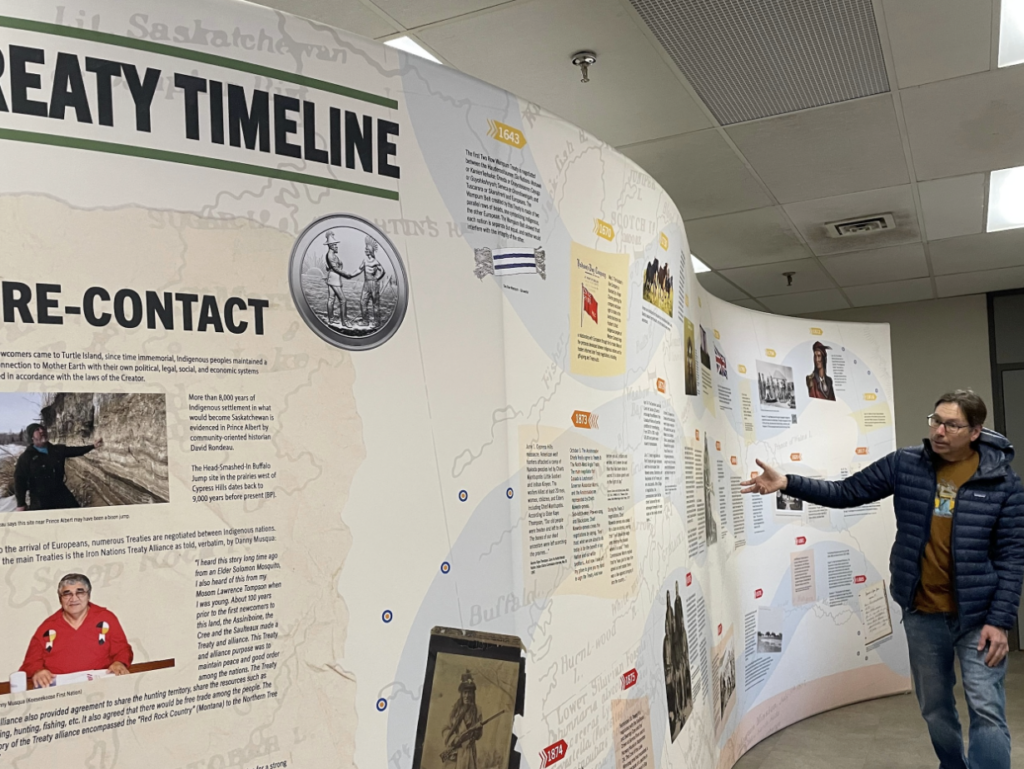
 Members of the Office of the Treaty Commissioner team got to see behind the scenes at the Western Development Museum (WDM) as a new Treaty Timeline is being prepared for display.
The massive timeline allows people to walk through Treaty history. From Pre-contact through the early and numbered Treaties to today, people can follow the journey as it flows from one date to another.
It comes as part of the memorandum of understanding between the OTC and WDM.
“We use the expertise of the WDM team in terms of museum displays in combination with our knowledge of Treaty history,” said Sheldon Krasowski, OTC director of research and archives.
Once finalized this version will be available on display at the WDM, and the OTC will have a display to take to events.
Welcoming the Winter Solstice
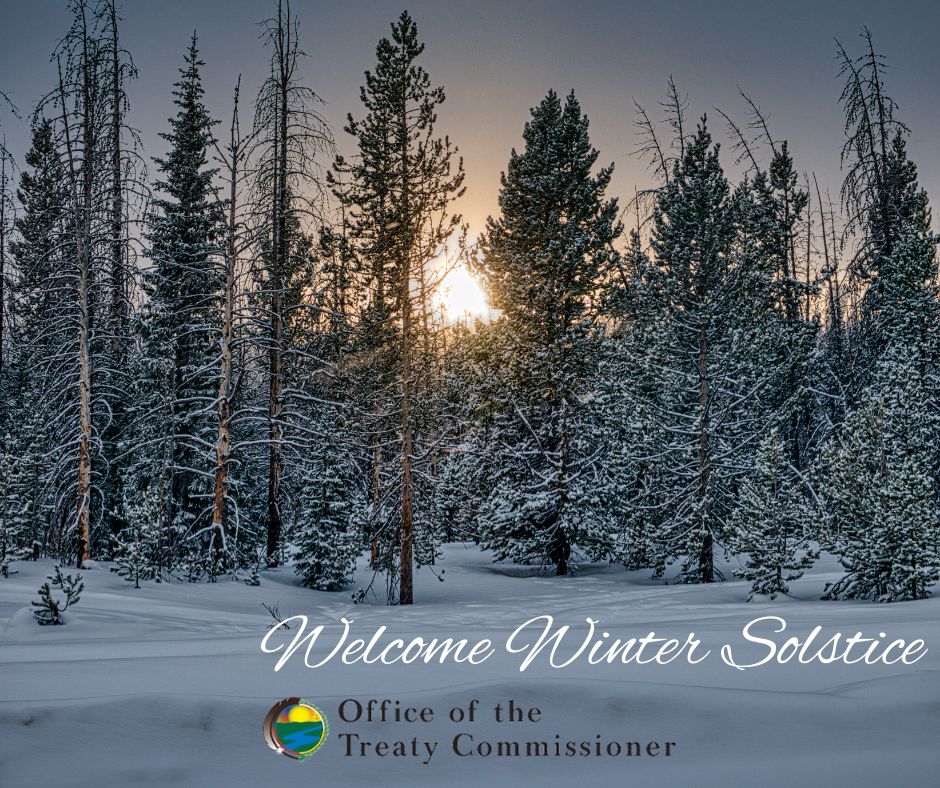
 Early Saturday morning marks the beginning of the Winter Solstice, the shortest day and the longest night of the year. It marks the beginning of winter in the Northern Hemisphere.
It’s a tradition that goes back centuries, with many First Nations taking the time of year to celebrate with ceremony and community gatherings. There is an event being hosted in Regina on Saturday by the Buffalo People Arts Institute, with a pipe ceremony, talking circle, and feast.
The solstice marks the beginning of the season for reflection and the telling of stories.
“When I think about the winter solstice in this time of year that we call December, that others may call snow moon, frost moon, it’s really important to acknowledge those start stories,” said Joely BigEagle-Kequahtooway from the Buffalo People Arts Institute in a video she created with the Royal Saskatchewan Museum about what the Winter Solstice means for her.
“For me it’s important for us to gather because it’s a time when it’s cold outside. It’s a time for meditation, reflection, the time for family, for extended family, for ceremonies, dances, feasts, and giveaways.”
Learn more about the Winter Solstice by watching these videos
A look at the importance of the winter solstice
The Importance of Winter Solstice in Indigenous Culture
What the winter solstice means in the Cree tradition | Ask an Elder
And these articles
CBC Unreserved: How solstice is helping some Indigenous people reconnect to their land, families and traditions
NDN Collective: Acknowledging the Winter Solstice is a Decolonial Act for Indigenous People
Winter Solstice and what it means to Indigenous peoples