
News
Human Rights Day
Every Dec. 10 Human Rights Day is observed to commemorate the anniversary of the Universal Declaration of Human Rights.
This document enshrines the inalienable rights that everyone is entitled to as a human being – regardless of race, colour, religion, sex, language, political or other opinion, national or social origin, property, birth or other status.
The FSIN Chiefs-in-Assembly have tasked the Treaty Governance Office to advocate for the protection and enforcement of Treaty rights and responsibilities, and to advance knowledge of and engagement with Canada’s implementation of UNDRIP.
While imperfect, the Treaty Governance Office believes that Canada’s UNDRIP Act and Action Plan are useful tools that First Nations can use to further the recognition of their rights. By hosting both virtual information and community-based engagement sessions, the Treaty Governance Office amplifies the voices of First Nations and ensures that First Nations can make informed decisions regarding how they approach the protection and enforcement of their individual and collective rights
Protecting and creating common understanding on the inherent and Treaty rights of First Nations remains at the forefront of everything we do. The work is guided by our Treaty Elders and includes education and engagement on the implications and implementation of the UN Declaration on the Rights of Indigenous Peoples, which sets out the minimum standards for the survival, dignity, wellbeing and rights of Indigenous peoples around the world.
OTC and FSIN Treaty Governance Office
Honouring Senator Jenny Spyglass
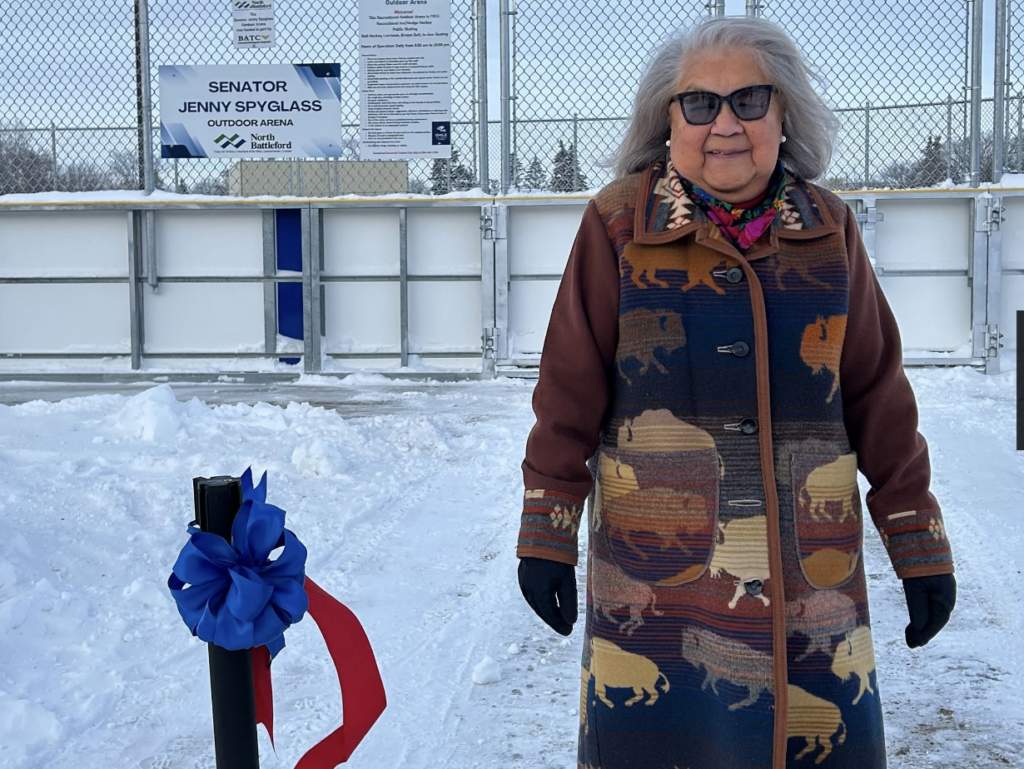
 The Senator Jenny Spyglass Outdoor Arena was officially celebrated with a ribbon-cutting this week in North Battleford.
The Treaty Commissioner of Saskatchewan, Dr. Kathy Walker was pleased to be able to attend the event honouring Spyglass and her contributions to community.
While I have personally not known Senator Jenny Spyglass for very long, she has been a valuable member of the Office of the Treaty Commissioner kihtehayak Council since the fall of 2022. In that short time, Senator Spyglass’ contributions to the OTC and our kihtehayah Council show someone who exemplifies what it means to be a residential school thriver.
In 2019, Senator Spyglass made history as the first woman appointed to the Battlefords Agency Tribal Council and Federation of Sovereign Indigenous Nations Senate. She is the former chief, and a long-time councillor of Mosquito Grizzly Bear’s Head Lean Man First Nation. She is also a Pow Wow dancer.
Spyglass retained her nehiyawewin language, and while she is incredibly eloquent in both Cree and English, she has said she regrets not speaking Assiniboine fluently as well.
As a residential school thriver, she has used the loss and pain she experienced as fuel to motivate her to help others and ensure no other child or person has to go through what she went through. She truly embodies the idea that Every Child Matters and teaches others to do the same.
She is a force at all of our Elders councils and OTC meetings. She is famous for standing up to a group who wanted to prevent the sharing of First Nations Treaty teachings.
In that situation, Elder Spyglass explained that as result of residential school, she had to re-learn Treaty teachings and was grateful that resources were available to her to learn and that Elders shared their knowledge. She stated in no uncertain terms that these teachings would continue. Her point was made so eloquently that no other Elder felt the need to speak on the matter.
I hear also that Elder Spyglass also has the distinction on the Elders Council of always being the best dressed kihtehayah at our councils, and in fact is usually the best dressed person in any room.
The Senator Jenny Spyglass Outdoor Arena is the perfect name for a space that will help children, youth and the community thrive in athletics; in recreation; and grow and learn together.
In honouring Senator Spyglass with the naming of this space, I feel her life and contributions honour us all and I look forward to working with and learning from Senator Sypglass and watching this honour continue to grow.
Read more about the opening: Ribbon cutting officially opens the Senator Jenny Spyglass Outdoor Arena
Government House launches video series
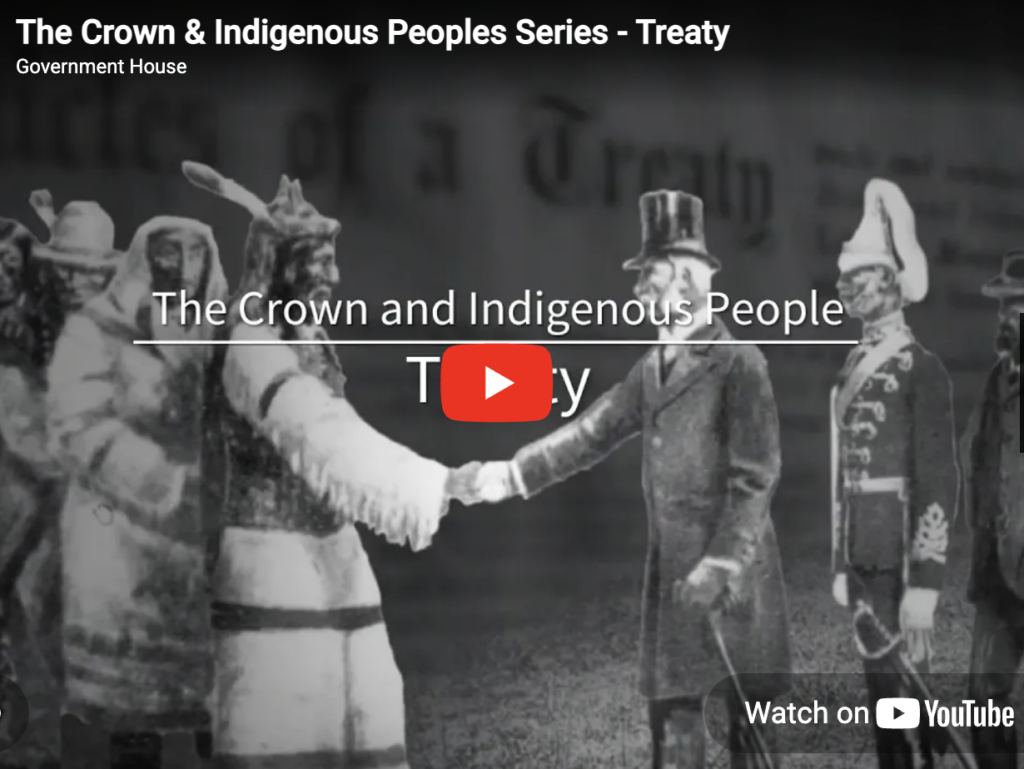
Created over the past year, the Crown and Indigenous Peoples Series features three episodes covering Treaty, Residential Schools, and Truth and Reconciliation.
The videos aim to introduce each topic and encourage questions, dialogue, and further exploration.
The series includes interviews with former Treaty Commissioner of Saskatchewan Mary Musqua-Culbertson and OTC speakers bureau member and Traditional Knowledge Keeper Lyndon J. Linklater.
Learn more about the Crown and Indigenous Peoples Series
Watch them:
Treaty
Residential School
Truth and Reconciliation
The content of this documentary series may be disturbing to some viewers as it explores the impacts of Residential Schools in Canada.
If you need help, there are services available, including: the federal Indian Residential Schools Resolution Health Support Program, and the National Indian Residential School Crisis Line which provides support 24 hours a day, 7 days a week – 1-866-925-4419.
Leading Together Awards
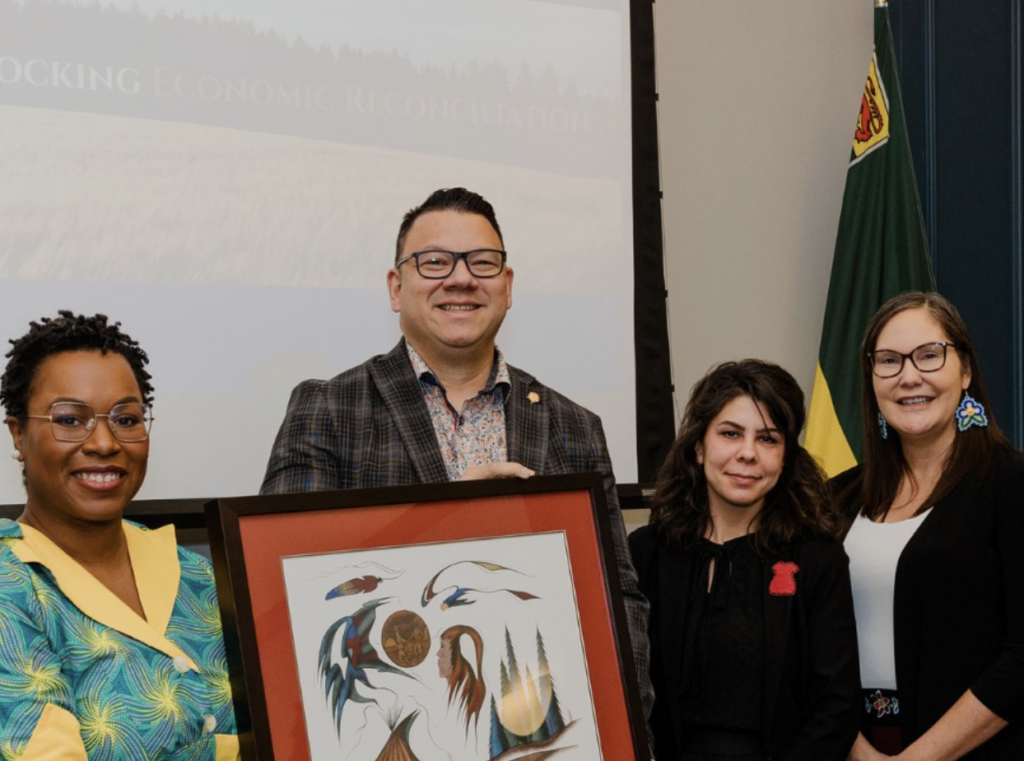
 The Office of the Treaty Commissioner was pleased to partner with Multicultural Council of Saskatchewan (MCoS) to present the Leading Together Awards in November at Government House in Regina.
The Leading Together awards recognize outstanding efforts in areas of activity including land, education, anti-racism, MMIWG2SBM, justice, health, social services, economic development, arts, language, culture, and more.
In its second year, two organizations were recognized for their work Burnt Thicket Theatre and OneHoop.
Treaty Commissioner of Saskatchewan Dr. Kathy Walker was at the event to present the awards.
OneHoop was honoured for their work in advancing Canadians’ understanding of economic reconciliation and supporting meaningful relationship-building between the corporate sector, governments and the Indigenous community.
Burnt Thicket Theatre received their award for their show We Treaty People, 9 digital audio plays and 9 interviews from a diverse group of 49 artists exploring the question, “What does it mean to embrace all our relations?
“This is a great honour and I feel very humbled to be in the room here with so many amazing people,” Steven Waldscmidt said during Burnt Thicket Theatre’s acceptance speech.
“I’d like to thank [Dr.] Kathy Walker and everyone at the Office of the Treaty Commissioner and to MCoS for the gift of these awards and this recognition as well as bringing all these people together.”
The Sarkar Family Foundation donated funds to MCoS to establish and maintain an award that recognizes long-term impactful work towards reconciliation.
Watch the video featuring the nominees
National Indigenous Veterans Day
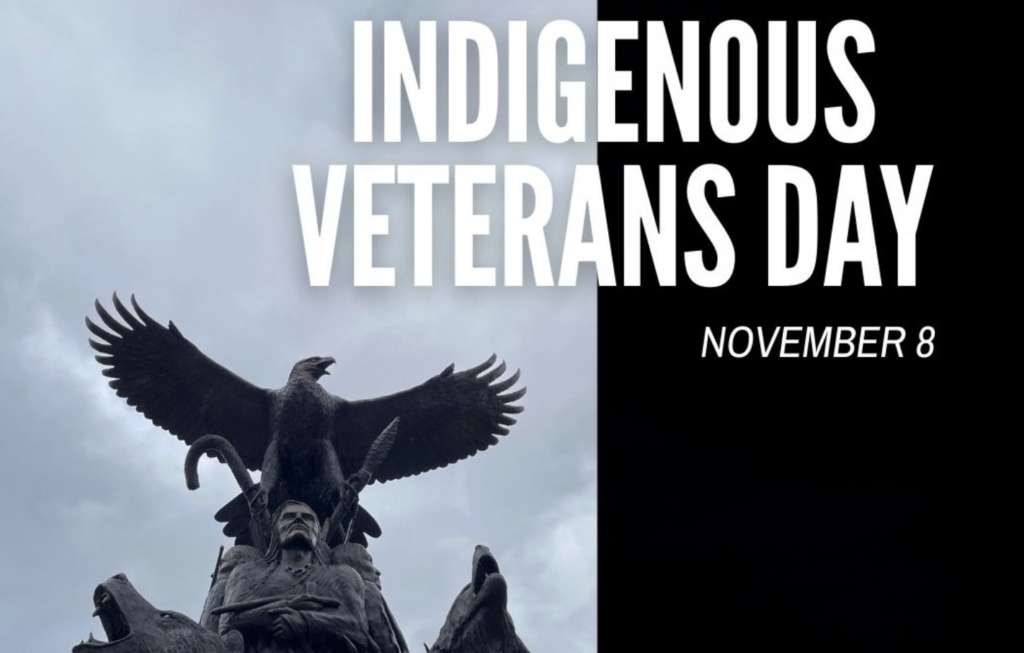
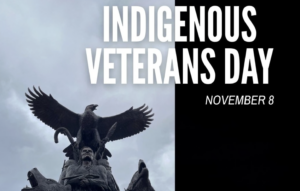 Today is National Indigenous Veterans Day. Thirty years ago, it was created as National Aboriginal Veterans Day to honour Indigenous veterans and pay tribute to their contributions in Canada’s military history.
While Nov. 8 provides an occasion to remember those who fought and those who died, it is also an opportunity to reflect on the unequal treatment faced by Indigenous People when they returned from combat.
Under Treaty, Indigenous People did not have to fight on behalf of the Queen or Canada. Yet thousands of people signed up to serve. However, during this same period, Canada expropriated reserve lands. Upon their return, Indigenous Veterans were typically denied the farmland granted to other returning Veterans. Also, they were often denied access to full benefits and support programs.
Despite serving on the front lines together, Indigenous Veterans were treated as second-class citizens, making their transition to life back home even harder.
As part of your reconciliation journey, learn more about these veterans and take time to recognize them now. Here are some resources to get started
ithiniw-simâkanisihkânak / Indian Veterans
Salamô omasinahikîwin / Written by Solomon Ratt
nêhiyawak Language Experience receives literacy award
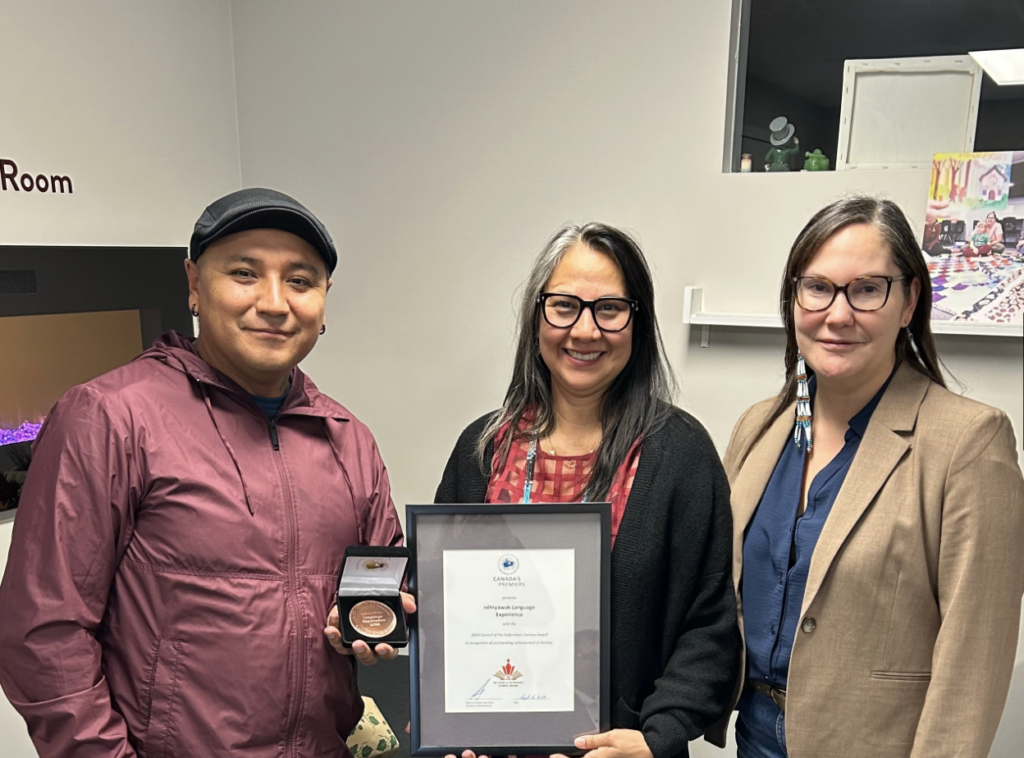
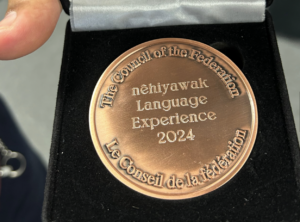
The Office of the Treaty Commissioner congratulates the nêhiyawak Language Experience (nLe) for receiving the Council of the Federation Literacy Award.
“The nêhiyawak Language Experience is so deserving of this recognition. For 20 years, they have been leaders in language revitalization, in terms of connecting language learning with being in relationship with the land,” said the Treaty Commissioner of Saskatchewan, Dr. Kathy Walker.
“The Sturgeon Lake First Nations leaders, Elders and communities have supported the land-based language learning camps of nLe and should be commended as well. Language is more than words; it contains a way of life and learning your language also contributes to your Treaty learning journey.”
The program was founded in Sturgeon Lake, to offer language experience and education through workshops, lectures and community projects, including the Sturgeon Lake Multifaceted Language Revitalization Project. The summer offerings often become family-orientated events. Children are cared for and learn in a play-based environment while adults take part in teacher-hosted opportunities.
The Council of the Federation Literacy Award was created to recognize outstanding achievement, innovation and excellence in literacy in each of Canada’s provinces and territories.
The Commissioner attended the award ceremony on Tuesday, Nov. 25, to congratulate co-founder and assistant professor at the University of Victoria, Belinda Daniels, and nLe language teacher Randy Morin, assistant professor of Indigenous Studies at the University of Saskatchewan.
OTC statement on the passing of Murray Sinclair
The Office of the Treaty Commissioner was heartbroken to hear of the passing of Senator Murray Sinclair, the Chair of the Truth and Reconciliation Commission into residential schools.
A member of Peguis First Nation signatory to Treaty One, Sinclair was born in 1951, before Indigenous people had the right to vote, Sinclair grew to be a key figure in Indigenous advocacy as a judge of 28 years and a Canadian senator.
The 2015 final report of the Truth and Reconciliation Commission included the 94 Calls to Action, which are the foundation of reconciliation work in Canada today. Sinclair believed strongly in the role of education in this work
“Education is the key to reconciliation,” he said. “Education got us into this mess and education will get us out of it.
We extend our condolences to the family, friends, community, and the hundreds of thousands of lives Sinclair touched through his work. During this difficult time, our thoughts are with those who grieve his passing.
We can honour his life by continuing the work of his enduring legacy—advocating for and advancing truth and reconciliation.
Statement on the passing of Elder Gilbert Kewistep
The team at the Office of the Treaty Commissioner extends our deepest condolences to the family, friends, colleagues, and the people touched by the life and work of Gilbert Kewistep.
Originally from the Yellow Quill First Nation, the Elder, Knowledge Keeper, and Residential School Survivor made his home in Saskatoon where he was actively involved in community work with Elders, organizations, and students.
He believed in creating meaningful change through sharing the culture and history of Indigenous people in this province and country — and the effects of residential schools, reconciliation, and the sixties scoop. Kewistep engaged with the City of Saskatoon on several projects including the Chief Mistawasis Bridge Naming. He also supported the Saskatchewan Health Authority as a cultural advisor.
The OTC created a close relationship with Kewistep as he was actively involved in the creation of Reconciliation Circles in Saskatoon, Yellow Quill, and Prairie Rivers Reconciliation. He was a good friend and teacher to many on the OTC team, in particular to Rhett Sangster, director, reconciliation and community partnerships.
“He raised his pipe for us, shared his residential school story, and famously told us there could be ‘no more baby steps,’” Sangster said. “We are grateful for his love and support. He will be missed.”
We mourn the loss of Kewistep whose contributions touched the lives of many. During this difficult time, our thoughts are with those who are grieving as we honor his memory.
Treaty Learning Journey: Let’s Talk Truth Conference
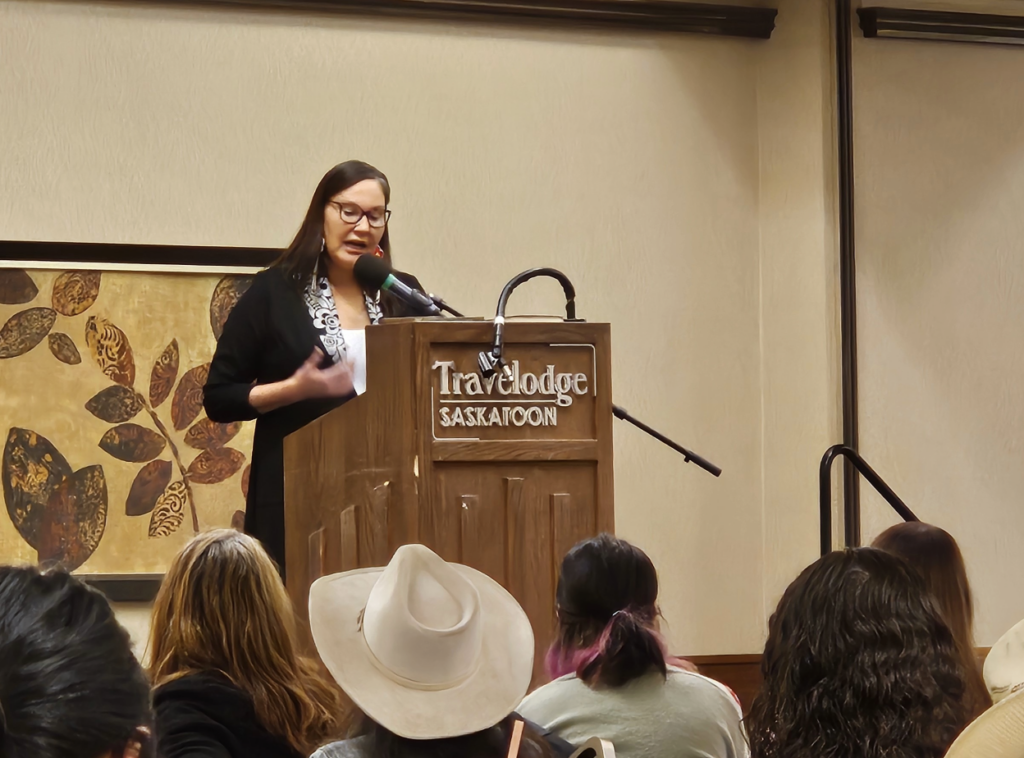
 The Office of the Treaty Commissioner’s Treaty Learning Journey: Let’s Talk Truth Conference, held at the end of October, was a success.
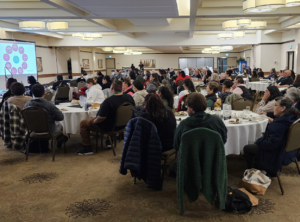
More than 160 people filled the conference room at the Travelodge in Saskatoon for discussion and learning on Indigenous culture and worldview, life before Treaties, Treaty-making and the historical Numbered Treaties, the Spirit and Intent of Treaties, breaches of Treaty, and modern Indigenous issues.
“Everyone was excited to learn. There was a lot of active participation and questions, which kept the conversation flowing,” said Charmaine Gardiner, the OTC’s Treaty Learning Network Coordinator.
Like any difficult conversation and topic, there were laughter, tears, and hugs, as people heard about the lasting impacts of residential schools.
The sessions were led by Elaine Sutherland, OTC director of Treaty Education as well as members of the OTC Speaker’s Bureau: Lyndon Linklater and Sharon Meyer. The keynote speaker on the opening day of the conference was Dr. Kathy Walker, the new Treaty Commissioner of Saskatchewan.
To follow each session, we had Keep the Conversations Going discussions led by amazing facilitators which included Cort Dogniez, Angela Cousins, and Dale Worme. There were also facilitated groups on how to bring the learnings into a classroom setting targeted for educators.
Support staff was available throughout the conference, including Elders and the Yorkton Tribal Council mental health support workers.
During lunch each day, there was entertainment, including drummers led by TJ Warren, and the father-son duo the Boyer Boys fiddling, with participants jigging.
Many participants expressed their gratitude to the OTC team for the valuable learning opportunity and emphasized how important the storytelling was in making the information relatable.
In the days following the conference, a number of people have reached out to let the OTC know they are encouraging their management teams to host the Treaty Learning Journey: Let’s Talk Truth for their organizations, so all of their co-workers can gain the same knowledge and understanding.
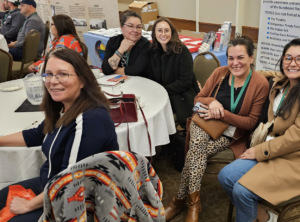
OTC celebrates the MLCN Cree Language App
Office of the Treaty Commissioner congratulates Montreal Lake Cree Nation for the launch of their Cree Language App.
MLCN recorded language keepers and created the app to assist in their language reclamation journey. The app features 46 categories with 1,150 words and phrases that the Language group has contributed to. Both the app and the materials on the website create a foundation to continue reclaiming language through documentation and creating resources that are user friendly.
MLCN has created language learning resources drawing from the language app to connect users to visual images, games and word finds that are posted on a Cree language website under the nihithawiwin (Woodland Cree) language tab.