
News
Treaty 6 Commemoration
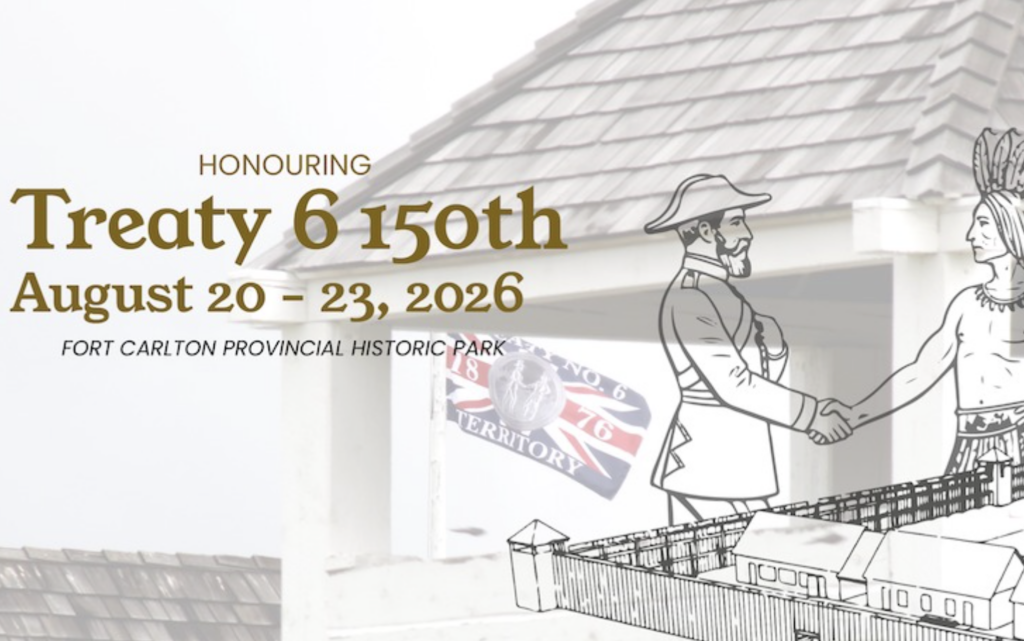
 As Treaty 6 approaches its 150th anniversary, the Office of the Treaty Commissioner is pleased to support the Treaty 6 First Nations with their commemoration events.
In 1876, First Nations and the Crown entered into Treaty 6 at Fort Carlton on August 23, at Chief Kamiscowesit’s (Beardy’s) campsite on August 28, and at Fort Pitt on September 9. The agreement, grounded in promises of mutual benefit and shared prosperity, endures as a covenant between peoples.
From August 20–23, 2026, commemorations will take place at Fort Carlton Provincial Historic Park, offering an opportunity to honour the Spirit and Intent of Treaty and reaffirm commitments for future generations.
The anniversary is about more than history, Treaty Commissioner of Saskatchewan, Dr. Kathy Walker said.
“The Treaties are not relics of the past. They are living agreements. Living the Treaties means understanding our shared responsibilities and working together in the spirit they were intended.”
The OTC is inviting communities to reflect on a living agreement that continues to shape relationships across the Prairies.
The words spoken at the negotiations still resonate today
“What we speak of and do now will last as long as the sun shines and the river runs, we are looking forward to our children’s children, for we are old and have but few days to live” said Chief Weekaskookwasayin in 1876.
As part of the commemoration, organizers have launched the Treaty 6 150 Logo Contest, calling on artists to design an emblem reflecting the Treaty’s history and living legacy. The selected logo will be featured across events and materials, marking this once-in-a-generation milestone.
Treaty 6A Adhesion Commemoration
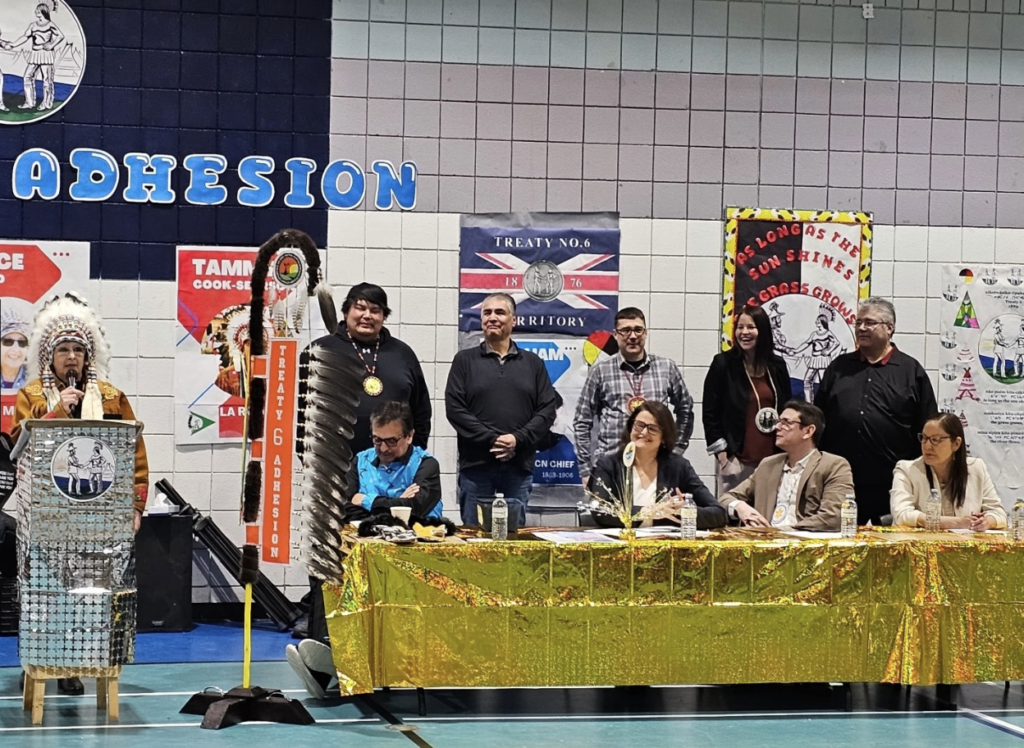
The Treaty Commissioner of Saskatchewan and Office of the Treaty Commissioner staff were pleased to be able to attend the 137th commemorative gathering of Treaty 6A in Montreal Lake Cree Nation this week
“Gatherings like this are so important to understanding treaty history especially of Treaty 6A and of those nations,” said Treaty Commissioner, Dr. Kathy Walker.
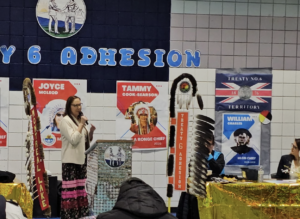
More than 100 people filled the Senator Allan Bird Memorial School gym. The event got underway with a grand entry led by flag carriers and two eagle staffs.
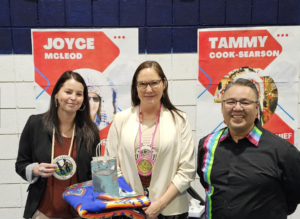
The Chiefs of the three signatory first nations spoke about upholding Treaty and Treaty Rights – Chief Peter A. Beatty of Peter Ballantyne Cree Nation, Chief Tammy Cook-Searson of Lac La Ronge Indian Band, and Chief Joyce Naytowhow McLeod of Montreal Lake Cree Nation.
Also in attendance was Premier Scott Moe, cabinet ministers, and members of the opposition.
These events are a way to educate youth and create space for knowledge keepers to share the oral histories, said Walker. The Office of the Treaty Commissioner’s Treaty Timeline was on display.
“It’s a way for people to talk about Treaty 6A, acknowledge the importance, and connect with one another.”
After the official close, everyone gathered for a feast of fish and moose meat, harvested by youth and Elders for the event.
The commemoration was held Feb. 10 because Feb.11, the Treaty signing day, was declared a public holiday on Montreal Lake Cree Nation.
There was a call to host the event on Feb. 11 next year at Molanosa, where Treaty 6A was signed.
“Because then it helps the history come alive even more. The exact place when the Treaty was signed and the exact time,” Walker said.
Gordon Denny Community School Treaty Installation
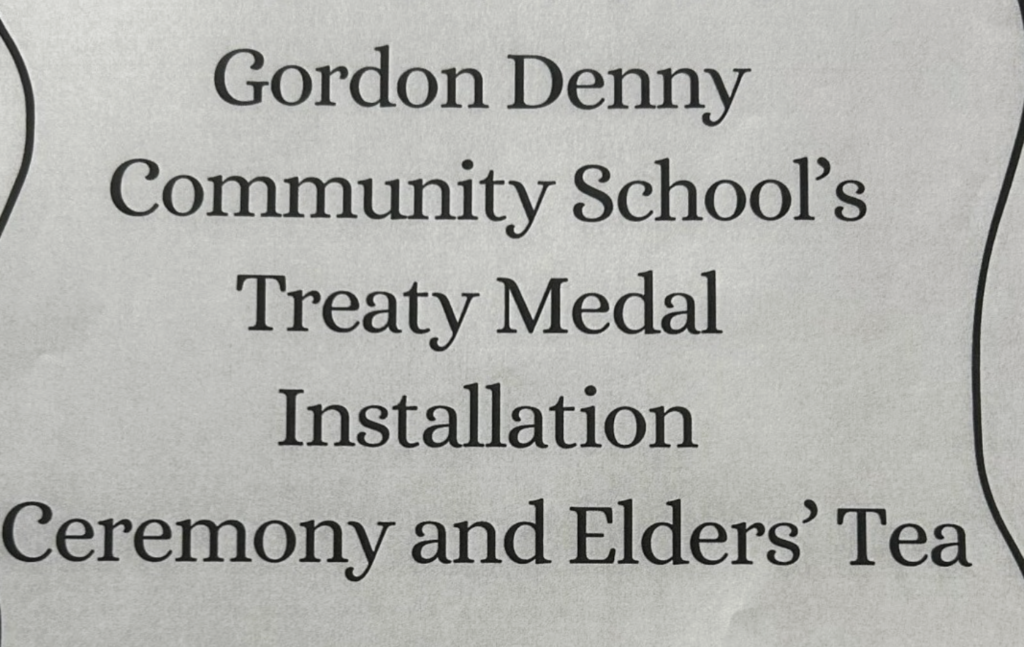
 The Office of the Treaty Commissioner would like to thank the staff and everyone involved at the Gordon Denny Community School for making your wonderful event possible.
We are so proud of the work that you do in learning and teaching Treaty Education. To the staff, this is a wonderful learning opportunity that you have given to these students, and to the students, thank you for learning about the Treaties.
In order to move forward into the future, we need to learn our true history. We would also like to give a special thank you to kitehe-aya Tom Roberts for his work that he does with you.
OTC is very proud for Tom to be a member of OTC’s Treaty Kihci-Anishinabe ??nedhe Kihteyayah Council. We truly treasure the knowledge he has and shares with you.
Your Treaty medal installation marks the start of honouring our history. It symbolizes the commitment and agreement made between the First Nations People and the Crown. As your Treaty medal is presented, it will honour the Chiefs and the Treaty negotiations that were put forth for future generations. More specifically for the 137 years of Treaty 6A, since 1889.
When you see the Treaty Medal, we would like you to remember what those symbols represent, and why they are so significant. It is important that we continue to acknowledge and learn Canada’s history with Indigenous people. We cannot forget the Treaties as they are the foundational building blocks of Canada, therefore it is important that we honour the Spirit and Intent of Treaties. As long as the sun shines, the grass grows, and the rivers flow!
Winter Solstice
Dec.21 marks the Winter Solstice when the sun is farthest away from the equator, making it the darkest and shortest day of the year in the northern hemisphere.
The solstice is significant for many Indigenous Peoples including First Nations, Inuit, and Métis. Some communities hold special gatherings and ceremonies, while others take time for reflection. In Regina the Buffalo People Arts Institute is hosting a pipe ceremony, talking circle, and feast.
“The winter solstice is the opportunity to gather, to connect with one another, and to share stories of what we have learned over the past year,” said Treaty Commissioner of Saskatchewan, Dr. Kathy Walker.
“Taking time to celebrate the solstice is about living the Treaties. It is about regaining the teachings, practices, and ceremonies from our cultures.”
The solstice marks the beginning of the season for reflection and the telling of stories, some of which are exclusive to the winter season. For many the time of darkness is an opportunity for rest and to go inwards with care for selves, loved ones, and families.
It’s also a vital turning point in the year with the return of the sun. Many Inuit communities celebrate Ullukinneq, signifying renewal and survival with country food, storytelling, drum dancing, and honoring ancestors.
Additional Winter Solstice Reads:
Acknowledging the Winter Solstice is a Decolonial Act for Indigenous People (NDN Collective)
Winter solstice: A time of celebration, reflection and traditions for Indigenous people (Stats Canada)
How solstice is helping some Indigenous people reconnect to their land, families and traditions (CBC Unreserved)
Visiting the Treaties
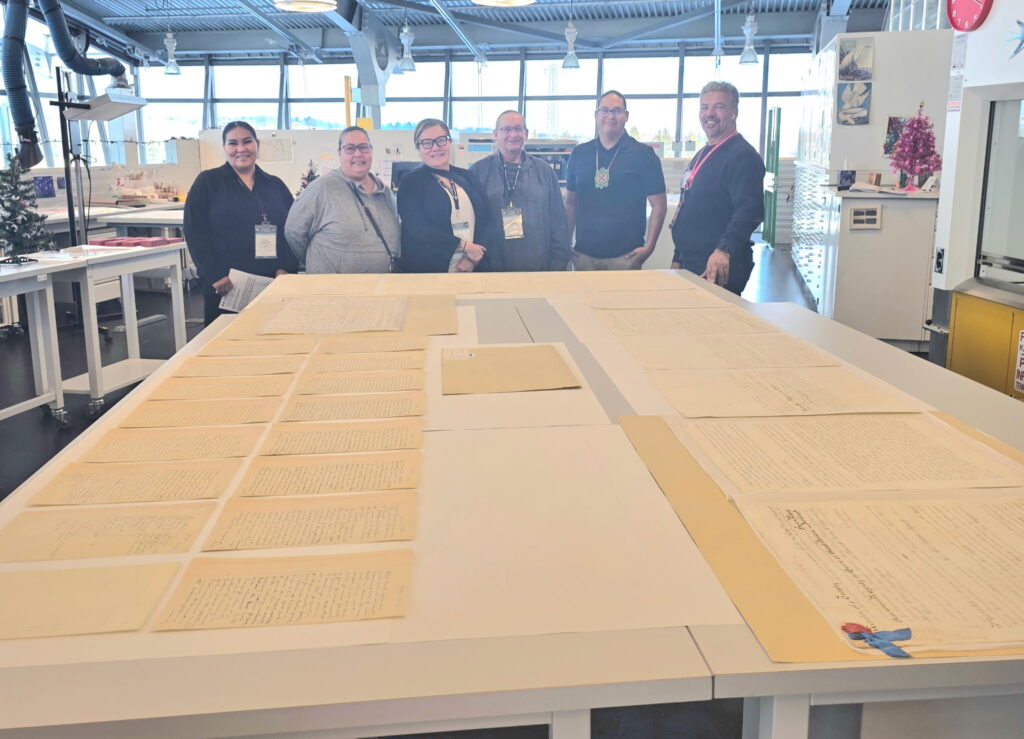
On Dec. 4, Chiefs and Councillors with ancestors that signed Treaty 4, Treaty 6 and Treaty 10 participated in a tour of the Preservation Centre in Gatineau, Quebec organized by the Office of the Treaty Commissioner and Library and Archives Canada.
Five original Treaties were viewed: Treaty 1 signed in 1871; Treaty 4 signed in 1874; an adhesion to Treaty 4 signed in 1875 at Qu’Appelle Lakes; Treaty 6 signed in 1876 and Treaty 10 signed in 1906. In addition, the Selkirk Treaty signed in 1817, was also available for viewing.
“It is quite moving to see the original Treaty parchments as they are foundational to the history and governance on our lands,” said Commissioner of Saskatchewan, Dr. Kathy Walker.
“These original Treaty parchments strengthen our connection with our Treaty ancestors who once stood where we stood to affix their mark or touch the pen agreeing to the Spirit and Intent of Treaty.”
Many of the parchments are now 150-years-old as Treaties 1 to 5 have commemorated 150 years in the last five years. Treaty 6 will commemorate 150 years in 2026.
As its name indicates, the Preservation Centre stores the Treaties in special humidity controlled vaults to protect and preserve them for future generations. Nobody is allowed to touch the parchments without gloves.
“What struck me is the distinctness of each of the Treaty parchments” said Commissioner Walker. “The seals, the type of paper, and even the handwriting indicate different approaches to Treatymaking as time progressed.”
The Selkirk Treaty was of particular interest to participants because Treaty leaders signed not with an ‘x’ but with their clan ‘totems’ or their clan symbol to identify themselves.
The OTC is working with First Nations leaders and the Preservation Centre to bring the original Treaty Texts to Saskatchewan for viewing by all Treaty citizens.
Saskatchewan NDP honours former NDP MLA, Joan Beatty
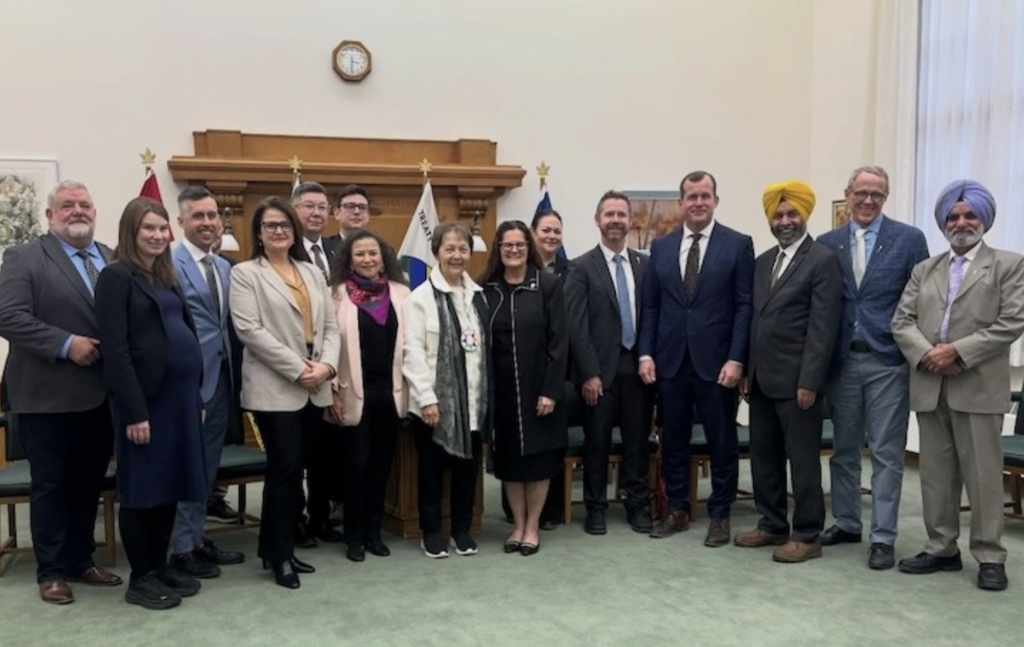
 In November Joan Beatty, the first Indigenous woman ever elected to the Saskatchewan legislature, was honoured at an event hosted by Saskatchewan’s NDP MLAs at the legislature.
Beatty served as the MLA for Cumberland from 2003 to 2008 before becoming the first Indigenous woman appointed to the Saskatchewan cabinet, serving as Minister of Culture, Youth and Recreation and Provincial Secretary.
“Joan is a trailblazer and has been a strong voice for northern people ever since I’ve known her,” said Treaty Commissioner of Saskatchewan, Dr. Kathy Walker. “She’s provided invaluable support and mentorship to so many and continues to be a strong community builder.”
Beatty was born in Deschambault Lake and is a member of the Peter Ballantyne Cree Nation. Prior to entering politics, she built a respected career in journalism as a broadcaster with the CBC, where she helped bring Indigenous voices, stories, and perspectives to a wide audience.
Throughout her career Beatty has demonstrated strong leadership grounded in community, culture, and public service.
Learn more about the event
Saskatchewan NDP honour Joan Beatty, first Indigenous woman elected as MLA (CTV News)
Saskatchewan NDP honours former NDP MLA, Joan Beatty (APTN News)
OTC at the Touchwood First Nations’ Elders Gathering
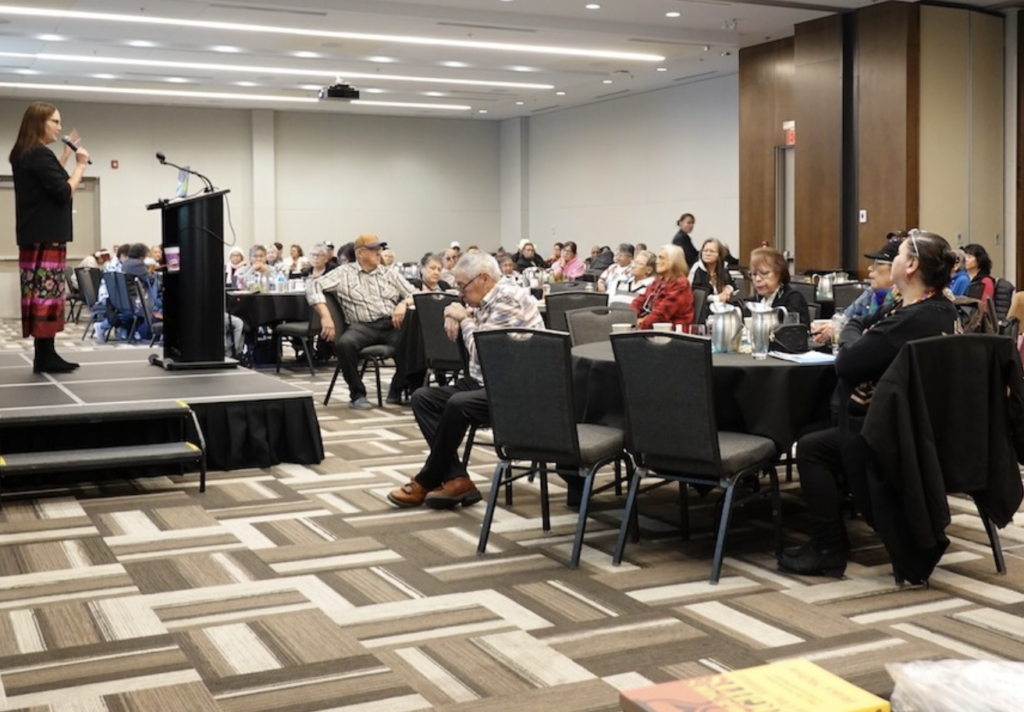
The Gathering brought together approximately 100 Elders from the Touchwood Hills region. Citizens and Elders from Muskowekwan, Daystar, and Kawacatoose First Nations—members of the Touchwood Agency Tribal Council—took part in the two-day event focused on knowledge sharing, history, and intergenerational learning. The oldest Elder in attendance was 91 years old, representing Kawacatoose First Nation.
Chief Wanda Whitehawk (Daystar), Chief Leanne Kehler (Kawacatoose), and Chief Cynthia Desjarlais (Muskowekwan) attended to support their Elders and participate in discussions on Treaty history and contemporary issues.
Senator Bill Armstrong of Kawacatoose played a central role in organizing the gathering, which included presentations by speakers from Touchwood First Nations as well as the Office of the Treaty Commissioner and the Saskatchewan Indigenous Cultural Centre.
“We were pleased to be invited to be part of the gathering and present on Treaty issues such as repatriation and annuities,” said Treaty Commissioner of Saskatchewan, Dr. Kathy Walker. Director of Research and Archives, Sheldon Krasowski, and the Commissioner, enjoyed visiting with and learning from the Elders.
“Being welcomed into this circle of knowledge is an honour,” said Dr. Walker.
“Our Elders ground us in the spirit and intent of the Treaties, and their teachings guide the work we continue to do today.”
The OTC team spoke on foundations of Treaty, contemporary Treaty issues, the work of Treaty education in Saskatchewan, as well as the importance and process of repatriation in Canada.
Leading Together: Healing the Past – Empowering the Future Awards
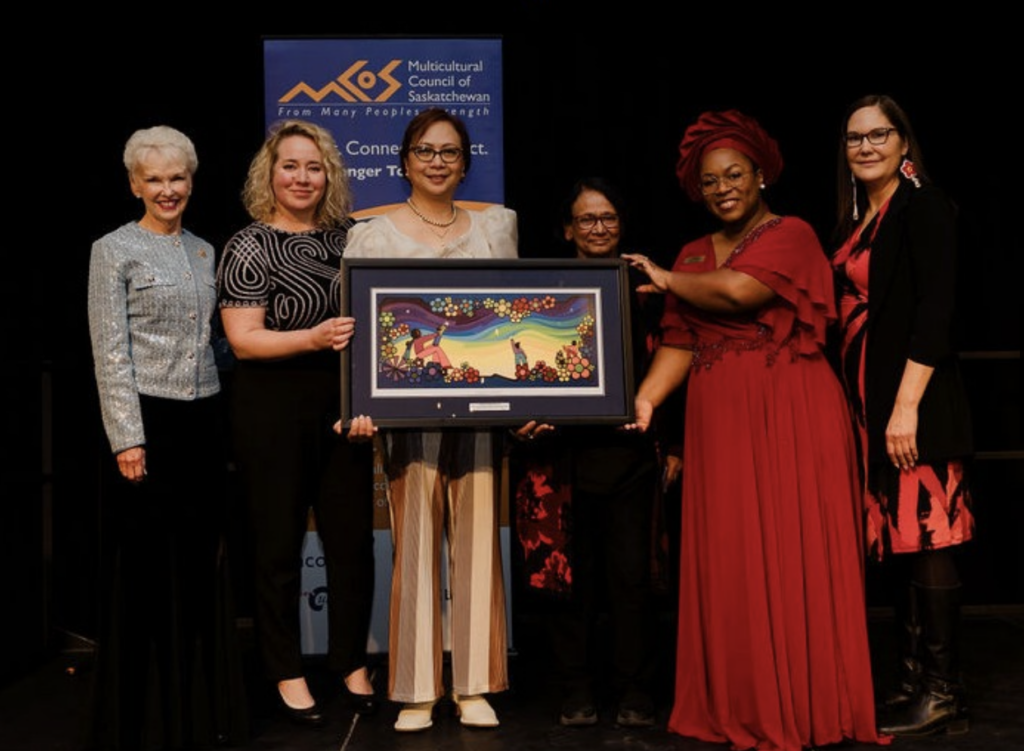
 The Office of the Treaty Commissioner and the Multicultural Council of Saskatchewan partnered to present Leading Together: Healing the Past – Empowering the Future Awards in Regina on Nov. 22.
Two awards are presented annually to an individual and an organization to recognize their long-term impact towards truth and reconciliation. Recipients demonstrate long-term commitment to fostering understanding, healing, and collaboration between Indigenous and non-Indigenous communities, to honouring the spirit and intent of treaties, and to active engagement in initiatives that address the legacy of colonization, systemic inequality, and intergenerational trauma.
This work is often related to issues and/or areas of activity including land, education, anti-racism, MMIWG2SBM, justice, health, social services, economic development, arts, language and culture.
The individual award went to Lindsay ‘eekwol’ Knight, a trailblazer in Indigenous hip hop, who has dedicated over two decades to advancing truth and reconciliation through her art, educational leadership and community engagement. She was the first Indigenous Storyteller-in-Residence at the University of Saskatchewan and is currently pursuing a PhD.
The organization award was presented to The Truth and Reconciliation Committee of Swift Current and Area. Since 2017, this Committee has consistently organized and delivered programs, events and activities with truth as the cornerstone while working toward reconciliation in their community.
Treaty Commissioner of Saskatchewan, Dr. Kathy Walker was pleased to present the awards to the incredible recipients.
These awards are made possible by a generous donation of the Sarkar Family Foundation
OTC’s First Treaty Youth Gathering
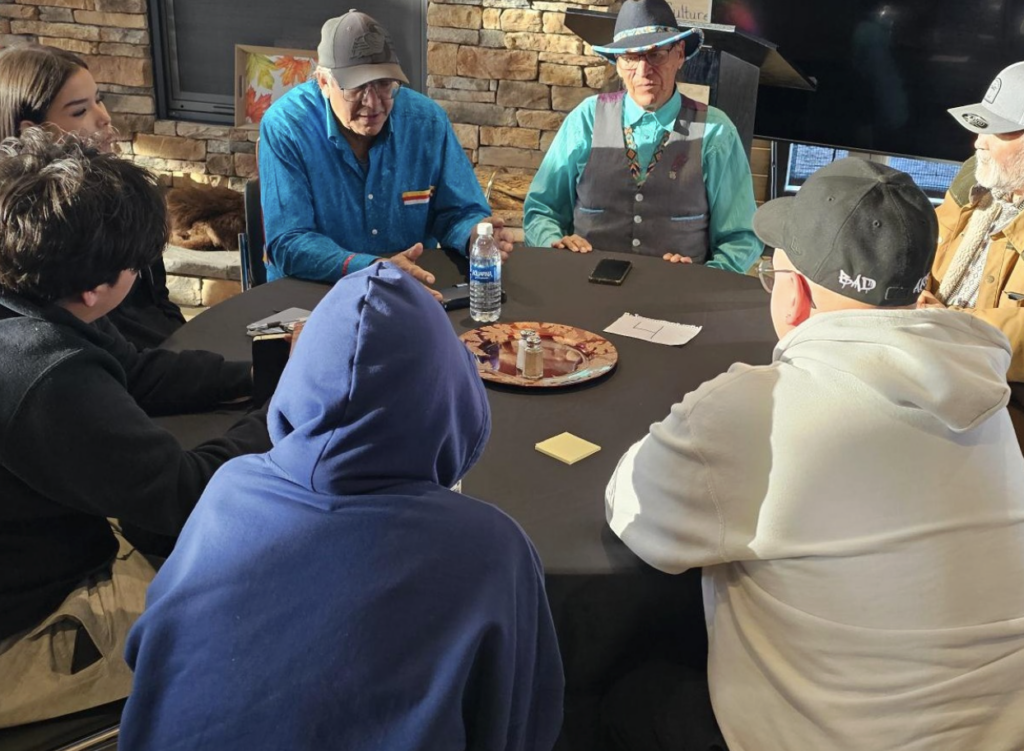
 The Office of the Treaty Commissioner hosted the first Treaty Youth Gathering on Nov. 14, welcoming youth from One Arrow First Nation, Beardy’s & Okemasis Cree Nation, and Muskoday First Nation. With the theme Youth Empowerment through Treaty Education, the day focused on giving the 45 young people space to learn, speak, and lead.
Leadership from each nation joined the event, along with FSIN Chief Bobby Cameron and Vice-Chief Fabian Head, who both shared messages of encouragement to the youth. Chief Cameron even offered a quick Cree lesson as a reminder that language revitalization starts one word at a time.
The youth were introduced to the day’s theme before diving into a Treaty crash course and a round of Treaty Jeopardy, which was a favourite.
In the afternoon, everyone moved into smaller groups to explore key areas of Treaty relationships—between First Nations and the Crown, with the land, through oral histories, and within themselves. Elders and leaders supported these conversations, creating a safe space where youth felt comfortable asking questions and being heard.
“The day was about learning to live the Treaties, which is the blueprint for reconciliation. To see youth actively involved is incredible,” said Treaty Commissioner, Dr. Kathy Walker.
The gathering ended with talking circles and final messages. Youth told us they appreciated the small size of the gathering because it made it easier to speak openly. Youth also asked that this not be a once-a-year event, but something held quarterly so they can continue building on what they learned.
Before heading home, each youth received a Treaty Youth Gathering bunnyhug and a backpack.
Honouring Indigenous Veterans
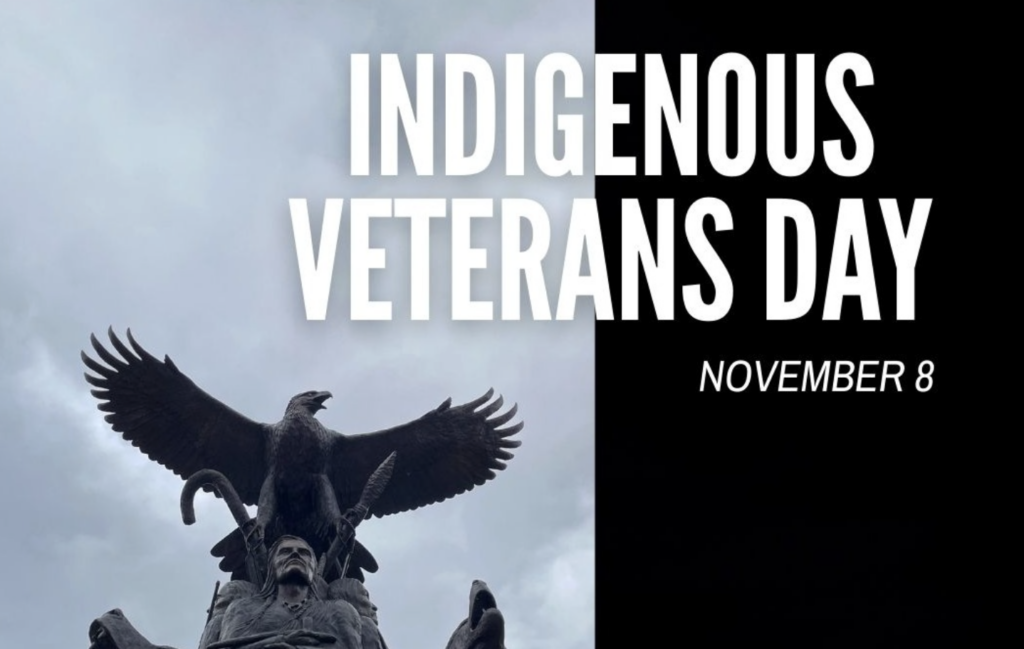
Under Treaty, First Nations were not required to serve in conflicts involving the Crown or Canada.
Yet thousands chose to serve, defending a country that did not treat them as equals, demonstrating commitment to their communities and Canada. When they returned home, Indigenous veterans found their Treaty and human rights denied—losing status, land, and access to the same supports given to other veterans. While non-Indigenous veterans received farmland and benefits, Indigenous veterans were often excluded from these programs.
“When we remember Indigenous veterans, we also remember the promises of peace, respect, and mutual support that the Treaties represent,” said Treaty Commissioner Dr. Kathy Walker. “By living the Treaties we can work to undo past wrongs and uphold those promises today.”
Today, as part of your reconciliation journey, take time to learn about and honour these veterans—their courage, their sacrifice, and their resilience.
ithiniw-simâkanisihkânak / Indian Veterans
Salamô omasinahikîwin / Written by Solomon Ratt