
News
OTC’s response to COVID-19
 In response to the ongoing public health emergency, COVID-19, we are making some changes to our operations. We want to do our part to help you stay as informed as possible on our work during this time. The impacts of COVID-19 are ever changing and dynamic.
The OTC staff are no longer travelling to events around the province, and work from home.
We’re suspending activities of the speakers bureau. Many of our speakers are elders and it is of upmost importance for us to protect our knowledge keepers. If you have an event booked, you will be contacted shortly to reschedule. We are not accepting new requests for the speakers bureau for the next 30 days and after this time we will revisit the situation.
Other reconciliation events and activities hosted by the OTC will be rescheduled or cancelled on a case-by-case basis. The information will be posted on OTC Twitter and Facebook as it becomes available.
Resources on how to stay safe and healthy during this time are available through the Saskatchewan Ministry of Health.
The Office of the Treaty Commissioner understands that challenging times like these can be stressful. We need to take care of ourselves, while looking out for our friends, relatives and community.
Thank you for your ongoing support.
OTC in Fond du Lac
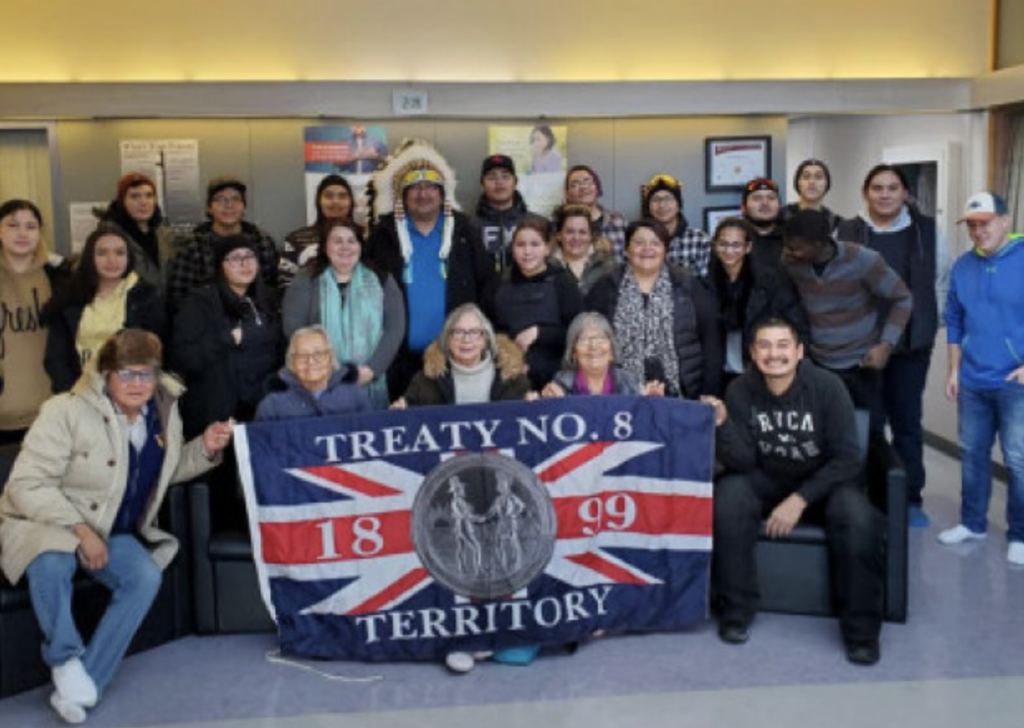
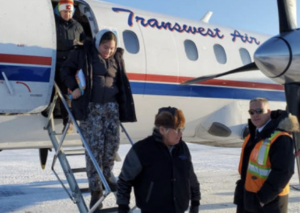
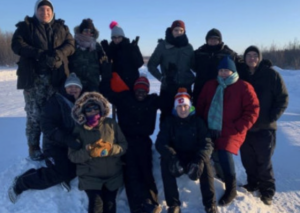
 For a week in February a team from the Office of the Treaty Commissioner, including some of the OTC youth spent a week in Fond du Lac.
On arrival the team was warmly greeted by Fond du Lac Denesuline First Nation Chief Louie Mercredi to Treaty 8 territory.
He says the arrival of Treaty Commissioner Mary Culbertson was the first time a Treaty Commissioner of Saskatchewan had arrived in the community.
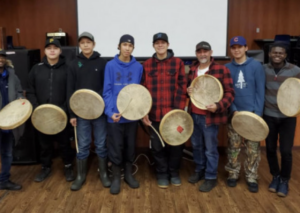
We saw the youth grow from the experiences, from driving on an ice road, to eating caribou, shopping at the local grocery store, working with other community youth, and attending blanket exercises.
“I believe they left with so much more than can ever be taught in a classroom, the cultural and traditional exchange is priceless,” said Angie Merasty, Youth in Service project coordinator.
The Kairos blanket exercise was well attended by people in the community including RCMP and health workers from the Athabasca Health Authority and was very powerful, she said.
Meals prepared by our new friend Janelle at Hailey’s Lodge. On some nights there were debriefing meetings with the youth on others there was music, and then on the hunt for the Northern Lights!!
The OTC youth on the trip come from Sandy Bay, Prince Albert, Red Pheasant and Saskatoon, who are here from Nigeria and India.
The OTC Youth have been filming all week, interviewing other youth, taking beautiful photos of the community, the ice road and Elders. This work will be shared as part of our ongoing youth reconciliation programs.
OTC Youth Culture Camp
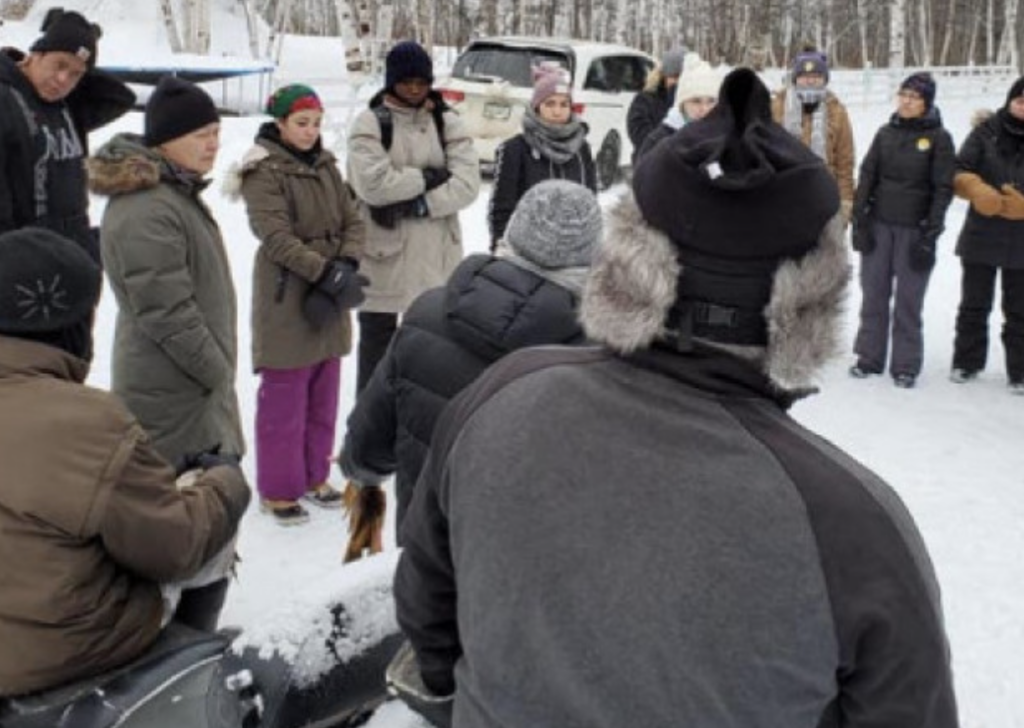
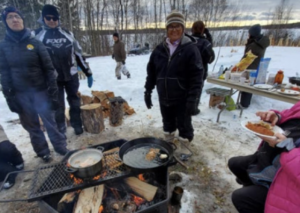
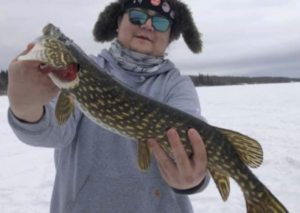
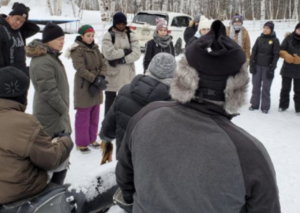 The Office of the Treaty Commissioner youth initiative spent three snowy days in February at Ministikwin Winter Cultural Camp, near Cold Lake, Alberta.
According to the youth, by the end of the time there the camp felt like it was home. We were so happy to hear this during the sharing circle.
For many of the youth this was their first-time trying activities like dog sledding, ice fishing, setting a net with a jigger, checking nets, making fires, boiling tea, making dry moose meat, learning to speak Cree, filleting fish, skinning, snowshoeing, and entering a sweat lodge.
“Even just sitting around the fire sharing stories and laughing was good. This was what our ancestors did, this was enjoyable and calming for the youth, no cell service, no social media and they loved it,” said Angie Merasty, Youth in Service Project Coordinator.
Many staff from the OTC as well as parents and chaperones joined in the activities and the youth during the trip.
We are grateful to the culture camp for treating us well, but also to the Cold Lake First Nation Chief Roger Marten who dropped by to meet the youth and welcomed us into his territory.
Committing to walk the path of Reconciliation
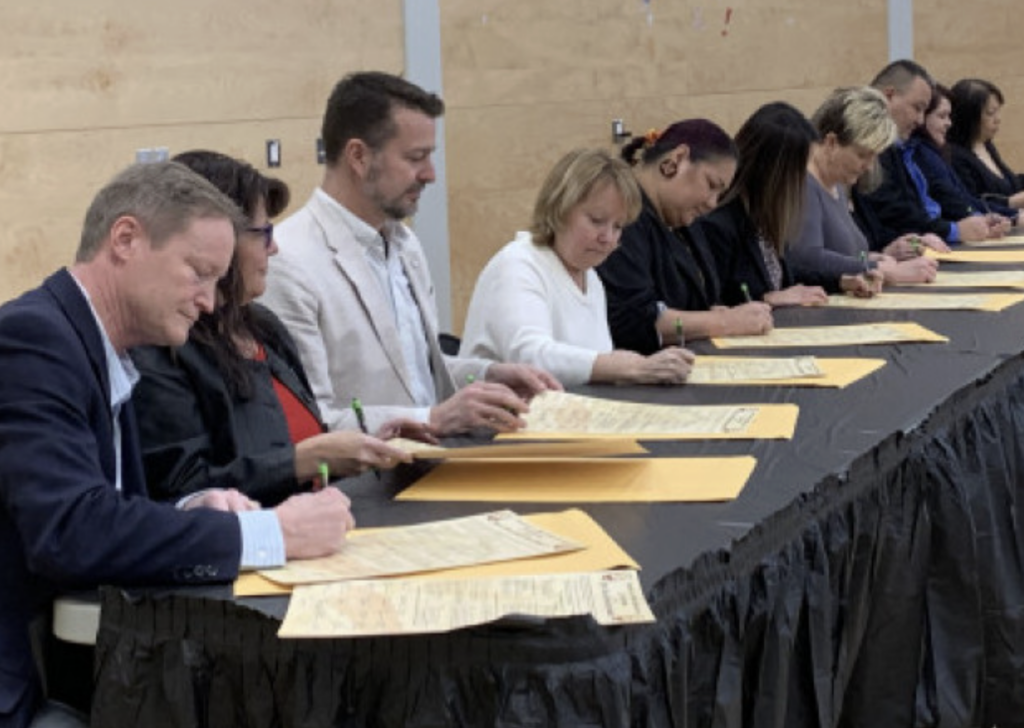
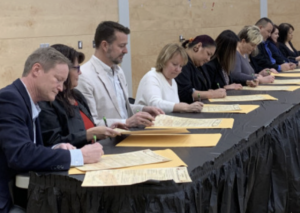 On Feb. 6, 2020, the partners of Prairie Rivers Reconciliation publicly committed to travelling the path of reconciliation together.
Through a pipe ceremony and public signing of the PRRC Reconciliation Declaration, the partners will formally begin their journey by building strong relationships for a long-term commitment to relationships and education.
“January 2018 brought together 29 people to discuss ways to build reconciliation. It began our journey of learning,” said Robin Bendig, one of the groups co-founders.
“March 2019 developed vision and objectives in a one-day retreat, and from this we created the declaration we’re signing today.”
The group decided on two priorities to move forward, relationships and education.”
More than 100 people attended the event held on One Arrow First Nation, including the Lieutenant Governor of Saskatchewan, Russell Mirasty.
“It’s critical that we have these conversations and then of course to act. Great work from committees like this build a common understanding,” he said,
“This is truly an investment in our province and like any investment it will take time, but it is crucial that we keep up the momentum.”
Mirasty brought greetings from the Queen in English and in Cree.
Prairie Rivers Reconciliation is a Committee comprised of individuals, organizations and communities, from Rural Saskatchewan, who are committed to learning about reconciliation and actively working toward reconciliation which began in January 2018.
Affinity Credit Union, Batoche National Historic Site, Carlton Trail College, City of Martensville, City of Warman, Corman Park, Dakota Dunes Community Development Corporation, Federated Co-operatives Limited, Great Plains College, Lakeland District for Sport, Culture and Recreation, Martensville High School, Mennonite Central Committee, Misty Ventures, Office of the Treaty Commissioner, One Arrow First Nation, Prairie Central District for Sport, Culture, and Recreation, Prairie Sky Chamber, Prairie Spirit School Division, RCMP, Rosthern Junior College, Rosthern Station Arts Centre, Sask Parks & Recreation Association, Sask Polytechnic, Saskatoon Regional Economic Development Authority, SK Health Authority, Station Arts Centre, Town of Aberdeen, Town of Osler, Town of Rosthern, Valley Action Abilities, Waldheim School, Warman High School.
OTC selects new logo

When the Office of the Treaty Commissioner decided to update the logo as we marked our 30th anniversary, we decided to look to the future of Saskatchewan – youth.
We sent a call for entries to all schools in the province and received well more than 100 entries.
“It was very difficult to pick the winner because there were so many amazing entries,” said Trish Greyeyes, OTC executive director.
Tiegan, 18, from Medstead School had her design selected to be the next logo.
“We were impressed with Tiegan’s entry not only because of how beautiful the drawing was, but her written submission. To us, her written submission was moving because she talked about the spirit and intent of Treaty,” Greyeyes said.
In her entry Tiegan wrote, “I drew all of these things because they are all part of First Nations culture.”
She wrote about the medicine wheel around the whole picture because it represents spiritual, emotional, physical and mental needs. She included sweet grass because through smudging it purifies body and soul and clarifies the mind. She talked about Treaties lasting as long as the grass grows, the river flows and the sun shines.
“The feather I drew because it symbolizes, truth, honour, strength, wisdom, power and freedom.”
We are so excited to have the logo to take us into the future of the office.
Commemorating sombre history
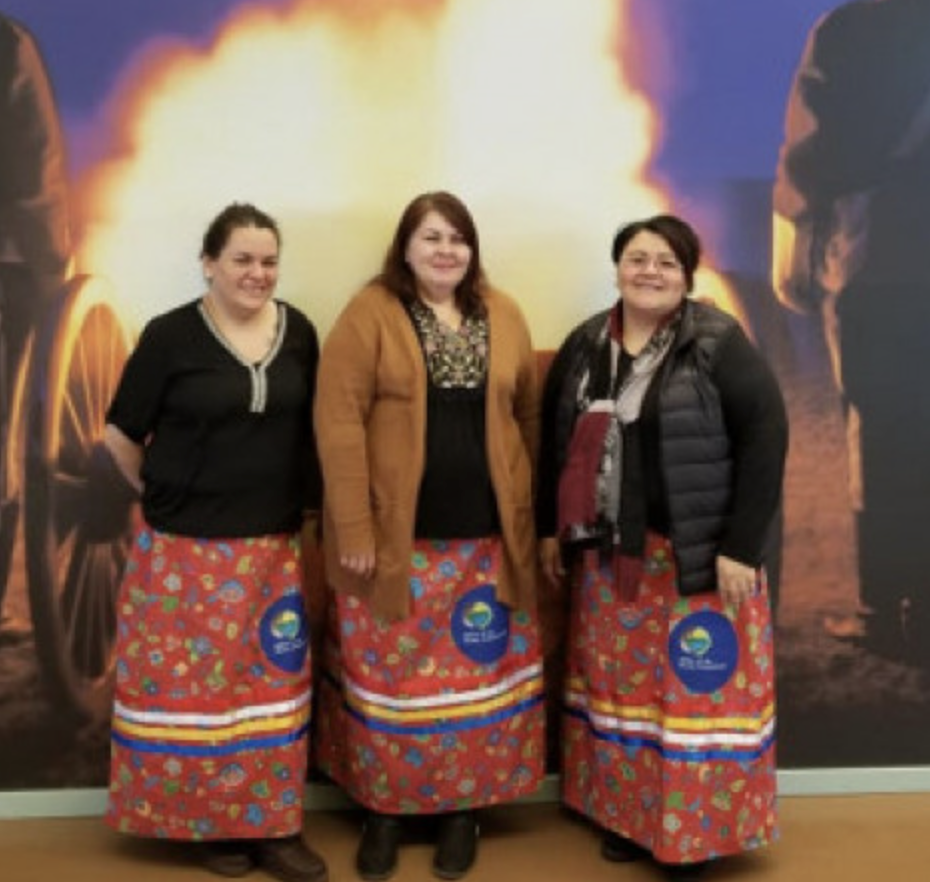
 The Treaty Commissioner of Saskatchewan along with OTC staff attended the commemoration ceremony of the November 27th, 1885 hangings of eight First Nations men in Battleford.
It’s somber history, but we must never forget them:
Walking the Sky
Bad Arrow
Miserable Man
Iron Body
Little Bear
Crooked Leg
Man Without Blood
Wandering Spirit
“So much history was shared by the Elders, this needs to be taught in schools and we should all know this piece of history,” said Angie Merasty.
OTC celebrates 30 years of Treaty work
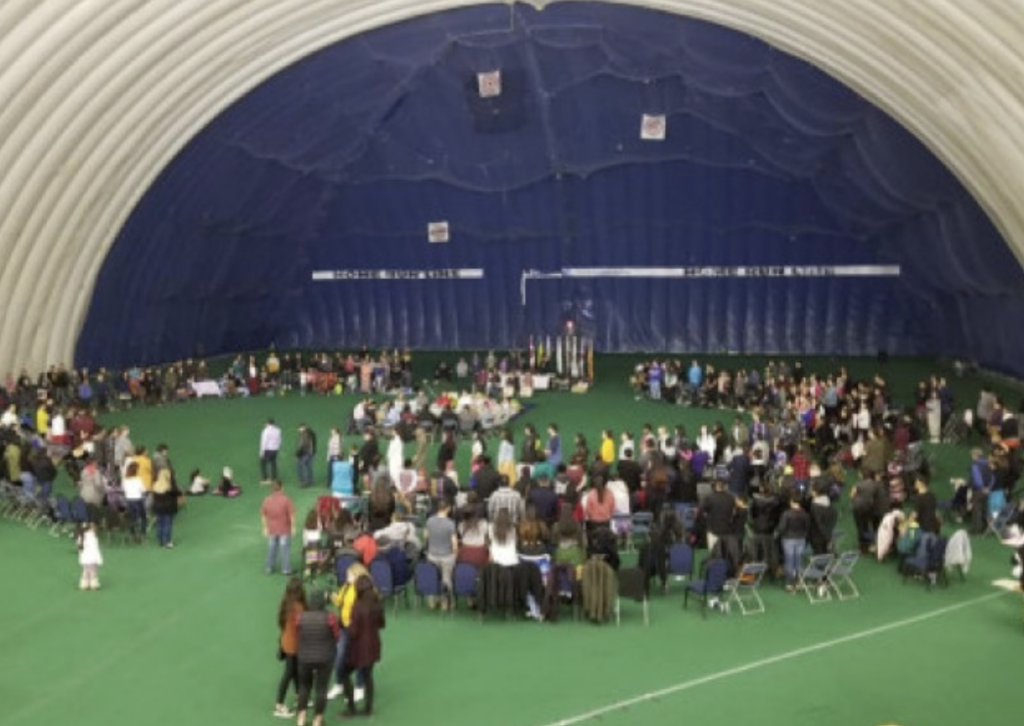
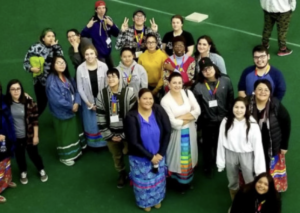
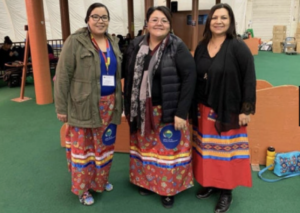
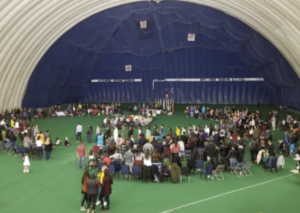 On Nov. 22, more than 100 people came together to celebrate the 30th anniversary of the Office of the Treaty Commissioner in Saskatchewan.
The 30th Anniversary Round Dance and Feast was held in Saskatoon and provided and opportunity for celebration of past work and a look to the future including, the unveiling of a new logo.
“As the fifth Treaty Commissioner of Saskatchewan and the first woman Treaty Commissioner, I am proud to celebrate 30 years of the office. It has been a catalyst for Treaty education both in the classroom and in the greater public,” said Mary Culbertson, Treaty Commissioner of Saskatchewan.
We were the first region to have mandatory Treaty education in schools and the OTC was the vehicle that carried information about Treaty to the public through the speakers bureau, said Culbertson.
“It has been a shining example for other commissions across Canada and is called on to share experience and expertise across the land.”
At the event the history was celebrated and the people who have helped the office were recognized, including OTC’s Director of Education Brenda Ahenakew, who was honoured with a star blanket. Youth in the OTC’s Youth in Service group supported the giveaway.
“It was a wonderful evening, I really enjoyed it,” said Rhett Sangster, OTC Director of Reconciliation, Community Partnerships.
Reconciliation remains central to the work of the OTC as the office looks to the future. There are Treaty obligations that have not been honoured, and work has to be done to make systemic change, said Culbertson.
OTC renews college strategic alliance
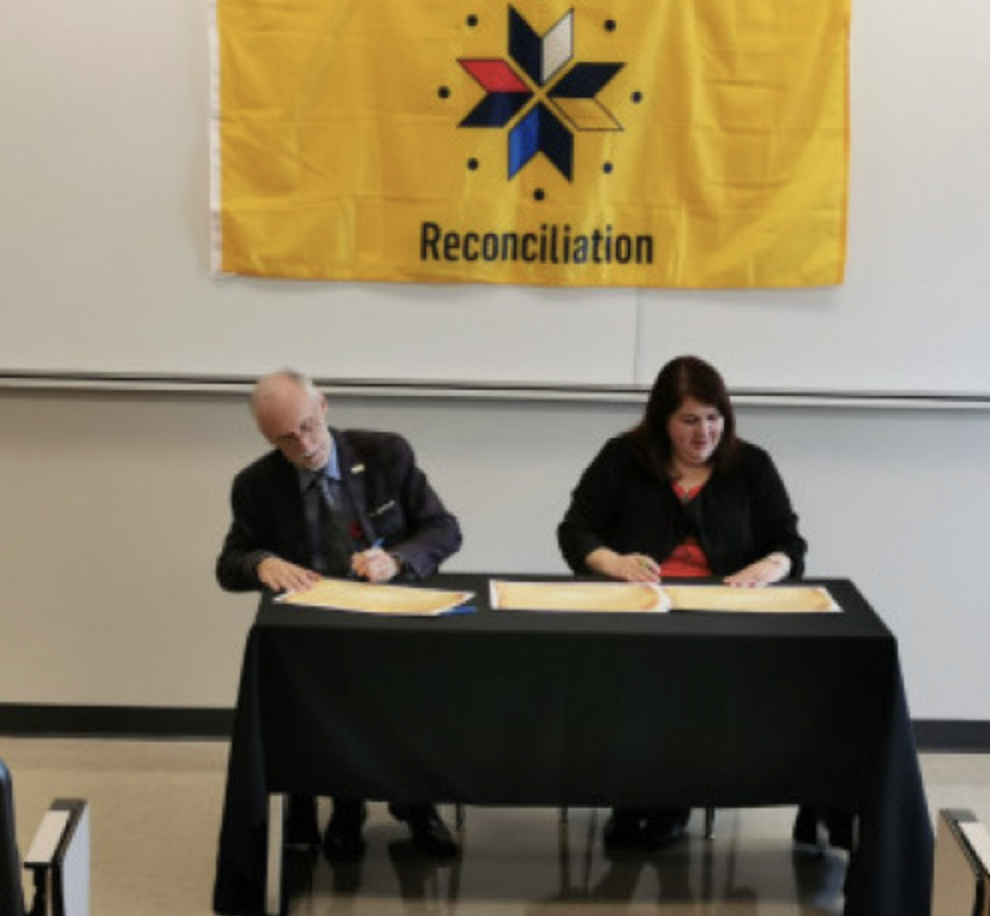
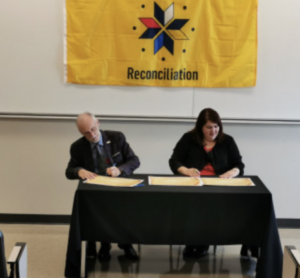 The Office of the Treaty Commissioner renewed their strategic alliance with the Great Plains College at an event on the Warman campus last week.
The ceremony began with a prayer by OTC Speakers Bureau member and Cultural Advisor to Great Plains College, Lyndon Linklater. He also shared information on the importance of the partnership and his experiences over the years working on the college campuses.
Treaty Commissioner of Saskatchewan Mary Culbertson shared information about OTC is and the purpose and importance of these partnerships, as well as the importance of regional colleges to our province. Amy Seesequasis provided history on the alliance and steps moving forward. College President David Keast spoke of the campuses and their importance to the communities, the profound changes to the campus over the years due to the partnership, and how this new information sharing contributes to the bigger picture which is healthy and vibrant communities that are inclusive.
There were about 25 students and 15 staff attended the event to see the signing of the three-year renewal document.
The Great Plains College has been working with the OTC since 2012, and in 2017 the first two-year alliance was signed to see Treaty History, Indigenous knowledge systems and Reconciliation awareness integrated into the campuses across Saskatchewan.
OTC Youth in Service Northern Conference a success
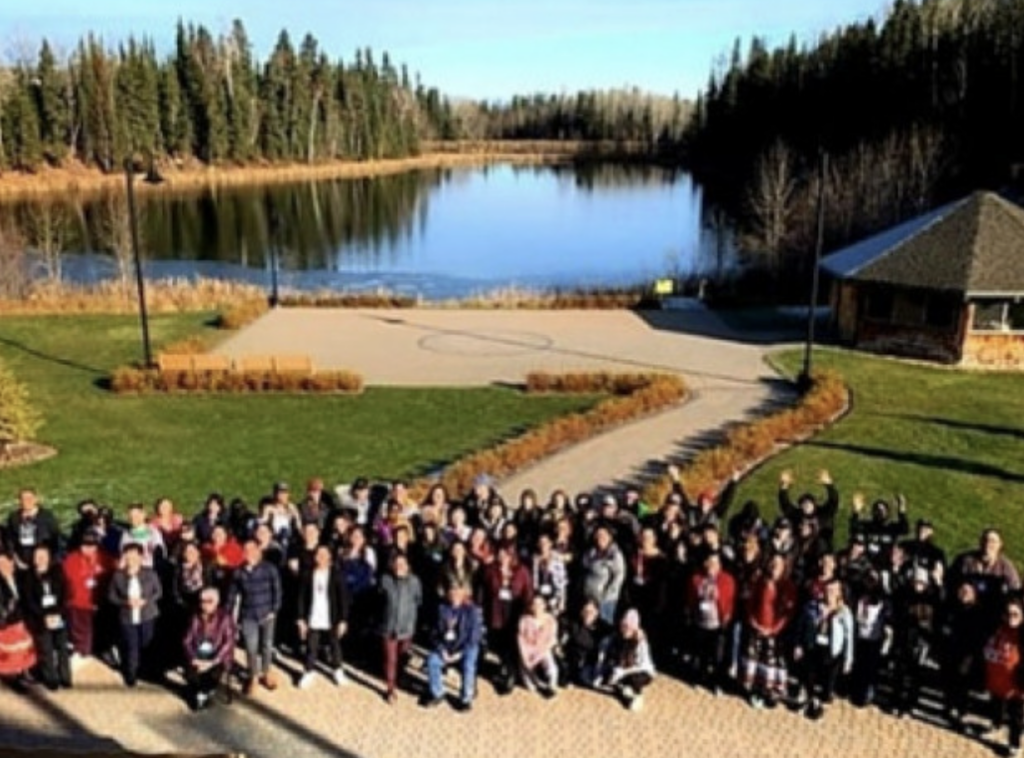
 The Office of the Treaty Commissioner’s Youth in Service Northern Conference saw youth come together to make new friends and work on Reconciliation.
“My heart is full,” said organized Angie Merasty,
“Amazing wonderful youth filled my heart with their voice, their talent, their intelligence. They participated and they asked many good questions.”
The youth who participated said they were happy with the new friends they made, what they learned about Residential Schools, the Indian Act, the OTC, the Speakers Bureau, etc.
The witty emcee Nick Daigneault kept things flowing and entertaining; motivational speaker James Anderson was a huge hit; and Max Fineday, and his team from Canadian Roots Exchange, were informative and engaging with their sessions.
We are so thankful for everyone who supported the OTC with this event, especially the Elders, who were there the whole time to support these young people and prayed hard for us all.
We were excited to welcome youth and chaperones from the communities of Turnor Lake, La Loche, Pinehouse, North Battleford, Southend, Stanley Mission, Sandy Bay, Pelican Narrows, Deschambault Lake, Cumberland House, Nipawin, Shoal Lake, Beardy’s Okemasis, Prince Albert, and Saskatoon!!
Statement from the Office of the Treaty Commissioner on the passing of Veteran Phillip Ledoux
The Office of the Treaty Commissioner is sad to share the news that Veteran Phillip Ledoux has passed. We send our condolences to his family, friends, colleagues and the people of Mistawasis First Nation.
Phillip was a staple at the Treaty table, always reminding us of why we are meeting, the issues that we having being trying to resolve for 30 years.
“Phillip was always pushing for the fair treatment of veterans and veterans’ rights. He was well respected for his insights and addition to the conversation,” said Treaty Commissioner, Mary Culbertson.
A wake service will be held beginning at 4 p.m. on Mistawasis First Nation today, and his funeral will be held at 11 a.m. at the Mistawasis school gym on Monday, Oct. 28 at 11 a.m.